Archive for category 5 Questions About Writing
5 Questions about Verse Translation With . . . Mark Haywood
Posted by Sally Jenkins in 5 Questions About Writing, Poetry on February 24, 2026
Mark Haywood is a poet and verse translator. 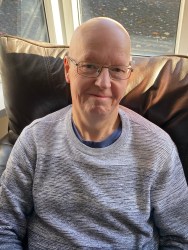 As a poet, he enjoys working with the challenges of formal poetry, particularly the sonnet and the limerick, and has had several sonnets and sonnet sequences published in the UK, Canada and the USA. Some of his sequences have dealt with topics uncommon in the sonnet form, for example art criticism and jazz theory. Recently Mark has been translating some of Molière’s classic 17th century French comic plays into rhyming verse. Some of this work has been shortlisted and longlisted in the John Dryden Translation Competition, and two of these translations, The Learned Women and The Flying Doctor, have been published by Broadway Play Publishing Inc, New York.
Mark also composes music and has had two collections of piano music published, as well as some articles on jazz.
How did you get involved in verse translation?
Most of us can remember having to “translate” something at school – maybe from French or German, or even (if you’re my age) from Latin. At my school we had to “do” Molière’s comedy Tartuffe, and I really enjoyed it, once I’d understood it well enough. We translated parts of it out loud in class, and wrote out bits in English for homework. The original play is in verse, but we simply put it into prose.
That was half a century ago and since then I’ve written a lot of formal verse in English. One day I was reading George Chapman’s verse translation of Homer’s Odyssey, and I thought, “I wonder if I could translate a bit of a Molière play into rhyming verse…that would be a challenge!” I picked The Learned Women which I’d once read in English and which had really made me laugh (I was going to need a laugh), decided on a rhythm and rhyme scheme, took a deep breath, and jumped in!
What are the most important qualities required by a verse translator?
The most obvious quality is proficiency in both the source language and the target language of the translation. That doesn’t mean one has to be bilingual, or anything like it. We’re talking about written translation as opposed to live interpreting where everything is done in real time. With written translation there is time to study the source passage, to understand its meaning and spirit/nuances, time to think, to write, to revise.
This brings me to the next important quality – patience! When I’m translating into verse, I try dozens of different ways of saying essentially the same thing, before I find the potential rhymes, and then experiment with more permutations before the rhythm of the verse works properly. I’ve learnt not to get impatient with myself because eventually it will click into place, and the harder it was to get there, the more satisfying it is when it works.
How does a translator find a publisher?
I use Google to locate publishers interested in publishing translations, some publishers specialise in it. The Writers’ and Artists’ Yearbook is also a good source of guidance, with listings of publishers, prizes, societies and so on, as well as articles to help people hoping to get published.
Which translating resources have you found useful, e.g. books, courses, organisations, websites etc?
I approach my translations of Molière armed first with some existing prose translations of the play. These are to ensure I’ve understood the original text correctly. I avoid looking at any verse translations because I want my own versification to be completely original. Then, with a good French dictionary and an English thesaurus, I’m ready to go.
A top tip for would-be/newbie translators?
Persevere and enjoy it! Be patient and kind to yourself – especially if you’re translating something into verse. My Molière projects continue to teach me so much, not just about the play I’m translating, or about French, but about English as well. What began as a difficult slog has become a wonderful and addictive process.
About The Learned Women
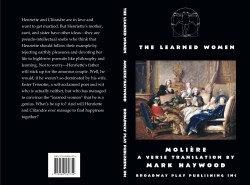 First performed in Paris in 1672, The Learned Women (Les Femmes Savantes) is one of Molière’s last and greatest comedies. It is a hilarious romp that pits pseudo-intellectual pretentiousness against plain common sense, and true love against self-seeking duplicity. As with all of Molière’s classic comedies, it is as relevant today as it ever was.
Mark’s translation is published (paperback and e-book) by Broadway Play Publishing Inc (December 2025) – click here for full details. It is also available here through Waterstones and here through Amazon.
5 Questions About Writing With . . . Harry Whittaker
Posted by Sally Jenkins in 5 Questions About Writing, Authors on January 13, 2026
Harry Whittaker is an author and broadcaster.  His first fiction title for adults, Atlas: The Story of Pa Salt, was an instant Sunday Times Number One Bestseller, and was nominated for Fiction Book of the Year at the British Book Awards. Rosie and the Friendship Angel, from the Guardian Angels series, was named as one of the best books for children in 2022 by The Times. He lives in North Yorkshire with his wife and twin daughters.
How do you discipline/motivate yourself to write and do you set daily targets?
I began writing picture books for children six years ago. Oh, that was a joy! I would spend entire mornings poring over the structure of sentences (in between brewing increasingly eccentric coffees, staring out into the garden and daydreaming). But now I’m a novelist, and things are grimmer. Then only way I can hit a first draft deadline is by locking myself away and forcing myself to write ten pages per day. Sometimes, that provides only three pages of usable manuscript. But every so often, when the stars are in the right place, eleventh, twelfth and even thirteenth pages have been known to appear.
What are the most important qualities required by a writer? Do you have them?
I think discipline is probably the most important quality, and I don’t I possess an ounce of it. I will actively seek out ways to leave my desk – be it to take the dog out, feed lunch to one of my twin daughters, or sneakily watch The Traitors on iPlayer. As an author, you’ve really got to love writing. By which I mean hate writing. By which I mean you’ve got to love to hate writing.
I imagine that forcing out a novel has some crossover with childbirth. It’s hideously difficult, but at the end you have a beautiful baby. Then you immediately forget the excruciating pain and vow to do it all over again in the coming years.
How do you market yourself and your books?
I just say ‘yes’ to anything any publisher asks of me. Once I’ve delivered the product, it’s out of my hands, really. I love talking to readers. I don’t think there’s been a single event or signing I haven’t enjoyed. The key to those is to authentically be oneself. (And for the love of God, not to take your work too seriously.)
Which writing resources have you found useful, e.g., books, courses, organisations, websites etc.?
My mother was the author Lucinda Riley, so she was my number one resource. But if you don’t have a global bestseller on the end of the phone, I think the BBC Writers Room is pretty fab. Though it’s primarily a screenwriting resource, the advice on there is universal. David Edgar’s How Plays Work is essential if you’re wanting to hone your theatrical craft. And then, of course, there’s every book ever written. Each time you pick up something to read, be it in your genre or something new entirely, you absorb, learn and grow.
A top tip for other writers?
Write! It doesn’t matter where, when or how much… just go for it. If you’re writing, you can call yourself a writer. If you’re not, you can’t.
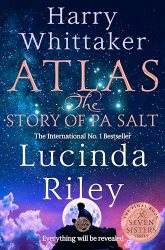 About Atlas: The Story of Pa Salt – The epic conclusion to the Seven Sisters series
Spanning a lifetime of love and loss, crossing borders and oceans, Atlas: The Story of Pa Salt draws the Seven Sisters series to its stunning, unforgettable conclusion. The sisters must confront the idea that their adored father was someone they barely knew – and, even more shockingly, that his long-buried secrets may still echo through the generations today.
5 Questions About Writing With . . . Jane Holland
Posted by Sally Jenkins in 5 Questions About Writing on December 2, 2025
Jane Holland is a published poet, and a bestselling, award-winning novelist who writes in multiple genres under multiple pen-names, including her popular WWII Cornish Girls saga series as Betty Walker. 
She’s written over 70 novels, and lives in Cornwall with two adorable cats and a large family.
How do you discipline/motivate yourself to write and do you set daily targets?
Thankfully, after 70-odd novels, writing is still hugely exciting to me, but I do usually need to manipulate myself into starting work because, like most people, I prefer thinking about work rather than doing it. I may go to a coffee shop, turn off WIFI, listen to music on headphones, and bribe myself with coffee and a treat. As soon as I’ve got a few words down, it gets easier. Or I may write longhand for a few hundred words, which feels more creative, and add more as I type it up. Increasingly, I use dictation software – Dragon Anywhere app on my phone – and upload my rambling thoughts straight into a Word doc for editing. I can achieve a 1000-word rough draft (my daily minimum) in ten minutes like that.
What are the most important qualities required by a writer? Do you have them?
Leading on from my answer above, you need self-motivation and self-discipline. Talent is common. Skill can be acquired. But if you frequently let days slide by without writing, you’ll struggle to make it as a professional. You must be dogged too, robust and able to shrug off criticism, to keep going and believe in yourself regardless of rejections and mockery. You need to be a workaholic egotist. And yes, that’s me. Humility is corrosive to a writer.
How do you market yourself and your books?
I run occasional ads on Facebook and Amazon, though increasingly these yield little return. My mainstay is X/Twitter which I enjoy, though a bearpit at times, and I’ve found many new readers by chatting there. I really like YouTube but I’m inconsistent with posting, so my videos don’t get many views. I underuse TikTok and Instagram for the same reason. My new Substack has brought a few sales, but its longer content requires too much energy that I’d rather put into writing new books. Producing new, readable novels several times a year seems the best and most organic way to find a readership.
Which writing resources have you found useful, e.g., books, courses, organisations, websites etc.?
I’ve consulted The Writer’s Journey (especially the original edition) by Christopher Vogler for every single novel I’ve ever written. It’s endlessly useful at helping me structure my novels and avoid things dragging partway through.
The Bestseller Code by Archer and Jockers is also worth a read if you want to write commercially.
I’ve been on many Arvon Foundation residential courses and recommend going on at least one, if only for the unique experience of being stuck in the middle of nowhere for 5 days with a group of other writers. In particular, it can kickstart a project if you’ve lost your way.
A top tip for other writers?
Finish your novel. No excuses. Until you’ve done so, even if it’s disintegrating under you, you cannot hope to fully understand what you’ve done, and then do it again, and do it better. Leaving a novel unfinished is the kiss of death. Ignore self-doubt and push through to the bitter end. Then start a new one soon after; don’t linger over edits. (Also, I find planning the novel out in advance hugely helpful when it comes to finishing what you start. I used to worry this would stop me writing it, but the opposite is true!)
 About The Spiritualist’s Daughter – published November 2025
Victorian London is under siege. Who are you going to summon?
After the death of her spiritualist father, Ophelia Savage must continue their psychic evenings or risk losing everything. But a series of macabre events leaves Londoners panicked, and then rival psychics start mysteriously disappearing.
Will she be next?
5 Questions About Writing With . . . Gabrielle Mullarkey
Posted by Sally Jenkins in 5 Questions About Writing on November 11, 2025
Gabrielle Mullarkey has just released her fourth novel, The Ones Who Never Left, a gothic chiller to read with the lights on. She’s also written over 3,000 short stories and serials for women’s magazines.  As a journalist, she’s contributed features, travel writing and opinion pieces to a wide range of publications. Her writing has been broadcast on radio, adapted for audio download, and won or been shortlisted in writing competitions. She also teaches creative writing.
How do you discipline/motivate yourself to write and do you set daily targets?
I trained as a journalist and that discipline helps when it comes to developing ideas and meeting deadlines. Because I write short stories and serials alongside novels, my daily routine is determined by a story or serial I have to complete, or the next idea I have to pitch. I can be very tunnel-visioned unless distracted by the pressures of daily life. That’s handy because, as a champion worrier, I sometimes find it difficult to switch off from daily demands.
What are the most important qualities required by a writer? Do you have them?
When an idea takes root, you must let it germinate without becoming impatient. Stamina is key when actually writing, it’s the old adage of ten per cent inspiration and 90 per cent perspiration.
I teach creative writing for two local authorities, and meet talented writers who become disheartened by the need to make several revisions to a story. The act of creativity is such an initial joy, it often comes as a shock to discover how much hard work is involved in making a piece the best it can be.
You also have to tread a fine line between self-evaluation and self-belief so that you’re open to learning from others. I like to believe in the democracy of writers (the correct collective noun is a procrastination of writers!): There’s always something to learn from others if you pay attention.
How do you market yourself and your books?
All my novels have been different. I wrote two romances, then a historical crime novel featuring Jane Austen as an amateur detective, and my latest novel is a gothic chiller set in a haunted house. Writers are often told that we need a ‘brand’ and to stick to writing in the same genre. So, while I do love flexing my writing muscles in different genres, I feel I’ve ‘come home’ writing dark subject matter that’s full of psychological chills and jump scares.
While my four novels have been traditionally published, like all writers I do as much self-promotion as possible. On social media, you can find me on X.com, Bluesky and on Substack, where I talk about the inspiration behind my latest book.
I also reach people through the women’s magazines I write for, and through courses and workshops I teach. I don’t impose myself on anyone when teaching (I hope!), but writing course participants are always keen to know what the tutor is working on.
For the past few years, I’ve attended the South Warwickshire Literary Festival. I have an MSc is in Creative Writing for Therapeutic Purposes and, last year, I gave a talk on writing for wellbeing. This year, I judged the festival short story competition, gave a workshop at the event itself and joined the author Q&A panel. I’ve also given talks on gothic literature and teach an annual Christmas workshop on writing a ghost story.
Sometimes I’ve had to push myself out of my comfort zone, but it’s a case of ‘feel the fear and do it anyway!’ Now, if I could just master the diving board at my local swimming pool or driving on the motorway at night…
Which writing resources have you found useful, e.g., books, courses, organisations, websites etc?
I’m a member of the Society of Authors, which offers excellent one-off workshops to members, on everything from narrative structure to mental wellbeing.
My love of Jane Austen inspired my darkly comic detective novel and I’ve always adored ghost stories and gothic literature, from Mary Shelley’s Frankenstein to Shirley Hill’s The Haunting of Hill House. I don’t try to emulate or be like anyone else. It’s vital that you listen to your own voice.
From a wellbeing perspective, I love to revisit Natalie Goldberg’s book, Writing Down the Bones, which talks about writing as an act of discovery and is chockful of wisdom to help sustain self-belief.
A top tip for other writers?
Be attuned to the world around you. You might get the spark of an idea from reading about a seaweed farm in the Hebrides or overhearing a remark on the bus. I once got a short story out of a stranger exclaiming in public, ‘but we always have shepherd’s pie on a Tuesday!’ Writers are magpies.
Equally, read as a writer, noting how the writer uses imagery, structures the narrative and so on. It won’t spoil your enjoyment of a text, only enrich it.
About The Ones Who Never Left – published October 2025
 Disillusioned with London, newlyweds Lucy and Hugh move to rambling Rook House in Yorkshire, unfazed by local claims that the house is haunted. Hugh, as a writer of supernatural fiction, hopes that the house will ‘speak’ to him through its brooding history. Meanwhile, Lucy craves the solitude and scenery that will inspire her to pick up a paintbrush again. But it soon becomes clear that someone – or thing – in Rook House has been waiting for its latest occupants… waiting to unfold a story that’s been whispered down the years but gone unheard. They don’t yet know it, but Hugh and Lucy are the perfect audience. The former inhabitants of Rook House have a story to tell. And if you listen too closely, you end up joining the ones who never left.
The Ones Who Never Left is available in paperback from Spiral Books, Amazon and all good bookshops, including Waterstones.
5 Questions About Writing With . . . Sophie Hannah
Posted by Sally Jenkins in 5 Questions About Writing on October 7, 2025
Sophie Hannah is a Sunday Times, New York Times and Amazon Kindle No. 1 bestselling crime writer, and the author of the new Hercule Poirot mysteries, at the request of Agatha Christie’s family and estate. 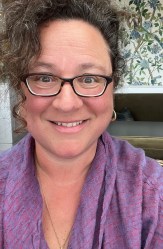
Her books are published in 51 countries and have sold more than five million copies worldwide. She won the UK National Book Awards Crime Novel of the Year prize in 2013, and the Dagger in the Library Award in 2023. Her murder mystery musical, ‘The Mystery of Mr E’ is available on Amazon Prime and Apple TV now. Sophie is an honorary fellow of Lucy Cavendish College, Cambridge, and the founder and coach at Dream Author Coaching.
How do you discipline/motivate yourself to write and do you set daily targets?
I have to use my higher brain, and make it the boss, rather than letting my primitive brain be in charge. My primitive brain always wants to do the easiest, most fun thing in the moment – which usually isn’t writing lots of words! But my higher brain knows it really matters to me that my book gets written, so I need different motivation. I need determination, resolve and commitment, rather than desire in the moment, and I need to understand that I don’t need to want to write at this very moment in order to write. When I allow my higher brain to impose this sort of discipline, and when I obey it, I am always thrilled to have written. And then my free time, my leisure time, is so much more genuinely enjoyable, because there isn’t that persistent soundtrack in the back of my mind going: ‘You should be writing, you slacker!’
What are the most important qualities required by a writer? Do you have them?
Imagination, creativity, passion, self-discipline and an unwavering belief in one’s work and in the possibility of success. Yes, I have all these qualities! Though I should point out that I do not have self-discipline in many other areas of life – but luckily, for my writing, I do!
How do you market yourself and your books?
I am so passionate about all the creative offerings I produce – from poetry, to fiction, to self-help books, to murder mystery musical movies … I want to share them with as many people as possible because I believe they are genuinely entertaining, insightful, unique – so I kind of rave about them whenever I can, to whoever will listen, because I believe that if you discover my work, it will brighten up your day! (I think this might be called ‘organic marketing’!) I also have a website, an author newsletter, and regularly check people on X.com, Facebook and Instagram. Lots of people also discover my writing via my Dream Author Coaching program for writers and/or anyone who wants to write. The other thing to bear in mind about marketing, specifically if you’re a writer, is that you have to be doing it because you genuinely believe your book will be an amazing treat for whoever buys and reads it. I’ve seen so many authors trying to market their books by saying, ‘My book is out today and please, please consider buying it or else I might end up sleeping under a bridge while feeling very unloved.’ This is not marketing, it’s being unhelpfully needy, and it’s not going to make anyone want to buy your book. It’s crucial to make your audience want to buy your book for their sake, not for yours.
Which writing resources have you found useful, e.g., books, courses, organisations, websites etc.?
I’ve been on several Arvon courses which I have loved! I also did a wonderful MA in Novel Writing in 1993/1994 at the University of Manchester, which was incredibly helpful and inspiring. Other writers are my main source of inspiration – when I read brilliant books by other people, I think, ‘I want to write something as amazing as that.’ I also get huge inspiration from my coaching programme Dream Author – my clients are amazing people who keep going on to achieve new and brilliant success!
A top tip for other writers?
Your thoughts and beliefs, not the circumstances, create your results – so make sure to think in an inspiring way!
About No One Would Do What The Lamberts Have Done – published June 2025
 You think it will never happen to you: the ring of the bell, the policeman on the doorstep. What he says traps you in a nightmare, and there seems to be no way out. It starts with the words, ‘I’m afraid…’
Sally Lambert is afraid too, and desperate enough to consider the unthinkable. Is it really, definitely, impossible to escape from this horror? Maybe not. There’s always something you can do, right? Of course, no one would ever do this particular something – except the Lamberts, who might have to. No one has ever gone this far. Until Sally decides that the Lamberts will…
‘No one writes twisted, suspenseful novels quite like Sophie Hannah.’ Liane Moriarty
About The Last Death of the Year – to be published 23rd October 2025
The brilliant Belgian detective rings in the New Year with a chilling murder investigation on a Greek island in this all-new holiday mystery from Sophie Hannah, author of Hercule Poirot’s Silent Night.
New Year’s Eve, 1932. Hercule Poirot and Inspector Edward Catchpool arrive on the tiny Greek island of Lamperos to celebrate the holiday with what turns out to be a rather odd community of locals living in a dilapidated house. A dark sense of foreboding overshadows the beautiful island getaway when the guests play a New Year’s Resolutions game after dinner and one written resolution gleefully threatens to perform “the last and first death of the year.” Hours later, one of the house’s residents is found dead on the terrace.
In the light of this shocking murder, Poirot reveals to Catchpool the true reason he’s brought him to the island—the life of another community member has been threatened. Now both men resolve to ensure that the first murder will be the last…
5 Questions About Writing With . . . Will Carver
Posted by Sally Jenkins in 5 Questions About Writing on September 2, 2025
Will Carver is the award-losing writer of 12 novels, a novella and several short stories. 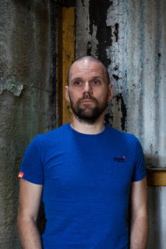 His books regularly feature on book-of-the-year lists in the mainstream media and he has been described as ‘The most original writer in Britain.’ Refusing to conform to a specific genre, Will’s latest novel Kill Them With Kindness sees him move away from crime and thriller stories into speculative fiction.
How do you discipline/motivate yourself to write and do you set daily targets?
People will do the thing that they most want to do. If you really want to lose weight, you will think about what you put into your mouth and make sure you exercise more. If you are eating a tub of hummus and a movie bag of Doritos while watching your favourite soap opera and talking about wanting to lose weight, it’s not really the thing you want most.
It’s the same with writing.
If you want to write and it is important for you to do that, you will MAKE the time. You will find any pocket in the day to squeeze out some words. You will dedicate a portion of your time to creative endeavours.
I want to write. Every day. So I make sure that I do.
That said, half of writing is discipline, and when you start out, you need to teach yourself that. You’ll be surprised how quickly you can get a book together by writing just 500 words a day and making sure those 500 words are the best that they can be.
What are the most important qualities required by a writer? Do you have them?
The ability to not speak. I have this. Writers are, inherently, good watchers. We extrapolate a lot of information from viewing people and how they behave, and we take inspiration from that to create our fiction.
Listening is equally important and becomes more so the further through the process you get. You have to listen to your editor and your publisher and your readers. You don’t have all the answers. You have to shut up and work it out. Speak through your writing.
This leads to the greatest tool a writer can have: a thick skin. It’s a hard industry. A lot of the time, you are being told where you are going wrong and that you need to fix it. You can’t let that get you down. You can’t let it put you off. You have to bite your tongue, listen and learn.
The discipline of writing each day is just the start. Once you finish writing that book, it no longer belongs to you, it belongs to everybody else.
How do you market yourself and your books?
Badly. I’m lucky that my publisher takes care of that kind of thing. But I write articles and do interviews or appear on podcasts around publication time. This is mostly organised through my publisher but I do have direct relationships with writers and podcasters who ask me to do things. I do them throughout the year because they’re fun.
I don’t like to keep posting things on my social media because it becomes too much and I like it to be more of a personal thing; it’s a way for me to speak with my readers.
There’s a bit of a disconnect with me when it comes to writing and promoting because I think of myself as an artist not a product. Again, this is something you come to terms with over time and through experience. There are plenty of people who aren’t great writers but do well because they know how to promote themselves and their work. I try to be honest about things, and that isn’t always the best way to promote. If you can do the opposite of what I do, when it comes to self-promotion, you are probably doing something right.
Which writing resources have you found useful, e.g., books, courses, organisations, websites etc.?
Writing is like any skill: If you want to get good at playing the piano, you can read all the theory books you want but the only way you will improve is to sit at the thing and hit those keys. You have to know what feels right and you have to know what feels wrong.
I recommend David Mamet’s On Directing and his other book True and False – neither are books about how to write but they are both concerned with how you portray a story, how you show only what is needed. William Goldman’s Adventures in the Screen Trade books are an incredible insight into storytelling and the intricacies of a creative industry that every writer should read. But nothing teaches you how to write more than sitting down and writing.
And being told that it sucks.
And having to rewrite.
You will get more from reading the writing of those you admire than any How To manual or lesson from a failed-writer-turned-lecturer.
If you want to be a writer, stop doing all those other things that are not the one thing you want to do.
A top tip for other writers?
You can’t throw out a blanket rule because every writer works in a different way. It is important to discover your own techniques. That said, there is one tip I don’t mind giving because I think it is applicable to all writers: Do NOT ask for feedback on your writing from somebody who loves you. It’s not fair on them. They don’t want to tell you that you are awful. They don’t want to tell you what doesn’t work. And that’s, actually, not fair on you. Because you can only learn and get better by finding out these things. Your partner/parent/best friend is not the person to tell you these things. Find someone who won’t mind breaking that news to you. Because this is a huge part of the process. It should not be an emotional thing, but it will be if you choose somebody who loves you unconditionally.
Substack is a great place to put something out there to get feedback. Or join a writing group. See how others work. Get their feedback. Give them feedback. Your mum loves you, she will tell you you’re the best even if you’re not. That feels nice but being a writer rarely feels nice. Get used to it. About Kill Them With Kindness – published June 2025
A deadly, fast-spreading contagion is wiping out humanity and it’s almost at the UK’s shores. With no solution in sight, the government prepares for mass euthanasia. But in China, Dr. Haruto Ikeda races to release a radical solution: a virus that rewires the brain for kindness. But time is running out and compassion may be humanity’s best weapon or it may be its last mistake.
Kill Them With Kindness is available in paperback, audio and on Kindle.
5 Questions About Writing With . . . Ian McMillan
Posted by Sally Jenkins in 5 Questions About Writing, Poetry on August 5, 2025

Ian McMillan (Credit: Photo, Adrian Mealing)
Ian McMillan is a writer and broadcaster who presents The Verb on BBC Radio 4 every week and its sister programme The Adverb. He hosts both the annual T.S.Eliot Prize Readings and the Academy of Urbanism Awards. He’s written poems, plays, a verse autobiography Talking Myself Home and a voyage round Yorkshire in Neither Nowt Nor Summat. His latest book with Bloomsbury is My Sand Life, My Pebble Life, a memoir of a childhood and the sea. Ian is poet-in-residence for Barnsley FC and was Barnsley’s Lockdown Poet. He’s a regular on Pick of the Week, Last Word and BBC Proms Plus. He’s been a castaway on Desert Island Discs.
How do you discipline/motivate yourself to write and do you set daily targets?
I try to write every day and the motivation is always that if I don’t there will be blank pages in magazines and newspapers and books and there will be empty air on the radio. I prime myself for writing by going on my early stroll at 05.20 and then forcing myself to see five different things on a stroll I’ve taken for years; I pound my brain to make language from the things I notice and then when I get home I tweet the five things I’ve seen and then I’m set up for the day. For me it’s essential to write every day because if I don’t then I’m anxious that I might forget how to do it!
What are the most important qualities required by a writer? Do you have them?
A sense of wonder and a sense of discipline. Both of these can be cultivated and developed. A sense of wonder is essential because the world is, for all its faults, a wonderful place and as a writer it’s my job to report on it. I try to remind myself that the so-called ordinary is really extraordinary, even if it doesn’t seem like it in the drizzle! Discipline is so important: I have to write every day, I have to rewrite every day, I have to read every day and I have to reread every day.
How do you market yourself and your books?
I leave that up to my wonderful agent. I will say that, at least when you first start, you should say yes to every writing and performing opportunity but at the same time be wary of the people who don’t want to pay you and who say that doing something for nothing will be good exposure. There are certain things that I will do for nothing but it should never be expected that you will. You can’t spend exposure in the shop!
Which writing resources have you found useful, e.g., books, courses, organisations, websites etc.?
The Arvon Foundation was my writing school. I went on courses at their centre in Lumb Bank as a very young man and the things I learned there about writing and performing have stood me in very good stead over the years.
A top tip for other writers?
Always read as a writer. Examine each sentence as though you’ve written it and think how you might improve it. Think of yourself as the co-writer of anything you read, and remember that all writing, no matter who it’s by, can always be improved. Oh, and carry your notebook everywhere, or your phone if you want to leave yourself a voice note. That idea won’t remember itself!
About My Sand Life, My Pebble Life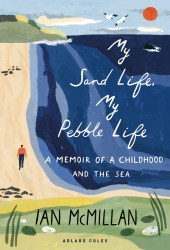 A memoir of a childhood and the sea. My life measured out in tides, coming in and going out and doing the same again. My life measured out in games of trying to spot the sea first.
A heartwarming and salt-water infused collection of coastal memories. In this perceptive and funny book, Ian transports us to a coastline rich in memories. He recalls his days by the sea, from Cleethorpes to Suffolk, from the coast of Northumberland to Blackpool, Scarborough, and the Isle of Skye. He walks barefoot to the sea to see the sun rise; he is attacked by seagulls, midges, and wasps; he eats a lot of fish & chips and it’s always the best yet; he nearly avoids a frisbee; he searches for jazz. In writing peppered with poetry, Ian recounts the memories and experiences that have shaped who he is today.
My Sand Life, My Pebble Life is available on Kindle and in hardback and audio formats.
5 Questions About Writing With . . . Ellie Henderson
Posted by Sally Jenkins in 5 Questions About Writing on July 1, 2025
Ellie Henderson was brought up in Glasgow and now lives near the sea on the east coast of Scotland.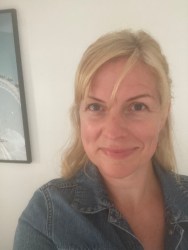 She has written five books set on the Isle of Arran and is working on a new series set by Loch Lomond. When she’s not writing, she runs creative workshops in the community and delivers training in First Aid for Mental Health. She also writes psychological fiction under the name Lorna Henderson.
Find out more about Ellie at: https://elliehendersonbooks.com/ellie-henderson
How do you discipline/motivate yourself to write and do you set daily targets?
It very much depends on deadlines and other work projects that I am juggling. I wish I could say that I sat down every day at a certain time to write x number of words. But I’ve had to learn to be flexible and fit in writing when I can. I used to work as a journalist – so I do love a deadline – that tends to motivate me. Recently I’ve found that walking is a good way to unclutter my mind and work out where the plot is going next. Then I sit down and write. Although I can also procrastinate so I will switch off the WIFI and phone and set a timer which helps focus my mind!
What are the most important qualities required by a writer? Do you have them?
I think anyone can write for the love and process of writing and I’m a great believer that creative writing can be really positive for our wellbeing. I think writing in order to be published can be different and can bring a lot of other additional challenges. Some of the most important qualities are: imagination, patience, perseverance, being open to feedback and learning. But most of all you need to actually just get on with it and write.
How do you market yourself and your books?
Fortunately my publisher, Joffe Books, does a lot of the marketing which is wonderful. I have previously self-published books and the marketing takes a huge amount of effort. I am quite introverted and prefer to shy away from publicity. I’d much rather be writing! However I know it is important. I use social media, mostly Instagram, which can be fun and am lucky that I have a lot of supportive followers who help to spread the word. I also keep in touch with local newspapers and let them know if I have any book news which might be of interest.
Which writing resources have you found useful, e.g., books, courses, organisations, websites etc.?
I loved The Artist’s Way by Julia Cameron; I also did an MA in Creative Writing which I personally found useful as it gave me a framework to follow at a time when I needed it most and I was trying to juggle work and family life and develop my writing.
A top tip for other writers?
Don’t give up! Keep persevering and trust you will get there at the right time. I’ve had hundreds of rejections over the years but that probably made me more determined to succeed. The final tip would be to enjoy the writing process. It’s such a gift and something I am very grateful for.
About A Summer of Secrets on Arran – published June 2025
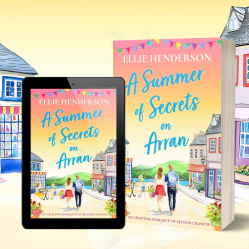 A Summer of Secrets on Arran is a heartwarming, emotional romance about second chances, family ties and the healing power of love. It’s about three women, Rosie, Isobel and Bella and a secret that could change everything they knew about love.
5 Questions About Writing With . . . Abigail Johnson
Posted by Sally Jenkins in 5 Questions About Writing, Authors, Books on June 3, 2025
Abigail Johnson is an author from Birmingham whose stories have been longlisted for the Bath Novel Award and Exeter Novel Award and shortlisted for the Edinburgh Award for Flash Fiction.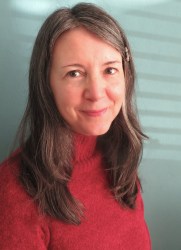 Although her primary school teacher predicted she would grow up to be an author, it was only in her forties that she decided to take writing seriously.
How do you discipline/motivate yourself to write and do you set daily targets?
I don’t set daily targets as I find that some days the words flow and some days they don’t, and if I force myself, I’ll just end up feeling frustrated! Instead I might set rough goals, for example, aiming to get to a certain point of the story within a set timeframe. The motivation can be hard when I’m feeling stuck and that’s when I think it’s important to try and move forward, even if you skip past a tricky part and revisit it later.
What are the most important qualities required by a writer? Do you have them?
I think being able to have empathy with your characters is probably the most important. If you want your readers to care about the characters you’ve written, you really need to be able to step into their shoes. This is something that comes quite naturally to me but the other important element needed is being able to structure a story well and I find this a bit harder.
How do you market yourself and your books?
My books are uplifting book club fiction and I’m grateful to the publicity team at PanMacmillan for their marketing of my book. I’m trying to get myself known by taking part in events and meeting readers. I also have a website and promote myself on social media, which doesn’t come very naturally to me.
Which writing resources have you found useful, e.g., books, courses, organisations, websites etc.?
Despite the fact that I love reading, for some reason I don’t particularly like to read about the craft of writing but this isn’t because I don’t have lots to learn. What I have found useful is attending workshops and listening to other authors talk about how they approach their writing. I found the Jericho Writers’ Festival really helpful when I was starting out and I’m thrilled I’m going to be delivering my own workshop at this year’s Festival! I’ve also done a number of writing courses where I’ve learned more about the publishing industry as well as writing techniques. The Secret Collector, my debut novel, was written while on the Curtis Brown Creative three month novel writing course.
A top tip for other writers?
Keep going! It’s so much harder to write a novel than I had ever imagined and I could have easily given up many times along the way but if you don’t stick with it, you’ll never finish what you started. If you are feeling very stuck, I recommend taking a break and perhaps being creative in other ways. Write a bit of poetry or flash fiction or a short story or even draw something. It might just be what you need to feel inspired again.
About The Secret Collector – published April 2025
 The Secret Collector, is set in Birmingham and is an uplifting and warm story about friendship across generations, the power of community and finding hope where it had been lost. Alfred is an elderly widower who uses antiques and collectibles to fill the hole in his heart left by his late wife. Kian is a lost teen who has been let down by the care system and finds it difficult staying on the straight and narrow. After Kian throws a brick through Alfred’s window, Kian is enrolled on a restorative justice programme to help make Alfred’s home liveable again.
5 Questions About Writing With . . . Lee Benson
Posted by Sally Jenkins in 5 Questions About Writing, Poetry, Writing for Children, Writing Handicaps on May 6, 2025
Lee Benson was the owner of successful Birmingham art gallery ‘Number Nine’ for 14 years and the sales director of a commercial gallery prior to that. 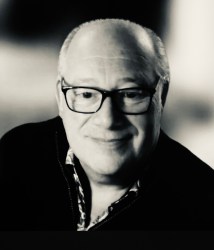 He is a fine watercolourist with two sell out solo exhibitions and many group shows. Lee has published 11 children’s illustrated books, six of which were recorded for TV. He has visited over 100 schools performing the stories and has been a guest author for World Book Day as far afield as Dubai and Stourbridge. Lee has also had nine books of poetry published, with two new collections due for release early this summer. He has produced three novels, a ghost story and seven complete discographies in collaboration with A. Sparke. Under the pen name of Lee Hemingway he released an alien crime novella in the USA.
Lee can be contacted through his website: https://thecreativeleebenson.com/
All of his books can be viewed on his Amazon page.
How do you discipline/motivate yourself to write and do you set daily targets?
Great question. My mind is always busy and so is my life. I put myself into writing mode by walking in the fresh air and absorbing the atmosphere. This applies to both my children’s stories and my poems. When my mind is in the right gear, I write. I write from within the story. I see it, then write it.
What are the most important qualities required by a writer? Do you have them?
Self-belief.
I do not believe in writing to order or being formulaic. If I’m not feeling it myself, it gets binned. I hate rewriting chapters so I edit in my head first before committing to paper. My wife is a great listener, she tells me if it flows or if it doesn’t make sense. We all love reassurance that what we have created is good. Children are the best critics for my children’s tales.
How do you market yourself and your books?
I use all social media badly. I find performing at schools is the best way to sell my children’s books. After a lockdown drought, schools are letting us indie authors in again but the receptionist frontline can be a tight fortress to get through, plus teachers have to follow protocols now.
Which writing resources have you found useful, e.g., books, courses, organisations, websites etc.?
Because I am dyslexic writing courses are difficult and frustrating. Searching for help is even more challenging. You have to ask the right logical questions to get to the right logical answers and I have a problem with thinking logically. So I rely on my brain and my life experiences to help me.
A top tip for other writers?
Write away selflessly without editing. Don’t think you have to write a certain amount of words per day. If it flows, then go for it. About Random Hopefulness – published October 2024
Random Hopefulness is a collection of observations on humour, love and loss, with a little tongue in cheek included for good measure. It is the first of a new series of poetic oddities. Lee focuses on what is all around us. He says, “Sometimes I don’t realise I am writing at mad unholy hours and voila in the morning, there it is, Random Hopefulness is the answer.”
-
You are currently browsing the archives for the 5 Questions About Writing category.
 Sally Jenkins