Archive for category Authors
On the panel . . . with cupcakes!
Posted by Sally Jenkins in Authors, Events, Promotion, public speaking on February 27, 2024
Despite having researched tips for panel events for Public Speaking for Absolute Beginners, I’d never actually taken part in such an event until last Friday night when I was part of a Women’s Fiction Panel. I sat alongside the charismatic Kim Nash and the fabulous Florence Keeling at The Museum of Cannock Chase. 
Kim was a very able chairperson with a wonderful flow of writing-related conversation starters which showed differences and similarities in the way the three of us approach our work.
Florence is a pantster who sallies forth with no definite plan about where the story is going. I plan but mostly veer away from it once the characters start appearing on the page and I realise that what I planned for them won’t work with their personalities.
Kim lights a candle on her desk to signal the switch from working at home in her day job to embarking upon her ‘writing time’. Florence doesn’t have space for a dedicated writing area and so you’ll find her on the settee with the laptop on her knee and a Harry Potter film on TV as background. I work in the smallest bedroom in silence – any music or radio noise is too distracting.
Kim and I write the first draft without reading back and editing what we’ve done the day before. Florence edits each section as she goes.
Florence and Kim both started writing initially as an escape from tough times in their lives. I got addicted after seeing my name and contribution in print on a women’s magazine letters’ page and receiving a cheque in the post for my trouble.
Florence and I have each self-published several books, as well as having novels traditionally published.
A very exciting part of the proceedings were the cupcakes(see above!) Each one sported a little cocktail stick holding one of our book covers – fantastic!

Did I learn anything about panel events?
If you’re worried about your mind going blank when faced with a question (as I was!), ask the chair for a list of possible question areas in advance. I felt more comfortable knowing the subjects that might be covered. This is also gives you chance to think about how you could turn a question around if it’s one you might find awkward.
Remember to talk to the audience. It’s OK to glance at your fellow panelists occasionally but the audience wants to see your face and hear your answer! Without the audience there would be no event.
If the venue is plying you with tea and coffee, don’t drink too much before the event starts – a toilet visit part way through the discussion might be frowned on.
Find out what the arrangements are for selling books. The lovely Press Books and Coffee Shop kindly attended my event to sell copies of all of our traditionally published books. But I only discovered later that I could have taken my self-published books to sell directly as well.
Relax. It’s not the Spanish Inquisition! The rest of the panel are human too and it’s always a lot of fun talking about writing and books with others who are passionate about the subject.

Five Myths on Writing
Posted by Sally Jenkins in Authors, Books, Writing on December 19, 2023
Leafing through issue 117 of nb. magazine an article about the myths around being a writer caught my eye. What do you think about some of the ‘mistruths’ debunked in the feature?![20231217_165957[1]](https://sally-jenkins.com/wp-content/uploads/2023/12/20231217_1659571.jpg?w=171&h=228)
Write Every Day
Katie Doyle, author of the short story collection I Meant It Once, struggles with this. She writes only when she feels like it and when she is caught up in it. Anita Frank, author of The Good Liars, can’t write every day because she is the carer of a disabled child. But she does try to think about her novel every day so that when she gets to her laptop, the words flow.
Wait for Inspiration to Strike
Tom Mead, author of The Murder Wheel, used to waste time waiting for inspiration to come along. Over the years, he’s learned that you’ve got to actively find it yourself or you’ll forever procrastinate.
Writing is an Easy, Romantic Occupation
Linwood Barclay, author of The Lie Maker, tells it like it is. “The reality?” he says in the article, “Staring at the computer screen until blood starts beading up on your forehead.” And he talks about the worry that the next book will sink like a stone.
Perfection will Pour Out
Tony Parsons, author of Who She Was, emphasises the point that perfection NEVER arrives with the first draft and an author must write draft after draft after draft before a novel is anywhere near good enough. Writing a novel is like climbing a mountain.
There is a ‘Right’ Way to Write
Chris Merritt, author of Committed, says that while it can be helpful to know how others write, ultimately, each individual has to find what works for them. Harriet Evans, author of The Stargazers, agrees and advises trying different things to establish what time of day and what method of writing self-accountability spurs you on.
Apologies for the lack of clickable links in the above section but WordPress decided to throw a wobbly and kept removing them. Don’t ask me why!
If you’d like to read the full article (and lots more bookish stuff!) the magazine can be ordered from nb. magazine. (Fingers crossed that link stays in place!)
From a personal point of view, I find that writing as often as I can keeps my head in the story – but there’s always at least one or two days a week when I can’t get to my desk. The inspiration for a fully formed novel NEVER descends from the heavens and teasing it out of nowhere can be like pulling teeth – but it has to be done! There is nothing easy about writing – it requires time, effort and self-discipline. My first drafts are always awful but it’s easier to rewrite and edit a terrible manuscript than it is to aim for perfect paragraphs from the outset. After a lot of experimentation I’ve found something that gets my bottom on the chair to write – the daily (free!) Zoom writers’ hours organised by the London Writers’ Salon.
What works for you?
(P.S. If you’re considering of ‘going wide’ with your self-publishing in 2024, now is the time to read Kobo Writing Life Publishing for Absolute Beginners – currently only 99p or free with Kindle Unlimited.)
A Commercial Break
Posted by Sally Jenkins in Authors, Books, Successes on December 5, 2023
Drum roll and trumpet fanfare!
A massive thank you to everyone who has preordered Waiting for a Bright New Future – it will have landed on your kindle in the early hours of today. Hooray!
If you missed the preorder, you can buy now with instant delivery. Plus the paperback should be available very soon too.
The NetGalley advance reviewers have been busy reading Waiting for a Bright New Future and the response has been favourable (phew!)
“I loved the characters in the book and the humour thrown in amongst the sadness and how the main character was a man in his 50s discovering his life again after the death of his father and starting over again.” Helen A.
“I love that it wasn’t a simple ending but it fit perfectly with how each of the characters were set up.
Definitely a book I recommend.” Reviewer 1028737.
“This book makes you feel everything, the joy, the sadness, the anger, all the emotions you can think of, bundled up together and woven into such a perfect story.” Reviewer 810933.
According to my publisher, ChocLit (part of Joffe Books), this book will appeal to lovers of books by Jenny Colgan, Mike Gayle, Jill Mansell, Sue McDonagh, Laura Pearson or Beth Moran. I can’t believe that they’ve slotted me into such good company!
Still wondering whether it’s worth squandering the grand sum of 99p on Waiting for a Bright New Future? Here’s the blurb:
Is it ever too late to start living for the first time?
Florence is buoyant and colourful, an ageing tribute band singer who’s full of life. And the complete opposite of staid Stuart, her new landlord.
Stuart’s not sure about having a lodger. And he’s not used to the singing and dancing that now fills the house. Nor the pairs of voluminous knickers left to dry on every spare surface in the bathroom.
Florence is everything Stuart has never allowed himself to be: bold, fearless, unabashedly herself. He’s spent his life putting everyone’s needs ahead of his own, avoiding risks and hiding from chances.
Soon Florence is persuading Stuart to dance with her in the kitchen. And when his childhood sweetheart shows up again, it’s Florence who encourages him to make his move.
Florence can see how much he’s changed, even if he won’t admit it. But Stuart has changed. He’s no longer the timid man he was when they first met.
Life is about to give Stuart a second chance, if only he has enough courage to grasp it . . .
Waiting for a Bright New Future falls into the UpLit (Uplifting Literature) genre and will leave you feeling hopeful and positive for the coming of 2024.

The Positivity of Grudges
Posted by Sally Jenkins in Authors, Books, Lifestyle, Non-writing on September 8, 2023
After being inspired by Sophie Hannah’s talk at the 2023 RNA Conference on ‘How to be a Happy and Successful Writer’, I went in search of self-help books by Sophie. I found ‘How to Hold a Grudge‘. The title didn’t inspire me – I was of the mindset that grudges are all about bitterness and negativity but I started reading anyway.
Sophie writes in the same chatty, amusing way that she speaks and the book is very easy reading. And she does not advocate any bitterness or negativity! In a nutshell she advises that when someone acts badly towards us, we should:
- Recognise that a wrong has been done to us
- Acknowledge that we feel angry and/or upset and that it’s OK to feel like this
- Do not try to immediately forgive, forget and move on
- Record the grudge and learn from it. Simplistic examples of this are: accept that Fred is always late when you arrange to meet and therefore turn up a few minutes late yourself instead of waiting angrily, or learn to stop lending books to Jane because it upsets you when they come back damaged. This learning protects us from future hurt by these people.
- Having taken the above steps, we will find that the anger, bitterness, and upset we feel towards that person will diminish.
(Apologies to Sophie if I haven’t got the above spot on. There’s a lot more advice in the book than those few bullet points!)
The book is an absolute delight to read – especially the details of some of Sophie’s own grudges which, having learned from them, she keeps in her ‘grudge cabinet’. However I would say that a much better (and more realistic) title for the book would be ‘The Positivity of Grudges’.
I’ve also read (and learned from) Sophie’s more recent self-help book, ‘The Double Best Method‘, which is all about how to make decisions – great for ditherers like me!
Staffetta Partigiana – A Different Kind of Hero(ine)
Posted by Sally Jenkins in Authors, Books on June 6, 2023
I wasn’t familiar with the World War II Italian Resistance movement until I came across author Kat Devereaux and her debut novel Escape to Tuscany. Her fictional heroine is a brave young woman who is part of this movement. Kat kindly agreed to share some of her research and knowledge with us (plus her top writing tip!). Over to Kat:
When you think about the partisans who fought to liberate Italy during the German occupation, you might imagine Peppone. A communist hardliner with a red kerchief, a Stalin moustache and a fiery temper, Peppone (“Big Joe”) is the sympathetic antagonist of Giovanni Guareschi’s Don Camillo stories. He was played by Brian Blessed in the UK television adaptation, which tells you everything.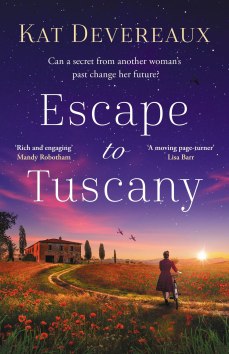
As with any caricature, there’s an element of truth to Peppone. Aligned with the Italian Communist Party, the Garibaldi Brigades were the heavy hitters of the resistance movement: organised, disciplined, and ferocious in battle. It’s not surprising that the image of the red-kerchiefed, gun-toting partisan is so iconic.
But there are many ways to resist. In my debut novel Escape to Tuscany, I chose to showcase another indispensable figure: the staffetta partigiana.
A different kind of hero(ine)
The resistance movements that sprang up after the German occupation of September 1943 had to work in extremely dangerous conditions. In the first months, partisan groups set up camp in the mountains, where local knowledge and harsh conditions worked to their advantage. As the war progressed and support for the partisans grew, the fight spread to the towns. And as Italy was liberated, city by city, partisan brigades played a leading role.
None of this could have been achieved without the staffette: the couriers who transported information, messages, supplies and armaments from place to place. Couriers needed to be inconspicuous and able to move easily even in crowded urban settings. They had to be able to pass through German checkpoints and elude the attention of sadistic Italian Fascist vigilante groups, such as the Black Brigades, who hunted partisans and their supporters. And they needed something to hold their cargo, something that wouldn’t stand out: a shopping bag, a school satchel, a bicycle basket.
So it’s no surprise that couriers were most often young women or teenage girls. My historical narrator Stella may be fictional, but she fits the profile of a courier perfectly. Just fourteen years old, she moves between her hometown of Romituzzo and the neighbouring towns of Castelmedici and San Damiano by train or bicycle, carrying intelligence, notes and even weapons. She has to fear violence from Germans and Fascists alike—sometimes she has to witness it. Stella operates in the shadows, unseen and undersung. But the stories she has to tell speak of tremendous courage.
Many women, many voices
I had a wealth of inspiration when writing Stella’s story. Thankfully for posterity, some of the women who worked as couriers during the occupation have left their testimonies behind. While most of these are in Italian, there are some English resources available. A wonderful place to start is the documentary Bandite, made in 2009 and available for free. You can find a subtitled version here https://youtu.be/iwJlwdBGBQ4.
For years after the Liberation, women partisans were denied the recognition they deserved. This has changed in the last decades, and now the staffetta on her bicycle is a symbol of antifascist resistance. That’s entirely as it should be.
My top writing tip
When researching a historical novel, it’s easy to get caught up in research and end up down a rabbithole. If you come across a book, video or other resource that’s absolutely fascinating but not relevant to what you’re writing at this precise moment, don’t get sidetracked. But don’t dismiss it, either: keep a note of it and store it somewhere easy to find. You never know what stories it might spark in the future.
Thank you, Kat!
Escape to Tuscany will be published on July 6th 2023 and is available to pre-order now. It is described as “A gripping and moving debut novel about two women, decades apart, whose fates converge in Florence, Italy. Perfect for fans of Patricia Wilson, Carol Kirkwood and Lucinda Riley.” Regular readers of this blog will know that I am a great fan of Lucinda Riley’s Seven Sisters series – so Escape to Tuscany sounds right up my street!
About the book:
Romituzzo, 1944
Just fourteen, Stella Infuriati is the youngest member of her town’s resistance network – a secret she keeps even from her parents. She works alongside her brother Achille to relay messages, supplies, and weapons to partisan groups in the Tuscan hills. Fuelled by courage and a fierce sense of purpose, Stella braves incredible danger and survives … but when peace comes in 1945, she vanishes.
Florence, 2019
Writer Tori MacNair arrives in Florence. Fleeing an emotionally abusive marriage, she’s come to build a new life in the city her grandmother taught her to love. As she digs into her family history, Tori uncovers decades-old secrets: the story of a brave young woman who risked everything to save her world.
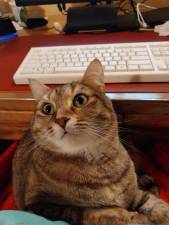
Rosa – Kat’s Writing Assistant
About Kat:
Born near Edinburgh, Kat Devereaux lived all over the globe before finally settling in Italy in 2019.
As a writer, Kat loves big, controversial personalities, spectacular settings and high-stakes conflict. The rest of the time, she likes being very quiet in libraries. In her everyday life, she is a freelance writer and translator with a special focus on Italian literature, history and religion.
Books Fit For a King
Posted by Sally Jenkins in Authors, Self-publishing, Writing for Children on May 5, 2023
On this Coronation weekend I am absolutely delighted to welcome children’s author Iona Chisholm to my blog.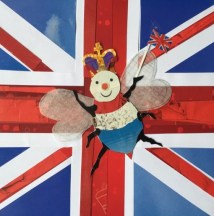 Iona’s books about royalty make perfect follow-up presents for youngsters who’ve been watching proceedings on the television or been involved in parties and activities at school. Here’s Iona to tell us about the books, her writing journey plus she offers some useful tips for publishing illustrated books on Amazon KDP:
It was an unexpected opportunity to write that led me to self-publish my first children’s picture book on Amazon. Isolating with Covid in 2022, I wanted to be productive and so I challenged myself to write a rhyming story about The Queen’s forthcoming Platinum Jubilee. ‘Jubilee Bee’ was born!
I experimented with collage illustrations using paper, card and magazines. I inserted photographs of them into my word document. It proved straightforward to publish this as a Kindle edition. However, I encountered teething problems producing a paperback and made several mistakes. Firstly, I selected an 8 by 6-inch book size and, secondly, I had issues because my word document didn’t convert properly into paperback through the Kindle Kid’s Book Creator.
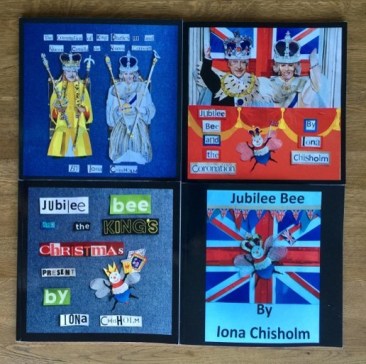
By the time I produced ‘Jubilee Bee and the King’s Christmas Present’, I had learned that an 8.5 inch square book size was best. Further, if I transferred my word document into a PowerPoint presentation with 8.5 inch square slides and saved as a PDF, it converted perfectly into paperback.
I’ve now released my third book, ‘Jubilee Bee and the Coronation’.
 Each storybook I’ve written contains suggested questions and associated facts for children, whilst promoting looking after nature, the earth and each other. The positive feedback that I have received always refers to these features.
I learned recently that Amazon picture books must be fewer than 43 pages to be able to retail at an affordable £5.99 and produce a reasonable profit. I’d done so much work for the Coronation that I ended up with an 87-page document! Therefore, I split it in half and published my fourth book, ‘The Coronation of King Charles III and Queen Camilla, The Queen Consort.’ This non-fiction text contains acrostic poems, illustrated anagram puzzles and journal space to make a personal souvenir. Self-publishing allowed me to quickly utilise all my work and ideas.
I am proud of my writing journey and the progress that I am making. I have now produced a second edition of ‘Jubilee Bee’ in an 8.5 inch size. Holding my set of 4 books in my hand was a real high point!
Wanting to make my family proud and improving with every project really motivates me and I am finding it easier to prioritise writing, dip my toe into social media and integrate into the online writing community where I have felt welcomed, supported and nurtured. Everyone has been so keen to share their experiences and I hope to be able to encourage other newcomers to press that ‘publish my book’ button!
As a mum of four, primary school Governor (with a focus on writing) and keen gardener, I strongly believe in the inspiration and well-being that we can all gain from words and the outside world. Therefore, I aim to promote nature, learning and positivity in whatever I write, whether it be an article for Garden News, a poem, a short story for a woman’s magazine or my next book! In the future, I hope to complete and publish a novel, but must remind myself to take things one step at a time….
Find out more about Iona at www.ionachisholm.co.uk or follow her on Instagram Ionachisholm01 for gardening and writing posts!
Bits and Pieces plus a Bookish Competition
Posted by Sally Jenkins in Authors, Books, Competitions on April 11, 2023
I’m writing this in a coffee shop (hence the picture!) and there are a few things to share with you this time (not counting my excitement about this, which happens in exactly a fortnight).
Firstly, I recently heard from a writing acquaintance of mine in South Africa, Arnie Witkin, who has featured on this blog before. Arnie self-published It’s not a Big Thing in Life a couple of years ago. It’s full of interesting life lessons and was written originally for his teenage grandchildren, but the project mushroomed. Initially sales were slow but Arnie contacted me to let me know that The Western Cape Education Department is now distributing his book to each of its 6,000 Life Orientation teachers in the province. Life Orientation is a compulsory subject in schools in South Africa. Which just goes to show that, in this writing life, you never know what is just around the corner. And the only way to find out is to put yourself out there and give things a try!
Secondly, I have a couple of books to recommend. In my book group we’ve just read A Handful of Dust by Evelyn Waugh. It’s the first Waugh that I’ve read and I was pleasantly surprised. It was written in the 1930s and is very easy to read. It contains both humour and darker moments. But the most interesting thing about it is the ending, which comes across as completely out of synch with the rest of the book. Further research indicates that Waugh took an earlier short story and simply appended it to form the ending of the novel (incidentally the short story is reputed to have given Stephen King the idea for his novel, Misery) but the serialisation of the novel has a completely different, tamer ending. I find writing endings extremely difficult – maybe I’m in good company and Waugh did too!
The second book is The Dictionary of Lost Words by Pip Williams. It’s one of those books where you get lost in the story but learn something new too – such as the origin of ‘bumf’ – a handful of paper used as ‘bum fodder’ in WWI in the absence of toilet paper. Set in the early twentieth century it’s a fictionalised account of the publication of the first Oxford English Dictionary. Well worth a read.
Thirdly, the 2023 Marlborough Literature Festival Love Books Competition has just opened for entries. You have until Friday June 30th 2023 to submit up to 750 words about a book that you love and would recommend to others. The winner in each age group (includes adults) receives £300 and the runner-up in each age group will receive £100.
Finally, I have reached the heady heights of being interviewed by the lovely people at The Bookshelf Cafe!
And that’s it for now. Happy reading and writing!
How to Write a Novel Series by Anni Rose
Posted by Sally Jenkins in Authors, Books, Writing on March 3, 2023
Series of novels are loved by both publishers and readers. On the commercial side they build brand loyalty and returning customers. For readers they offer the chance to spend longer with favourite characters and are a pain free way to choose books without gambling on a new author or standalone novel. Anni Rose is a master of series writing. Her latest book, Recipe for Mr Ideal, is book 4 in her Recipes for Life series and is published by ChocLit. It can also be read as a standalone novel. I’m delighted that Anni has agreed to share some of her writing wisdom with us today.
Thank you, Sally, for inviting me onto your blog today to give advice on something I really enjoy: writing a series of novels.
In my opinion, there are two areas that series writers need to be aware of before they get stuck in: organisation and characters.
Organisation
I use Plottr software to help me plan a book. It has some really useful templates and I like being able to assign characters and places to as many books as I want and keep notes of important details. I remember reading a series of books by one author and being amazed by how often details changed. I am sure I don’t always get it right, but hopefully there are not too many inconsistencies.
However, I don’t find it easy to write in Plottr, so I export everything to Scrivener then Word. Word is the writing program I’m most used to, but when I’ve finished a section I post it into Scrivener as well, because I like being able to move scenes and chapters around and see, at a glance, different points of view etc. and how many words there are in each section or chapter. Scrivener keeps the technical side of my brain happy.
I like to include little details from a variety of sources. When I’m out and about I might hear or see something and must make a note of it there and then in case I forget, but this does mean my notes can be in more than one format and place, so once a week I try and sit down and sort them all out in various lists or link them to a character or place. If I don’t then months later, I come across maybe a sentence and can’t remember why it seemed important at the time.
 Characters
What I love most about writing a series is getting to know the characters. Writing a series, you are developing long term relationships with them. Often you find someone you thought to be a minor character in one novel, has a much bigger story that you have to tell later on.
The hardest job for me is deciding on character names. I try to pick names which fit with the characters I’m writing about, because I have to feel comfortable with their name before I can begin to make them come alive. I use local towns as inspiration for surnames – an idea I stole from J K Rowling.
Pay attention to ages. If you’re writing a series, then it stands to reason it’s going to be over a period. Sadly, they will age. It happens to us all. How many times have you read a series and the main character stays at the same age for many books. I give my characters a date of birth rather than a specific age. That helps with music choices, events in their lives etc.
Having said all that my current work in progress has two of the minor characters who have appeared before in the series and have very similar names to two, who were minor characters in a more recent book but now feature quite heavily in this one – there was nothing else for it, I had to send them off on a cruise. They’re having a ball and will be back!
Thank you, Anni, for some great advice. Now let’s find out more about your latest release and you!
Recipe for Mr Ideal
Would you settle for Mr Less-Than-Ideal for a chance at happily-ever-after?
Registrar Maddie Winter has overseen enough weddings to know that marriage is not just for Christmas (or Valentine’s Day) – it’s for life, and regardless of whether the ceremony involves specially trained owls, dinosaurs or the police, it should be only the beginning of a story that will end in happily-ever-after.
Saying that, Maddie’s own married life is far from perfect – her husband, David, is more interested in his phone than in her, and when he suddenly walks out, Maddie’s long-held beliefs are put to the test.
Except Maddie knows David was never really her ‘Mr Ideal’; that was sweet, funny, motorbike-riding Josh Diamond – although obviously not that ideal, as he did dump her to move to the States. Even so, when Josh unexpectedly rides back into town, Maddie begins to wonder whether her happily-ever-after could still be to come …
Book 4 in the Recipes for Life series but can be read as a standalone novel. It is available on Amazon, Barnes and Noble, Apple Books, Kobo and Google.
About Anni Rose
Born and raised in Berkshire, Anni emigrated to Wiltshire six years ago, where she lives with her husband, sister and two dogs.
As a child, she could usually be found either reading or writing fiction, producing reams of stories over the years.
On leaving school, the need to earn a living sort of got in the way and her writing was limited to financial reports or employees’ handbooks, but a local writing course and an encouraging group of writing friends re-ignited the fiction flame many years later and Anni went on to have several short stories published in various magazines.
Anni would describe her writing these days as mainly modern romantic stories with a healthy dollop of humour thrown in. Away from writing Anni can usually be found behind a camera, walking the dogs, enjoying one of her husband’s curries or one of her sister’s bakery treats.
You can catch up with Anni on her website www.anniroseauthor.co.uk, on
Twitter – @AnniRoseAuthor, or on her Facebook page – https://www.facebook.com/anniroseauthor

Marie Laval’s Top 6 Writing Tips
Posted by Sally Jenkins in Authors, Books, Writing on February 16, 2023
I am delighted to have Marie Laval as a guest on my blog today. Marie is published by Choc Lit and writes both contemporary and historical romance. In 2021 she was shortlisted for the RNA Jackie Collins Romantic Suspense Award. She has kindly agreed to share with us her top six writing tips. Over to Marie:
Thank you so much for welcoming me on your blog today to share with you my writing tips. Every writer is different and I don’t pretend that my tips will suit everybody, but they have worked well for me so far. So here we go! 
- Write every day, even if it’s only a few lines. I know it’s not always possible, and I have myself found it extremely hard over the past year and a half and my writing has suffered. I try to scribble something about the story or the characters on a notebook before going to bed if I haven’t had the chance to do any ‘proper writing’ during the day.
- Be completely in love with your hero. It may sound corny, but you are going to be spending many hours with that person, so it is essential to feel a connection to him!
- If like me, you don’t plan a lot, you should at least work out what the motivations of the main characters are before you start so that you understand why they behave the way they do.
- Research the setting well, or even better, visit the locations in order to experience the landscapes, the colours and the smells so that when you describe them the readers feel they are actually there with the characters. It’s not always possible to travel, of course, but there are brilliant videos on YouTube, such as walking tours of a town or a historic building which can help you get a good feel for the place.
- Be patient. Sometimes you get stuck but things always work out in the end. Go for a walk and talk to yourself aloud to experiment with dialogue, even if it makes you look a bit silly.
- Be kind to yourself. Sometimes we judge our writing far too harshly, or we take a critical review to heart and feel discouraged and ready to give up. I love writing. It helps me escape from daily worries and it brings me a lot of joy. And that’s what matters in the end.
Marie’s latest book, Captured by a Scottish Lord, was published last month and sounds intriguing:
 Can a Desert Rose survive a Scottish winter?
The wild Scottish landscape is a far cry from Rose Saintclair’s Saharan oasis, although she’ll endure it for Lord Cameron McRae, the man she married after a whirlwind romance in Algiers. But when stormy weather leads to Rose’s Scotland-bound ship docking on Cape Wrath – the land of Cameron’s enemy, Bruce McGunn – could her new life already be in jeopardy?
Lord McGunn was a fearless soldier, but his experiences have made him as unforgiving as the land he presides over. He knows McRae won’t rest until he owns Wrath, and the man is willing to use brutal tactics. Bruce decides that he’ll play McRae at his own game, take the ship and its precious occupant, and hold them hostage.
Rose is determined to escape, but whilst captured she learns that there’s another side to her new husband – and could her supposedly cold and ruthless kidnapper also be concealing hidden depths?
CAPTURED BY A SCOTTISH LORD is available on Amazon and Kobo and other platforms.
About the author
Originally from Lyon in France, Marie now lives in Lancashire and writes historical and contemporary romance.  Best-selling LITTLE PINKTAXI was her debut romantic comedy novel with Choc Lit. A PARIS FAIRY TALE was published in July 2019, followed by BLUEBELL’S CHRISTMAS MAGIC in November 2019 and bestselling romantic suspense ESCAPE TO THE LITTLE CHATEAU which was shortlisted for the 2021 RNA Jackie Collins Romantic Suspense Award. Marie’s historical romances, ANGEL OF THE LOST TREASURE, QUEEN OF THE DESERT and CAPTURED BY A SCOTTISH LORD, all feature members of the Saintclair family and her short stories are published in the bestselling Miss Moonshine anthologies. Marie is a member of the Romantic Novelists Association and the Society of Authors, and her novels are available as paperbacks, ebooks and audiobooks on Amazon and various other platforms.
Researching the Past
Posted by Sally Jenkins in Authors, Books, Resources on February 9, 2023
I am delighted to have Choc Lit novelist, Victoria Cornwall, with me today, sharing research secrets from her new WWII novel, Waiting for Our Rainbow. Over to Victoria:
I have an interest in WW2, so researching for my latest release, Waiting For Our Rainbow, was particularly fascinating. From 1942, thousands of American soldiers began arriving in England, many of whom ended up in Cornwall. Who were these men? Where did they come from? What did they do while they were here?

Victoria Cornwall
My research began on the internet. I discovered it was the 29th Infantry Division who came to Cornwall, which gave me a starting point. Through Facebook and dedicated websites, I contacted several historians who were experts on the division and the training they undertook after their arrival in England. They answered many of my questions and provided me with lots of information. I also came across the US government’s advice booklet they issued to their soldiers to help them with the cultural differences they would face on their arrival to England.
I’d grown up knowing African American soldiers were also billeted to Cornwall. What role did they play? Why were their camps separate from the combat soldiers’ camps? I was concerned about writing this part of the novel because at the time racial tensions were particularly high. I could not ignore the important role they played, but I knew that if I wrote about it I wanted to remain true to the era and dialogue without contemporary attitudes and pressures making me water it down. Fortunately, I came across a collection of video interviews, where African American veterans recalled their experience of joining the army, the segregation they faced and their frustrations at not being given combat roles at the beginning. There is a pivotal scene in Waiting For Our Rainbow, where a small group of African American soldiers notice Joe, a white soldier, entering their encampment. The scene and dialogue that follows were inspired by those veterans’ memories and experiences.
Next was the local community… how did they feel about American soldiers invading their county? I was able to talk to some people who were there at the time, but I also read archived newspaper articles and a couple of childhood memoirs which were extremely helpful. I also read the BBC’s online memory collection, WW2 Peoples War, which is a brilliant resource.
My final research was to visit some of the places. Fortunately, I live in Cornwall so it was easy for me to do. It was a humbling experience to stand in the same places where American soldiers had once stood. They were young men, many with little to no experience of combat but, along with British and Canadian soldiers, they took part in the largest amphibious military assault in history – but they could not have done it without the help, knowledge and support of many others. Also taking part in the success of D Day were sailors, soldiers and airmen from Australia, Belgium, Czechoslovakia, France, Greece, the Netherlands, New Zealand, Norway, Poland and others. In addition, the skills of meteorologists, scientists, inventors and the French Resistance were used during its planning and implementation.
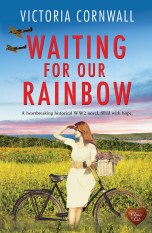 Waiting For Our Rainbow concentrates on Joe, an American soldier, and Anne, a young Cornish woman. Ultimately it is a normal romance between a man and a woman, yet it is set at a pivotal time in the history of the war that would affect their romance, the decisions they make and the course of their lives for decades to come.
Waiting For Our Rainbow was released as an Ebook on 31st January, 2023. A paperback and audio version will follow shortly afterwards.
About Victoria Cornwall
Victoria grew up on a farm in Cornwall and is married with two grown up children and three grandchildren. She likes to read and write historical romance with a strong background story, but at its heart is the unmistakable emotion, even pain, of loving someone.
Her books have reached the finals of the NEW TALENT AWARD at the Festival of Romantic Fiction, the RNA’s JOAN HESSAYON AWARD, the 2021 RNA’s Goldsboro Books HISTORICAL ROMANTIC NOVEL AWARD. Her books have also been twice nominated for the RONE Best Indie or Small Published Book Award by InD’tale magazine.
She is a member of the Romantic Novelists’ Association.
Find Victoria on her website, Twitter, Facebook, Instagram, YouTube and Pinterest.
About Waiting For Our Rainbow
Would you give your heart away if you knew it could only end in goodbye?
It should have been a time of romance and excitement for Anne – but it’s 1941 and the war is raging. So instead, she spends her days repairing spitfire wings and reminding herself that the real sacrifice is going on far away from her Cornish village.
When the news breaks that America has entered the war, it brings cautious hope to Anne and her family. And eventually, as the Jeeps filled with GIs roll in, it seems their little community is to play a pivotal role in the next stage of the fight.
But the Americans don’t just bring Hollywood glamour and optimism, they also bring something more tantalising – so when Anne meets handsome Joe Mallory, she has to remind herself of exactly why he’s there; that any relationship between them could only end in goodbye.
But is the inevitability of ‘goodbye’ powerful enough to stop what has already begun to blossom?
Buying Links:
Amazon UK
Amazon US
Kobo
Nook
iBook
Google Play
-
You are currently browsing the archives for the Authors category.
 Sally Jenkins