Archive for category Events
West Country Writers’ Association Annual Congress
Posted by Sally Jenkins in Competitions, Events, Successes on December 7, 2010
I heard today that I’ve been awarded a bursary to attend the West Country Writers’ Association 2011 Annual Congress in Plymouth next April! Two nights and three days away from home to indulge in all things literary – I can’t wait. Speakers include Jean Saunders, Rachel Billington and Rebecca Tope.
Applicants for the bursary had to write a letter outlining their literary achievements so far, their hopes for the future and why they would like to attend the Congress.
If you fancy joining me, the Association is also running a short story competition with a first prize of £50 and 24 hours at the Congress. Stories can be on any theme but must include the word ‘Dartmoor’ and be less than 1200 words. The closing date is 12th December and entry is only open to those with no more than two short stories professionally published. Full details are here.
Diversify, urges Graham Joyce
Posted by Sally Jenkins in Authors, Events, Writing on December 1, 2010
Novelist, Graham Joyce, gave the closing address at this year’s Birmingham Writers’ Toolkit event. 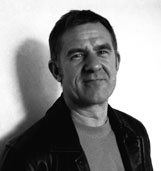 He stressed the need for writers today to have several streams of income, especially as publishing is moving away from traditional books towards e-publishing. He suggested the following areas from which writers could source their income:
- The traditional advance on a book – however this type of payment is becoming smaller and less common
- Digital downloads – writers can sell their own work directly via their website thus bypassing publishers
- Teaching creative and other types of writing
- Performing their work
- Giving talks – schools love writers to come into the classroom or try the after dinner/lunch circuit
- Writing non-fiction
- Screen development of their work – funding is often available for this (although not for actually producing the film)
- On-line drama – ‘Kate Modern’, which was linked to BeBo, is an example of this type of drama which can be simply filmed by the author
- Computer games – these now require more narrative and emotional content. Farmville is an example of this and,surprisingly, the average player is a 47-year-old female.
By diversifying and marketing themselves and their work independently, writers can continue to work even if the fickle publishing world turns against them.
It is worth taking note of this if you are trying to build up a writing career. It shows that it may be possible to earn a living as a writer without being picked up by a major publisher – if you are willing to think laterally, become digital savvy and go out there and sell yourself.
Real Writing Lives
Posted by Sally Jenkins in Authors, Events, Writing on November 23, 2010

Image via Wikipedia
There are as many different methods of writing as there are writers. There is no ‘special’ method that brings fame and fortune with it – we all have to find our own way of creating literary masterpieces whilst paying the mortgage.
At the annual Writers’ Toolkit event in Birmingham, three writers gave an insight into their working days.
Jo Bell is a poet but most of her days are filled with other activities to keep the wolf from the door. Amongst other things, she is a freelance organiser of literary events, teaches creative writing, gives readings and does book promotions. When Jo checked her diary, she had only 3 days in the next fortnight available for actual writing.
She wisely told us that we shouldn’t look upon the essential but non-writing stuff in our lives as an obstacle to being creative – instead it should be seen as something that enables the writing to happen.
Jo also advised, “Work out what you want to do and then go out and find it. This might mean knocking on doors and suggesting workshops or offering yourself as a writer in residence. Above all, make sure you get paid because otherwise you devalue Writing as a whole.”
Mike Gayle is a full-time novelist but doesn’t believe that having all the time in the world is an effective way of writing. He wrote his first book whilst still earning his living elsewhere and looked forward to his snatched periods of writing time.
“But as a full-time writer I found there was a tendency to take a whole afternoon to eke out one paragraph,” he explained, “and it’s easy to feel removed from the real world and ordinary people. This means there’s no ready raw material to feed the fiction.”
Having discovered he’s a morning person, Mike now squeezes his writing day into 9am – 1:30pm, giving himself a structure within which to work.
Chris McCabe writes novels under the pseudonyms John Macken and John McCabe. He is also a full-time Professor of Molecular Endocrinology at the University of Birmingham. He writes during his lunch hour and from 8:30 – 10:00 in the evening. He has no time for writers’ block and has to make the most of every minute.
Chris did try taking a year out from his ‘proper’ job to concentrate on writing but it didn’t work for him.
“Even though I hate gardening I found myself doing it to avoid having to write,” he said. “I need a time a shortage to get me going.”
So, giving up the day job and writing full-time might not be the best option. Most people need a little bit of time pressure to make them effective and we all need outside stimuli to feed our work.
Today’s writing prompt is:
A Last Will and Testament – who inherits what is up to your imagination.
P.S. If you fancy winning a great bundle of writing books, nip over to my writing buddy Helen’s blog and enter her (very easy) competition.
RNA New Writers’ Scheme
Posted by Sally Jenkins in Events, Writing on November 13, 2010
I’ve just come back from a meeting of the Birmingham Chapter of the Romantic Novelists’ Association. We get together every three months at the Edwardian Tea Rooms in the Birmingham Museum and Art Gallery for lunch and a chat  about writing in general and romance writing in particular.
I joined the RNA at the beginning of 2010 through its New Writers Scheme, which provides unpublished authors with a comprehensive report on a full-length romance novel. The report covers characters, plot and the suitability of the novel for its intended audience. This scheme has a limit of 250 places and opens for applications at the beginning of January each year (but you do have until the end of August to submit your manuscript). The scheme is usually full within a month – so you have to be quick off the mark!
My novel came out of this very badly but nevertheless it was money well spent. The following points came out of the detailed critque:
- Aim at a readership that you can identify with – it’s hard to write to chick-lit for 20-somethings when you’re old enough to be their mother!
- Get to know your characters before you start writing – my heroine had many inconsistencies in the way she acted, leaving it difficult for the reader to care about her at all
- Work out the plot in detail, again before you start writing, mine had as many holes as a seive
- Only include scenes that move the story on otherwise the book becomes dull
Don’t submit to the New Writers’ Scheme if you’re afraid of criticism – parts of my report were quite brutal. Recognise the report you receive for what it is – an attempt to help you become a better writer and that can’t be done without honestly telling you if your novel is bad.
Of course not everyone’s work is as bad as mine! Anne, who I met at lunchtime, was given some useful advice about giving her 1950s heroine more oomph and she is now working to improve her book. About 5% of manuscripts submitted to the scheme are judged worthy of a second reading and may then get sent on to an agent.
If you decide to submit – Good Luck! and remember, contrary to popular belief romance writing is not easy.
Today’s writing prompt: Easter Egg (not very seasonable now but remember if you’re writing for publication, magazines work several months in advance).

Iain McDowall
Posted by Sally Jenkins in Authors, Events on November 6, 2010
This week I went to listen to the crime writer, Iain McDowall, speak at my local library.
“Most writers hate writing,” he said.
Iain then went on to explain how we, as writers, have a vision in our head of the book that we want to get down on paper but very rarely succeed in recreating this perfect vision in words. Therefore many of us have a reluctance to actually start the writing process because of this near impossibility of getting things down on paper exactly as we want them.
I found it a great relief to know that I am not the only one who puts off working on my ideas because I’m scared that they’ll crumble into nothing when I start trying to put them into words.
Iain has been a full-time writer for several years, has published six crime novels and is now working on his seventh.
“Writing for a living is much harder than my previous jobs,” Iain explained. “It’s more stressful and uncertain. I don’t recommend it.”
Iain’s novels centre on the fictional town of Crowby, which is located somewhere in the Midlands. His detectives are Frank Jacobson and Ian Kerr. The crimes that these two men investigate are either real (with the details heavily disguised) or they are crimes that could conceivably happen. Iain doesn’t go in for manic cannibalistic serial killers because he wants his books to be about life as it is. He’d like to think that in years to come his work might offer a window on to the world as it was at the beginning of the 21st century.
Writing crime requires research and in his early days as an author Iain used a contact in the police force to get the information that he needed for his books. He still keeps up to date with new developments in forensic science etc. and much of this is now available on the internet. However, he stressed that very little of his research ends up in his books but it does give him the ability to write confidently.
“I don’t follow police procedure to the letter,” Iain went on. “If I did the book would be very boring because everything would take too long. Sometimes I make the procedure up.”
Iain gave some final words of advice for wannabe authors:
“You should always write for money and treat it like a proper job.”
-
You are currently browsing the archives for the Events category.
 Sally Jenkins

