Archive for category Markets
Call for Royal Wedding Submissions
Posted by Sally Jenkins in Competitions, Markets on April 21, 2011

Image via Wikipedia
Louise Gibney is compiling an anthology of pieces about royal weddings. It might be about how you celebrate William and Kate’s nuptials at the end of this month or your thoughts about the event. Alternatively recollections about previous royal weddings are welcome. Can you remember what you were doing in 1981 when Charles and Diana got married or were you around in 1947 when the Queen and Prince Philip tied the knot? Did you have a street party or watch all the excitement on a brand new TV bought especially for the occasion?
I remember watching the wedding of Prince Andrew and Sarah Ferguson through the window of a television showroom in my lunch hour from work (no bank holiday for them!) and when William’s parents got married I was part of a band that rang a quarter peal on our local church bells to mark the occasion.
Proceeds from the anthology will go to UNICEF and all successful entrants will receive a copy of the book.
Entries should be between 500 and 2,000 words, double-spaced in 12 point, typed in a Word document. Don’t forget to include your name, address, telephone number and email.
Post your submission to:
Louise Gibney
100 Avenue Road
Winslow
Bucks.
MK18 3DB
or email: louisegibney88@hotmail.com
Closing date is 29th June 2011.
Alternatively, if you’re a poet (and can work to a tight deadline) have a look at the Royal Wedding sonnet competition mentioned on Helen Yendall’s blog.
Some Good News
Posted by Sally Jenkins in Markets, Successes on April 11, 2011

Image by Goxxy via Flickr
Acceptances seem like buses – you go for ages without any and then several come along at once.
Over the last few months I’ve been submitting stuff into a big black hole with every editor ignoring me. However, patience and perseverance has paid off and in the last couple of weeks I’ve had a handful of positive responses. So I’m feeling good!
Articles have been easier to place than fiction (not surprising when you think how many more markets there are for features compared to short stories) and the turnaround is quicker too.
These are the publications that have recently accepted my work – they’re wide open to all writers so why not give them a go?
- The Weekly News – I have a short story in the April 9th issue (in the shops now!) and have previously posted here about writing for them.
- Writers Forum
- Freelance Market News – this is available on subscription only and comes from the Writers’ Bureau stable
- Work Your Way – this is a brand new magazine aimed at entrepreneurial mums (incidentally I found this market through a lead in Writing Magazine).
Olympic Storytellers Wanted
Posted by Sally Jenkins in Competitions, Events, Markets on March 24, 2011

Image via Wikipedia
BT is searching for people to become the storytellers of the London 2012 Olympic Games. During the 12 months leading up to the Games those chosen will capture and record what London 2012 means to them and the wider British public. Applicants may have a direct connection with the Games or simply be an enthusiastic observer.
They are looking for bloggers, social networkers, creative writers, poets, film-makers, photographers, musicians, journalists, artists etc etc – in fact anyone with a creative leaning and an interest in recording the build-up to and the events of both the Olympic Games and the Paralympics. Your creative output might focus on a personal experience or something in your locality or the national build-up.
I should say at this point that there is no mention of any payment. However, the announcement does say that there will be:
“the chance for our storytellers to experience the excitement that’s already building around London 2012. You’ll be able to attend sporting and cultural events, and meet some of the people who are directly involved, from athletes to celebrities. In addition, BT will be aiming to showcase some of your work online and even in the media.”
I don’t know exactly what this means but it sounds to me like a great way of getting involved in a once in a lifetime event and I’ve already got my application in.
Apply on-line here. There is a very simple form to complete but you do have to state in 100 words why you would like to be considered as a storyteller. Those chosen will be informed by the 26th July 2011.
Bits & Pieces
Posted by Sally Jenkins in Competitions, Events, Markets, Successes on February 28, 2011
I’ve got a few bits and pieces that might be of interest:
- Lois Maddox has dropped me a line about two weekend creative writing courses that she is organising. They are both aimed at all levels of writing ability and take place at Swanwick in Derbyshire. The first is ‘From Memories to Memoirs’ . It is led by Alison Chisholm, who will deal with creating a scheme for a life file and selecting a theme or time period to write about. The second is ‘Write Crime’. It is led by retired policeman Nick Oldham and as well as dealing with plot and characters, it will look at setting the scene with up-to-date procedures. Further details are available at www.malagaworkshops.co.uk.
- My Weekly Pocket Novels have upped their required wordage from 30,000 to 50,000. Payment has also gone up from £200 to £300. As some of you may know, I’m having a go at writing one of these as a stepping stone to a ‘proper’ novel. I did have my ten 3,000 word chapters mapped out. So now it’s back to the drawing board to find a subplot or something else to extend (without padding!) the story. Further details here.
- www.writing.ie is a new website, billing itself as ‘the home of Irish writing, online’. The events and courses listed on the site will mainly be of interest to those living in Ireland but there is also loads of free writing advice to be found on writing.ie. under the Writers’ Toolbox tab.
- The Telegraph has launched a short story competition for young writers aged between 16 and 18. It will be judged by John le Carre and the closing date is April 14th 2011. Full details here.
- I have to mention two small personal successes that I found out about last week. Firstly I have short piece about the Festival of Britain in the Cornucopia section of the current (Spring) edition of This England magazine. Secondly I have won the Writers’ Forum subscription that is up for grabs each month to the person sending in the best bit of news for the magazine’s NewsFront page.
- Finally, look out for an extra post on Wednesday – I am taking part in my first ever blogfest.
Short Stories for the Weekly News
Posted by Sally Jenkins in Markets on January 21, 2011
The Weekly News prints three short stories a week. However, it is a market that is sometimes overlooked by writers targeting women’s magazines because it is published in newspaper format and can be difficult to find in the newsagent. I buy my copies in WHSmith or Tescos.
The Weekly News is aimed at a family audience of males and females across all ages. The short stories accepted for publication reflect this. It is not a market for romance or anything too ‘female’ orientated. In an interview for a past issue of Writers’ Forum Jill Finlay, the fiction editor said, “We like funny stories or happy endings but also something slightly darker, edgier – blackmail, the occasional murder – but please, more black humour than shock-you crime.”
Jill is also a fan of twist in the tale endings and topical stories.
Stories range in length from around 800 to 2000 words. They are generally written in the third person and often from a male point of view.
I studied a couple of recent issues and in the first all three stories had a twist ending although they covered different topics:
- A story that appeared to be about a manned mission to Mars turned out to be children playing a game
- A story that appeared to be about a pilot flying a plane turned out to be a man driving to the airport and back in the middle of the night to lull the baby to sleep
- A disgruntled train commuter on her last journey to work before she switched jobs – to Customer Services Manager for the train company.
In the second issue I looked at, twists were popular again:
- A supermarket car park attendant issuing cash fines to customers parking illegally in disabled spaces turns out to be an ordinary woman just pocketing the money for herself
- A lady joins the gym to get fit for her 50th birthday party but hates it. However she does find a keep fit routine that suits her and is able to make a grand entrance to the party – as a belly dancer.
- A lady in bed and unable to sleep yet again because of the noise from the party next door. She finally cracks, gets up and goes to the shed to get something before joining the party – with two bottles of wine.
Some of the plots above may have lost something in my re-telling (apologies to the authors) but you get the idea of the type of thing that Jill Finlay chooses for The Weekly News fiction pages.
Submission is by email only to jfinlay@dcthomson.co.uk. Further detailed guidelines can be found on Womagwriter’s Blog.
And if you’re visiting my blog for the first time, click here for details of my free prize draw.
Improve Your Reader’s Mood
Posted by Sally Jenkins in Books, Competitions, Markets, Writing on January 17, 2011
As you write do you consider how your words will affect your reader’s mood? Will he be uplifted to a better place or left wondering whether or not to slit his throat? 
The Reading Agency and BBC Headroom have worked with reading groups to identify a selection of ‘Mood-busting Books’ that should leave you with a smile. The list includes The Uncommon Reader by Alan Bennett, Cold Comfort Farm by Stella Gibbons, My Family and Other Animals by Gerald Durrell and The No.1 Ladies’ Detective Agency by Alexander McCall Smith.
I think it’s hard to write something that makes a reader a happy. It’s so much easier to make a story out of tragedy or misfortune – after all if everything is going swimmingly for your characters, where’s the conflict that we are told is an essential element of every piece of fiction? A death, divorce or double-dealing fraudster immediately threw up dozens of plot lines but it’s harder to make a compelling piece of fiction out of happy family life. Making your reader feel good is much more of a challenge than making them feel sad.
Judges of short story competitions often complain that there are too few entries that make them smile. Imagine wading through a couple of hundred stories dwelling on the harsher side of life – the one story that can make you laugh and raise your mood must make it to the short list.
So why not read one of the mood-busting books above and then practise some ‘feel-good’ writing – January is dismal enough without making it worse with massive amounts of melodrama.
To get the creative juices flowing, here are a few places to target with your smiley stories and pick-me-up poems:
- The Marple Short Story and Poetry competition is offering a special prize for the best humourous poem submitted
- East of the Web publishes short stories online and has a humour section – unfortunately there is no payment other than a page to publicise yourself, including links to your own blog/website.
- Chicken Soup for the Soul publishes inspirational books, comprising a selection of short pieces on a particular theme designed to encourage, comfort or amuse. They are currently looking for submissions around themes such as weddings, Canada and marriage. The full list is here.
And if you just want something to cheer yourself up during these grey weeks – enter my free prize draw.
Two American Short Story Markets
Posted by Sally Jenkins in Competitions, Markets, Writing on January 13, 2011

Image via Wikipedia
The beauty of the internet is that it brings the world into our living-rooms. We can target markets across the globe without worrying about the cost of international postage and how to include a stamped addressed envelope for a reply.
Here are two American websites to which I’ve submitted work:
- Long and Short Reviews specialises in romantic fiction. Their main function is to review full-length novels, however every Thursday they publish a short story. Stories must be between 1000 and 1500 words and contain a strong romantic element and a ‘happy ever after’ or at least ‘hopefully happy ever after’ ending. Payment is minimal ($5 plus a free 1 month advert if you have a book that you want to promote) but they include a short biography with each story in which you can include your website/blog. Full submission details are here. I submitted a story originally written for the UK women’s magazine market. It had done the rounds here without success but I didn’t want to consign it indefinitely to my desk drawer. The story is available to read here on the Long and Short Reviews site. By the way Long and Short Reviews has a sister site, Whipped Cream, that deals with erotic fiction – so don’t be shocked if you see that mentioned in the submission guidelines on the site!
- The second market is a regular competition organised on the Readingwriters site. Each competition has a different theme and varying word count so you need to check the current requirements. I like these competitions because they are free to enter but offer a $100 prize and the judging procedure allows you to see how near (or otherwise) you were to winning. The stories that got through the first round of judging are listed on the website, then a bit later those that got through the second round of judging and finally the winner’s name plus ‘honourable mentions’ are published. The winning story is posted on the site along with a critique by the judge.
So why not send your work across the pond and see if you can make it big in the US!
Failing that, sign up for email updates to this blog and enter the prize draw for a set of Stieg Larsson books. For details, click here.
Become a Weekend Writer
Posted by Sally Jenkins in Markets, Successes, Writing on January 6, 2011

Image via Wikipedia
If you’d like to get published in the weekend newspapers have a look at my article in the February 2011 edition of Writing Magazine.
It’s extremely difficult to get a feature in one of the weekend nationals unless you have a well-established track record in journalism. However, many of the papers have ‘filler’ slots and actively ask for people to fill them. To list just a few:
- Confessions of a Tourist in the Sunday Times
- What I’m Really Thinking in the Saturday Guardian
- Just Back in the Saturday Telegraph (which I seem to have missed out of the article)
There’s also the letters’ pages to consider (the tabloids tend to pay whilst the broadsheets don’t) and have a look at your local regional weekend papers – these are often easier to break into than the nationals, especially if you have a story with local human interest.
As always market research is the key to success with any of these markets – buy and read several issues before you submit. It’s essential to get the tone and content of your piece just right.
If you’d like to know more about this area of writing then have a look at the full article in Writing Magazine.
Don’t forget the prize draw running on this blog at the moment, click here for more details. If you’ve already entered and haven’t received your confirmation email, please check your spam folder.
This England
Posted by Sally Jenkins in Markets, Writing on December 6, 2010
Many years ago when I was starting out on my writing career I did a correspondence course with The Writers’ Bureau. For one of my first assignments I wrote a short article about Birmingham Botanical Gardens and my tutor suggested I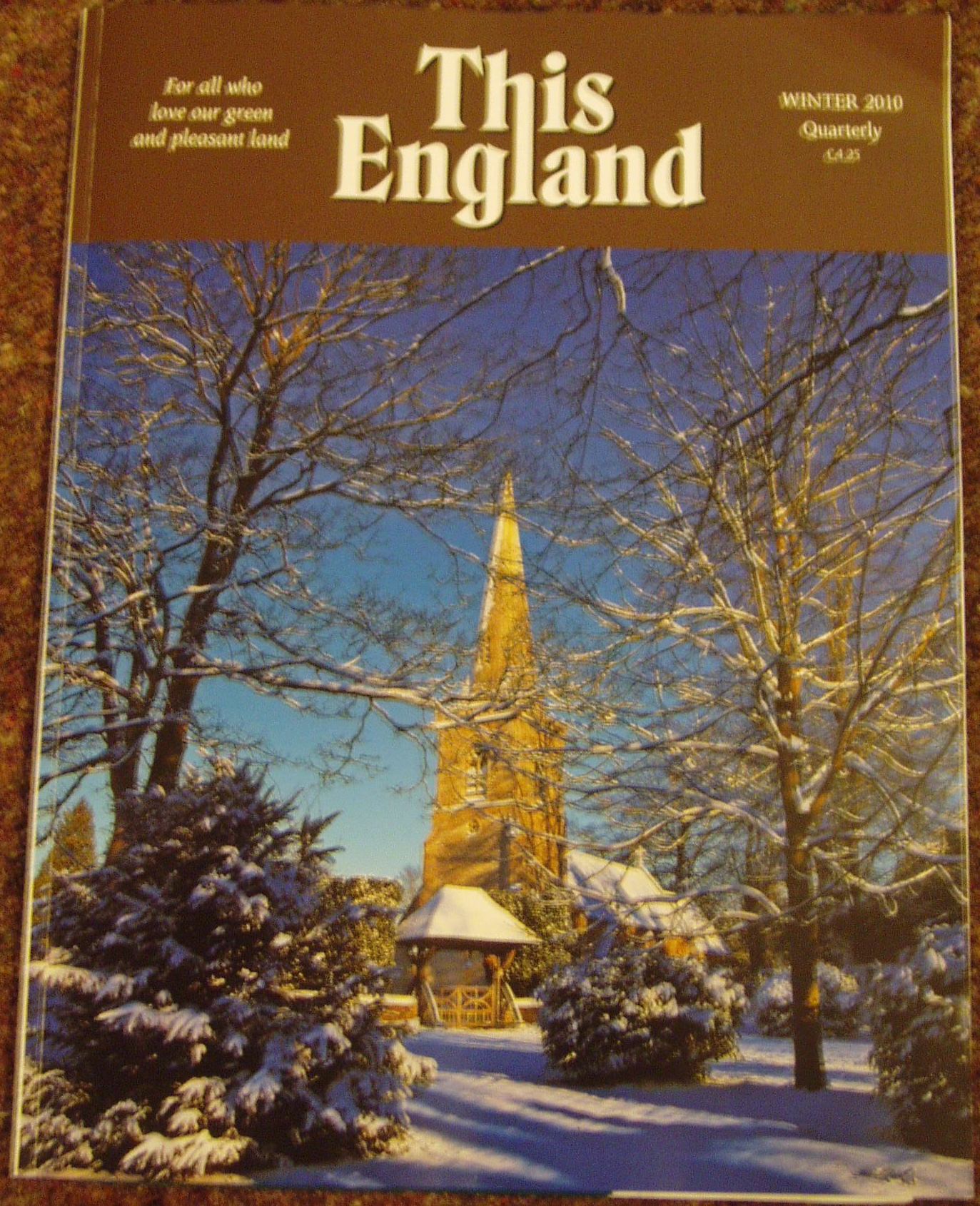 send it to This England. I did and they published it in their Cornucopia section. I got paid and felt like a real writer.
This is a good market to aim for if you want to have a go at non-fiction writing.
This England is a glossy, quarterly magazine for “all who love our green and pleasant land.” It contains illustrated articles on English history, traditions and towns and is “read by two million patriots all over the world”.
The Cornucopia section consists of several short pieces, some written in house and some supplied by freelances. They range in length from around 250 to 400 words and cover topics such as the centenary of a Brighton cinema, Digswell Lake near Welwyn Garden City and recyling at Chatsworth House. I’ve found that the easiest pieces to get accepted are those based on an anniversary of some kind, e.g. 50 years since the birth of X, 75 years since building Y was opened.
The magazine’s Guide for Contributors states that articles should be “about our country’s people and places – its natural beauty, towns and villages, traditions, odd customs, legends, folklore, surviving crafts, etc. ” Short poems (6 to 24 lines) that are meaningful rather than clever are also accepted.
The best way of getting a feel for the style and content of the magazine is get hold of a copy (it is available in WH Smith and other good newsagents).
Submit your article (with an SAE) to:
The Editor (MSS)
This England
P.O. Box 52
Cheltenham
Glos.
GL50 1YQ
Material related to a particular date or season should be sent at least 6 months in advance. A decision on work submitted can take up to 3 months and be warned if you chase the fate of your piece before the full 3 months has elapsed, the Guide says “Material is invariably returned without further consideration to an over-zealous contributor.”
Payment is £25 per 1,000 words plus a contributor’s copy of the magazine.
Letters to the Editor
Posted by Sally Jenkins in Markets, Successes, Writing on November 19, 2010
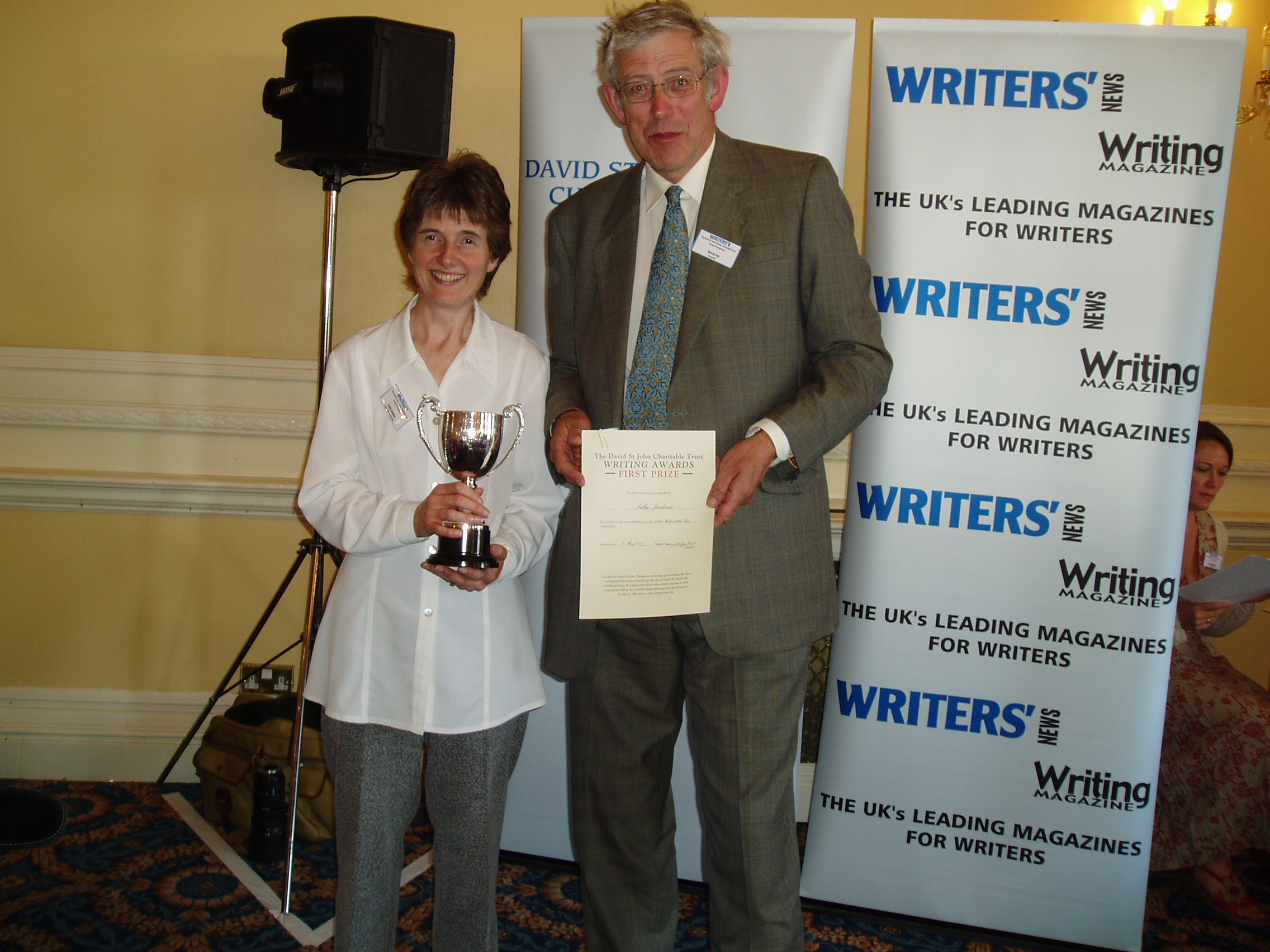
Receiving My Only Silver Cup Ever!
Writing letters for publication is one of the quickest (and easiest) ways of getting your name in print and there’s often a cash payment or other prize if you’re successful.
In 2007 I was the David St John Thomas Charitable Trust Letter Writer of the Year (unfortunately this particular award is no more). To win I had to provide a portfolio of letters that I’d had published over the previous 12 months and in the course of putting this together I picked up several tips for getting in to print:
- Be concise – usually the shorter the letter the better
- Study the publication – look at the letters already chosen for publication and use these as your template. Mimic their language and sentence structure. Take note of their subject matter – are they funny family anecdotes or intelligent comments on past features in the magazine.
- Say thank you – magazines like positive feedback so tell them if an article they published has helped or inspired you in some way
- Include a photograph – women’s magazines in particular use pictures of their readers, so including one will increase your chance of publication
- Don’t duplicate your letters – as with short stories and features, don’t send the same letter to two different publications. Letters must be ‘exclusive’.
- Target a variety of magazines – if you write too often to the same publication your name may go on a ‘banned’ list because readers complain if the same name continually appears. Once a letter is accepted, leave a gap before writing again.
- Be quick off the mark – if you’re commenting on something that’s appeared in the magazine, email your letter ASAP so that it can be printed in the next or second issue.
- Keep records – if a letter hasn’t appeared in print after several months and it’s content is not magazine specific, try sending it somewhere else.
There is a ‘How To’ article of mine covering this topic here.
Today’s writing prompt follows on from the theme of letters and is:
A sealed envelope

Photo courtesy of Oliver Gruener, Germany.
-
You are currently browsing the archives for the Markets category.
 Sally Jenkins