Archive for category Short Story
Two Free Writing Competitions
Posted by Sally Jenkins in Competitions, Poetry, Short Story on August 16, 2022
Thank goodness the heatwave in the UK is diminishing. It seemed to sap all my energy and brain power. As I cool down, my thoughts are getting back into some sort of order and I’ve found two free competitions with generous cash prizes. They might be worth a try if you’re feeling creative.
The inaugural Patricia Eschen Prize for Poetry 2022 is open for entries.
Poems can be on any subject, up to a maximum length of 40 lines. Entry is free and limited to one entry per person. First prize is a massive £1,000, second prize is £500 and third prize is £300.
Closing date is Friday 30th September 2022.
The Secret Life of Data Short Story Competition is being run by Bristol University. The website says, “this secret life of data – the traces, bits, and fragments of personal information that we leave behind us online – is the focus of this short story competition.”
Maximum word count is 4,000 and any style or genre is acceptable. Prizes are: 1st – £1000, 2nd – £500, 3rd – £250. The ten shortlisted stories will be published in the Secret Life of Data Anthology in both print and ebook formats plus there will be an Awards Ceremony in Bristol.
Closing date 9am (BST) Monday 12th September 2022 and entry is free.
This timid little fellow belonging to one of our neighbours didn’t like the heat either and flaked out in any shade he could find. 
‘Clean vs Green’ – Free Short Story Competition
Posted by Sally Jenkins in Competitions, Short Story on June 1, 2022
Green Stories Writing Competitions want your stories on the theme ‘Clean versus Green’. 
The competition is looking for an engaging fictional story which will help readers understand how over-cleaning and misinformation about bacteria can mean that we can end up killing our bodies’ ‘good’ bacteria through over-use of harsh cleaning products.
To help you get started there are story ideas on the website plus a free virtual writing workshop on June 6th, to which you can take your draft stories for early feedback. Attendance at the workshop is not a prerequisite of entry.
First prize is £500.
Entry is FREE. Stories must be between 1000 and 3000 words and the story can be in any genre. Closing date is 21st July 2022.
As always, please make sure you read all the rules before entering.
Librarian Stories Wanted
Posted by Sally Jenkins in Competitions, Markets, Short Story on May 10, 2022
This is a bit of an unusual call for stories but it caught my eye because I’ve been working as a library assistant since last October.

16211412 © Grahamtaylor | Dreamstime.com
Air and Nothingness Press want short stories about a librarian for their upcoming anthology which will have the title ‘The Librarian’. However, the stories must be about a very specific librarian who, “… travels the multiverse (along the timeline – past through the future – and across planetary systems and universes) helping out people, societies, and those in need, with their questions, problems, and research (as librarians do).” The stories should be positive and hopeful and have narratives that celebrate librarians.
There’s lots more information about the requirements on the Air and Nothingness Press website.
The closing date for submissions is June 30 2022. Selected stories will be paid for at the rate of 8 cents per word and authors will also receive one print copy of the anthology.
The cookie picture was just to get your attention. Sorry.
Free: Concrete Short Story Competition
Posted by Sally Jenkins in Competitions, Short Story on April 17, 2022
Outsideleft is running a free to enter short story competition in conjunction with The Bear Bookshop.
The theme is ‘concrete’. ‘Concrete’ might not immediately grab you but the story doesn’t have to be about physical concrete. It could be about solid ideas or anything unmovable and difficult to get around.
First prize is £100. Maximum of 1,000 words and the closing date is 31st May 2022.
Any genre is acceptable and entry is by email only. As always, make sure you read all the rules before submitting.
The Short Story Synopsis – How to Get It Right
Posted by Sally Jenkins in Markets, Short Story, Writing on November 16, 2020
Much is written about crafting the novel synopsis and agent pitch but there’s far less on how to sell a short story to the women’s magazine market via a synopsis.
Writer, S. Bee has put together some good tips for those of us trying to make sales in this ever decreasing market. Here is her advice:
Six UK women’s magazines require a short synopsis – either with the story itself, or before the story is submitted.
- The regular, fortnightly Yours
- The Yours Fiction Special
- Take a Break’s Fiction Feast. (N.B. This has a closed writer’s list and takes all rights.)
- Spirit & Destiny. This magazine requires a story pitch upfront. If they like the sound of the story, they ask for it to be emailed for consideration. They also take all rights to accepted stories.
- My Weekly require a brief synopsis to head up the story. This magazine has a closed writer’s list.
- During the current lockdown, The People’s Friend is asking for writers who have previously been published by the magazine to email a synopsis. Writers new to the magazine should continue to submit by post.
Possible reasons editors ask for a short story synopsis:

S. Bee
- It allows the editor to quickly see what kind of story it is – sweet romance/comedy/crime/revenge, etc.
- It explains the plot, so the editor can decide whether or not the story will work for that magazine.
- It’s useful for the illustrator/picture editor – so consider including significant details about the age and appearance of characters or the location.
Below are six steps to getting the synopsis right:
- Keep to the word count. If the guidelines ask for 200 words, don’t ramble on. Don’t start with: ‘This is a story about…’ Provide a clear outline of the story from start, middle and end.
- Do I reveal the ending? There is some debate around this. Some writers do (I’m one of them) but some choose not to. It’s entirely up to you.
- Run it past a womag writer/ reader friend before submitting. Asking other womag writers to read your work before submitting is useful. I run a womag writers’ email critique group; we read each other’s work and give constructive feedback. Not only can others point out the flaws in the story, they might be able to spot the flaws in your synopsis too.
- Themes/ Genres There’s no need to include the theme or a genre in your synopsis. The word count matters, so don’t fill your lines with: ‘This is an empty nest/ moving on/ dealing with bereavement story.’
- Get to the point Imagine you are an aspiring scriptwriter who steps into a lift with a movie producer. You have an amazing opportunity to pitch your story – but only 30 seconds to do it. Cut the waffle and focus on the chain of events in your story: The main character has a problem/conflict. How do they overcome this problem? What complicates it? How is it solved?
- Get over the dread writing of them. It can seem like a synopsis cruelly chops our work down and removes the heart of the story. But without it, there’s no chance of a sale to the above magazines. The more synopses you write, the more confident you’ll become.
Women’s magazine writer, TW, has kindly provided me with an example synopsis:
Music manager Ross King is visited in his office by Beth and Sam, who are members of one of his most successful pop acts.
Beth and Sam are in their early twenties, slim, blonde and beautiful. They are very excited, as they have met a potential new member of the group, Penny. Ross has a shock when Penny enters the office, as although she is also slim, blonde and beautiful, she is over forty. Ross thinks the group’s young fans won’t accept an older woman as part of the group. He’s forced by politeness to watch Penny audition (sing and dance) and recognises that she is very talented. After some tough argument, Ross agrees that Penny can join the group.
The girls are so keen on her joining them that Ross suspects – rightly – that there is something they are not telling him about Penny, and at the end of the story the girls reveal what this is.
The above story was published in Take a Break’s Fiction Feast. Note that the twist ending wasn’t revealed in the synopsis.
Practice makes perfect. Writing a synopsis – whether it’s for a short story, a novel, article or a play – is a specific, highly valued skill. Give it a go and increase your chances of a story sale!
 S. Bee is the brains behind the lively short story anthology Paws for Thought. It is available on Kindle and raises money for the RSPCA.
To find out more about S. Bee and her critique group, Fiction Addition, please visit her website.
Don’t forget there’s lots more information about writing fiction for women’s magazines at https://womagwriter.blogspot.com/
Readly – Unlimited Magazines to Read
Posted by Sally Jenkins in Markets, Non-fiction, Resources, Short Story on August 18, 2020
Freelance writers must study their target publication before starting work on a short story or article.
It’s essential to find out the following as an absolute minimum:
- Are freelance contributions accepted? Look at the bylines, list of contributors etc.
- What’s the word count for the slot in the magazine you are aiming at?
- What’s the tone/style/age range of the publication?
- What topics have been covered recently? Potential writers will have to come up with something different.
- What’s the name and email address of the feature editor? This will allow an idea to be pitched in advance before writing up the whole article.
It’s difficult to discover the above without reading several copies of a magazine. If you’re aiming to write for several different publications, buying all the magazines can become very expensive.
I’ve just discovered the joy of Readly. For a monthly subscription of £7.99 Readly gives access to a wide range of magazines plus a couple of newspapers as well. You can read as many publications as you want across up to 5 devices including laptop, tablet and phone. Perfect for a writer to study the wide magazine market.
The Readly website currently offers a one month free trial but it’s sometimes possible to get a longer trial elsewhere. I found a two month trial via Money Saving Expert but unfortunately that’s finished.
However, electronic reading doesn’t beat curling up with a proper, paper copy of your favourite magazine. Use Readly for market research but please continue to buy your favourite magazines on the high street – otherwise there’ll be no markets left for us to write for!
Restricted Entry Writing Competitions
Posted by Sally Jenkins in Competitions, Non-fiction, Short Story on July 23, 2019
Back in 2011 I wrote a post about Women Only Writing Competitions. At the time they seemed to be a ‘thing’.
Recently two men have independently stumbled across that old post whilst searching for ‘men only’ writing competitions and each left a comment indicating that they don’t think it necessary to have such discriminatory entry requirements. And I agree with them – surely it’s the standard of writing that’s important and not the sex of the writer. Women have come a long way since the days of writers such as the Bronte sisters, who had to hide behind male pseudonyms. I feel we can now compete on equal terms.
Since 2011 other forms of restricted entry have emerged, for example asking for entries only from the LGBT community or from minority ethnic groups or from writers of limited financial means or from particular age groups. I assume that these entry restrictions are imposed because the competition organisers are either looking for stories from these particular viewpoints or the prize is a bursary aimed at those in need or it’s been found that writers from these groups are reluctant to enter open writing competitions. These are all valid reasons for using specific competitions to encourage writing in particular groups.
However, I hope that in the future all writers will feel comfortable entering all competitions, confident that their stories will be judged without prejudice. Meaning that in the future competition organisers (or publishers) might specify if a particular character/story type is required rather than the type of author required. Of course bursaries for those on a limited income should continue to be awarded to those talented writers in the most financial need.
In the meantime here are a few ‘restricted’ competitions, lifted from the pages of this month’s Writing Magazine:
The Nan Shepherd Prize for Nature Writing – for unpublished writers who consider themselves under-represented in nature writing, through gender, class, sexuality, ethnicity, disability or any other circumstance. Closes 10th September 2019.
The Mo Siewcharran Prize – for unpublished UK novelists from a BAME background. Be quick! Closes 29th July 2019 (but will run annually).
Mslexia Fiction and Poetry Competitions – open to women only. Close various dates in September 2019.
Passager Books are seeking submissions of poetry, memoir and short fiction from writers over 50. Closes 15th September 2019.
10-Word Story Competition
Posted by Sally Jenkins in Competitions, Short Story on June 28, 2019
To celebrate the tenth anniversary of its Audible Short Story Award, the Sunday Times is running a competition for the best 10-word short story.
Entry is by email to shortstoryaward@sunday-times.co.uk. Alternatively, you can tweet your entry using the hashtag #shortshort.
Closing date is Sunday July 7th 2019.
The winner will be published on Sunday July 21st and awarded twelve free audiobooks from Audible UK.
As always, remember to read the full terms and conditions.
Three Free Competitions
Posted by Sally Jenkins in Competitions, Short Story on May 3, 2019
I’ve got three competitions for you today. Two are short fiction and one is a giveaway on Twitter.
First up is the Writers’ HQ Flash Quarterly Competition. It’s an open theme, 500 words limit and, as the name suggests, it runs every quarter. The next closing date is 30th June. First prize is
12 months Writers’ HQ membership plus 3 free writers’ retreats (cash value £450). Second prize is 6 months Writers’ HQ membership and 3 free retreats (cash value £270). Third prize is
3 months Writers’ HQ membership and 3 free retreats (cash value £180). The writing retreats are 10 am to 4 pm in various UK cities. Writers’ HQ membership gives several benefits.
Make sure you read the full rules before entering.
The second competition is the Reedsy Short Story Contest which runs every week and has a $50 prize. The story must be written to fit one of a selection of weekly prompts and should be between 1,000 and 3,000 words long. In order to get the prompts each week (which can be used as general inspiration and ideas – you don’t have to enter the competition) you need to sign up for the contest email (sign up form should be on the right of the screen).
Finally, if you have a Twitter account, you can enter a giveaway for a chance to win a signed paperback copy of Public Speaking for Absolute Beginners. 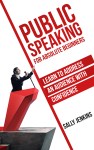 Simply, go to my Twitter Account, read the pinned Tweet (i.e. the first one visible), follow me (if you don’t already) and retweet that pinned tweet. You can also find me by searching for @sallyjenkinsuk. But be quick; the competition ends at midnight tomorrow (4th May 2019).
-
You are currently browsing the archives for the Short Story category.
 Sally Jenkins