Archive for category Writing
Two American Short Story Markets
Posted by Sally Jenkins in Competitions, Markets, Writing on January 13, 2011

Image via Wikipedia
The beauty of the internet is that it brings the world into our living-rooms. We can target markets across the globe without worrying about the cost of international postage and how to include a stamped addressed envelope for a reply.
Here are two American websites to which I’ve submitted work:
- Long and Short Reviews specialises in romantic fiction. Their main function is to review full-length novels, however every Thursday they publish a short story. Stories must be between 1000 and 1500 words and contain a strong romantic element and a ‘happy ever after’ or at least ‘hopefully happy ever after’ ending. Payment is minimal ($5 plus a free 1 month advert if you have a book that you want to promote) but they include a short biography with each story in which you can include your website/blog. Full submission details are here. I submitted a story originally written for the UK women’s magazine market. It had done the rounds here without success but I didn’t want to consign it indefinitely to my desk drawer. The story is available to read here on the Long and Short Reviews site. By the way Long and Short Reviews has a sister site, Whipped Cream, that deals with erotic fiction – so don’t be shocked if you see that mentioned in the submission guidelines on the site!
- The second market is a regular competition organised on the Readingwriters site. Each competition has a different theme and varying word count so you need to check the current requirements. I like these competitions because they are free to enter but offer a $100 prize and the judging procedure allows you to see how near (or otherwise) you were to winning. The stories that got through the first round of judging are listed on the website, then a bit later those that got through the second round of judging and finally the winner’s name plus ‘honourable mentions’ are published. The winning story is posted on the site along with a critique by the judge.
So why not send your work across the pond and see if you can make it big in the US!
Failing that, sign up for email updates to this blog and enter the prize draw for a set of Stieg Larsson books. For details, click here.
Become a Weekend Writer
Posted by Sally Jenkins in Markets, Successes, Writing on January 6, 2011

Image via Wikipedia
If you’d like to get published in the weekend newspapers have a look at my article in the February 2011 edition of Writing Magazine.
It’s extremely difficult to get a feature in one of the weekend nationals unless you have a well-established track record in journalism. However, many of the papers have ‘filler’ slots and actively ask for people to fill them. To list just a few:
- Confessions of a Tourist in the Sunday Times
- What I’m Really Thinking in the Saturday Guardian
- Just Back in the Saturday Telegraph (which I seem to have missed out of the article)
There’s also the letters’ pages to consider (the tabloids tend to pay whilst the broadsheets don’t) and have a look at your local regional weekend papers – these are often easier to break into than the nationals, especially if you have a story with local human interest.
As always market research is the key to success with any of these markets – buy and read several issues before you submit. It’s essential to get the tone and content of your piece just right.
If you’d like to know more about this area of writing then have a look at the full article in Writing Magazine.
Don’t forget the prize draw running on this blog at the moment, click here for more details. If you’ve already entered and haven’t received your confirmation email, please check your spam folder.
Can men write romance?
Posted by Sally Jenkins in Authors, Writing on December 27, 2010
Can a man get inside the mind of a woman as she falls in love? Can he describe the emotional roller coaster we women travel when we think we’ve found ‘the one’? If, as many believe, men are from Mars and women are from Venus, then how can a male know what goes on in the female mind?
I started thinking about this after reading the latest issue of Romance Matters (the magazine of the Romantic Novelists’ Association) . It features an interview with Roger ‘Gill’ Sanderson. Roger writes medical romances for Mills and Boon and has published 47 books since 1996. He says, ‘Love is a universal emotion. If you’ve been in love you must have sympathy with women.’ However, he does admit to asking for help occasionally, especially in the area of women’s clothing!
Roger isn’t the only man writing romance. Bill Spence is also a member of the RNA and writes historical sagas as Jessica Blair. He served in the RAF during World War II and started his writing career with Westerns before moving on to sagas in the early 1990s.
Michael Taylor is another British author who has found success in writing about love. He came to talk to my writing group a couple of years ago and was as far from the pink, fluffy Barbara Cartland image of a romance writer as you can get. His books are set in the past and he spends a lot of time researching his novels.
Michael says, “Men are at least as capable as women of feeling emotion, and are no less as vulnerable in love and out of it.”
He says that he found the romance, ‘Lorna Doone’ (also written by a man), moving and sensitive and one of the inspirations that started him writing.
In fact in 1906 ‘Lorna Doone’ was chosen by male students at Yale as their favourite novel – perhaps showing that men and women are not as different as we might think.
I haven’t yet read any of Roger’s or Bill’s books but I have read ‘Clover’ by Michael Taylor. I enjoyed the well-drawn characters and authentic period setting but I think it might have turned out to be quite a different book if Michael had been a woman. One of the main protagonists is Ned Brisco, who is trying to build and fly an early aircraft. If the author had been female, I think more emphasis would’ve been given to the heroine trying to make her mark on the world and less on the technicalities of this invention.
But it’s not possible to say which would have been the better book. Men and women can both write well about love because it is a universal emotion. However, the two sexes will give a different emphasis to other parts of the supporting story depending on their own interests and outlook on life.
Variety is the spice of life so – Vive la difference!
Merry Christmas Everybody!
Posted by Sally Jenkins in Resources, Writing on December 23, 2010

Image via Wikipedia
Christmas is coming and time is in short supply so just a quick post to wish you all:
A Very Happy Christmas and a Successful Writing Year in 2011!
And in case you get bored over the next few festive days here are a couple of websites to keep you busy.
If you’re looking for a market for your work try www.magazinesabout.co.uk
This site allows you to search on a subject, such as knitting, in order to find a magazine to target with your article.
Or if you’re looking for inspiration try www.sixtysecondwriter.blogspot.com
This site provides lots of prompts for short fiction – but of course you could use them for any sort of writing.
Reader’s Digest 100 Word Story Competition
Posted by Sally Jenkins in Competitions, Writing on December 19, 2010

Image by העין השביעית • the7eye.org.il via Flickr
See Results update at the end of this post.
Reader’s Digest are running a 100 word story competition. Stories should be original, unpublished and exactly 100 words long (99-worders will be disqualified). The title will not be included in the 100 words.
Email your stories to theeditor@readersdigest.co.uk by January 31. The winner will receive £5,000 and the two runners-up a £100 book token each. All 3 stories will be published in Reader’s Digest.
There is also a schools’ section to the competition with the winner in each of the 2 age groups getting £1000 in high street vouchers plus £1000 for the winners’ schools.
Full details of the competition can be found here.
However; there has been some controversy in writing circles about the terms and conditions of this competition. These state that ‘contributions become world copyright of Vivat Direct Ltd (t/a Reader’s Digest)’.
This means that Reader’s Digest take the copyright of all stories entered, not just the winning stories that are published in the magazine – therefore you couldn’t then publish or enter your (winning or losing) story in a similar competition elsewhere. There has been discussion about this on the Writers’ News Talkback Forum, with the participants split between those willing to give up copyright on their story for the chance to win £5,000 and those who thought that writers should never give up copyright on anything without some form of payment or acknowledgement.
Gill Hudson, editor-in-chief of Reader’s Digest, explained the policy to Alex Gazzola in the January issue of Writers’ News.
“We’ve had to do it this way beacuse, with the small team we have, and the sheer practicalities of thousands of entries, I don’t think we could run this competition if we had to deal with all the various rights, permissions and queries that could potentially arise.”
You will have your own opinion about whether you want to give away your carefully crafted 100-word story in exchange for a chance at a £5000 jackpot. Personally, I think it’s worth the gamble. I do recycle work that is rejected by its original target market or fails to make the grade in a competition. However, I usually find that the work has to be tweaked in some way before it can be resubmitted, this may mean lengthening or shortening it or changing the tone slightly to fit the new market. I expect this would be the case if I wanted to recycle my 100 word story for another micro fiction market – it may have to be moulded to fit a set theme or again, made longer or shorter to suit the new requirements.
So, I will make a note on the filed copy of my entry, to remind myself to wait until the results of the Reader’s Digest competition have been announced and then (if I lose) to change the story substantially before resubmission.
POST UPDATED 21 APRIL 2011
The winner is announced here. The standard of writing was so high that Reader’s Digest have decided to feature one story a day on their website – please leave a comment if yours is featured so that we can all admire it!
Are you ready for Christmas 2011?
Posted by Sally Jenkins in Writing on December 15, 2010

Image via Wikipedia
No, there isn’t a mistake in the title of this post – I really do mean Christmas 2011.
Magazines and newspapers use lots of Christmas themed features and stories but it’s very hard to sit down in the middle of summer and write a tale featuring Father Christmas and snowmen. And how do you motivate yourself to do that article on Christmas Traditions when you’re buying suncream and bikinis? Don’t think you can put these pieces off until the nights start drawing in – by then Christmas issues will have been finalised and will be almost ready to hit the shelves.
If you want to be published during Christmas 2011 you need to start preparing now.
- Cut out and file festive features from magazines and newspapers. The same Christmas topics come round year after year – you need to give them a fresh angle, a different viewpoint or add some fresh research of your own. Use the cuttings as an ideas springboard to go off on your own tangent – don’t copy them!
- Study the short stories in magazines. Make a note of which publications go for the cute and cosy stories and which like something a little bit more realistic. Look at the types of characters in the stories and the settings.
- Start a new notebook and label it Christmas ideas. Put one idea on the top of each page and work forwards through the book for fiction ideas and start at the back for articles. In the lead up to Christmas flesh out each of these ideas as much as you can with bullet points about what you might include in the article or how the story plot might develop.
- In those lazy days between Christmas and New Year, push the Quality Streets to one side, turn off the television and write a couple of those stories or articles. It will be much easier to do it now whilst the tree is still up, the weather is cold and the radio is playing Slade.
- Get out your new calendar, diary or phone and make a note to revisit these finished pieces in the summer. Proof read them and then get them submitted in good time.
If you’re really stuck for ideas here a few links to get you going:
Novel-writing Starter Kit with Martin Davies
Posted by Sally Jenkins in Events, Writing on December 13, 2010
If you live within reach of Derby you might be interested in the Novel-writing Starter Kit being run by Martin Davies.
It’s at Mackworth Library on Saturday January 29th, 10:00 am until 3:45 pm and costs £25, including tea and coffee. According to the web-site, the workshop ‘will help you address some of the challenges of novel-writing – from planning and structure to plot and characterisation. Most of all, it will help you tackle some of those anxieties that make it so hard to get started’.
For full details and how to book click here.
It sounds like a good way to kick-start writing in 2011. I shall be going and it would be great to meet some of you there – let me know if you decide to sign-up.
Many thanks to Helen Yendall for telling me about this workshop and a reminder that time is running out to win the pile of writing books on offer at her blog. All you have to do is leave a comment on Helen’s blog by clicking here – it needn’t be deep and meaningful, just a few words agreeing or disagreeing with one of her posts – and you will go into the prize draw.
The Writer’s Notebook
Posted by Sally Jenkins in Writing on December 11, 2010
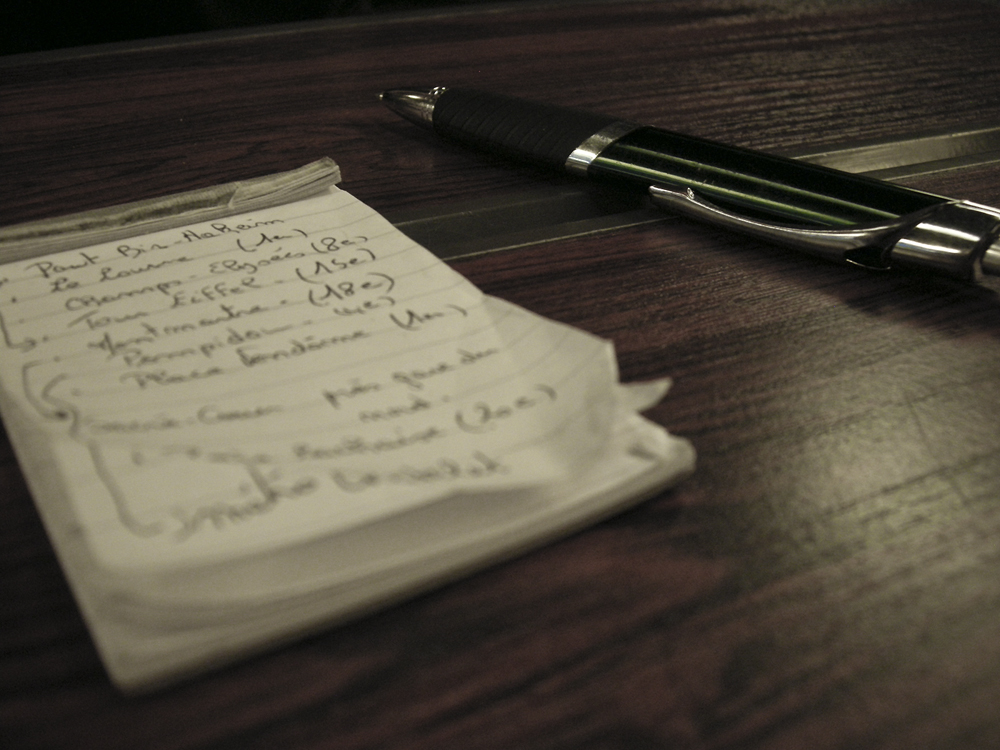 It’s one of the first things that we are ever told as writers – always carry a notebook. In it we should write snatches of overheard conversation, descriptions of characters that we see in the street or the beauty of the sunset on our way through the park.
For years I didn’t carry a notebook but recently I’ve started stuffing one in my handbag ‘just in case’. I seldom write in it because I feel self-conscious standing in the check-out queue writing down what the woman in front is saying or wearing but on occasion I’ve found a coffee shop and had a quick scribble.
But now I’ve got these little gems in my notebook (and presumably over the months and years I will build up several of these books) – how do I find what I want when I want it? Unless it fits my current work in progress how do I catalogue it until I need it?
There is no order to my notebook, just odd words, sentences or sometimes a whole paragraph (if I’m lucky) on disjointed subjects. When I’m deep into my novel and need an old lady character, how will I know which notebook holds the description I’m looking for?
The writer, Caro Clarke, believes that few good writers will break their narrative flow to go rooting in notebooks for something they jotted down years ago (and will they even remember they wrote it?). She says “When you are really writing, the words you need come to you. The words the story needs arise from writing it.”
I tend to agree with Caro but because this notebook mantra is so widespread, I feel that I am missing something obvious.
The best idea I could find on the internet for organising a notebook was here. It suggests buying one of those books containing subject dividers and using the sections as you find appropriate e.g. titles, dialogue, characters etc. This makes sense until you’ve filled more than one notebook.
What about you – do you use a notebook? If so, how do you retrieve what you’ve written in the past? Or do you think they’re a waste of time?
Leave a comment and maybe between us we can find the best way of retaining those ideas, characters and flashes of inspiration that occur whilst we’re out and about.
This England
Posted by Sally Jenkins in Markets, Writing on December 6, 2010
Many years ago when I was starting out on my writing career I did a correspondence course with The Writers’ Bureau. For one of my first assignments I wrote a short article about Birmingham Botanical Gardens and my tutor suggested I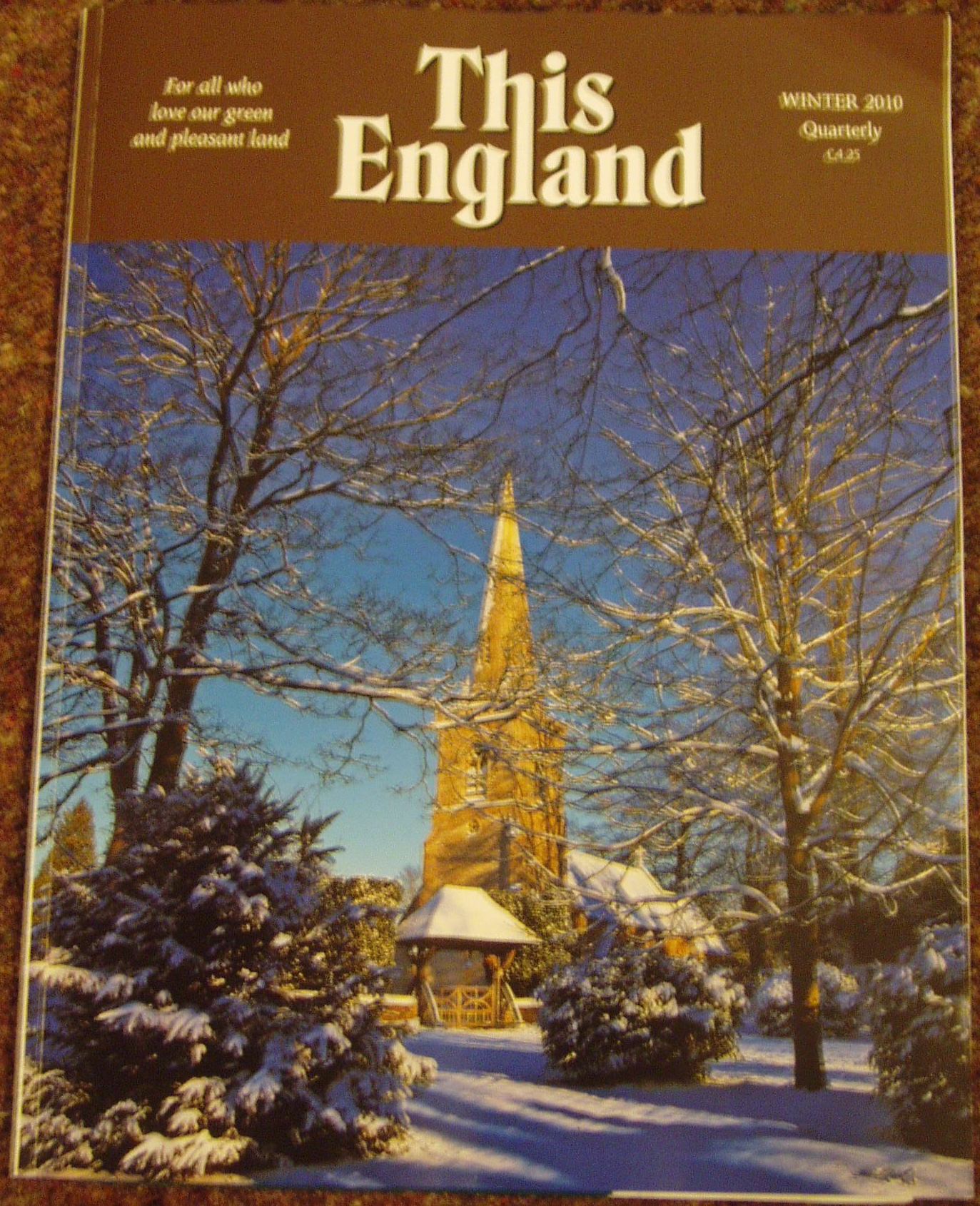 send it to This England. I did and they published it in their Cornucopia section. I got paid and felt like a real writer.
This is a good market to aim for if you want to have a go at non-fiction writing.
This England is a glossy, quarterly magazine for “all who love our green and pleasant land.” It contains illustrated articles on English history, traditions and towns and is “read by two million patriots all over the world”.
The Cornucopia section consists of several short pieces, some written in house and some supplied by freelances. They range in length from around 250 to 400 words and cover topics such as the centenary of a Brighton cinema, Digswell Lake near Welwyn Garden City and recyling at Chatsworth House. I’ve found that the easiest pieces to get accepted are those based on an anniversary of some kind, e.g. 50 years since the birth of X, 75 years since building Y was opened.
The magazine’s Guide for Contributors states that articles should be “about our country’s people and places – its natural beauty, towns and villages, traditions, odd customs, legends, folklore, surviving crafts, etc. ” Short poems (6 to 24 lines) that are meaningful rather than clever are also accepted.
The best way of getting a feel for the style and content of the magazine is get hold of a copy (it is available in WH Smith and other good newsagents).
Submit your article (with an SAE) to:
The Editor (MSS)
This England
P.O. Box 52
Cheltenham
Glos.
GL50 1YQ
Material related to a particular date or season should be sent at least 6 months in advance. A decision on work submitted can take up to 3 months and be warned if you chase the fate of your piece before the full 3 months has elapsed, the Guide says “Material is invariably returned without further consideration to an over-zealous contributor.”
Payment is £25 per 1,000 words plus a contributor’s copy of the magazine.
Diversify, urges Graham Joyce
Posted by Sally Jenkins in Authors, Events, Writing on December 1, 2010
Novelist, Graham Joyce, gave the closing address at this year’s Birmingham Writers’ Toolkit event.  He stressed the need for writers today to have several streams of income, especially as publishing is moving away from traditional books towards e-publishing. He suggested the following areas from which writers could source their income:
- The traditional advance on a book – however this type of payment is becoming smaller and less common
- Digital downloads – writers can sell their own work directly via their website thus bypassing publishers
- Teaching creative and other types of writing
- Performing their work
- Giving talks – schools love writers to come into the classroom or try the after dinner/lunch circuit
- Writing non-fiction
- Screen development of their work – funding is often available for this (although not for actually producing the film)
- On-line drama – ‘Kate Modern’, which was linked to BeBo, is an example of this type of drama which can be simply filmed by the author
- Computer games – these now require more narrative and emotional content. Farmville is an example of this and,surprisingly, the average player is a 47-year-old female.
By diversifying and marketing themselves and their work independently, writers can continue to work even if the fickle publishing world turns against them.
It is worth taking note of this if you are trying to build up a writing career. It shows that it may be possible to earn a living as a writer without being picked up by a major publisher – if you are willing to think laterally, become digital savvy and go out there and sell yourself.
-
You are currently browsing the archives for the Writing category.
 Sally Jenkins