Archive for category Writing
Writing Prompts from Castleton
Posted by Sally Jenkins in Poetry, Resources, Writing, Writing Exercises on August 17, 2012
It wasn’t only poetry that I toyed with in Castleton in the Peak District.

I also jotted down some ideas for short stories and I’m going to share them with you because I know that we’d all produce completely different tales (& submit them to different places) from the same initial prompt.
We stayed in Little Lilac Cottage – a tiny 350-year-old dwelling with a king-sized brass bed, a Victorian rolled top bath and open beams on the ceiling. Reading through the guest book I tried to imagine all the other visitors to this romantic cottage, why they came and whether the holiday lived up to expectations:
- Honeymooners – young or old? first or subsequent marriage?
- A couple having an affair – unused to spending so much time together, will they still get on or will guilt take over?
- A holiday to save a marriage – away from it all, can they get their relationship back on track or will it go up in flames?
- First holiday for years without the children – do the couple still have anything in common?
We did plenty of walking and one day came across a set of intertwined initials carved into a tree by a waterfall:
- Who carved them and why?
- What happens when one or both of them come back to revisit the carving?
There’s also plenty of scope for stories with a historical setting:
- Think of all the people who were born and died in our cottage
- A local told us that the last ‘ordinary’ people to live in our cottage brought up 3 boys there – how? The house was barely big enough for the 2 of us!
- The old coffin route from Edale to Castleton. At one time there was no consecrated ground in Edale and all the dead had to be brought over the hill to the church in Castleton
And that final point brings me to my poem – poetry connoisseurs please look away now. The rest of you can blame Julia, Susan and Alison, who all asked to see it after my post about the poetry writing workshop I attended in Castleton.
A Coffin Route Farewell
My baby, wrapped in sacking and loaded on a mule
a tiny corpse under a pauper’s shroud.
My baby, born mute, motionless and far too early
now travels the path toward Castleton.
My baby, cast out from home to ride with a stranger
in search of consecrated land.
Exhausted from birthing I never even held you.
They snatched you away without time for farewell.
My baby, you never shed a tear but my eyes will never be dry again.
Maiden Names and Married Names
Posted by Sally Jenkins in Writing on June 4, 2012
I have an unusual maiden name – ‘Mumby’ – and it’s rare that I stumble across it anywhere else but I found it on a tiny war memorial in the small church at Croft Castle, near Leominster. I was so surprised that I had to take a picture of it (it’s in the bottom right-hand corner).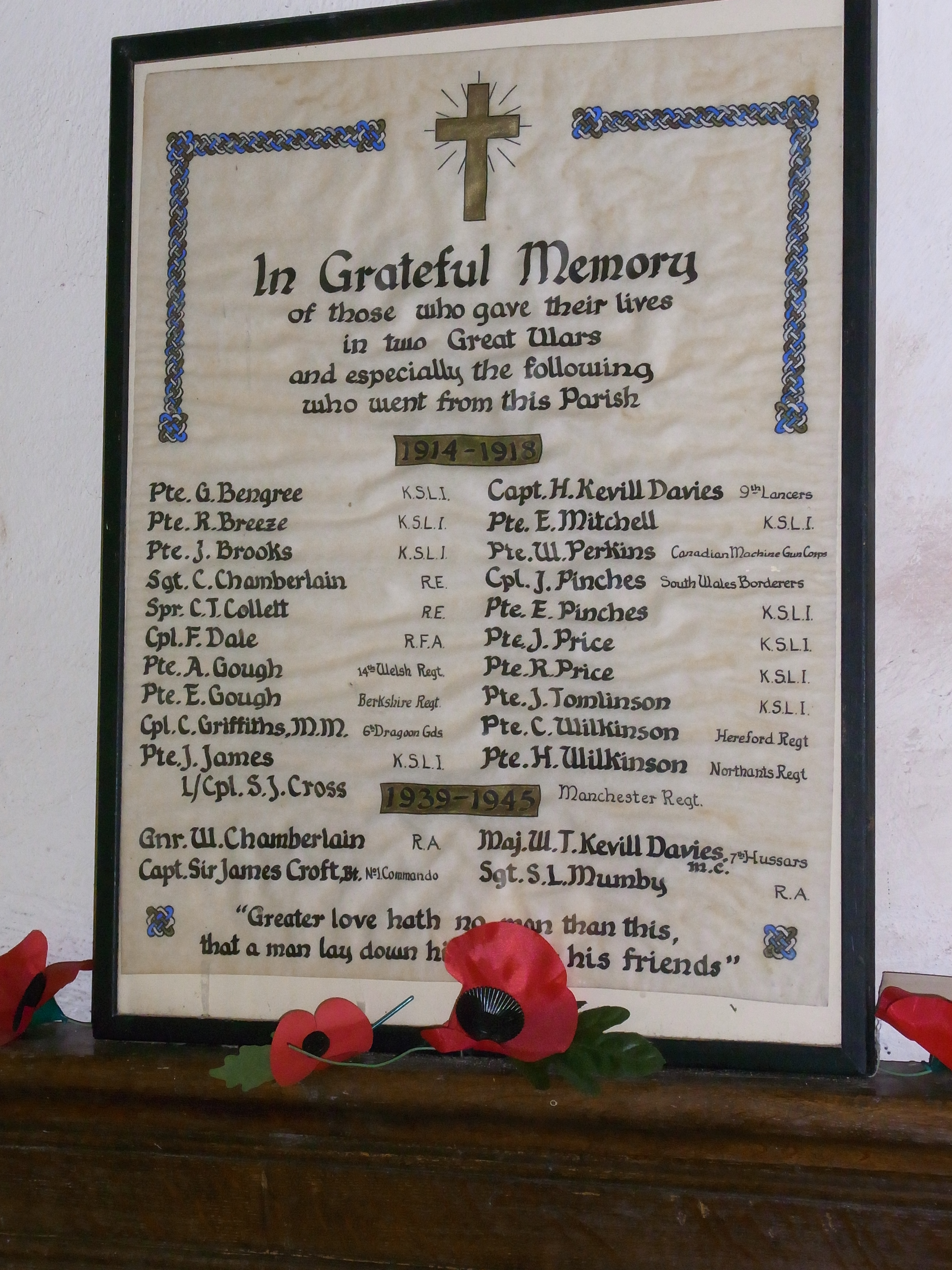
This got me thinking about creating female characters by looking at what they choose to do with their surname when they get married and what motivates them to behave in this way. I think we women fall into one of several camps when we walk down the aisle:
- The majority of us go with convention and take our husband’s name – so maybe we don’t want to rock the boat or stand out from the crowd
- Keeping our maiden name – this is the course usually followed by the famous but I know ‘ordinary’ women who have done this and get quite cross when they get lumped together with their husband as Mr & Mrs ‘Husband’s surname’. Could this be the basis for a fictional character desperate to carve her own way in the world or afraid of living in her husband’s shadow?
- Going double-barrelled – some couples choose to join their surnames together when they tie the knot. Could this a social-climbing couple? Double-barrelled names always sound quite posh to me.
- And there’s the choice of Mrs or Ms, if you don’t want the whole world to know you’re married. Why does a character who’s married want to keep it hidden?
Plus don’t forget until quite recently married women were often addressed by their husband’s Christian name as well as his surname, for example Mrs John Smith. An elderly lady in a story might unintentionally annoy her daughter-in-law by sending birthday cards addressed in this way.
Then what happens when we get divorced? Many of us (understandably) decide to revert back to our maiden names but those with young children might choose to keep their married name to avoid confusion. Or what about the high-flyer who’s made a name for herself in her married name – does she drop it or resentfully keep it?
So next time you’re dreaming up a female character think about her marital status and the surname and title she’s chosen to use – it might make you think about her in a whole new way.
Escape to the Country by Patsy Collins
Posted by Sally Jenkins in Authors, Books, Writing on March 29, 2012
Patsy Collins’ debut novel, Escape to the Country, 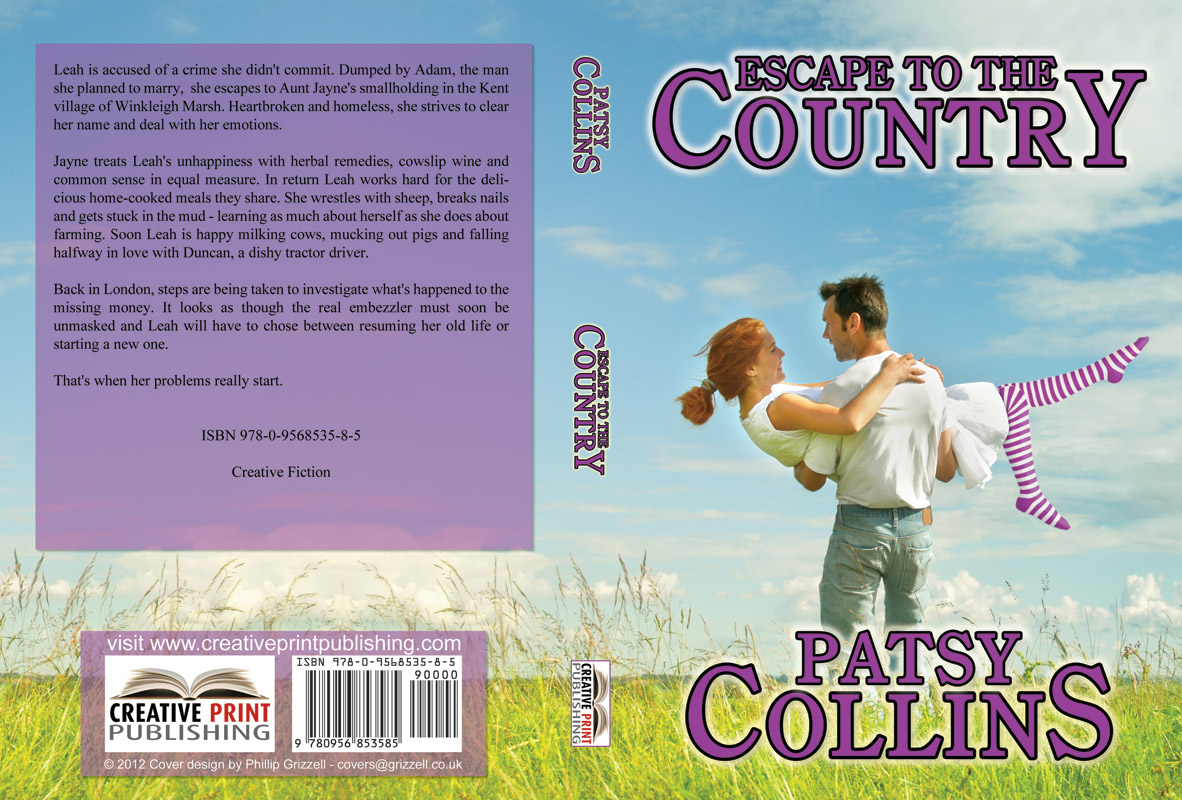 will be published on 30th March 2012 and I am honoured to have Patsy visiting my blog today. I asked her a question I’m desperate to know the answer to. This is what she had to say:
Out of My Depth!
Posted by Sally Jenkins in Authors, Resources, Writing on March 26, 2012
I’ve mentioned before my intention to enter the Good Housekeeping Novel Writing Competition and I’ve been beavering away at my entry since January. I wrote 20,000 words and then paused to take stock and prepare my entry which had to consist of the first 5,000 words plus a full synopsis. The synopsis was a challenge because until then I’d been writing without a detailed plan but after some thought I managed it.
Then I decided to send the 5,000 words and synopsis to novelist Patricia McAughey (who writes as Patricia Fawcett) for a critique. Patricia reads for the RNA New Writers’ Scheme and also runs a reasonably priced private critique service for all types of fiction except fantasy, sci-fi or children’s. She can be contacted through her website for a quote.
Patricia sent me a detailed report which very tactfully told me that my story didn’t work because I was still in ‘short story’ mode. She said, “Slow down. You are rushing things. I know it is tempting to try to get all the ideas down but you are writing a longer piece and there is no rush. Relax.”
She went on to explain that I was giving the reader no idea about the setting. One of the scenes was in a Derbyshire cafe but I didn’t describe the interior, the waitress, the view or even indicate whether the place was full or empty. Patricia suggested painting a broad picture of the scene and then honing in on small details such as a woman trying to get a pushchair through the gap in the chairs.
There was a similar problem with my characters. Patricia said, “… I don’t have any great affection as yet for either of the two central characters simply because I don’t know enough about them…”. I had omitted rather obvious details like what the heroine did for a living or what she looked like!
It wasn’t all doom and gloom. I did get words of praise for my dialogue (which I love writing) and my synopsis.
So if you’re trying to move from short stories to longer fiction, take a moment to check that you’ve added depth to your writing. Make sure you haven’t skimmed over the setting or the characters’ backgrounds. Have you described what it smells like in the kitchen? Have you mentioned what your hero is wearing as he meets the heroine for the first time?
Later this week Patsy Collins, a successful short story writer and debut novelist, will be guesting on this blog and attempting to explain how she made the leap from short stories to seeing her first novel published.
Coffee Shop Writing
Posted by Sally Jenkins in Writing, Writing Handicaps on March 15, 2012
Have you ever tried writing in a coffee shop?

Image via Wikipedia
I fancied myself as a J.K. Rowling sort of writer – scribbling away in the corner of a cafe, far from all the domestic distractions and guilt trips (like ironing, kitchen cleaning etc). So when my daughter bought me a Costa Coffee gift card I decided to indulge my fantasy.
11am on a Friday morning and the cafe was busy but I managed to find a nice little table hidden away at the back – just right for me, my latte and my notebook. I had a few sips of coffee, found my pen and started to write and that’s when I noticed the noise level. All around me were groups of women yakking at the tops of their voices (or so it seemed). I’d never noticed this decibel assault before (probably because I’m usually one of those yakking women when I go out for coffee!) It was impossible to stop myself tuning into what they had to say:
“That’s Mark’s ex. Now he’s with the one with the crooked eye.”
“They stitched her up so the baby couldn’t come out and now she’s nearly 2 weeks overdue.”
“She was sick at the altar whilst she made her wedding vows.”
At home I write in silence with not even the radio on for company so all this was hard to take but I did eventually manage to tune out and write.
The next problem was – how long can you sit with an empty latte glass in front of you without feeling obliged to buy another or leave? It was a situation made worse when the waitress whisked my glass away leaving me with nothing – but she completely ignored the tables of women who’d been there much longer than me. So I gave up and went home.
Would I try coffee shop writing again? Yes – I’ve still got £7.65 left on my gift card and it was good to get away from the PC and back to pen and paper. But I’ll try to go when it’s not so busy next time and have a pot of tea – so it’s not so obvious when I’ve finished & the waitress won’t whisk it away!
Where do you prefer to write?
Motivation
Posted by Sally Jenkins in Writing on March 8, 2012

Image via Wikipedia
What motivates you to pick up a pen or put fingers to keyboard and write? Is it the hope of riches and fame? Is it the need to communicate your thoughts and opinions to others? Or is it because those ideas buzzing around in your head won’t go away until they’ve been captured on paper? Or may be just because you enjoy it?
I expect most of us write for a combination of these reasons. Riches and fame might be at the back of our minds but we know that penning a bestseller is as likely as winning the lottery, so money alone is rarely the primary reason for becoming a writer – but the odd cheque for a story, article or reader’s letter certainly helps the enthusiasm levels!
As well as the ‘grand motivation’ for writing, we all make smaller motivational decisions over each piece that we decide to write. For instance when you decide to enter a particular competition – is it because the prize is good? Or is it because it’s smaller competition and prize, so therefore there’s a greater chance of winning? Similarly, do you only write when you have known publication or market to target? Or if an idea pops into your head do you get working on it and worry where to send it later?
Long ago I learned that it’s virtually impossible to make any sort of living from the written word so I suppose I must write because I enjoy it – although most of the time it just feels like hard work! I like the satisfaction of completing and submitting a piece, along with that surge of hope that this could be ‘the one’ that successfully hits its target.
As far as the smaller motivations, I only write if I can see where I can submit the piece. But my chosen market doesn’t have to pay a fortune (I might choose differently if I didn’t have a ‘proper’ job and therefore relied on writing for an income) – I prefer to have a greater chance of small prize/payment than a smaller chance of a bigger pot of money.
Sometimes it’s not the ‘carrot’ that’s important – it’s the need to show those that have made fun of our writing ambitions that they are wrong and that we can write well enough to be published. John Malone discusses this ‘negative’ motivation on his blog here.
So, why are you writing?
How Do You Create Your Characters?
Posted by Sally Jenkins in Resources, Writing on February 16, 2012
How do you make the people in your fiction (longer fiction especially) well-rounded, believable individuals that the reader might care about?
In short stories it isn’t always necessary to know all the details about a character, for example it may be enough to know that the heroine is a grandmother and not her exact age or her previous profession (if any). But when attempting to write something longer, facts like these become important so that the writer can concoct a suitable back story for the lady, so it may be useful to know in what decade she was a teenager, at what age she left full-time education and whether or not she became a working mother. The life which the grandmother lived before the novel opens will have a bearing on how she acts and reacts within the story – so both the author and the reader need to know what went before.
Some writers advocate filling in a questionnaire about each character, covering physical appearance, hobbies, education etc (a sample questionnaire can be found on Stewart Ferris’ website here). This is a useful way of keeping track of facts such as eye colour and height (easy things to forget as you get deeper into the plot).
However, I find it very hard to just jot down a sentence or two about the big things such as a character’s personality, attitude to life and motivation. In order to get know a protagonist I have to start writing scenes from his or her point of view. It’s only as I write that I realise what I don’t know about a character and therefore what I need to put into their back story to make them act in a certain way in the present. This means I don’t do much planning before I write because I have to write in order to create the characters.
Some writers cut pictures from magazines and use these as prompts for their characters. But this only covers their physical appearance – so I’m not sure it would help me.
Nicola Morgan advocates interviewing your main character (her list of suggested questions is here and they are pretty searching!) Most of these I couldn’t have answered when I initially decided on the people I needed in my story but now I’ve written a bit from each point of view I’m going to pretend I’m a chat show host and start asking questions.
What about you – how do you develop your characters?
5 Word Challenge – The Answer
Posted by Sally Jenkins in Competitions, Writing on January 18, 2012
The 5 word sentence, where each of the 5 words is identical is:

Image via Wikipedia
Buffalo buffalo buffalo Buffalo buffalo.
The meaning is:
Buffalo buffalo (i.e. buffalo that live in Buffalo) buffalo (i.e a verb meaning to intimidate or fight) Buffalo buffalo (i.e. buffalo that live in Buffalo).
This is also explained here and a longer more complicated version is here. One day this knowledge might make you the winner of a pub quiz!
Whilst we’re on the subject of short pieces of writing, here are a couple of flash fiction competitions:
- Early Works Press are offering £75 first prize plus two runners-up prizes of £10 for a 100-word story. Entry is £3.50 and the closing date is 31/8/2012. Full details here.
- Multi-Story want 600 words and offer prizes of £300, £100 and £50 for an entry fee of £5 (or £8 for 2 stories). It’s an open theme and the closing date is 29th February 2012. Full details are here.
5 Word Challenge
Posted by Sally Jenkins in Writing on January 16, 2012
Here’s a challenge that my sister-in-law set me at Christmas – I failed miserably but I’m sure you can do better.
Can you create a 5-word sentence where each of the 5 words is exactly the same?
Here’s a clue – the word has 3 different meanings within the sentence, it is used as a verb, a noun and a proper noun. The word is spelt the same each time it is used.
I’ll post the answer on Wednesday (if you use the box on the right to subscribe to this blog via email, the answer will automatically arrive in your inbox as soon as it’s posted – it’s free and you can unsubscribe at any time).
In the meantime if you’re running out of inspiration for your writing, take a look at Sally Quilford’s blog. She’s currently running a challenge to write 100,000 words in 100 days – not for the faint-hearted and definitely not for me! But to help those who are up to the challenge she is posting a selection of writing prompts each day. Many of them are quite inspiring and could easily trigger a short story or a poem. Why not nip over there, choose a prompt and get writing!
New Year’s Resolutions…or maybe not
Posted by Sally Jenkins in Competitions, Writing on December 28, 2011
I don’t like New Year’s resolutions for two reasons – both related to the fact that they have to be made public. Firstly, when you say aloud something that you really want to do, it can sound impossible to achieve or just stupid – and that is a bad way to start. Secondly, once everyone knows that you’re training for a marathon or writing a novel, they will keep asking how you are doing. This is fine when things are going well but it’s awful to have to own up if you’re struggling. So I am going to keep my own aspirations to myself this year and instead I’ll just share a few mini-goals that I’ve put on my ‘Writing To Do List’ fot the first part of 2012:
- Enter all 4 of Eddie Walsh’s Emerald Writing Workshops 500 word story competitions plus the 4 sentence story. I intend to send them all together in one envelope (saving money on stamps!) before the first closing date of 28th February 2012. I’ve already drafted most of them – I just need an idea for the story set on a train…
- Enter Della Galton’s competition for a 250 word story about a New Year’s resolution that went wrong. The prize is a copy of her new book ‘Moving On’. Closes 10am Jan 4th.
- Enter The Writers’ & Artists’ Yearbook 2012 competition. Stories on the theme of ‘Identity’ of up to 2,000 words. Closes 14th February 2012. I really fancy the prize – £500 plus an Arvon course.
- Enter the Swanwick 2012 competition for a story or article on the theme ‘A Sense of Duty’. First prize is a week at the Swanwick summer school. Closes 30th April 2012. I fancy there will be fewer entrants in the article section but at the moment I’m struggling to come up with an idea.
Finally, (following yet another rejection from Take a Break’s Fiction Feast) I am going to stop banging my head against a brick wall on markets that my writing is obviously not suited for.
Happy New Year to you all – and thanks for sticking with me through 2011!
-
You are currently browsing the archives for the Writing category.
 Sally Jenkins