Sally Jenkins

Freelance writer, author and public speaker.
Homepage: https://sallyjenkins.wordpress.com
5 Questions About Writing With . . . Sophie Hannah
Posted in 5 Questions About Writing on October 7, 2025
Sophie Hannah is a Sunday Times, New York Times and Amazon Kindle No. 1 bestselling crime writer, and the author of the new Hercule Poirot mysteries, at the request of Agatha Christie’s family and estate. 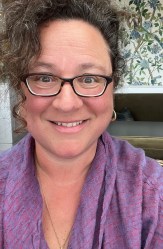
Her books are published in 51 countries and have sold more than five million copies worldwide. She won the UK National Book Awards Crime Novel of the Year prize in 2013, and the Dagger in the Library Award in 2023. Her murder mystery musical, ‘The Mystery of Mr E’ is available on Amazon Prime and Apple TV now. Sophie is an honorary fellow of Lucy Cavendish College, Cambridge, and the founder and coach at Dream Author Coaching.
How do you discipline/motivate yourself to write and do you set daily targets?
I have to use my higher brain, and make it the boss, rather than letting my primitive brain be in charge. My primitive brain always wants to do the easiest, most fun thing in the moment – which usually isn’t writing lots of words! But my higher brain knows it really matters to me that my book gets written, so I need different motivation. I need determination, resolve and commitment, rather than desire in the moment, and I need to understand that I don’t need to want to write at this very moment in order to write. When I allow my higher brain to impose this sort of discipline, and when I obey it, I am always thrilled to have written. And then my free time, my leisure time, is so much more genuinely enjoyable, because there isn’t that persistent soundtrack in the back of my mind going: ‘You should be writing, you slacker!’
What are the most important qualities required by a writer? Do you have them?
Imagination, creativity, passion, self-discipline and an unwavering belief in one’s work and in the possibility of success. Yes, I have all these qualities! Though I should point out that I do not have self-discipline in many other areas of life – but luckily, for my writing, I do!
How do you market yourself and your books?
I am so passionate about all the creative offerings I produce – from poetry, to fiction, to self-help books, to murder mystery musical movies … I want to share them with as many people as possible because I believe they are genuinely entertaining, insightful, unique – so I kind of rave about them whenever I can, to whoever will listen, because I believe that if you discover my work, it will brighten up your day! (I think this might be called ‘organic marketing’!) I also have a website, an author newsletter, and regularly check people on X.com, Facebook and Instagram. Lots of people also discover my writing via my Dream Author Coaching program for writers and/or anyone who wants to write. The other thing to bear in mind about marketing, specifically if you’re a writer, is that you have to be doing it because you genuinely believe your book will be an amazing treat for whoever buys and reads it. I’ve seen so many authors trying to market their books by saying, ‘My book is out today and please, please consider buying it or else I might end up sleeping under a bridge while feeling very unloved.’ This is not marketing, it’s being unhelpfully needy, and it’s not going to make anyone want to buy your book. It’s crucial to make your audience want to buy your book for their sake, not for yours.
Which writing resources have you found useful, e.g., books, courses, organisations, websites etc.?
I’ve been on several Arvon courses which I have loved! I also did a wonderful MA in Novel Writing in 1993/1994 at the University of Manchester, which was incredibly helpful and inspiring. Other writers are my main source of inspiration – when I read brilliant books by other people, I think, ‘I want to write something as amazing as that.’ I also get huge inspiration from my coaching programme Dream Author – my clients are amazing people who keep going on to achieve new and brilliant success!
A top tip for other writers?
Your thoughts and beliefs, not the circumstances, create your results – so make sure to think in an inspiring way!
About No One Would Do What The Lamberts Have Done – published June 2025
 You think it will never happen to you: the ring of the bell, the policeman on the doorstep. What he says traps you in a nightmare, and there seems to be no way out. It starts with the words, ‘I’m afraid…’
Sally Lambert is afraid too, and desperate enough to consider the unthinkable. Is it really, definitely, impossible to escape from this horror? Maybe not. There’s always something you can do, right? Of course, no one would ever do this particular something – except the Lamberts, who might have to. No one has ever gone this far. Until Sally decides that the Lamberts will…
‘No one writes twisted, suspenseful novels quite like Sophie Hannah.’ Liane Moriarty
About The Last Death of the Year – to be published 23rd October 2025
The brilliant Belgian detective rings in the New Year with a chilling murder investigation on a Greek island in this all-new holiday mystery from Sophie Hannah, author of Hercule Poirot’s Silent Night.
New Year’s Eve, 1932. Hercule Poirot and Inspector Edward Catchpool arrive on the tiny Greek island of Lamperos to celebrate the holiday with what turns out to be a rather odd community of locals living in a dilapidated house. A dark sense of foreboding overshadows the beautiful island getaway when the guests play a New Year’s Resolutions game after dinner and one written resolution gleefully threatens to perform “the last and first death of the year.” Hours later, one of the house’s residents is found dead on the terrace.
In the light of this shocking murder, Poirot reveals to Catchpool the true reason he’s brought him to the island—the life of another community member has been threatened. Now both men resolve to ensure that the first murder will be the last…
First Five Pages Competition
Posted in Competitions, Events, Short Story on September 25, 2025
The lovely people at Farnham Literary Festival have asked me to publicise their Farnham’s First Five Pages Competition. 
Entrants must submit the first 5 pages of their novel plus a 250-word synopsis. The novel does not already have to be finished. There is no set theme or style of writing, but entries should be unpublished and original.
The prizes are:
First place – THE PARIS PRIZE FOR FICTION (sponsored by best-selling author B.A. Paris) – £1000 and a critique
Second place – £300
Third place – £200
There is a £10 fee per submission and entrants must be unpublished (self-published is acceptable).
Closing date is Wednesday 31 December 2025 – so plenty of time to get writing!
As always, please check the full terms and conditions before entering.
Good luck and enjoy!
Farnham Literary Festival also a run Flash Fiction competition if something shorter is more your thing.
Book Club Day UK 2025
 September 11th is Book Club Day in the UK.
It’s a time to share and highlight the joy of being part of a book club and to encourage new clubs to form, so that more people will discover the social connections that discussing a book can bring.
I led a library-based book club for eleven years, stepping down only recently due to time pressures. But I’m remaining a member of the group because I love hearing all the different opinions generated by just one book. Invariably, we have someone who loves it and someone who thought it was so bad that they couldn’t finish it, plus all shades in between. And as an author, the experience helps me to accept that, without a doubt, some readers will hate my books while others (fingers crossed!) will like them.
There are a multitude of different types of book club: some concentrate on a particular genre such as crime, in others members take it in turn to choose the books, in my group the leader chooses our monthly book from the book group stock held within the Birmingham library system, in some groups the wine is more important than the literature and others bring together neighbours in a particular street.
If you’re looking for recommendations for your group, here are a few that my group has read and discussed with gusto:
The Uncommon Reader by Alan Bennett – the late Queen visits a mobile library.
Mr. Two Bomb by William Cole – a man witnesses the atomic bombs in Hiroshima and Nagasaki.
Mrs. Palfrey at the Claremont by Elizabeth Taylor – an elderly lady in the late 1960s joins several other older people as a permanent resident in a hotel.
Daisy Jones and the Six by Taylor Jenkins Reid – a 1970s pop band and their lead singer.
Elevation by Stephen King – a man is mysteriously losing weight.
As a group leader, I always found it helpful when a book had a list of ‘Discussion Questions’ included at the end. We didn’t work prescriptively through the list but it was good to have a jumping off point to get the conversation buzzing. During the final edits for Out of Control I drew up a list of discussion questions and was delighted when my publisher, Choc Lit, agreed to include them at the back of the book. 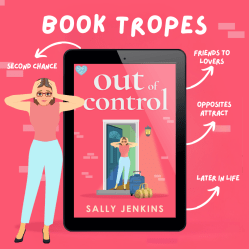
I’m too nervous to try out the book and the questions with my own group (and I think my presence would sugarcoat their comments!) but if anyone tries Out of Control with their group, I’d love to know how you get on, whether the questions help and whether there are any other topics that the book leads you on to?
5 Questions About Writing With . . . Will Carver
Posted in 5 Questions About Writing on September 2, 2025
Will Carver is the award-losing writer of 12 novels, a novella and several short stories. 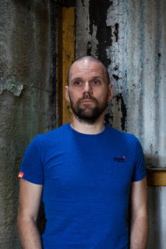 His books regularly feature on book-of-the-year lists in the mainstream media and he has been described as ‘The most original writer in Britain.’ Refusing to conform to a specific genre, Will’s latest novel Kill Them With Kindness sees him move away from crime and thriller stories into speculative fiction.
How do you discipline/motivate yourself to write and do you set daily targets?
People will do the thing that they most want to do. If you really want to lose weight, you will think about what you put into your mouth and make sure you exercise more. If you are eating a tub of hummus and a movie bag of Doritos while watching your favourite soap opera and talking about wanting to lose weight, it’s not really the thing you want most.
It’s the same with writing.
If you want to write and it is important for you to do that, you will MAKE the time. You will find any pocket in the day to squeeze out some words. You will dedicate a portion of your time to creative endeavours.
I want to write. Every day. So I make sure that I do.
That said, half of writing is discipline, and when you start out, you need to teach yourself that. You’ll be surprised how quickly you can get a book together by writing just 500 words a day and making sure those 500 words are the best that they can be.
What are the most important qualities required by a writer? Do you have them?
The ability to not speak. I have this. Writers are, inherently, good watchers. We extrapolate a lot of information from viewing people and how they behave, and we take inspiration from that to create our fiction.
Listening is equally important and becomes more so the further through the process you get. You have to listen to your editor and your publisher and your readers. You don’t have all the answers. You have to shut up and work it out. Speak through your writing.
This leads to the greatest tool a writer can have: a thick skin. It’s a hard industry. A lot of the time, you are being told where you are going wrong and that you need to fix it. You can’t let that get you down. You can’t let it put you off. You have to bite your tongue, listen and learn.
The discipline of writing each day is just the start. Once you finish writing that book, it no longer belongs to you, it belongs to everybody else.
How do you market yourself and your books?
Badly. I’m lucky that my publisher takes care of that kind of thing. But I write articles and do interviews or appear on podcasts around publication time. This is mostly organised through my publisher but I do have direct relationships with writers and podcasters who ask me to do things. I do them throughout the year because they’re fun.
I don’t like to keep posting things on my social media because it becomes too much and I like it to be more of a personal thing; it’s a way for me to speak with my readers.
There’s a bit of a disconnect with me when it comes to writing and promoting because I think of myself as an artist not a product. Again, this is something you come to terms with over time and through experience. There are plenty of people who aren’t great writers but do well because they know how to promote themselves and their work. I try to be honest about things, and that isn’t always the best way to promote. If you can do the opposite of what I do, when it comes to self-promotion, you are probably doing something right.
Which writing resources have you found useful, e.g., books, courses, organisations, websites etc.?
Writing is like any skill: If you want to get good at playing the piano, you can read all the theory books you want but the only way you will improve is to sit at the thing and hit those keys. You have to know what feels right and you have to know what feels wrong.
I recommend David Mamet’s On Directing and his other book True and False – neither are books about how to write but they are both concerned with how you portray a story, how you show only what is needed. William Goldman’s Adventures in the Screen Trade books are an incredible insight into storytelling and the intricacies of a creative industry that every writer should read. But nothing teaches you how to write more than sitting down and writing.
And being told that it sucks.
And having to rewrite.
You will get more from reading the writing of those you admire than any How To manual or lesson from a failed-writer-turned-lecturer.
If you want to be a writer, stop doing all those other things that are not the one thing you want to do.
A top tip for other writers?
You can’t throw out a blanket rule because every writer works in a different way. It is important to discover your own techniques. That said, there is one tip I don’t mind giving because I think it is applicable to all writers: Do NOT ask for feedback on your writing from somebody who loves you. It’s not fair on them. They don’t want to tell you that you are awful. They don’t want to tell you what doesn’t work. And that’s, actually, not fair on you. Because you can only learn and get better by finding out these things. Your partner/parent/best friend is not the person to tell you these things. Find someone who won’t mind breaking that news to you. Because this is a huge part of the process. It should not be an emotional thing, but it will be if you choose somebody who loves you unconditionally.
Substack is a great place to put something out there to get feedback. Or join a writing group. See how others work. Get their feedback. Give them feedback. Your mum loves you, she will tell you you’re the best even if you’re not. That feels nice but being a writer rarely feels nice. Get used to it. About Kill Them With Kindness – published June 2025
A deadly, fast-spreading contagion is wiping out humanity and it’s almost at the UK’s shores. With no solution in sight, the government prepares for mass euthanasia. But in China, Dr. Haruto Ikeda races to release a radical solution: a virus that rewires the brain for kindness. But time is running out and compassion may be humanity’s best weapon or it may be its last mistake.
Kill Them With Kindness is available in paperback, audio and on Kindle.
VJ Day 80th Anniversary
Posted in Books on August 15, 2025
Following on from the National Memorial Arboretum’s Commemoration of the 80th Anniversary of VJ Day, I wanted to highlight a book that I have mentioned before on this blog: Mr. Two Bomb by William Coles.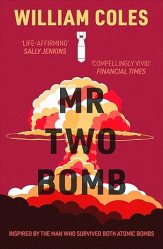
The main character miraculously survives the Atomic Bomb of Hiroshima. He catches the last train home – to Nagasaki – and arrives just before the world’s second atomic bomb explodes. As he battles through the apocalyptic destruction, he is haunted by one question: is he lucky, or unlucky?
I read this book several years ago and it has been imprinted on my mind ever since. It hasn’t had the size of audience it deserves and it isn’t an easy read but I found it life-affirming. I hope you will too – sometimes we have to learn about difficult topics in order to appreciate what we have.
Read my more detailed post about Mr. Two Bomb here.
Also, a heads up that A Coffee Break Story Collection: 36 Short Stories has been selected for an Amazon Limited Time Deal and, for a short time, is only 99p on Kindle. It makes a perfect antidote to the harrowing Mr. Two Bomb.
 “I enjoyed all the short stories…..wish there were more.” 5-Star Amazon Review
5 Questions About Writing With . . . Ian McMillan
Posted in 5 Questions About Writing, Poetry on August 5, 2025

Ian McMillan (Credit: Photo, Adrian Mealing)
Ian McMillan is a writer and broadcaster who presents The Verb on BBC Radio 4 every week and its sister programme The Adverb. He hosts both the annual T.S.Eliot Prize Readings and the Academy of Urbanism Awards. He’s written poems, plays, a verse autobiography Talking Myself Home and a voyage round Yorkshire in Neither Nowt Nor Summat. His latest book with Bloomsbury is My Sand Life, My Pebble Life, a memoir of a childhood and the sea. Ian is poet-in-residence for Barnsley FC and was Barnsley’s Lockdown Poet. He’s a regular on Pick of the Week, Last Word and BBC Proms Plus. He’s been a castaway on Desert Island Discs.
How do you discipline/motivate yourself to write and do you set daily targets?
I try to write every day and the motivation is always that if I don’t there will be blank pages in magazines and newspapers and books and there will be empty air on the radio. I prime myself for writing by going on my early stroll at 05.20 and then forcing myself to see five different things on a stroll I’ve taken for years; I pound my brain to make language from the things I notice and then when I get home I tweet the five things I’ve seen and then I’m set up for the day. For me it’s essential to write every day because if I don’t then I’m anxious that I might forget how to do it!
What are the most important qualities required by a writer? Do you have them?
A sense of wonder and a sense of discipline. Both of these can be cultivated and developed. A sense of wonder is essential because the world is, for all its faults, a wonderful place and as a writer it’s my job to report on it. I try to remind myself that the so-called ordinary is really extraordinary, even if it doesn’t seem like it in the drizzle! Discipline is so important: I have to write every day, I have to rewrite every day, I have to read every day and I have to reread every day.
How do you market yourself and your books?
I leave that up to my wonderful agent. I will say that, at least when you first start, you should say yes to every writing and performing opportunity but at the same time be wary of the people who don’t want to pay you and who say that doing something for nothing will be good exposure. There are certain things that I will do for nothing but it should never be expected that you will. You can’t spend exposure in the shop!
Which writing resources have you found useful, e.g., books, courses, organisations, websites etc.?
The Arvon Foundation was my writing school. I went on courses at their centre in Lumb Bank as a very young man and the things I learned there about writing and performing have stood me in very good stead over the years.
A top tip for other writers?
Always read as a writer. Examine each sentence as though you’ve written it and think how you might improve it. Think of yourself as the co-writer of anything you read, and remember that all writing, no matter who it’s by, can always be improved. Oh, and carry your notebook everywhere, or your phone if you want to leave yourself a voice note. That idea won’t remember itself!
About My Sand Life, My Pebble Life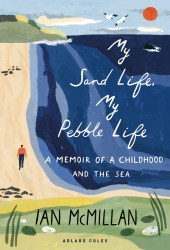 A memoir of a childhood and the sea. My life measured out in tides, coming in and going out and doing the same again. My life measured out in games of trying to spot the sea first.
A heartwarming and salt-water infused collection of coastal memories. In this perceptive and funny book, Ian transports us to a coastline rich in memories. He recalls his days by the sea, from Cleethorpes to Suffolk, from the coast of Northumberland to Blackpool, Scarborough, and the Isle of Skye. He walks barefoot to the sea to see the sun rise; he is attacked by seagulls, midges, and wasps; he eats a lot of fish & chips and it’s always the best yet; he nearly avoids a frisbee; he searches for jazz. In writing peppered with poetry, Ian recounts the memories and experiences that have shaped who he is today.
My Sand Life, My Pebble Life is available on Kindle and in hardback and audio formats.
Nesting by Roisin O’Donnell
Few books effect me enough to blog about them. Nesting by Roisin O’Donnell is one of those books. I’ve been raving about it to anyone who will listen.
The novel is set in Dublin and features a young woman, Ciara, who is being coercively controlled by her husband, Ryan. One day she’s had enough and, on the spur of the moment, bundles her young daughters into the car, along with a random selection of belongings, and drives away. She escapes one unbearable situation but arrives in another. She has little money, no job, nowhere to stay and her family are in England. And Ryan is relentless in his quest to get her back or to win custody of the children he’s shown little interest in, until now.
Ciara’s strength of spirit is tested to its limit as she navigates creating a home for her children in a hotel room, finding a job and facing the demons in her head.
The writing is wonderful, evocative and emotional. This is fiction but for me the book was heavy with real life. It paints such an authentic picture of the lives of families forced to live in a hotel room because of the lack of emergency social housing. Before reading Nesting, these families were just statistics to me but now they have a voice, a face and my respect.
Nesting is not holiday reading but it will leave you with a new perspective on coercive control, homeless families and the strength of maternal love.
Nesting by Roisin O’Donnell is available on Kindle, in paperback, hardback and audiobook. (And I’m not on commission!) Or try your local library – which is where I borrowed my copy.
If you’ve read the book, do leave a comment – I’d love to know what you thought?
What I Learned at the Lichfield Book Extravaganza
A few months ago I discussed the pros and cons of authors paying for tables at book fairs.

Meeting the Deputy Mayor of Lichfield at the Book Extravaganza
That post was based on the experiences of other writers. I’ve now taken part in one of these events as a stallholder. Here is what I learned:
1. A tall pop-up banner proclaiming your name, genre, book titles etc. is not essential. Individually they look professional, but space around the stalls can be limited, meaning the banners crowd each other out. I don’t have a banner and don’t plan to get one in the near future.
2. It’s essential to be able to accept both cash and card payments. I downloaded the Sum Up app onto my android phone in order to take card payments – this app doesn’t require the purchase of a separate card-reading device. I practised at home to ensure that I knew where on the back of the phone the customer needed to tap their card/phone. I had a couple of failed payments on the day but discovered that closing the app and starting again solved the problem. Sum Up takes a very small commission on each transaction. Also ensure you have a cash float in order to give change to those who hand over a £20 note.
3. Very few people will stop and peruse your table of their own free will. Make eye contact as people pass your stall and then immediately engage them in conversation; a question about the weather, compliment their outfit, bag etc., make a general comment about the event or whatever else pops into your head. Then lead gently into the books on your table. But accept that a lot of people will ignore you or not be your target reader. As with the rest of the publishing industry, you need a thick skin!
4. Have an ‘Event Special Offer!’ to attract people’s attention and act as a conversation opener about your books. This helped me a lot.
5. Make friends with an adjacent stallholder – you will need someone to watch your table when you go for a toilet break or in search of a cup of tea.
6. Take enough food and drink to last the whole day to reduce the amount of time you spend away from your stall.
7. Have business cards and bookmarks to give out.
8. Take a tablecloth plus book stands and an easy to see price list. I noticed that the few stalls with books just laid flat on a bare table attracted the least interest.
9. When someone buys a book, encourage them to join your email list either by displaying a QR code for direct online signup or by taking down their email address on paper to manually add later. I regret that I forgot to do this!
The Lichfield Book Extravaganza was a success for me (as well as a learning experience). I sold twenty books which more than covered my costs and I enjoyed the day. I will do this event again because it was fairly close to home, but I would think twice about travelling a long way unless it was for something special.
Please leave a comment if you’ve had experience of similar events?
5 Questions About Writing With . . . Ellie Henderson
Posted in 5 Questions About Writing on July 1, 2025
Ellie Henderson was brought up in Glasgow and now lives near the sea on the east coast of Scotland.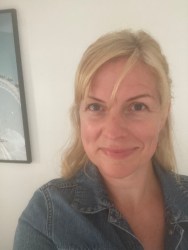 She has written five books set on the Isle of Arran and is working on a new series set by Loch Lomond. When she’s not writing, she runs creative workshops in the community and delivers training in First Aid for Mental Health. She also writes psychological fiction under the name Lorna Henderson.
Find out more about Ellie at: https://elliehendersonbooks.com/ellie-henderson
How do you discipline/motivate yourself to write and do you set daily targets?
It very much depends on deadlines and other work projects that I am juggling. I wish I could say that I sat down every day at a certain time to write x number of words. But I’ve had to learn to be flexible and fit in writing when I can. I used to work as a journalist – so I do love a deadline – that tends to motivate me. Recently I’ve found that walking is a good way to unclutter my mind and work out where the plot is going next. Then I sit down and write. Although I can also procrastinate so I will switch off the WIFI and phone and set a timer which helps focus my mind!
What are the most important qualities required by a writer? Do you have them?
I think anyone can write for the love and process of writing and I’m a great believer that creative writing can be really positive for our wellbeing. I think writing in order to be published can be different and can bring a lot of other additional challenges. Some of the most important qualities are: imagination, patience, perseverance, being open to feedback and learning. But most of all you need to actually just get on with it and write.
How do you market yourself and your books?
Fortunately my publisher, Joffe Books, does a lot of the marketing which is wonderful. I have previously self-published books and the marketing takes a huge amount of effort. I am quite introverted and prefer to shy away from publicity. I’d much rather be writing! However I know it is important. I use social media, mostly Instagram, which can be fun and am lucky that I have a lot of supportive followers who help to spread the word. I also keep in touch with local newspapers and let them know if I have any book news which might be of interest.
Which writing resources have you found useful, e.g., books, courses, organisations, websites etc.?
I loved The Artist’s Way by Julia Cameron; I also did an MA in Creative Writing which I personally found useful as it gave me a framework to follow at a time when I needed it most and I was trying to juggle work and family life and develop my writing.
A top tip for other writers?
Don’t give up! Keep persevering and trust you will get there at the right time. I’ve had hundreds of rejections over the years but that probably made me more determined to succeed. The final tip would be to enjoy the writing process. It’s such a gift and something I am very grateful for.
About A Summer of Secrets on Arran – published June 2025
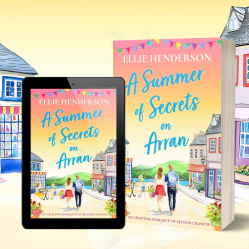 A Summer of Secrets on Arran is a heartwarming, emotional romance about second chances, family ties and the healing power of love. It’s about three women, Rosie, Isobel and Bella and a secret that could change everything they knew about love.
Excitement and Nerves
Have I got news for you!
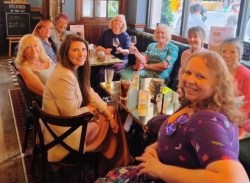
Choc Lit Authors before the Joffe Summer Party
My publisher, Choc Lit (an imprint of Joffe Books) has signed me to write two more novels!
Both books will feature a later-in-life romance as part of the storyline. The first book has a working title of Because You’re Worth It and follows Michelle, who inherits a mysterious fortune from her mother. Michelle must embark on a journey of self-discovery and learn that it is never too late to trust her heart. All being well, this will be published in summer 2026. The second book, which currently has no plot and no title, will follow in summer 2027.
This has made me extremely excited but also slightly anxious. I have to provide my editor with the manuscript for the first book by 1st December this year and I’ve never written to a deadline before. It’s like being back at school with that pile of homework that needs to be done always at the back of your mind.
Watch this space for how I get on!
In other news, last month I went to the annual Joffe summer garden party in London. The picture above is me (second from right under the window) with several of the other Choc Lit authors in the pub beforehand. It’s the second time I’ve been to the party. This time I was more confident and made a point of searching out everyone in the Choc Lit/Joffe team who’d had a hand in making my books a reality. I got to meet the lovely Kate Ballard who, along with Becky Slorach, the head of Choc Lit, gave me great editorial advice on Out of Control, which was published earlier this year. I also spoke to the lovely people who deal with marketing and social media and those who format both the Kindle books and the paperbacks. It really does take a whole team to make books happen!
 Final bit of news: My second short story collection, Hit or Miss?, was chosen as a June Amazon Monthly deal. This means the Kindle version is only 99p until the end of June, so now might be the time to indulge yourself (!) The book challenges the reader to decide which of the short stories were competition or magazine hits and which failed to land on the right editor’s desk at the right time.
 Sally Jenkins