5 Questions about Verse Translation With . . . Mark Haywood
Posted by Sally Jenkins in Poetry, 5 Questions About Writing on February 24, 2026
Mark Haywood is a poet and verse translator. 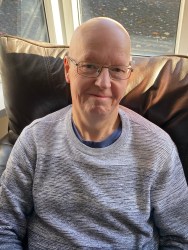 As a poet, he enjoys working with the challenges of formal poetry, particularly the sonnet and the limerick, and has had several sonnets and sonnet sequences published in the UK, Canada and the USA. Some of his sequences have dealt with topics uncommon in the sonnet form, for example art criticism and jazz theory. Recently Mark has been translating some of Molière’s classic 17th century French comic plays into rhyming verse. Some of this work has been shortlisted and longlisted in the John Dryden Translation Competition, and two of these translations, The Learned Women and The Flying Doctor, have been published by Broadway Play Publishing Inc, New York.
Mark also composes music and has had two collections of piano music published, as well as some articles on jazz.
How did you get involved in verse translation?
Most of us can remember having to “translate” something at school – maybe from French or German, or even (if you’re my age) from Latin. At my school we had to “do” Molière’s comedy Tartuffe, and I really enjoyed it, once I’d understood it well enough. We translated parts of it out loud in class, and wrote out bits in English for homework. The original play is in verse, but we simply put it into prose.
That was half a century ago and since then I’ve written a lot of formal verse in English. One day I was reading George Chapman’s verse translation of Homer’s Odyssey, and I thought, “I wonder if I could translate a bit of a Molière play into rhyming verse…that would be a challenge!” I picked The Learned Women which I’d once read in English and which had really made me laugh (I was going to need a laugh), decided on a rhythm and rhyme scheme, took a deep breath, and jumped in!
What are the most important qualities required by a verse translator?
The most obvious quality is proficiency in both the source language and the target language of the translation. That doesn’t mean one has to be bilingual, or anything like it. We’re talking about written translation as opposed to live interpreting where everything is done in real time. With written translation there is time to study the source passage, to understand its meaning and spirit/nuances, time to think, to write, to revise.
This brings me to the next important quality – patience! When I’m translating into verse, I try dozens of different ways of saying essentially the same thing, before I find the potential rhymes, and then experiment with more permutations before the rhythm of the verse works properly. I’ve learnt not to get impatient with myself because eventually it will click into place, and the harder it was to get there, the more satisfying it is when it works.
How does a translator find a publisher?
I use Google to locate publishers interested in publishing translations, some publishers specialise in it. The Writers’ and Artists’ Yearbook is also a good source of guidance, with listings of publishers, prizes, societies and so on, as well as articles to help people hoping to get published.
Which translating resources have you found useful, e.g. books, courses, organisations, websites etc?
I approach my translations of Molière armed first with some existing prose translations of the play. These are to ensure I’ve understood the original text correctly. I avoid looking at any verse translations because I want my own versification to be completely original. Then, with a good French dictionary and an English thesaurus, I’m ready to go.
A top tip for would-be/newbie translators?
Persevere and enjoy it! Be patient and kind to yourself – especially if you’re translating something into verse. My Molière projects continue to teach me so much, not just about the play I’m translating, or about French, but about English as well. What began as a difficult slog has become a wonderful and addictive process.
About The Learned Women
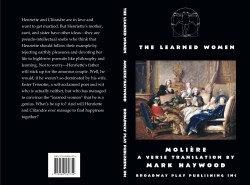 First performed in Paris in 1672, The Learned Women (Les Femmes Savantes) is one of Molière’s last and greatest comedies. It is a hilarious romp that pits pseudo-intellectual pretentiousness against plain common sense, and true love against self-seeking duplicity. As with all of Molière’s classic comedies, it is as relevant today as it ever was.
Mark’s translation is published (paperback and e-book) by Broadway Play Publishing Inc (December 2025) – click here for full details. It is also available here through Waterstones and here through Amazon.
3 Short Story Competitions plus the Society of Authors
Posted by Sally Jenkins in Competitions, Events, Promotion, Resources on February 13, 2026
It’s been a long time since I posted any competition opportunities – so here goes with three I’ve stumbled across recently.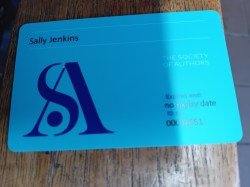
Cats Protection Short Story Competition
Cats must be central to the story’s plot and highlight the connection between cats and people. The story must be imaginative and creative as well portraying cats in an accurate and sensitive way.
The entry fee is £10 and will help the charity to continue its work in making a better life for cats.
The winning entry will be published in The Cat magazine and featured on the Cats Protection website. The winner will also receive an exclusive prize bundle from Cult Pens, worth up to £350.
Entries should be between 250 and 1,000 words.
Closing date is 31st March 2026.
For full details click here.
New2theScene Winter Short Story Competition
No theme and a maximum 4,000 words (so a bit more freedom with this one!)
The entry fee is £5 and the closing date is March 1st 2026 (so you might need to get your skates on!)
The winner receives lots of things: A podcast interview, their story published in an anthology & on the website, an ‘Origins’ blog to promote themselves, a free workshop place (worth £30), a relationship with New2theScene – potential offers for projects not advertised and £50 N2tS vouchers for their bookstore.
There are also prizes for ‘notable mentions’
For full details click here.
The Writing Clubroom Spring Competition
No required genre and a maximum 1,000 words.
FREE entry and the closing date is Easter Sunday 2026.
Total prize money is £150, split as follows: Prizes: £75, £35, £15 and £5 × 5
The judges are interested in work that feels honest, considered, and purposeful in its own terms.
For full details click here.
In other news, I’ve joined the Society of Authors. It describes itself as ‘the UK trade union for all types of writers, illustrators and literary translators’ and has 12,500 members. Amongst other things, it gives advice on contracts (these can be full of pitfalls and difficult for the layman to understand), tax and other writerly subjects. It also offers training and the opportunity to meet other writers. I’ve just been to a meet-up with the West Midlands group in Birmingham. There were about ten of us around a table in a cafe and the theme for meeting was ‘How We Promote Ourselves’. It was interesting to hear how authors handled book launches, ‘in person’ events, newsletters and other marketing opportunities. I was surprised (and relieved!) how little emphasis the group put on social media posts. The general consensus was that it was better to focus on a targeted group than shouting into the wind.
I’m looking forward to delving deeper into what the SoA has to offer as the year progresses!
All About . . .The Writing Clubroom
Posted by Sally Jenkins in All About . . ., Resources on February 3, 2026
I stumbled across The Writing Clubroom when Steve and Ash, who run the organisation, were promoting their Christmas short story competition at the end of last year. They were lovely to deal with and I was delighted when my story was placed third. I’ve invited them to answer five quick questions about their quiet ethos and what they offer.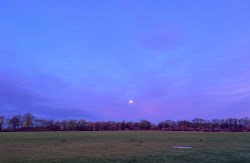
What are you offering to writers?
We offer a calm, supportive place to write and think. The Writing Clubroom is designed for people who want to approach writing without pressure, comparison, or urgency. We provide gentle guidance, clear starting points, and thoughtful spaces where writers can explore ideas, practise craft, and grow in confidence at their own pace.
Who is your target audience in terms of experience level, genre, or motivation?
We mainly support beginners, returners, and quieter writers who may have drifted away from writing or never quite felt they belonged. Some are starting for the first time; others are coming back after years away. Genre matters less to us than mindset. Our members tend to value kindness, seriousness, and reflection over competition or speed.
What makes you different from similar organisations?
We focus on removing pressure before adding structure. Writing doesn’t begin with productivity; it begins with permission. We avoid noise, performative sharing, and the sense that writers must constantly prove themselves. People are free to work privately, alongside others, or to step gently into shared spaces if and when they wish. There is no expectation to impress or to progress at a fixed rate.
How are you qualified to offer this service, in terms of experience or anything else?
Our qualification lies in long experience of working with writers as people rather than as producers. We understand how hesitation, confidence, and self-judgement shape the writing process, and how easily good intentions can be blocked by pressure. The Clubroom has grown from careful listening, reflective practice, and a commitment to treating writing as a human activity rather than a competitive one.
What is the single most important thing a writer should have, and why?
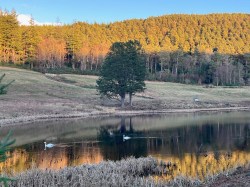 Permission. Before technique, before confidence, before ambition, a writer needs permission to begin imperfectly and to continue without judgement. Once that is in place, skills, habits, and confidence can grow naturally. Without it, even the best advice struggles to land.
Personally, I love The Writing Clubroom’s concept that writing should be enjoyed for its own sake without any of the outside pressure that we constantly feel in our everyday lives. Our writing can be our own personal retreat into calm, as illustrated by the two images Steve and Ash supplied to accompany this post.
If you would like to find out more, visit The Writing Clubroom’s website or their Facebook page.
A Photo Shoot!
Posted by Sally Jenkins in Lifestyle, Non-writing, Promotion on January 27, 2026
Apologies for the number of images of me in this post. Here’s the explanation: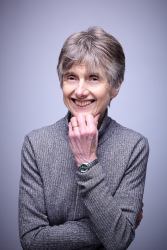
For the last four years I’ve been using the same old headshot for my author publicity and social media. It was taken by my husband and it took ages to get something that was just about acceptable in terms of lighting and my facial expression. Since then I may have grown the odd wrinkle or two, but I’ve delayed getting an updated image because of the aggro involved. However, I came across Najm Clayton, a local photographer with very reasonable charges, so I bit the bullet and asked him to take some photos.
I wasn’t looking forward to the experience. On top of deciding what to wear (plus which additional tops to take with me for a quick change into a ‘different’ look), I was worried about my abilities with makeup which I rarely use but which felt necessary on this occasion and I wasn’t sure I’d be able to produce the ‘correct’ facial expressions on demand.
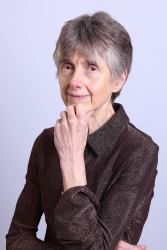 I needn’t have worried. Najm, immediately put me at ease with small talk and background music. The studio location also broke the ice. It was on the first floor of the now closed Marks and Spencer store in Sutton Coldfield. The whole building has become a centre for creatives, which made it feel an appropriate place for an author! The old managers’ offices and staffroom have become artists’ workshops, a band also uses the first floor studio for gigs and the ground floor will soon open as an art gallery.
Najm did test shots to check the lighting and then he guided me through turning my head, adjusting the angle of my hips, raising my chin slightly but not too much and going for a neutral expression but not too passport-like. He spotted any closed eyes immediately and took another shot. Partway through he took a couple of steps up a ladder to get a downward camera angle, after which he posed my arms to give some shots a completely different look. I was sent off to swap my top in the abandoned M&S changing rooms, still complete with mirrors, and then we repeated the whole scenario. And then again with my third blouse.
Amazingly the whole thing took only thirty minutes and it gave me a taste of what it must feel like for models on a fashion shoot. Half an hour was doable but a whole day of being posed, getting changed, posed again ad infinitum must be extremely tiring!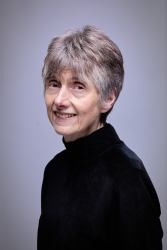
Given the subject matter that Najm had to work with – I think he did a brilliant job!
Find out more about Najm Clayton via his website.
5 Questions About Writing With . . . Harry Whittaker
Posted by Sally Jenkins in 5 Questions About Writing, Authors on January 13, 2026
Harry Whittaker is an author and broadcaster.  His first fiction title for adults, Atlas: The Story of Pa Salt, was an instant Sunday Times Number One Bestseller, and was nominated for Fiction Book of the Year at the British Book Awards. Rosie and the Friendship Angel, from the Guardian Angels series, was named as one of the best books for children in 2022 by The Times. He lives in North Yorkshire with his wife and twin daughters.
How do you discipline/motivate yourself to write and do you set daily targets?
I began writing picture books for children six years ago. Oh, that was a joy! I would spend entire mornings poring over the structure of sentences (in between brewing increasingly eccentric coffees, staring out into the garden and daydreaming). But now I’m a novelist, and things are grimmer. Then only way I can hit a first draft deadline is by locking myself away and forcing myself to write ten pages per day. Sometimes, that provides only three pages of usable manuscript. But every so often, when the stars are in the right place, eleventh, twelfth and even thirteenth pages have been known to appear.
What are the most important qualities required by a writer? Do you have them?
I think discipline is probably the most important quality, and I don’t I possess an ounce of it. I will actively seek out ways to leave my desk – be it to take the dog out, feed lunch to one of my twin daughters, or sneakily watch The Traitors on iPlayer. As an author, you’ve really got to love writing. By which I mean hate writing. By which I mean you’ve got to love to hate writing.
I imagine that forcing out a novel has some crossover with childbirth. It’s hideously difficult, but at the end you have a beautiful baby. Then you immediately forget the excruciating pain and vow to do it all over again in the coming years.
How do you market yourself and your books?
I just say ‘yes’ to anything any publisher asks of me. Once I’ve delivered the product, it’s out of my hands, really. I love talking to readers. I don’t think there’s been a single event or signing I haven’t enjoyed. The key to those is to authentically be oneself. (And for the love of God, not to take your work too seriously.)
Which writing resources have you found useful, e.g., books, courses, organisations, websites etc.?
My mother was the author Lucinda Riley, so she was my number one resource. But if you don’t have a global bestseller on the end of the phone, I think the BBC Writers Room is pretty fab. Though it’s primarily a screenwriting resource, the advice on there is universal. David Edgar’s How Plays Work is essential if you’re wanting to hone your theatrical craft. And then, of course, there’s every book ever written. Each time you pick up something to read, be it in your genre or something new entirely, you absorb, learn and grow.
A top tip for other writers?
Write! It doesn’t matter where, when or how much… just go for it. If you’re writing, you can call yourself a writer. If you’re not, you can’t.
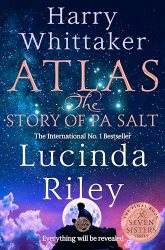 About Atlas: The Story of Pa Salt – The epic conclusion to the Seven Sisters series
Spanning a lifetime of love and loss, crossing borders and oceans, Atlas: The Story of Pa Salt draws the Seven Sisters series to its stunning, unforgettable conclusion. The sisters must confront the idea that their adored father was someone they barely knew – and, even more shockingly, that his long-buried secrets may still echo through the generations today.
Amazon Ratings
Posted by Sally Jenkins in Competitions, Markets, Successes on December 15, 2025
As we approach Christmas and the end of the year, I’d like to say a heartfelt thank you for your continued support. Most of the time, the writing life is a hard slog. Having people ‘on side’ makes a massive difference to the morale. Thank you!

The Interior of Waterstones in Bradford
At the beginning of December, Out of Control received its 1000th Amazon rating – which I think is cause for celebration. Little Museum of Hope has 1035 ratings and Waiting for A Bright New Future is creeping up behind them with 809 ratings. Thank you to anyone who has read and rated or reviewed any of my books – it makes a difference in several ways: a positive rating or review gives the author a boost and helps the book gain visibility on Amazon, which in turn may increase sales and sway a publisher into re-signing an author for further books.
The lovely people at Farnham Literary Festival have asked me to remind you that the closing date for their ‘First Five Pages’ competition is 31st December 2025 and it’s fast approaching. There is a first prize of £1000!
And here is a submissions opportunity for the New Year. Bending The Arc, a Thrutopia Magazine, will be open for submissions from Monday 12th January until Sunday 1st February. The magazine wants stories, poems, and essays which ‘bend the arc of the possible towards a thriving future on earth’. Their Substack account has more specific details.
I’ve mentioned the New Street Authors’ Collective before. They have produced a Collection of Beginnings. This allows readers to try a new author or genre without monetary risk and it’s available free of charge. The opening to my psychological thriller The Promise can be found by scrolling down to page 10, if you fancy giving it a try.
A couple of weeks ago I was in Bradford for the weekend and finally got to visit the town’s branch of Waterstones. I’d seen many pictures of the store’s interior on social media and it didn’t disappoint in real life. And it’s got a cafe where you can peruse your purchases! What more could a reader want?
Finally, I’d like to wish you a very happy Christmas and a healthy 2026. See you in the New Year!
5 Questions About Writing With . . . Jane Holland
Posted by Sally Jenkins in 5 Questions About Writing on December 2, 2025
Jane Holland is a published poet, and a bestselling, award-winning novelist who writes in multiple genres under multiple pen-names, including her popular WWII Cornish Girls saga series as Betty Walker. 
She’s written over 70 novels, and lives in Cornwall with two adorable cats and a large family.
How do you discipline/motivate yourself to write and do you set daily targets?
Thankfully, after 70-odd novels, writing is still hugely exciting to me, but I do usually need to manipulate myself into starting work because, like most people, I prefer thinking about work rather than doing it. I may go to a coffee shop, turn off WIFI, listen to music on headphones, and bribe myself with coffee and a treat. As soon as I’ve got a few words down, it gets easier. Or I may write longhand for a few hundred words, which feels more creative, and add more as I type it up. Increasingly, I use dictation software – Dragon Anywhere app on my phone – and upload my rambling thoughts straight into a Word doc for editing. I can achieve a 1000-word rough draft (my daily minimum) in ten minutes like that.
What are the most important qualities required by a writer? Do you have them?
Leading on from my answer above, you need self-motivation and self-discipline. Talent is common. Skill can be acquired. But if you frequently let days slide by without writing, you’ll struggle to make it as a professional. You must be dogged too, robust and able to shrug off criticism, to keep going and believe in yourself regardless of rejections and mockery. You need to be a workaholic egotist. And yes, that’s me. Humility is corrosive to a writer.
How do you market yourself and your books?
I run occasional ads on Facebook and Amazon, though increasingly these yield little return. My mainstay is X/Twitter which I enjoy, though a bearpit at times, and I’ve found many new readers by chatting there. I really like YouTube but I’m inconsistent with posting, so my videos don’t get many views. I underuse TikTok and Instagram for the same reason. My new Substack has brought a few sales, but its longer content requires too much energy that I’d rather put into writing new books. Producing new, readable novels several times a year seems the best and most organic way to find a readership.
Which writing resources have you found useful, e.g., books, courses, organisations, websites etc.?
I’ve consulted The Writer’s Journey (especially the original edition) by Christopher Vogler for every single novel I’ve ever written. It’s endlessly useful at helping me structure my novels and avoid things dragging partway through.
The Bestseller Code by Archer and Jockers is also worth a read if you want to write commercially.
I’ve been on many Arvon Foundation residential courses and recommend going on at least one, if only for the unique experience of being stuck in the middle of nowhere for 5 days with a group of other writers. In particular, it can kickstart a project if you’ve lost your way.
A top tip for other writers?
Finish your novel. No excuses. Until you’ve done so, even if it’s disintegrating under you, you cannot hope to fully understand what you’ve done, and then do it again, and do it better. Leaving a novel unfinished is the kiss of death. Ignore self-doubt and push through to the bitter end. Then start a new one soon after; don’t linger over edits. (Also, I find planning the novel out in advance hugely helpful when it comes to finishing what you start. I used to worry this would stop me writing it, but the opposite is true!)
 About The Spiritualist’s Daughter – published November 2025
Victorian London is under siege. Who are you going to summon?
After the death of her spiritualist father, Ophelia Savage must continue their psychic evenings or risk losing everything. But a series of macabre events leaves Londoners panicked, and then rival psychics start mysteriously disappearing.
Will she be next?
Do You Save Things for Best?
Posted by Sally Jenkins in Books, Lifestyle, Non-fiction, Non-writing on November 21, 2025
I’m one of those people who buys something new, puts it in the wardrobe and keeps it ‘for best’. Only to bring it out a year or two later and find it’s either gone out of fashion or no longer fits. I’m also a rainy day saver, convinced that a catastrophe is awaiting around the corner. Therefore, I save coffee shop loyalty free drinks, supermarket club card points, beautiful notebooks and any spare cash for when/if that catastrophe ever happens.
However, my mindset is changing after reading, ‘Die With Zero’ by Bill Perkins. The book reiterates what we all know but rarely act upon: There are no pockets in shrouds and You can’t take it with you. It advocates spending/using things so that you die with as little surplus as possible. This means that you get to enjoy everything that you’ve ever worked for over the years.
Bill’s advice is equally relevant to billionaires and those of us of more modest means.
He advocates maximising expenditure on travel and other active experiences in our younger, healthier years instead of hoarding money until we are too old or ill to enjoy hill walking, skiing, sightseeing or whatever it is that we’d like to try. Bill also explains that just as our money earns interest when invested in the financial markets, it can also earn us interest when invested in experiences. This latter type of interest comes in the form of memories and the pleasure we get at looking at photos and souvenirs of those experiences, holidays, meals with friends etc. And this interest, like financial interest, benefits from compounding over time, i.e., the earlier in life we create a memory, the longer we have to enjoy looking back on it.
Following this spending mindset sounds mean if you have people to whom you’d like to bequeath money when you die but Bill Perkins has an answer to that. Generally, people are in the latter half of their lives, say 50+, when they lose both parents and thus inherit. By that time most people are financially solvent after working hard and with children grown up. The time that most of us could use some extra money is around age 30, when we are setting up home, starting a family and struggling on the career ladder. Therefore, Bill argues, it’s better to give money to your children when they need it most and you can enjoy seeing how it’s helping them, rather than waiting until you’re dead.
The big hurdle to all this is knowing how long you are going to live, so that you can ensure that you don’t spend/gift too much money too soon and end up at zero but with several years of life remaining. The book suggests using one of the many online life expectancy calculators to estimate how long you might reasonably have left or some financial advisors suggest using the age of 90.
Most people probably come to this book later in life – but, in order to grow the compound interest on those experience investments, reading the book at an earlier age is recommended. However, as in my case, better late than never.
And tomorrow I’m going to start wearing the things in my wardrobe which still have labels on!
5 Questions About Writing With . . . Gabrielle Mullarkey
Posted by Sally Jenkins in 5 Questions About Writing on November 11, 2025
Gabrielle Mullarkey has just released her fourth novel, The Ones Who Never Left, a gothic chiller to read with the lights on. She’s also written over 3,000 short stories and serials for women’s magazines.  As a journalist, she’s contributed features, travel writing and opinion pieces to a wide range of publications. Her writing has been broadcast on radio, adapted for audio download, and won or been shortlisted in writing competitions. She also teaches creative writing.
How do you discipline/motivate yourself to write and do you set daily targets?
I trained as a journalist and that discipline helps when it comes to developing ideas and meeting deadlines. Because I write short stories and serials alongside novels, my daily routine is determined by a story or serial I have to complete, or the next idea I have to pitch. I can be very tunnel-visioned unless distracted by the pressures of daily life. That’s handy because, as a champion worrier, I sometimes find it difficult to switch off from daily demands.
What are the most important qualities required by a writer? Do you have them?
When an idea takes root, you must let it germinate without becoming impatient. Stamina is key when actually writing, it’s the old adage of ten per cent inspiration and 90 per cent perspiration.
I teach creative writing for two local authorities, and meet talented writers who become disheartened by the need to make several revisions to a story. The act of creativity is such an initial joy, it often comes as a shock to discover how much hard work is involved in making a piece the best it can be.
You also have to tread a fine line between self-evaluation and self-belief so that you’re open to learning from others. I like to believe in the democracy of writers (the correct collective noun is a procrastination of writers!): There’s always something to learn from others if you pay attention.
How do you market yourself and your books?
All my novels have been different. I wrote two romances, then a historical crime novel featuring Jane Austen as an amateur detective, and my latest novel is a gothic chiller set in a haunted house. Writers are often told that we need a ‘brand’ and to stick to writing in the same genre. So, while I do love flexing my writing muscles in different genres, I feel I’ve ‘come home’ writing dark subject matter that’s full of psychological chills and jump scares.
While my four novels have been traditionally published, like all writers I do as much self-promotion as possible. On social media, you can find me on X.com, Bluesky and on Substack, where I talk about the inspiration behind my latest book.
I also reach people through the women’s magazines I write for, and through courses and workshops I teach. I don’t impose myself on anyone when teaching (I hope!), but writing course participants are always keen to know what the tutor is working on.
For the past few years, I’ve attended the South Warwickshire Literary Festival. I have an MSc is in Creative Writing for Therapeutic Purposes and, last year, I gave a talk on writing for wellbeing. This year, I judged the festival short story competition, gave a workshop at the event itself and joined the author Q&A panel. I’ve also given talks on gothic literature and teach an annual Christmas workshop on writing a ghost story.
Sometimes I’ve had to push myself out of my comfort zone, but it’s a case of ‘feel the fear and do it anyway!’ Now, if I could just master the diving board at my local swimming pool or driving on the motorway at night…
Which writing resources have you found useful, e.g., books, courses, organisations, websites etc?
I’m a member of the Society of Authors, which offers excellent one-off workshops to members, on everything from narrative structure to mental wellbeing.
My love of Jane Austen inspired my darkly comic detective novel and I’ve always adored ghost stories and gothic literature, from Mary Shelley’s Frankenstein to Shirley Hill’s The Haunting of Hill House. I don’t try to emulate or be like anyone else. It’s vital that you listen to your own voice.
From a wellbeing perspective, I love to revisit Natalie Goldberg’s book, Writing Down the Bones, which talks about writing as an act of discovery and is chockful of wisdom to help sustain self-belief.
A top tip for other writers?
Be attuned to the world around you. You might get the spark of an idea from reading about a seaweed farm in the Hebrides or overhearing a remark on the bus. I once got a short story out of a stranger exclaiming in public, ‘but we always have shepherd’s pie on a Tuesday!’ Writers are magpies.
Equally, read as a writer, noting how the writer uses imagery, structures the narrative and so on. It won’t spoil your enjoyment of a text, only enrich it.
About The Ones Who Never Left – published October 2025
 Disillusioned with London, newlyweds Lucy and Hugh move to rambling Rook House in Yorkshire, unfazed by local claims that the house is haunted. Hugh, as a writer of supernatural fiction, hopes that the house will ‘speak’ to him through its brooding history. Meanwhile, Lucy craves the solitude and scenery that will inspire her to pick up a paintbrush again. But it soon becomes clear that someone – or thing – in Rook House has been waiting for its latest occupants… waiting to unfold a story that’s been whispered down the years but gone unheard. They don’t yet know it, but Hugh and Lucy are the perfect audience. The former inhabitants of Rook House have a story to tell. And if you listen too closely, you end up joining the ones who never left.
The Ones Who Never Left is available in paperback from Spiral Books, Amazon and all good bookshops, including Waterstones.
Bedsit Three – 10th Anniversary
Posted by Sally Jenkins in Books, Competitions, Successes on October 26, 2025
Today is a landmark day for me, so I’m doing a bit of my own trumpet-blowing. Drum roll, please!
My first novel, Bedsit Three, was published ten years ago, on 26th October 2015.
Applause please!
It won a small competition and the prize was publication through Amazon in paperback and on Kindle. It was also shortlisted in two other competitions. That book is still selling (only 99p on Kindle!) and also being read by those with a Kindle Unlimited subscription. Bedsit Three is a thrilling ‘why-dunnit’ and the competition organiser, Michael Barton, said this: “This novel is well-constructed and well-written. But it’s also far more than that. It’s a book that elicits emotional reaction, drawing the reader into the story and placing him or her in the middle of the action page after page. Be prepared for a sleepless night, because you won’t want to put it down until you get to the end.”
Publication of Bedsit Three was a tiny, hardly noticeable happening in the publishing world but it was a real confidence boost to me and since then I’ve had a further four novels published.
 The Promise was published in 2018 in partnership with the Book Guild. When the rights reverted back to me, I independently published it on Kindle. A limited number of paperback copies are available directly from me.
In autumn 2022 I signed a 3-book deal with Choc Lit (which became part of Joffe Books six months later) and they published my next three novels: Little Museum of Hope, Waiting for a Bright New Future and Out of Control. These are all uplifting women’s fiction with a mature main character and a little bit of romance.
Earlier this year I signed a further 2-book deal with Choc Lit/Joffe and the first of those will be out in 2026.
I owe a huge thanks to Michael Barton and the other organisers of the Ian Govan Award for choosing Bedsit Three as their competition winner and thus giving me the confidence to continue along the path to become a novelist.
Note to other writers: Never underestimate the power and benefits of entering even the smallest competition.
 Sally Jenkins