Before I Go To Sleep by SJ Watson
Posted by Sally Jenkins in Authors, Books on December 23, 2011
I’ve just read a terrific book – Before I Go To Sleep by SJ Watson.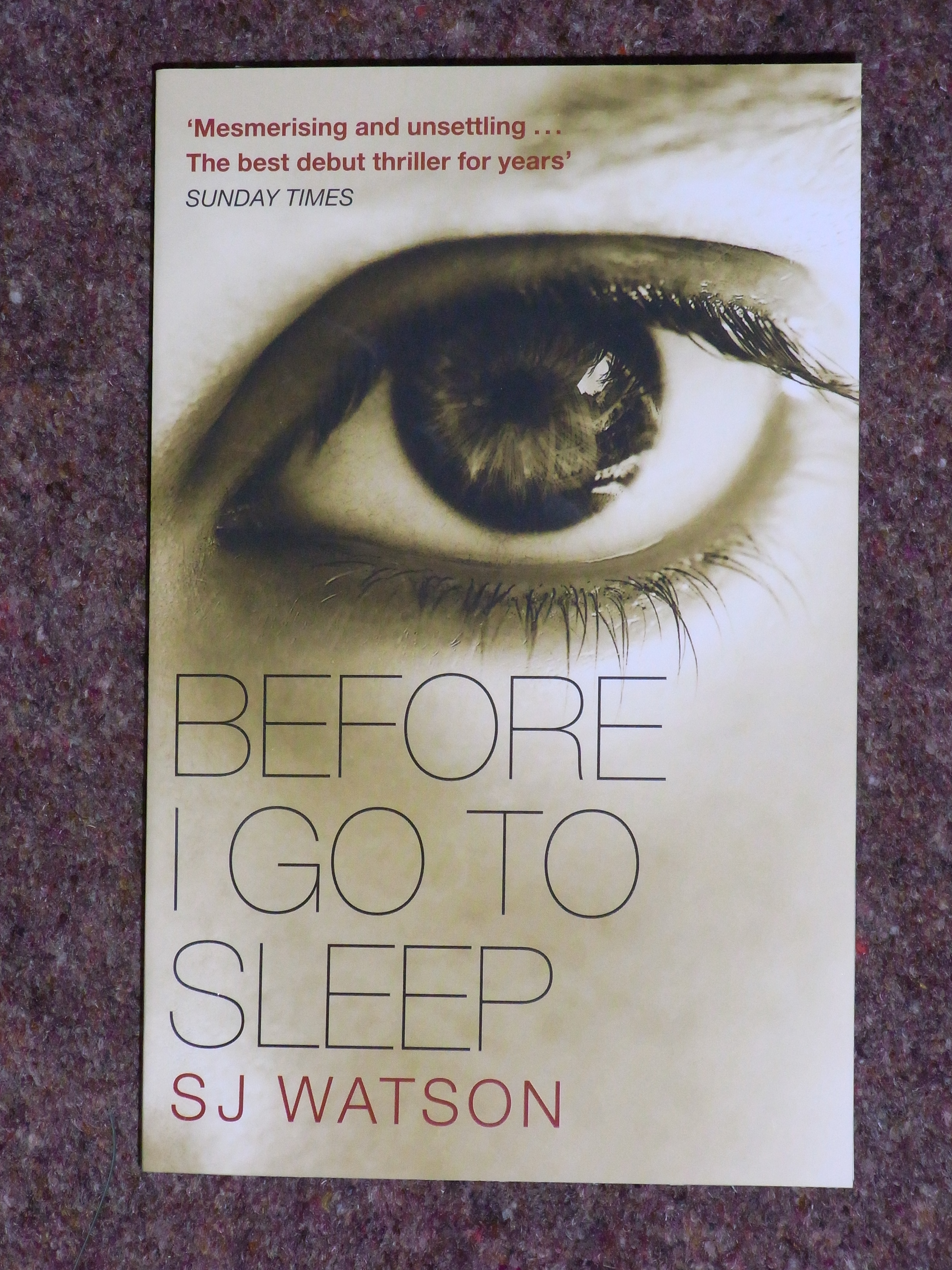
It’s about a lady called Christine who suffers from memory loss. Each morning she wakes up next to a strange man, not knowing who he is, how she got there or if anything happened between them. This man is her husband, Ben, and every day he has to explain their relationship to her and the facts about her past life. This happens day after day after day. Then a doctor takes an interest in her case and begins to see Christine without Ben’s knowledge. He encourages Christine to start keeping a journal and it appears that Ben may not be telling the full story about Christine’s past.
The ending is nail-biting stuff …
In 2009 Watson took part in the first Faber Academy ‘Writing a Novel’ course and this book is the result. Ever hopeful, I’ve just had a quick look at this course and it’s £3,500 for 6 months – a bit out of my league but it was obviously a good investment for Watson because the book has been translated into 30 languages and the film rights have been acquired.
Before I Go To Sleep is Birmingham’s Big City Read and 1,000 free copies (999 now because I’ve had one of them) are available from the city’s libraries. More details are here.
Notes From a Hospital Bed
Posted by Sally Jenkins in Non-writing, Writing on December 19, 2011
A few days ago I had to go into hospital for a minor operation. Like most people, I was nervous and tried not to think

Image via Wikipedia
about the actual procedure. Instead I tried to focus on the more pleasant things – such as choosing which book to pack to fill the time before I went down to theatre, going shopping for new slippers (fruitless – they were all old ladies’ styles!) and the relief I would feel when it was all over. If I had dwelt solely on the operation I would have been stressed, anxious and maybe I would’ve chickened out of the whole thing altogether.
Sitting in the ward in a backless gown, thick white anti-embollism stockings and paper pants (too much information – sorry!), it struck me that it was all a bit like attempting a novel. The thought of the huge task of slogging away at 80,000 words strikes fear, anxiety and stress into the heart of any writer – and scares many of us away from starting chapter 1 at all. But taking our eyes off the task ahead and instead concentrating on the preparation (character sketches, plot, chapter outlines etc) and allowing ourselves (brief!) flights of fancy to a future book launch party makes things less daunting – allowing us to slip into the actual writing without too much worry, just as I slipped under the anaesthetic (well, after a couple of attempts by the anaesthetist at finding a vein for his needle).
So don’t let that unknown black hole of hard work frighten you off attempting a longer piece of writing – concentrate on the pleasanter bits to ease yourself into it.
NAWG Short Story Competition 2011 Critique
Posted by Sally Jenkins in Competitions, Writing on December 14, 2011
A couple of months ago I entered the National Association of Writers’ Groups short story competition and I paid £3 extra for a critique by Linda Lewis. The story I sent had already been in 2 competitions (without success!) but I am fond of it and decided it deserved one more chance.
Again, it came nowhere but this time I found out why. Linda was very gentle but constructive in her comments. She explained that the story didn’t include enough information about the heroine to enable the reader to care what happened to her. Essentially I was writing about a lonely old lady in hospital but I didn’t explain why she had no visitors or what she’d done with her life (all rather obvious stuff when I look at it now). Linda also said that this kind of story had been written many times before (and I thought my idea was original!).
So now I know where I went wrong. I still like the story so I’m going to add some background information and try to think of a twist to make it a bit more unique. Then I’ll look for somewhere else to send it.
Linda writes a regular column in Writers’ Forum magazine and is offering a critique service through her website (don’t be scared – she knows how to phrase things kindly!).
Every little helps…
Posted by Sally Jenkins in Successes, Writing, Writing Exercises on December 9, 2011
Writing is a frustrating occupation with little reward. It’s easy to get fed up with the rejections, the publications that don’t bother to reply at all and that blank piece of paper which refuses to be filled with wonderful prose.
So why do any of us keep writing? Why do we pick up a pen or drag ourselves to the keyboard day after day? Is it the pleasure of losing ourselves in another world (in which case it would be easier to just pick up a book written by somebody else)?
Hope is what keeps me going. Hope that the editor might like this article pitch, hope that this story might win the competition or this reader’s letter might bag me the star prize.
This hope is fired by small incidents and minor successes along the way – things that cheer me up when the bigger prizes are eluding me.
One of these was my writing group’s Christmas meeting last week. Our new program secretary, Moira, organised a fun competition for a piece of writing containing the phrase ‘It happened every Christmas’ – with prizes from her attic store cupboard. We all took some food (there was way too much food!) and listened to everyone’s entries. We had fiction, poems, memoir and articles. Moira had the unenviable task of awarding the prizes. I received a scented candle in a pretty box (pictured). It may not be an award to add to my CV but it gave me a boost.
A couple of days ago I met up with my writing buddy, Helen. She didn’t award me any prizes but I did get inspired from our chat about plans for 2012. I came away knowing that I have to produce a certain amount of finished work otherwise I’ll let the side down.
Finally, I’ve been shortlisted in the latest Emerald Writing Workshops competition. It’s good to see a couple of other familiar names on the list – fellow blogger, Susan Jones and Sharon Bee who runs the Fiction Addiction website. Fingers crossed for us all!
So, maybe I haven’t won the Booker this month but there have been plenty of little things to keep me going!
Book Reviews
Posted by Sally Jenkins in Books, Writing on December 5, 2011
Read any good books lately? As writers we should all be bookworms too and what better way to practise concise writing than with a book review?
A book review requires the ability to:
- Summarise a plot (without giving away the ending!)
- Pass an opinion on various aspects of the book – it’s construction, characterisation, use of language etc.
- Share any emotional impact that it had on you – did it make you laugh, cry etc.
Writing book reviews won’t make you rich but it might earn you a free copy of a book and get your name out there.
Book reviewing opportunities:
- Waterstones – if you’ve got a Waterstones card (i.e. a free loyalty card – no need to buy anything) then you can enter regular draws for pre-publication copies of new books to review. There are usually 25 copies of each title to give away and I’ve been successful in the draws several times. If you receive a book then you just post a short review on the Waterstones website (and it doesn’t have to be good). Details of the books currently on offer are here.
- Take A Break’s Fiction Feast – each issue carries a 70 word ‘My Favourite Book’ from a reader. £20 is paid for each one used.
- The Saturday Guardian are asking ‘What have you enjoyed reading in the past 12 months?’ Email them no more than 150 words to readers.books@guardian.co.uk to arrive no later than Sunday 11 December and preferably write about a recent title. A selection of the reviews received will be published – no payment but the kudos of appearing in a broadsheet newspaper.
- Your own blog/Facebook/Twitter etc. – in these days of zero publicity budgets, authors need all the help they can get so if you’ve enjoyed a book, pass the word on! (and someone might do the same for you one day)
Alan Sillitoe Open Poetry Competition
Posted by Sally Jenkins in Competitions, Poetry on December 1, 2011
When entering a competition it’s always nice to know where the entry fees are going. The Alan Sillitoe Open Poetry

Image by wynlok via Flickr
Competition is raising funds to commission a statue of him, in Nottingham (£50,000 is needed). Alan died in 2010 and was one of Nottingham’s most distinguished 20th century writers.
Poems can be on any subject but must be no more than 40 lines. Entry fee is £3 (or £10 for 4 poems). Entry is by post only. The closing date is 10th January 2012 and winners will be notified in February. Full details are here.
If you are a fan of Sillitoe’s work (Saturday Night & Sunday Morning, The Loneliness of the Long Distance Runner etc.) you can make a donation to the statue fund here and be mentioned on their ‘Wall of Honour’.
The Writers’ Toolkit 2011
Posted by Sally Jenkins in Events, Promotion on November 28, 2011

Image by Lancashire County Council via Flickr
‘Write often, to a deadline and with an audience in mind. Have something of the marketer about you.’
This was the advice of writer and broadcaster, Stuart Maconie (pictured), in his keynote address at The Writers’ Toolkit 2011, held in Birmingham last week. He went on to tell us that the mastery of words is power and we should be proud to say ‘I am a writer’.
It was a full day of panel discussions and chances to chat to other writers. I found the session on ‘Networking as a Writer’ the most interesting and I came away with several scribbled notes about how to do this (both on-line and in real life):
- Be generous – help those who can’t possibly help you. It will be remembered and what goes around comes around. Share things that might benefit others – don’t see them as your rivals.
- If it feels like networking then you’re doing it wrong or trying too hard. It should feel like a conversation, not a sales pitch.
- Don’t vent your feelings online no matter how badly you feel you’ve been treated – cyberspace is a big place and you never know who might be reading.
- Become part of the real and virtual community. Join or start reading/writing groups and classes. Do book reviews on your blog & approach other writers to ask if they’d like you to review their book.
- Don’t limit yourself to writing events – attend other types of conferences and look at different types of blogs.
- Leave intelligent comments on the blogs of others to make people curious enough to have a look at you.
- Listen to what others have to say – don’t just sell yourself all the time.
- Be genuine and approachable
The event was organised by Writing West Midlands.
Win ‘Write Copy, Make Money’
Posted by Sally Jenkins in Competitions on November 24, 2011
Work Your Way have 2 signed copies of ‘Write Copy, Make Money’ by Andy Maslen to give away.
- What are the 7 essential personal qualities you need to be a successful freelance copywriter?
- What is the single biggest mistake most freelance copywriters make when quoting fees? (What should you do instead?)
- How do you go about winning that all-important first copywriting job?
This book, written by one of the UK’s leading and most successful freelance copywriters, has the answers and much more more.
But you’ll have to be quick because this competition closes tomorrow (25/11) but it’s easy to enter. Just like Work Your Way on Facebook, and leave a nifty bit of copy on their wall to finish the following sentence: “Work your way for…..” For example “Work your way for … a better work life balance.”
Have a quick look around the Work Your Way website to get some ideas.
Snapshots of History
Posted by Sally Jenkins in Competitions, Markets on November 21, 2011
Do you have an interest in history? Have you ever written a story set in the past? Have you ever heard of the publication Snapshots of History?
Snapshots of History is a quarterly journal dedicated to all aspects of historical short story writing. It was set up in 2010 and comprises an ongoing serial, short stories, a members’ corner for information of interest plus a quarterly competition. The best entry receives £15 and is printed in the magazine. Runners up may also be included in the journal. There is a £3 entry fee for non-subscribers. Stories should be between 1,000 and 2,500 words and be set no later than the end of the Second World War – and historical accuracy is important.
An annual subscription to the magazine costs £7.50 or individual copies can be bought for £2.00.
Full details are available here.
Don’t forget that some of the women’s magazines also take historical short stories. Writer Joanna Barnden penned a guest post on the subject for the Womag Writer’s Blog. It contains general advice plus some market tips. Read it here.
Reflected Glory
Posted by Sally Jenkins in Competitions, Successes on November 17, 2011
Sometime ago on this blog I mentioned a competition run by the West Country Writers’ Association to win a weekend away at their Annual Congress in 2012 (see here). This is a competition they run every year (and I was the lucky 2011 winner).
Well, I’m pleased to announce that the 2012 winner is Tracy Fells – who found the competition on this blog (hence my reflected glory!) and left a comment to let me know of her win. Congratulations, Tracy!
Tracy also heard about 2 other successes on the same day as this win – visit her blog to read about them.
If anyone else has any successes from anything I mention on this blog, please let me know so that we can all share it. I find it spurs me on to know that ‘ordinary’ people are winning things and getting published – if they can do it then so can the rest of us!
 Sally Jenkins