Writing Events in the Midlands
Posted by Sally Jenkins in Events on July 11, 2011
There’s an opportunity to ‘Meet the Authors’ tomorrow night (apologies for the short notice) in Birmingham’s Library Theatre. Lesley Pearse, Sam Hayes and Barbara Nadel are going to provide an evening of mystery, suspense and emotion. It is a free event but you need to book a place. Full details are here.
Looking further ahead, now would be a good time to get yourself on the Birmingham Book Festival mailing list to ensure that you receive your program for the event. It runs from the 6th to 16th October 2011 and usually offers a cornucopia of author talks and writing workshops (last year’s Find Your Blogging Voice workshop run by Jo Ind gave me the kick-start to get this blog off the ground). Volunteers are also needed to help the whole thing run smoothly.
Another date worth putting in your diary is the Writers’ Toolkit held in Birmingham City Centre on November 19th. This is an annual event of panel discussions on various subjects to do with the business of writing – tax, digital media, getting published, higher education opportunities etc. It attracts both established and new writers from a wide area and is great for getting to chat to other writers (take your business cards).
If the East Midlands is more accessible for you, the libraries around Derby offer a large number of events. In particular I’ll be attending The Novel Writing Booster Kit with Martin Davies at Mackworth Library. Other events are listed here.
Apologies to those of you outside the area – but why not have a root around your own council or libraries websites and see if there’s anything going on near you? Writing can be frustrating and lonely but an afternoon listening to an author speak or chatting with like-minded people will do wonders for your enthusiasm!
How to be a Best Selling Author…
Posted by Sally Jenkins in Authors, Books, Promotion on July 7, 2011

Image via Wikipedia
… organise a record-breaking book-signing.
An email from Random House popped into my inbox yesterday inviting me to Katie Price‘s latest book-signing. It is being held on July 27th at the O2 Academy in Leeds. Katie is aiming to sign more than 1,951 copies of her book The Comeback Girl. The book will be on sale at the event for half price and all those attending will have their name included in the acknowledgements of her next novel, out in October. In addition one lucky person will be picked at random to be a character in the new novel. Everyone will also receive a woven wristband as a souvenir of the day. Full details here.
This is a very canny (if expensive) marketing ploy. Katie is guaranteed massive sales at the signing event plus a repeat of those sales in October as everyone buys the next book (for themselves & their friends) because their name appears in the acknowledgements.
It’s widely acknowledged that Katie is a very skilful business woman who knows how to market herself and make money. In recognition of this, I take my hat off to her and wish her every success but a small part of me groaned when I read the email. It seems like another case of publishing success feeding off a celebrity name – but may be I’m not entitled to comment given that I’ve never read any of her books.
What do you think?
Beak Books Novel Writing Competition plus a Mini Saga
Posted by Sally Jenkins in Competitions on July 4, 2011
Beak Books is a new, independent publishing company looking for talented writers. An agent isn’t necessary but original ideas plus a willingness to promote your work is essential.
Submissions can be made via Beak Books Novel Writing Competition. The judges are looking for fiction that has a twist to it which is also original, humorous, surprising, action-packed, quirky, romantic, moving or thought-provoking. They do not want horror, crime, children’s fiction, non-fiction or science-fiction. Only unpublished novelists may enter.
Novels must be between 60,000 and 100,000 words in length but only the first three chapters are required in the first instance and submission is on-line. First prize is £80, second £60 and third £40. The winner may also be offered publication. Closing date is 30th September 2011 and the entry fee is £8.
At the other end of the word count spectrum Helen Yendall is running a mini-saga competition via her blog. Helen is celebrating her 100th blog post (congratulations, Helen!) and wants 100 word stories on any theme in any genre.
First prize is the ‘Writers’ and Artists’ Yearbook 2012′ and second prize is ‘Write to be Published’ by Nicola Morgan. Email entry only and the closing date is 26th July 2011.
Writing with Dyslexia
Posted by Sally Jenkins in Authors, Writing Handicaps on June 30, 2011

Image via Wikipedia
Most of us misspell words, punctuate incorrectly or get our grammar in a twist from time to time. Usually a quick read through the story or article will throw up the errors made in our haste to get the words down on paper. Then it’s a simple job to correct them and send the manuscript on its merry way to the editor.
But imagine if it wasn’t so easy. What if you couldn’t spot your own errors and continually made the same basic mistakes over and over again – despite having read The Penguin Guide to Punctuation six times? What if you’d been labelled ‘educationally subnormal’ at the age of 15 ? What if there were stories and poems buzzing around inside your head but no one would take your writing seriously because of the spelling and punctuation errors?
That was the experience of a friend of mine until finally, at the age of 60, she was diagnosed with dyslexia.
“I cried tears of such relief when I was told by an educational psychologist at the University of Birmingham that my IQ is above average and it is not my fault that I am a slow learner,” she said. “He discovered that I am seriously dyslexic and have problems writing paragraph sequences. I am very slow at reading print and need to read something up to 6 times before I fully understand it.”
The computer, with its spell-check facility has been my friend’s saving grace. It doesn’t flag all her errors but at least enables her to get her stories on to paper. Since her diagnosis she has successfully completed a BA Hons. in Creative Writing – demonstrating that she has the imagination and creativity to become a writer when armed with the right tools.
My friend isn’t the only writer to have battled dyslexia. Novelist, Natasha Solomons told the Evening Standard, “No one explained to me that the written shapes on the page were related to the words we spoke. I thought there were two separate languages: one sounds and one squiggles.”
The author and women’s campaigner Erin Pizzey is dyslexic, as is the actress and writer, Susan Hampshire.
So next time you’re struggling to find the right word or trying to decide whether an apostrophe is required, be thankful that you can easily browse the thesaurus or check in your grammar textbook. Some people aren’t so lucky but still battle through to make a success of writing.
By the way, the illustration to this post is called ‘Dyslexic Vision’. If any of you suffer from dyslexia, maybe you could let me know if this is how the printed page appears to you?
Earn £25 from Saturday’s Guardian
Posted by Sally Jenkins in Markets on June 27, 2011

Image via Wikipedia
I bought the Guardian for a change the other Saturday and was surprised at how many slots there are in the paper for readers’ contributions. Some of them pay and some of them don’t.
The Family section pays £25 for each of the 4 slots listed below:
- A letter to – This is an open letter to someone who has had an impact on your life in some way (& can be published anonymously). In the issue I looked at it was a letter to half-siblings that the author had never met. Read it here.
- Snapshot – This comprises a reader’s old photo and the story behind that picture.
- Playlist – The effect a particular song has had on you.
- We love to eat – share a favourite family recipe and include the story behind it or the memories it evokes.
Recent pieces published for Snapshot, Playlist and We love to eat can be found here.
In addition the Travel section of the Saturday Guardian offers a camera for the best travel tip received. The tip must be on the topic specified in the previous week’s paper.
In the Magazine section there is a traditional (non-paying) letters page plus 3 other slots where the reward is the prestige of appearing in a glossy weekend broadsheet magazine rather than a cheque:
- What you like – email a couple of sentences about something you love plus a website offering the reader further details.
- Weekender – email a photo plus a brief description of how you spend your weekend. Read an example here.
- What I’m really thinking – your (anonymous) thoughts on an aspect of your life (job, hobby, appearance etc). Read an example here.
If you fancy targeting any of the above slots grab yourself a copy of the Guardian on Saturday and do a bit of market research to ensure that you write in the correct style and to the right word length. All the email addresses are in the paper too. If you fancy trying some of the other weekend papers see my previous post on the subject.
Or, if you’re single and fancy a night out rather than another night toiling away over the keyboard in your garret, email your details to the Blind Date feature in the Guardian Magazine and have yourself some fun!
Competition Success & Womag Blues
Posted by Sally Jenkins in Competitions, Markets, Successes on June 23, 2011
Two small competition successes to report:
- I won the Lichfield & District Writers’ Article Writing Competition (members only) and received the lovely silver tray in the picture. Unfortunately it’s not to keep forever – I will have to hand it on to the next winner. Congratulations to John Walters and Elizabeth Dickerson who came second and third respectively, with articles on listening to the radio as a child and collecting collectibles. My article tried to dispel the many myths around church bell ringing (bats in the belfry, super human strength needed etc etc).
- I was placed third in the Emerald Writing Workshops Novel Opening Competition and received a £10 cheque. These 500 word competitions are run quarterly with a very reasonable entry fee of £1.80 for a £50 first prize. Well worth having a go! The next closing date is 31st August 2011 – check the website for further details.
That’s the good news over with and now the more serious stuff. As many of you will know the women’s magazine fiction market is shrinking and the latest casualty is the one page story in Take a Break (although the Fiction Feast story special will continue to be published). So some womag writers have started a campaign to let the magazines know that we want more fiction. Patsy Collins has put details on her blog about how to use Facebook to voice your opinions to the magazine editors. Alternatively (if like me you don’t ‘do’ Facebook) you could email or write to the magazines’ letters pages. If enough of us make a fuss then maybe it will have an impact and bring back some of those short story markets. Fingers crossed!
Originality or Marketability?
Posted by Sally Jenkins in Authors, Books, Markets on June 20, 2011
I’ve just read the Norwegian crime novel The Snowman by Jo Nesbo. It’s a gripping story of murder with many twists and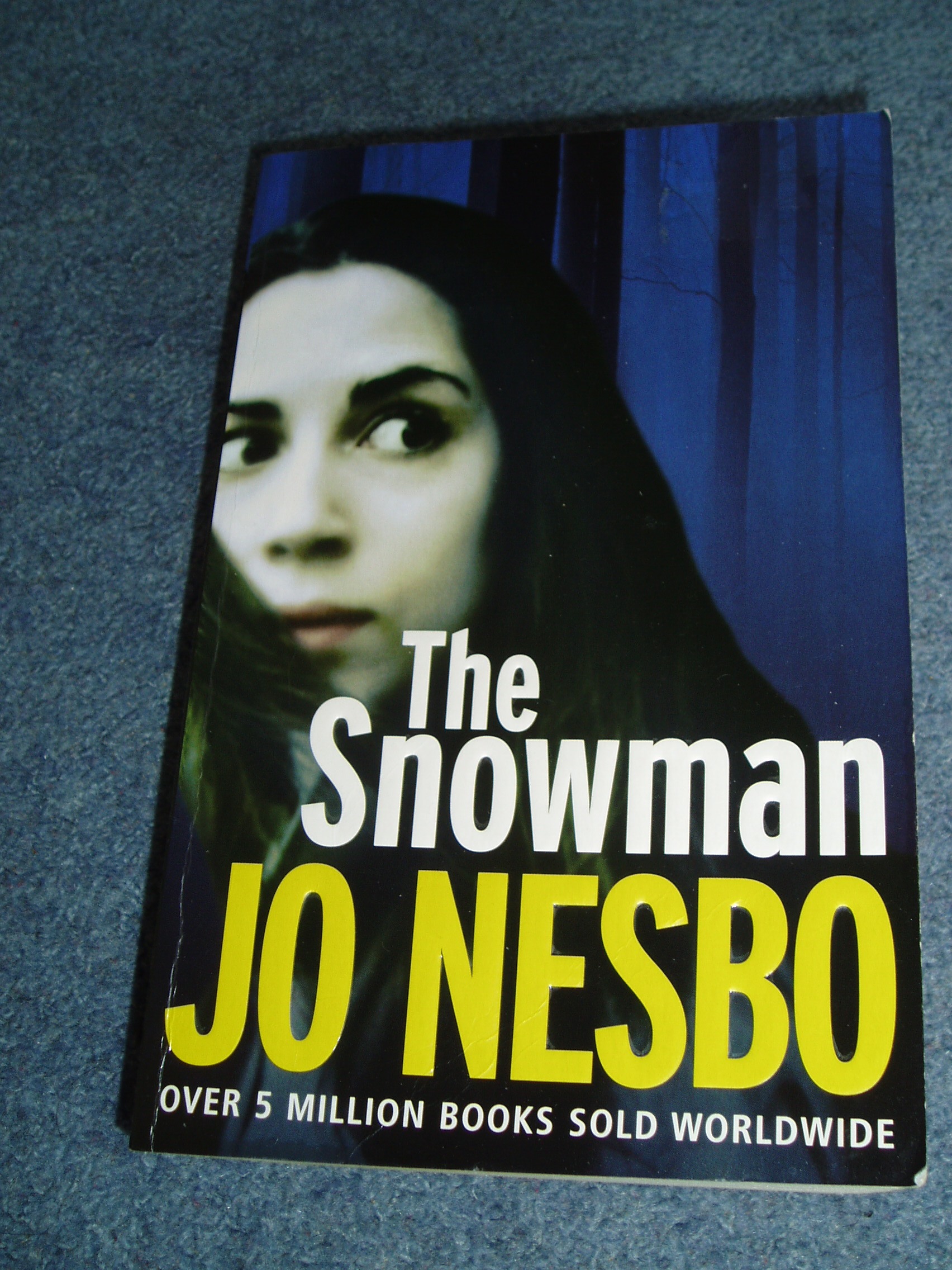 turns before the true identity of ‘The Snowman’ is revealed. I admit to choosing the book solely because Stieg Larsson and Henning Mankell (creator of Wallender) have hooked me into Scandinavian crime fiction.
The Sunday Times says of The Snowman, ‘…deserves comparison with the first volume of Stieg Larsson’s Millennium trilogy’ and The Independent says ‘…well placed to secure the loyalty of Stieg Larsson fans.’
When pitching to publishers and agents, would-be novelists are often advised to state where their book sits in relation to other authors, i.e. whose novels are similar to theirs. Publishers like a novel that fits neatly into a specific genre so that it can be easily marketed – hence the large number of books now marketed as ‘the next Stieg Larsson’.
So where does this leave originality and creativity?
It seems to me that a novelist (and especially a first time novelist) is risking life, limb and a publishing deal if he tries to write outside tried and tested genres. No matter how good the writing, it will be an uphill battle to get a book deal without a ready marketing hook. But someone has to be first to dip a toe in the water with a new idea – the Larsson books were something completely different when they first appeared.
What does anyone else think – is it best to bend your writing to fit a genre or is it better to follow your heart and risk alienating publishers?
By the way – I really enjoyed The Snowman and heartily recommend it.
Novel & Short Story Critques
Posted by Sally Jenkins in Competitions, Resources on June 16, 2011
Do you ever get that feeling that you can’t see the wood for the trees? You’ve edited and polished the words over and over again but you’re still not sure whether they’re any good? Or maybe you’ve had a string of rejections from the women’s magazines but can’t work out want you’re doing wrong?
Sometimes it helps to get the impartial opinion of a professional – someone who’s achieved success in the writing world and has a good idea about what editors are looking for. I’ve come across two such writers who offer critiquing services at reasonable prices:
- Patricia Mcaughey is a successful romantic novelist from Plymouth and she writes as Patricia Fawcett. She is a member of the Romantic Novelists Association and the West Country Writers’ Association. It was through the West Country Writers’ that I met Patricia at their annual Congress. Patricia charges £25 to critique the first 3 chapters of a novel plus the synopsis. A critique of a complete novel is £50 and Patricia is happy to look at any genre except children’s, horror or science fiction. She prefers to receive hard copies of manuscripts through the post but can be contacted via email in the first instance – patriciamcaughey@btinternet.com. Patricia currently has a website under construction.
- I’ve mentioned Joanna Barnden before on this blog. Joanna is a successful womag writer, Open University tutor and runs very inspiring writing courses. Joanna’s critiquing service costs £10 for one story (including a re-read after you’ve improved the story following her original comments) or £50 for 6, either sent in a single batch, or one after another over as long a period as you wish. The second way often works best as you can use it as a mini-correspondence course to improve your general writing techniques. This price applies to stories of 3000 words or under; for longer works she would be happy to quote on an individual basis. As well as critiquing the story Joanna will also give market advice. Joanna can be contacted via her website or email – info@joannabarnden.co.uk.
Alternatively, why not have a go at the Laurel House Creative Workshops competition which provides every entrant with a 400 word critique of their story. Entry fee is £4 and the winner will receive £100. Closing date 4th July. Full details here.
Coffee Break Fiction for Women’s Magazines
Posted by Sally Jenkins in Markets, Resources, Writing on June 13, 2011
Last week I was a guest blogger for the Writers’ Bureau. I chose to do my post about writing sub-1000 word stories for the womag market, in particular The Weekly News, My Weekly and Take a Break/Fiction Feast.
If you’re interested in writing for these magazines then read the full post by clicking here.
Anyone who is a student (or a temporarily lapsed student like me!) of the Writers’ Bureau is eligible to apply to be a guest blogger – just log in to the student community section of the Writers’ Bureau website for details. If chosen you will get a link back to your own blog – so if you’ve got something to say, it’s worth having a go.
Using Old Photos as a Writing Prompt
Posted by Sally Jenkins in Writing Exercises on June 9, 2011

Image via Wikipedia
Have you ever tried using old photos as a writing prompt? That was the task we were set at my writers’ group last week but it’s something that could be done just as well at home to get the creative juices flowing.
Our session was broken down into the following steps (we spent 5 minutes on each one before going round the group and reading aloud) and these may help you to get going on your own as well:
- Write from the point of view of one of the people in the picture – are they happy to be photographed or are they there under duress? Is their smile genuine or is it for the camera only and masking some personal tragedy?
- Write from the point of view of the photographer who took the picture and try to include some of the senses e.g sounds, smells etc.
- Write a piece of journalism about the scene in the picture – i.e. what newsworthy event could have affected these people or this place. Is one of them a murderer, a lottery winner or a kidnap victim? Was the building devastated by fire minutes after this picture was taken?
- Imagine that the photograph has been lost for a number of years. You have found it, traced the original owner and are now handing it over to them. What is their reaction – are they happy, sad or angry to have this section of their past raked up again?
As a group we then discussed which of these exercises had been most inspirational and given us something to take away, work on and turn into a polished piece of work. My own preference was the last piece because it enabled past and present to be linked through back story, with the opportunity to create mystery for the reader by withholding selected information.
The picture prompts work best if you don’t know the people in the photographs and therefore don’t have any preconceived ideas or go off at a tangent writing your family history. Bundles of old photos can sometimes be picked up cheaply in junk shops or car boot sales. Alternatively, try swapping pictures with a friend – recent pictures would work just as well, so long as you don’t know the people.
For some immediate picture prompts have a look here and then get writing!
 Sally Jenkins