The Versatile Blogger Award
Posted by Sally Jenkins in Uncategorized on May 2, 2011
 Many thanks to Susan Jones for sending me this great award!
The rules of the award state that I have to tell you 7 things about myself and then pass the award on to 7 more deserving bloggers. So here goes!
- I am a campanologist (church bellringer) and have rung 2 peals in my ringing career (a peal is 3 hours of non-stop ringing).
- I’ve been writing on and off for around 17 years but only started taking it more seriously two and a half years ago when I teamed up with my writing buddy Helen Yendall.
- I have run 2 Half Marathons (both in Birmigham – 2008 & 2010) – I think they were the result of some sort of panicky mid-life crisis!
- In my day job I am a computer programmer – so often don’t fancy writing in the evening when I’ve stared at a computer screen all day.
- I love watching ‘murder’ drama serials on TV such as Midsomer Murders, Waking the Dead, Silent Witness etc. If you throw in some red wine and dark chocolate then I’m really in heaven!
- On William & Kate’s wedding day I attended (& helped organise) my first ever street party. It was great fun and our road is now looking forward to another for the Queen’s Diamond Jubilee next year.
- I love routine! All the bank holidays over the last few weeks have played havoc with my writing time so now I’m looking forward to getting back to normal!
Next week I’ll announce the 7 worthy blogs that I’m passing this award on to.
Bits and Pieces
Posted by Sally Jenkins in Competitions, Successes on April 28, 2011
Hope you all had a good Easter and are dusting off your best frocks and morning suits for tomorrow’s royal nuptials. In the meantime here are a few bits from my world of writing over the last 10 days or so:
- Those of you who subscribe to The New Writer will have seen Simon Whaley’s piece about receiving 12 rejections from the same magazine, on the same day – each in its own stamped addressed envelope. This made me feel a whole lot better about my own rejections – my personal record being 4 stories turned down by My Weekly in the same email, which made me feel pretty bad at the time I can tell you.
- The results of the Readers Digest 100 word story competition are now out here. They are also showcasing several of the entries on a daily basis on their website – if yours has been selected please leave a comment with the link here so that we can all share your success!
- I had a phone call from the David St. John Charitable Trust this week to tell me that I had won a competition that I entered in November 2009 ! It just goes to show that you should never give up hope.
- If you’re feeling lucky there are 6 sets of 6 nature/outdoor books to be won in a Telegraph Prize Draw.
- Finally, I have a story in the April 30th issue of The Weekly News (2 short story acceptances within a month is something of a record for me!)
West Country Writers’ Association 60th Congress
Posted by Sally Jenkins in Events, Resources on April 25, 2011
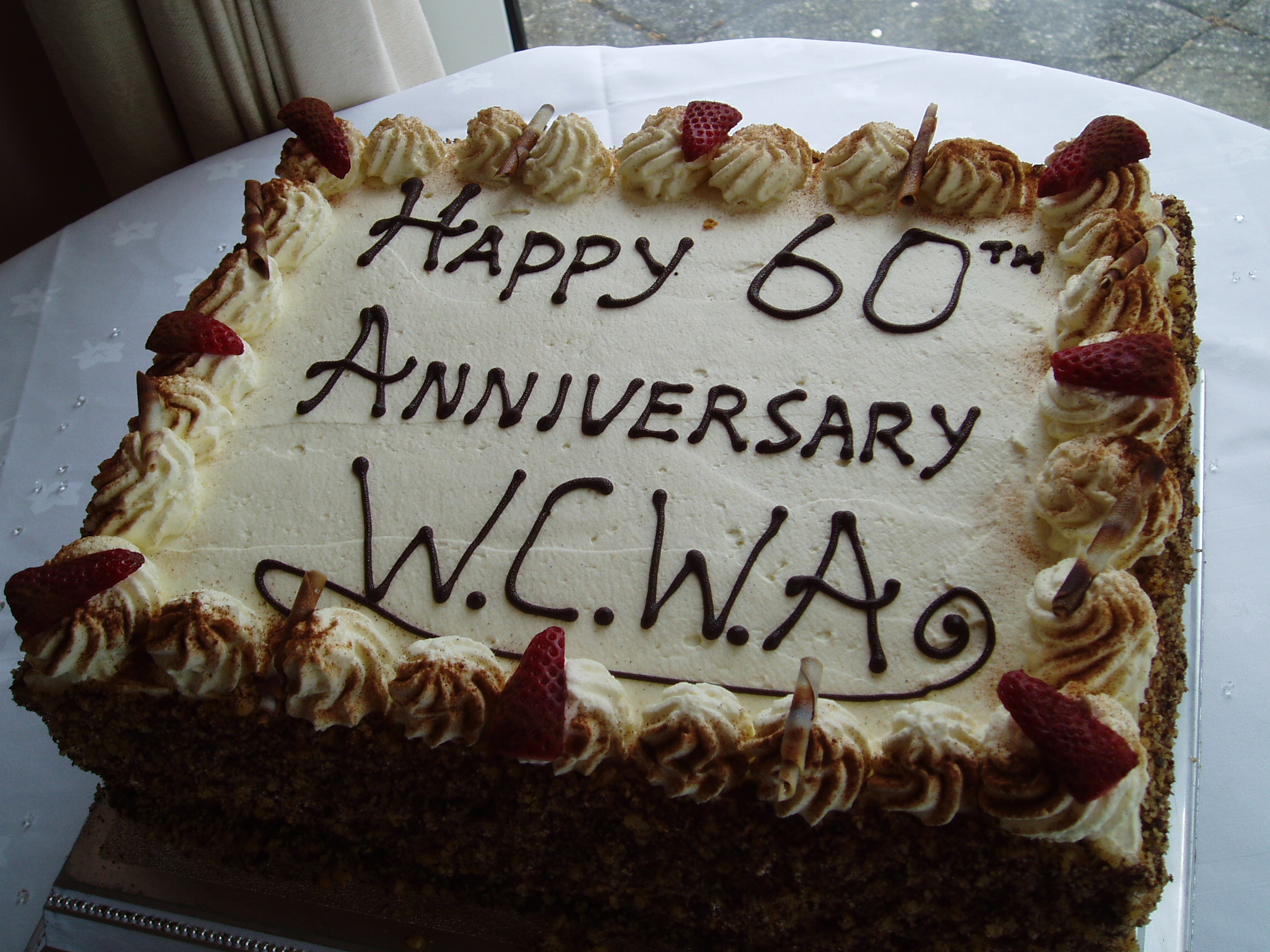 The weekend before last I attended the West Country Writers’ Association 60th Congress in Plymouth as the winner of their 2011 bursary.
It was a great luxury to be away from all the domestic disturbances for the weekend and to be able to completely immerse myself in chat about writing, publishing and related topics. It helped that the Congress was held at the lovely Elfordleigh Hotel which has a pool, sauna and steam room!
The weekend started on a high with the presentation of my certificate by Angela Rippon. She also gave an extremely interesting and enthusiastic talk about her career to date and revealed that, amongst other things, she is the author of a series of children’s books featuring the character Victoria Plum.
During the weekend I talked to writers of romantic fiction who were able to give me some advice about the world of My Weekly Pocket Novels:
- Include some adventure
- Try an exotic setting
- Have a foreign love interest
I was also told not to forget the possibilities of publication as a large print book too. The two main players are Chivers and Ulverscroft – the first of these pays royalties and the second pays a fee. And apparently there’s always the US market as well…
I also managed a few words with agent Dorothy Lumleyand asked her about writing the dreaded synopsis. She told me that writers always stress about this unnecessarily. She said that she always reads the first 3 chapters before the synopsis and it was imperative to grab the reader within the first page or two of these chapters. The best way of doing this is to open with a character that the reader immediately cares about. The reader must want to turn the page to find out what happens to this character. Dorothy added that the synopsis should always include the ending of the novel otherwise it is little more than an extended blurb – which will make you look unprofessional.
And one final titbit to put you off writing forever. I spoke to one novelist with a string of published titles to her name and she told me that she once calculated that she was writing for 40p an hour!
Call for Royal Wedding Submissions
Posted by Sally Jenkins in Competitions, Markets on April 21, 2011

Image via Wikipedia
Louise Gibney is compiling an anthology of pieces about royal weddings. It might be about how you celebrate William and Kate’s nuptials at the end of this month or your thoughts about the event. Alternatively recollections about previous royal weddings are welcome. Can you remember what you were doing in 1981 when Charles and Diana got married or were you around in 1947 when the Queen and Prince Philip tied the knot? Did you have a street party or watch all the excitement on a brand new TV bought especially for the occasion?
I remember watching the wedding of Prince Andrew and Sarah Ferguson through the window of a television showroom in my lunch hour from work (no bank holiday for them!) and when William’s parents got married I was part of a band that rang a quarter peal on our local church bells to mark the occasion.
Proceeds from the anthology will go to UNICEF and all successful entrants will receive a copy of the book.
Entries should be between 500 and 2,000 words, double-spaced in 12 point, typed in a Word document. Don’t forget to include your name, address, telephone number and email.
Post your submission to:
Louise Gibney
100 Avenue Road
Winslow
Bucks.
MK18 3DB
or email: louisegibney88@hotmail.com
Closing date is 29th June 2011.
Alternatively, if you’re a poet (and can work to a tight deadline) have a look at the Royal Wedding sonnet competition mentioned on Helen Yendall’s blog.
Writing Serials for Women’s Magazines (Episode 2)
Posted by Sally Jenkins in Events, Resources, Writing on April 18, 2011
More tips picked up at Joanna Barnden’s highly informative course on writing serials for women’s magazines:
Each episode of a serial needs a cliffhanger to make the reader buy the next edition of the magazine. The cliffhanger has to leave the reader wondering about what has just happened or desperate to find out what is going to happen next. It should open up the story for lots of possibilities in the next episode rather than answering any questions or tying up any loose ends.
Try to do this by revealing something that suddenly changes the reader’s assumptions about the story line, such as a dead body, a person who is not what he seemed or dropping in a face from the past. Alternatively leave your character in a perilous situation, for example in charge of a runaway horse or at the mercy of a gun man in a post office hold-up.
I mentioned in my previous post that it is the opening episode plus further episode by episode summaries that sell a serial to an editor. Joanna referred to this first episode as the ‘pilot’ that really has to ‘wow’ a very critical audience. This episode should try to include all your main characters. There are 2 obvious ways of doing this:
- Have everyone get together at a big important event such as a party, funeral or on a coach journey. Show how they react to each other and the event they are attending.
- Have a crisis (such as a road accident, outbreak of war) and show how the different characters react to it.
Following on from this, the episode summaries need to be concise and easy to read. Around 500 words per episode is sufficient. Also include a cast list with your submission listing a very brief sentence about each character. Finally, write a short summary of the whole story. This should be similar to the blurb found on a novel or DVD.
Three magazines currently use serials:
- People’s Friend – around 10 episodes with a total word count of 60,000
- Women’s Weekly – serials of either 3 or 4 parts of 3800 words each, they want ‘serials that reflect life but in a way that is utterly compelling’
- My Weekly – they don’t always run one but prefer 3 episodes of 2,500 words each
Once a magazine has accepted the first episode and summaries you will usually be asked to submit each episode in turn to the editor. She may request changes to get things just right before you move on to write the next episode. There is no need to write the whole serial ‘on spec’.
So there you have it – serial writing in a nutshell!
Writing Serials for Women’s Magazines (Episode 1)
Posted by Sally Jenkins in Events, Resources, Writing on April 14, 2011
Last week I enjoyed an immensely informative day in Derby taking part in Joanna Barnden’s course on writing serials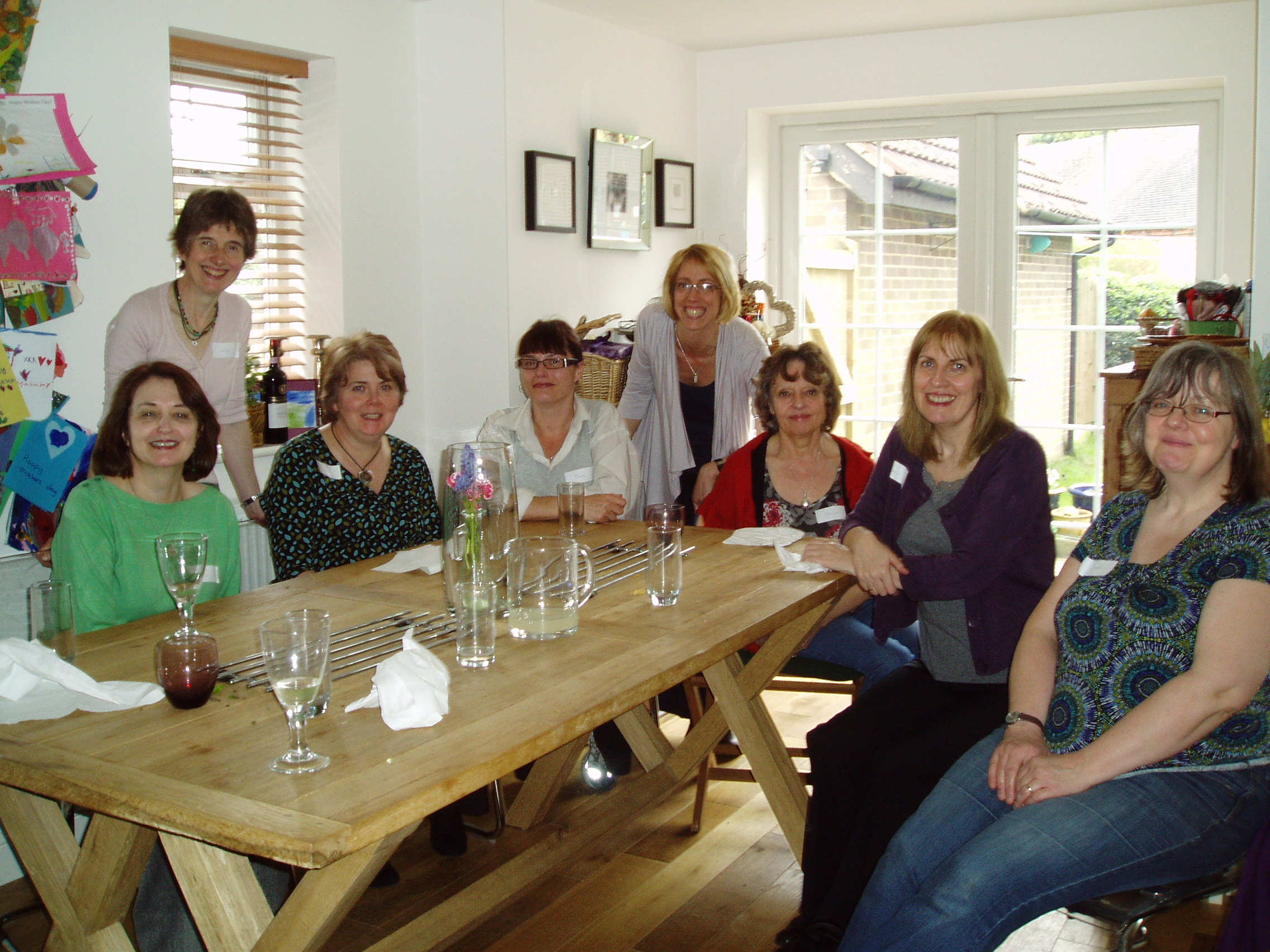 for women’s magazines. Joanna’s aim was for all of us to go home with a cast of characters and a basic outline for a serial that we could further develop ourselves. I thought it was a tall order but she succeeded!
There were 7 of us around the table (the picture shows us half way through a home-cooked lunch and waiting for pudding!) and as the day progressed so did our serials. From nowhere we produced story settings ranging from a Greek island, a solicitor’s office and a belfry. An equally disparate list of characters came to life and then we had to work on the bit I found really hard – a main plot plus a couple of sub plots…
Later it was down to planning that crucial first episode which has to grip the reader and make her buy the magazine again next week. But, most importantly, along with an episode by episode summary, it also has to sell the whole serial to the editor.
As we went through the day Joanna gave us a few rules to work with:
- Have lots of characters – all with their own problems. These people should be part of a linked group – perhaps they work together, belong to the same sports club or live around the same village green.
- The timeframe can be as long as you like
- Keep to a linear story
- Use several settings – think how often the camera moves to a different view in a TV drama
- Tease the reader by revealing things gradually
- Each episode needs to be satisfying read in itself – this is so that readers who have bought the magazine for the first time can still enjoy the story.
Most of these ‘rules’ are the exact opposite of short story writing where only a few characters play out the story in one setting within a tight time frame – so as someone who loves writing very short ‘coffee break’ fiction, this went totally against the grain for me.
One of the most important elements of a serial is the cliffhanger – and just to keep you on tenterhooks I’m going to save that plus how to submit your story to an editor for the next post !
In the meantime if you want to find out more about Joanna, her courses or her reasonably priced critiques – her website is here.
Some Good News
Posted by Sally Jenkins in Markets, Successes on April 11, 2011

Image by Goxxy via Flickr
Acceptances seem like buses – you go for ages without any and then several come along at once.
Over the last few months I’ve been submitting stuff into a big black hole with every editor ignoring me. However, patience and perseverance has paid off and in the last couple of weeks I’ve had a handful of positive responses. So I’m feeling good!
Articles have been easier to place than fiction (not surprising when you think how many more markets there are for features compared to short stories) and the turnaround is quicker too.
These are the publications that have recently accepted my work – they’re wide open to all writers so why not give them a go?
- The Weekly News – I have a short story in the April 9th issue (in the shops now!) and have previously posted here about writing for them.
- Writers Forum
- Freelance Market News – this is available on subscription only and comes from the Writers’ Bureau stable
- Work Your Way – this is a brand new magazine aimed at entrepreneurial mums (incidentally I found this market through a lead in Writing Magazine).
The Kindle Debate
Posted by Sally Jenkins in Books on April 7, 2011

Image via Wikipedia
Are you a fan of the Kindle and similar e-book readers or do you like to turn real pages and enjoy the smell of a new book?
According to a Telegraph article, Mills and Boon readers are leading the way as buyers of e-books, possibly to avoid the ’embarrassment factor’ of being seen reading them in public (personally I think there’s nothing wrong with reading M&B but I suppose if you’re a big butch male then you might not want to own up to your secret pleasure!). One of the best-selling romantic downloads on Amazon is the M&B The Temp and the Tycoon by Liz Fielding.
Sales of e-book readers amongst romance fans have been so great that Sony has designed a pink version of its reader complete with M&B logo (not one to buy if you prefer to hide your reading preferences!).
Philip Stone, charts editor at the Bookseller, said “Mills and Boon are probably the publisher feeling the biggest benefit from e-books. They were first out of the traps to take advantage of them.”
Whatever our current feelings about e-readers versus ‘real’ books I think we will see increasing numbers of people using them on buses trains etc. I started off very anti e-readers but am now beginning to find the thought of having all my books in one little device instead of piled around the house rather attractive.
This does mean that, as authors, we can no longer look forward to that thrill of spotting someone reading a book in public that we have written. But on the upside, e-books make self-publishing a lot easier. Have a look at Carol Bevitt’s blog for some useful information from freelance writer Deborah Durbin about Kindle Direct publishing.
So, on balance I think we should welcome this new technology. For many of us there will be a long cross-over period when we read both physical books (I, for one, a have a huge backlog to get through) and at the same time get to grips with the new technologies of e-readers (great for holidays and travelling).
Let me know what you think.
Short Story Critiques
Posted by Sally Jenkins in Competitions, Resources on April 4, 2011
A couple of weeks ago a follower of this blog contacted me for advice on obtaining a critique for a short story she was working on. Understandably, she didn’t want to pay a fortune and nor she did she want to risk the story being hijacked by someone else.
For a short piece of work like this the critiques offered by competitions are reasonably priced. These include:
- Writer’ Forum – a monthly competition with an open theme and maximum word length of 3,000. The critique is an extra £5 on top of the entry fee. I’ve used this service once and received a one page report covering: Presentation, Title, Opening, Dialogue, Characterisation, Overall. It pointed out my overuse of clichés, incorrect use of the word ‘indiscrete’, problems with characterisation and the fact that the ending was too ‘sudden’. So for £5 I had a lot to work on to improve the story before it went off to another competition.
- Meridian Writing run quarterly competitions and offer a basic critique for an extra £3. This is usually an A4 page in length. They are also offering critiques for noncompetition entries with the fee varying on whether a basic or detailed report is required and the length of the story.
- Flash 500 Competition is another quarterly open themed competition but the word limit is 500. The optional critique is £10. These competitions are run by Lorraine Mace and she also offers critiques on non-competition pieces (any length and including articles and non-fiction books), see here for more details.
A subscription to Freelance Market News includes a free critique on 3,000 words of prose or 120 lines of poetry. It costs £29 for 11 issues and includes free monthly writing competitions plus 20% off entry to The Writers’ Bureau Short Story and Poetry Competition.
Does anyone else know of a critiquing service that is good value?
Character Names
Posted by Sally Jenkins in Resources, Writing on March 31, 2011
Wouldn’t it be great to have an ‘age appropriate’ list of character names to choose from?
The pool of names at my disposal is quite limited. If the heroine is about my age then I run through the names of the girls that I was at school with – this means that you’ll often find a Karen, Alison (we had 4 of those) or Tracy starring in my tales about women in the prime of their life (!). When I am writing about a teenager then I pick the name of one of my daughters’ friends and Holly, Amy or Megan will take centre stage. My mum’s contemporaries come in useful when I’m writing about the older woman and the names that I’ve grown up with are Shirley, Audrey and Dorothy.
Anything in between these generations and I just have to guess or try to think of someone I know of the appropriate age.
Men’s names are much harder because I went to a girls’ school, had no brothers and I have no sons. I work mostly with men but their average age is just over 40 so choosing names for young men can cause me a problem.
If I were to set a story 100 years ago it would be much tougher still to work out an age appropriate name for my cast of characters.
However, Katey Nixon has solved this problem for me. She has produced a resource for writers comprising the most popular names for both sexes over the last 100 years. So whether you want to invent a cast of characters for a story set in war-torn London in the 1940s, or a tale of saucy goings on in the 1960s or even about a baby born as the world entered the new millennium, there should be something suitably inspiring to bring your story to life.
Specifically, Katey’s spreadsheet contains the top 100 girls and boys names for ten-year intervals from 1904 to 1994, and every year from 1994 to 2008. Plus there are Irish and Scottish names over the last century and this. The character’s age as of 2010 is preprogrammed into the spreadsheet. But it has a facility whereby you can enter the date your book or short story is set and it will recalculate.
But the best thing about this list of names is that it raises money for the charity Hamlin Fistula UK, which supports the Addis Ababa Fistula Hospital in Addis Ababa, Ethiopia – a hospital caring for women with horrendous injuries sustained in childbirth.
You can get hold of Katey’s fabulous resource by donating just £2 by clicking here. After you’ve donated you’ll receive a link enabling you to download the spreadsheet and get inspired by all those names just crying out to be brought to life!
 Sally Jenkins