Life Coaching for Writers
Posted by Sally Jenkins in Resources on March 28, 2011
Last week I had a telephone life coaching session. This was something completely new to me and I had no idea what to expect.
Suzanne, my coach, phoned at the appointed time and the first thing she advised was to go and fetch a glass of water – I would be doing a lot of talking over the next 50 minutes.
Life coaching is a way of asking questions to make the client see things from a different perspective and thus find solutions to the obstacles in their life. It is not some new pseudo-science that has been recently invented. Successful people have always had this ability to look at problems from a different angle and then set manageable goals to be achieved within a realistic timescale. Life coaches takes these skills and use them to help clients see a way forward towards what may have seemed an unachievable goal.
I told Suzanne that my goal was to finish my My Weekly Pocket Novel. At present I was only working on it once a week and therefore had lost momentum each time I came back to it. I am easily distracted into writing shorter stories for competitions and magazines – because I like the feeling of achievement that comes from having finished a piece of writing.
Suzanne asked me to imagine how I would feel when the Novel was finished (proud of my achievement plus an increase in confidence for future writing projects) and also how I would feel if I didn’t complete it (a failure plus a feeling that I could only manage shorter pieces).
She then got me to talk about the obstacles to completing the Novel and to think about ways in which they might be overcome. With Suzanne’s help, I created a plan for moving forward, with Easter as my first milestone:
- Print the Novel so far
- Read and make notes on each chapter (a sort of reverse planning)
- Plan out each as yet unwritten chapter (by Easter)
- Write the unwritten chapters according to the plan
This may not seem like rocket science but it is a step forward for someone like me who finds it hard to plan (because there’s no satisfaction of watching the word count increase and I find it difficult to see my characters until I actually write scenes with them in) and prefers writing in discrete chunks (hence my love of shorter pieces). Once the plan is in place I will be able to write my chapters in discrete chunks and will be less likely to ‘lose the thread’.
At the end of the session Suzanne pointed out that I had found the way round my own obstacles – she had merely asked questions to direct my thoughts. The advice about the water was good too – my mouth was getting dry towards the end of the session!
So now I’m feeling a little nervous but excited too about achieving the goals I’ve set myself.
Suzanne is a member of the Birmingham Chapter of the Romantic Novelists’ Association and has recently qualified as a life coach. She would like to specialise in coaching writers and other creative types and is currently offering free telephone coaching sessions in order to practise her skills and build up her experience. If you would like a coaching session with Suzanne please contact me via the form on my ‘About Sally Jenkins’ page (accessed via the tab on the top left of this page) and I will pass your details on to her.
Olympic Storytellers Wanted
Posted by Sally Jenkins in Competitions, Events, Markets on March 24, 2011

Image via Wikipedia
BT is searching for people to become the storytellers of the London 2012 Olympic Games. During the 12 months leading up to the Games those chosen will capture and record what London 2012 means to them and the wider British public. Applicants may have a direct connection with the Games or simply be an enthusiastic observer.
They are looking for bloggers, social networkers, creative writers, poets, film-makers, photographers, musicians, journalists, artists etc etc – in fact anyone with a creative leaning and an interest in recording the build-up to and the events of both the Olympic Games and the Paralympics. Your creative output might focus on a personal experience or something in your locality or the national build-up.
I should say at this point that there is no mention of any payment. However, the announcement does say that there will be:
“the chance for our storytellers to experience the excitement that’s already building around London 2012. You’ll be able to attend sporting and cultural events, and meet some of the people who are directly involved, from athletes to celebrities. In addition, BT will be aiming to showcase some of your work online and even in the media.”
I don’t know exactly what this means but it sounds to me like a great way of getting involved in a once in a lifetime event and I’ve already got my application in.
Apply on-line here. There is a very simple form to complete but you do have to state in 100 words why you would like to be considered as a storyteller. Those chosen will be informed by the 26th July 2011.
Fiction Addiction – An Online Womag Writers’ Circle
Posted by Sally Jenkins in Resources, Writing on March 21, 2011
Fiction Addiction is an online writing circle for Womag (women’s magazine fiction) writers. It was founded in January 2011 by Sharon Boothroyd because she (like the rest of us!) was fed up of getting rejections but not knowing where she was going wrong.
Since Fiction Addiction was mentioned on womagwriter’s blog, Sharon has received loads of emails and the writing circle is growing.
The circle has no strict rules to follow. Members send their work out for feedback whenever they wish. All stories and feedback are sent on a ’round robin’ basis so that everyone can read everything and no-one is left out. However, if individual members want to then start corresponding separately then that is OK too. Most of the stories submitted so far have been under 2,000 words but Sharon thinks that 6,000 would be the absolute limit. Serials and My Weekly/People’s Friend pocket novels are also welcome and can be sent out for feedback chapter by chapter or part by part.
The members of Fiction Addiction are asked to abide by certain guidelines to ensure that criticism is given in a constructive away and that email addresses are kept confidential. There is no need to fear having a story ‘stolen’ by someone else in the group – the ’round robin’ method of communication means that everyone else will know where a particular story originated from.
Membership of the Fiction Addiction writers’ circle is free and Sharon runs it as a hobby not a money-making enterprise. Some members of the group have already been published professionally and others are just starting out but they are all feeling the benefit of being part of a group rather than floundering alone. Here are some of their comments:
“Thank you all for the warm welcomes I have received already! It really is an active group and I am so excited about being part of it.”
“I love sitting down with a coffee to read a good story and it’s also really interesting to read everyone’s comments.” “Congrats to you for setting this all up, I think its going to be a real bonus for everyone involved and it feels great to be a part of something.”
I write women’s magazine fiction and find the feedback that I get from Helen, my writing buddy, invaluable. So I would urge anyone who would like someone else to cast an eye over their work (and who is willing to do the same for other people) to have a look at the Fiction Addiction website for more details.
Emerald Writing Workshops – Flash Fiction Competitions
Posted by Sally Jenkins in Competitions, Successes, Writing on March 17, 2011
It was my birthday on Sunday and the day was made even more special by receiving an email from Eddie Walsh of Emerald Writing Workshops to let me know that I was a runner-up in his Airport themed 500 word short story competition. A book of crime short stories is on its way to me – an unexpected ‘extra’ birthday present!
The winner was Tracy Fells from West Sussex. Her story was set around the baggage reclaim carousel and you can read it here. Congratulations Tracy!
Eddie Walsh is an Irishman living in Nottingham. He mainly writes fillers and letters but has recently become interested in fiction writing. In his competitions he is aiming to encourage the hobby writer and believes even getting on a shortlist stops a writer from giving up. He provides critiques of entries whenever he can, as writers rarely receive independent feedback.
Eddie runs a 500 word story competition every three months with a £75 prize fund for each one (£50 first prize, £15 second prize, £10 third prize plus books for 3 runners-up). There are 3 competitions currently open to submissions:
- First 500 words of a novel – closes May 31 2011
- 500 words on an open theme – closes August 31 2011
- 500 word ‘Riches to Rags’ story – closes November 30 2011
The entry fee is 5 second class stamps (or a cheque to that value). There are discounts for multiple entries into the same competition. Entries are acknowledged on receipt and periodically the site is updated with the number of stories received for each of the competitions.
Eddie is also currently running a 4-sentence competition which is free to enter and has a £75 prize fund to be divided equally between the 3 best entries. However, entries will only be accepted from people who have previously entered one of the 500 word competitions.
So if you’re looking for a competition with a friendly feel try Emerald Writing Workshops . And remember that the cost of second class stamps will be going up in April, so buy them now to use for your entry fee or if you intend paying by cheque, get your entries in before the price increase takes effect.
Alzheimer’s Blogging Competition Entry
Posted by Sally Jenkins in Competitions on March 14, 2011
A diagnosis of Alzheimer’s disease strikes fear into the heart of anyone. As a writer, it scares me to think that when I eventually retire from the day job to finally spend more time at my keyboard, this debilitating condition might rob me of the ability to string words together coherently.
I wouldn’t be the first writer to suffer in this way. It is well-known that Terry Pratchett suffers from Alzheimer’s and he has spoken publicly about the disease many times, in some ways becoming the contemporary face of Alzheimer’s. He now dictates his work, either using voice recognition software or to his PA, Rob Wilkins.
In 2009 the Guardian published an article claiming that Agatha Christie may also have been suffering from the disease towards the end of her life. Experts in Canada studied a selection of Christie’s novels written between the ages of 28 and 82 and counted the numbers of different words, indefinite nouns and phrases used in each. They discovered that Christie’s vocabulary size decreased noticeably (by between 15 to 30%) as she neared the end of her life and that her repetition of phrases and indefinite word usage (something, thing, anything) in her novels increased significantly. Agatha Christie, was never diagnosed with dementia but the authors of this study believe that the changes in her writing are consistent not with normal ageing, but with Alzheimer’s disease.
The results of the Christie study mirror those of a similar analysis of the early and late works of the novelist, Iris Murdoch. Her vocabulary had diminished in her final work and, on average, it contained fewer words and clauses per sentence. Murdoch was diagnosed with Alzheimer’s the year after her final novel was completed.
If diagnosed early there are drugs that can help the sufferers of this terrible disease but up until now the problem has been in making that early diagnosis. However, a brain scan is now being trialled by the NHS that spots the early signs of Alzheimer’s and can diagnose the disease in less than 24 hours. This would replace the often inconclusive memory tests that are currently used by doctors to spot the disease.
For those currently living with Alzheimer’s disease and those that care for them, there are aids available to make life a little bit easier, such as alarms to indicate when a sufferer has got out of bed or opened a door or window. These are available through The Disabled Shop.
One in ten people over the age of 65 will develop Alzheimer’s and more than half of those over the age of 85 will succumb to the condition. But only £12 per patient is spent annually on research into Alzheimer’s, compared with £289 per patient spent on cancer – this is an imbalance that can’t be right.
This blog post has been written in response to the Alzheimer’s Disease Blogging Competition, which is aiming to increase awareness of the disease and raise money to fight it. There’s a great list of blogging related prizes plus the chance of paid blogging assignments – if you’ve got a blog then click on the link for details of how to enter. More entrants mean a higher profile for Alzheimer’s Disease.
Alternatively, if you don’t blog, click here to make a donation.
Creative Writing Courses to be Won
Posted by Sally Jenkins in Competitions, Events, Writing on March 10, 2011
Can creative writing be taught? It’s a topic that’s often debated but I don’t think anyone has come up with a definitive answer.
Obviously, we can learn the rules of grammar, spelling and punctuation. We can also be told how to present a manuscript (double spacing, wide margins etc) and make sure we include a self-addressed envelope. But can anyone tell us how to grab an idea and turn into in a story?
I think it is possible to teach someone to write a competent short story. Most people can grasp the basic rules, such as:
- Keep the number of characters to a minimum
- Keep the time frame short
- Use just one ‘scene’
- The main character must resolve some sort conflict (internal or external)
But to rise above the ‘competent’ and produce a tale that really sparkles (and will attract the attention of editors and competition judges) requires some sort of talent or creative leaning. It may be a hidden talent that we don’t know we possess until it is honed by the production of several stories, each a little better than the last – so practice is just as important as anything that can be taught.
So, is it worth going on a creative writing course? The answer is most definitely yes!
The benefits of courses often far outweighs the number of ‘writing rules’ that might be taught. Being with like-minded people, even if only for half a day, will fill you with enthusiasm, give you the opportunity to meet new friends and make you more determined to continue down the rocky writing road.
But unfortunately writing courses tend to be expensive – unless you can find a subsidised one taking place in a library or similar place. However, all is not lost because it is possible to win your way on to a course with the following competitions:
- The Arvon Postcard Competition is offering a first prize of a one week Arvon course. Send in a piece of flash fiction or poetry that describes your favourite writing place (seems like a big prize for few words!) Closing date 21 May 2011.
- The Swanwick Writers’ Summer School is running three competitions, two of which offer a free week at the 2011 Summer School as their first prize. The first is a short story on the theme ‘New Beginnings’ and the second is 1,000 words of a children’s story. Closing date is 30 April 2011.
- Leaf books is running a travel writing competition with a first prize of a beginners’ travel writing course (in London). Send a 300 word piece of travel writing before the closing date 30 April 2011.
- Nature of Wales is offering a place on the nature writing course at Tŷ Newydd as the second prize in their competition (first prize is £500 cash). They require a thousand word article on a subject of topical environmental or wildlife interest in Wales. Closing date 31 March 2011.
World Book Night
Posted by Sally Jenkins in Authors, Books, Events on March 7, 2011
Saturday 5th March was World Book Night. It’s purpose was to celebrate great writing, the power of books and the pleasure of reading. To help achieve this 40,000 copies each of 25 books were specially printed to be given away free to the general public. That’s one million extra books put into circulation. It’s hoped that these books will be read, enjoyed and then passed on or shared with others. The titles given away covered a wide range of tastes and included Killing Floor by Lee Child, Rachel’s Holiday by Marian Keyes and Case Histories by Kate Atkinson.
I went to a special event at the Birmingham Library Theatre to mark the occasion. It featured a discussion on reading and writing between authors Mike Gayle (My Legendary Girlfriend), Catherine O’Flynn (What was Lost) and RJ Ellory (A Quiet Belief in Angels). The three writers covered many topics.
Mike told us how a light went on in his head when he came across Adrian Mole as a teenager. Here was a character with whom he totally identified and it was at this point that Mike began to realise the power that words could wield.
Catherine described her childhood longing to be a detective, fuelled by an Usborne book she was given as a youngster that was filled with advice on clues and suspects and methods of detection. She took to sitting outside her local bank and noting down car registration plates in case there was ever a big robbery – to her disappointment there never was.
Roger Ellory told us about a favourite book In Cold Blood by Truman Capote. This is based on the true story of the 1959 murder of a family in Holcomb, Kansas. Capote was a friend of To Kill a Mockingbird author, Harper Lee and she went with him to Holcomb to dig out the story behind the murders. Apparently, there is a theory that both of these books were written as a collaboration between the two authors and each put their name to one book. They both became bestsellers and neither writer ever published anything else.
Everyone at Saturday’s event went home with free books to read and pass on. I received Seamus Heaney’s New Selected Poems 1966 – 1987. This is not a book I would ever have chosen myself but maybe that was the purpose of World Book Night – to encourage those that never read to pick up a book and to push enthusiastic readers into trying something more challenging. I’m going to give it a go!
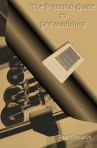
The Practical Guide to Self-Publishing by Paul Chiswick
Posted by Sally Jenkins in Resources, Self-publishing on March 3, 2011
I think all writers agree that getting published can be next to impossible for the novice writer (unless you’re a celebrity!). This means that more and more of us are turning to self-publishing as a way of getting our books out there. Paul Chiswick has experience of several self-published projects and has now written a book on the subject. Here he is with some advice for anyone thinking of going down the self-publishing route:
Everyone’s reason for producing his or her ‘book’ will be different. You may want it purely for posterity, a record of your own life. How many of us would love to know more about our grandparents and great-grandparents? Or you may be convinced you are the next JK Rowling, destined for fame and fortune. If only!
First things first: there’s a hurdle called publishing planted between you and your dream. Once upon a time, publishers were far more willing to publish an unknown author. They trusted their judgement, and knowledge of their readers. However, consolidation and an emphasis on profitability have changed the publishing world, perhaps forever. Look around you on the shelves of bookshops and supermarkets. Nowadays, a very large proportion of books published each year are by ‘celebrities’, who may or may not have written, or indeed have had much input into, the book that appears under their name. Either that or they are by well-established and successful authors. Naturally, these books are easier to sell. As a result, the highly competitive market for unknown authors has shrunk dramatically over the last few years.
Is there an alternative? You bet! Publish it yourself.
How do you do it? Here are four of the most common ways:
- The publisher takes your manuscript and carries out the complete publishing process. He charges you a fee, which covers the entire costs of production and distribution. This is exactly what a traditional publisher does, except in traditional publishing the publisher bears all the cost and assumes the risks. This is a growing area of self-publishing, and new entrants are coming into the market all the time. Expect pricing to become more aggressive and competitive.
- The services of the publisher are dispensed with altogether. You carry out all the stages of production and distribution. The only part of the physical process you won’t be able to undertake is the actual printing and binding of the books. A printer specializing in book production would undertake this for you. If this is an option that interests you, I suggest you acquire a copy of my eBook, The Practical Guide to Self-Publishing, a snip at only £3.99! Available from Barnes & Noble, Sony, Kobo, Amazon, Apple and Diesel.
- You produce everything in digital format on your PC and then employ Print On Demand technology. Print On Demand (sometimes termed Publish On Demand) arrived with the advent of digital printing when the printing of single copies of a document became economically viable. Using this technology, copies of the book are not printed until an order has been received.
- You produce everything in digital format on your PC, then produce, market and sell it as an eBook, often on your own website or through an online retailer such as Amazon.
What are you waiting for? Get publishing!
Super-snooper Blogfest
Posted by Sally Jenkins in Uncategorized on March 2, 2011
Today I’m taking part in my first ever blogfest. The task is to describe a setting that tells the reader something about a character’s personality. More info here.
I’ve chosen to describe the flat of Claire, who is the heroine in my work-in-progress. Here goes:
A Word document is open on the laptop and beneath its heading of ‘Ballerina Fairy Cakes’ is a list of ingredients plus unfinished instructions to pre-heat the oven and cream the butter and sugar. Next to the computer, on a white china plate, is a small pink sponge confection, topped with mauve butter icing and silver balls. An image of this cake is on the screen of the digital camera lying on the cream leather settee.
A brown Dralon armchair is almost completely hidden by a cream throw and on top of this is a pile of cookery magazines with bits cut out of them. The cuttings have been given the protection of a plastic sleeve and popped in a ring-binder. These articles all share the same by-line – Claire Draper. Claire’s thumbnail photo in the glossy publications is a slightly older version of the girl in cap and gown standing on the tiled fireplace.
A utilitarian gas fire squats in the hollow formed by the chocolate brown tiles. In front of this is a crystal vase holding a dozen red roses. A small rectangular card, propped against the glass and handwritten in fountain pen, reads ‘Six weeks and 3 days until we walk down the aisle. Love you always, Tom.’
On the mantelpiece several cards jostle for position with the silver-framed graduation photograph. They all carry the same message ‘Wedding Acceptance’, in a variety of fonts, colours and sizes.
An archway leads to the small kitchen where two large white plastic mixing bowls sit upside down on the draining board. The black granite effect work surface holds a food processor, its clear plastic bowl scratched through regular use. The cappuccino maker is boxed and a piece of torn wrapping paper is still stuck to the cardboard, it’s heavily creased but a diamond ring and the words ‘Happy Engagement’ are obvious.
Bananas, apples and kiwis sit in a wooden bowl next to a half-empty box of Jaffa cakes. An ironing-board and ‘Henry’ vaccuum cleaner have been squeezed into a space between the end of the work top and the lemon-painted wall.
The bathroom is windowless with a white suite and white walls. A large mirror hangs over the sink but the light decor and reflecting glass do not create the planned illusion of space. Shampoo, bubble bath and cocoa butter body lotion balance precariously along the edge of the bath. Toothpaste, soap and moisturiser clutter the hand-basin and a toilet roll sits on the radiator.
Jeans and a sweatshirt hang over the back of a dining-chair in the bedroom. Boots, trainers, and court shoes stand in line beneath the dressing table. The pink striped quilt is folded back, revealing a crumpled pair of cotton pyjamas and well-hugged teddy bear.
Bits & Pieces
Posted by Sally Jenkins in Competitions, Events, Markets, Successes on February 28, 2011
I’ve got a few bits and pieces that might be of interest:
- Lois Maddox has dropped me a line about two weekend creative writing courses that she is organising. They are both aimed at all levels of writing ability and take place at Swanwick in Derbyshire. The first is ‘From Memories to Memoirs’ . It is led by Alison Chisholm, who will deal with creating a scheme for a life file and selecting a theme or time period to write about. The second is ‘Write Crime’. It is led by retired policeman Nick Oldham and as well as dealing with plot and characters, it will look at setting the scene with up-to-date procedures. Further details are available at www.malagaworkshops.co.uk.
- My Weekly Pocket Novels have upped their required wordage from 30,000 to 50,000. Payment has also gone up from £200 to £300. As some of you may know, I’m having a go at writing one of these as a stepping stone to a ‘proper’ novel. I did have my ten 3,000 word chapters mapped out. So now it’s back to the drawing board to find a subplot or something else to extend (without padding!) the story. Further details here.
- www.writing.ie is a new website, billing itself as ‘the home of Irish writing, online’. The events and courses listed on the site will mainly be of interest to those living in Ireland but there is also loads of free writing advice to be found on writing.ie. under the Writers’ Toolbox tab.
- The Telegraph has launched a short story competition for young writers aged between 16 and 18. It will be judged by John le Carre and the closing date is April 14th 2011. Full details here.
- I have to mention two small personal successes that I found out about last week. Firstly I have short piece about the Festival of Britain in the Cornucopia section of the current (Spring) edition of This England magazine. Secondly I have won the Writers’ Forum subscription that is up for grabs each month to the person sending in the best bit of news for the magazine’s NewsFront page.
- Finally, look out for an extra post on Wednesday – I am taking part in my first ever blogfest.
 Sally Jenkins