Archive for category Authors
World Book Night
Posted by Sally Jenkins in Authors, Books, Events on March 7, 2011
Saturday 5th March was World Book Night. It’s purpose was to celebrate great writing, the power of books and the pleasure of reading. To help achieve this 40,000 copies each of 25 books were specially printed to be given away free to the general public. That’s one million extra books put into circulation. It’s hoped that these books will be read, enjoyed and then passed on or shared with others. The titles given away covered a wide range of tastes and included Killing Floor by Lee Child, Rachel’s Holiday by Marian Keyes and Case Histories by Kate Atkinson.
I went to a special event at the Birmingham Library Theatre to mark the occasion. It featured a discussion on reading and writing between authors Mike Gayle (My Legendary Girlfriend), Catherine O’Flynn (What was Lost) and RJ Ellory (A Quiet Belief in Angels). The three writers covered many topics.
Mike told us how a light went on in his head when he came across Adrian Mole as a teenager. Here was a character with whom he totally identified and it was at this point that Mike began to realise the power that words could wield.
Catherine described her childhood longing to be a detective, fuelled by an Usborne book she was given as a youngster that was filled with advice on clues and suspects and methods of detection. She took to sitting outside her local bank and noting down car registration plates in case there was ever a big robbery – to her disappointment there never was.
Roger Ellory told us about a favourite book In Cold Blood by Truman Capote. This is based on the true story of the 1959 murder of a family in Holcomb, Kansas. Capote was a friend of To Kill a Mockingbird author, Harper Lee and she went with him to Holcomb to dig out the story behind the murders. Apparently, there is a theory that both of these books were written as a collaboration between the two authors and each put their name to one book. They both became bestsellers and neither writer ever published anything else.
Everyone at Saturday’s event went home with free books to read and pass on. I received Seamus Heaney’s New Selected Poems 1966 – 1987. This is not a book I would ever have chosen myself but maybe that was the purpose of World Book Night – to encourage those that never read to pick up a book and to push enthusiastic readers into trying something more challenging. I’m going to give it a go!
Paper Lanterns by Christine Coleman
Posted by Sally Jenkins in Authors, Books on February 17, 2011
Paper Lanterns by Christine Coleman is a self-published novel and the first I’ve ever read. I may be naive (and I admit to knowing nothing about publishing) but I was expecting something amateurish, lacking in editing and with a cheap feel to it.
How wrong can you be! Paper Lanterns looks and feels like any professionally published paperback and, most importantly, it is a great read.
Christine was inspired by the discovery of a bundle of love letters written in China in the 1920s by two different women to the same man. The story is one of family secrets and the impact of their revelation. The narrative flicks between England and China in the 1930s, 1970s and 2008. Christine handles this complex structure without a hiccup.
Christine’s first novel, The Dangerous Sports Euthanasia Society, was published traditionally by Transita in 2005. Unfortunately, Transita are no longer publishing fiction and hence, Christine’s decision to publish her second book via NovelPress. NovelPress was formed by a group of writers, including Christine, who met on the Creative Writing M.A. at Nottingham Trent University in the late 90s and Paper Lanterns is the first book they’ve produced.
Both of Christine’s books are available via her website www.christinecoleman.net.
Reading Paper Lanterns raised two points in my mind:
- If someone who had a successful first novel published, can’t get their next book into print the traditional way – what hope is there for the rest of us who have yet to break into print at all? The growth of ebooks is making it easier for anyone to make their work available to the public but, for me, reading my work on a screen just wouldn’t have the same excitement as handling a book with my name on the cover.
- Paper Lanterns was inspired by a legacy of letters. Today we communicate via email and text. As current technology becomes obsolete these missives will disappear into the skip along with the computers and mobiles that generated and received them. Similarly, many of us take more photos than ever before but often they remain as digital images on disks that may be unreadable to future generations. Technology is making life easier today but will we be leaving anything of our lives behind us when we are gone?
Can men write romance?
Posted by Sally Jenkins in Authors, Writing on December 27, 2010
Can a man get inside the mind of a woman as she falls in love? Can he describe the emotional roller coaster we women travel when we think we’ve found ‘the one’? If, as many believe, men are from Mars and women are from Venus, then how can a male know what goes on in the female mind?
I started thinking about this after reading the latest issue of Romance Matters (the magazine of the Romantic Novelists’ Association) . It features an interview with Roger ‘Gill’ Sanderson. Roger writes medical romances for Mills and Boon and has published 47 books since 1996. He says, ‘Love is a universal emotion. If you’ve been in love you must have sympathy with women.’ However, he does admit to asking for help occasionally, especially in the area of women’s clothing!
Roger isn’t the only man writing romance. Bill Spence is also a member of the RNA and writes historical sagas as Jessica Blair. He served in the RAF during World War II and started his writing career with Westerns before moving on to sagas in the early 1990s.
Michael Taylor is another British author who has found success in writing about love. He came to talk to my writing group a couple of years ago and was as far from the pink, fluffy Barbara Cartland image of a romance writer as you can get. His books are set in the past and he spends a lot of time researching his novels.
Michael says, “Men are at least as capable as women of feeling emotion, and are no less as vulnerable in love and out of it.”
He says that he found the romance, ‘Lorna Doone’ (also written by a man), moving and sensitive and one of the inspirations that started him writing.
In fact in 1906 ‘Lorna Doone’ was chosen by male students at Yale as their favourite novel – perhaps showing that men and women are not as different as we might think.
I haven’t yet read any of Roger’s or Bill’s books but I have read ‘Clover’ by Michael Taylor. I enjoyed the well-drawn characters and authentic period setting but I think it might have turned out to be quite a different book if Michael had been a woman. One of the main protagonists is Ned Brisco, who is trying to build and fly an early aircraft. If the author had been female, I think more emphasis would’ve been given to the heroine trying to make her mark on the world and less on the technicalities of this invention.
But it’s not possible to say which would have been the better book. Men and women can both write well about love because it is a universal emotion. However, the two sexes will give a different emphasis to other parts of the supporting story depending on their own interests and outlook on life.
Variety is the spice of life so – Vive la difference!
Diversify, urges Graham Joyce
Posted by Sally Jenkins in Authors, Events, Writing on December 1, 2010
Novelist, Graham Joyce, gave the closing address at this year’s Birmingham Writers’ Toolkit event. 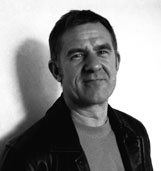 He stressed the need for writers today to have several streams of income, especially as publishing is moving away from traditional books towards e-publishing. He suggested the following areas from which writers could source their income:
- The traditional advance on a book – however this type of payment is becoming smaller and less common
- Digital downloads – writers can sell their own work directly via their website thus bypassing publishers
- Teaching creative and other types of writing
- Performing their work
- Giving talks – schools love writers to come into the classroom or try the after dinner/lunch circuit
- Writing non-fiction
- Screen development of their work – funding is often available for this (although not for actually producing the film)
- On-line drama – ‘Kate Modern’, which was linked to BeBo, is an example of this type of drama which can be simply filmed by the author
- Computer games – these now require more narrative and emotional content. Farmville is an example of this and,surprisingly, the average player is a 47-year-old female.
By diversifying and marketing themselves and their work independently, writers can continue to work even if the fickle publishing world turns against them.
It is worth taking note of this if you are trying to build up a writing career. It shows that it may be possible to earn a living as a writer without being picked up by a major publisher – if you are willing to think laterally, become digital savvy and go out there and sell yourself.
Real Writing Lives
Posted by Sally Jenkins in Authors, Events, Writing on November 23, 2010

Image via Wikipedia
There are as many different methods of writing as there are writers. There is no ‘special’ method that brings fame and fortune with it – we all have to find our own way of creating literary masterpieces whilst paying the mortgage.
At the annual Writers’ Toolkit event in Birmingham, three writers gave an insight into their working days.
Jo Bell is a poet but most of her days are filled with other activities to keep the wolf from the door. Amongst other things, she is a freelance organiser of literary events, teaches creative writing, gives readings and does book promotions. When Jo checked her diary, she had only 3 days in the next fortnight available for actual writing.
She wisely told us that we shouldn’t look upon the essential but non-writing stuff in our lives as an obstacle to being creative – instead it should be seen as something that enables the writing to happen.
Jo also advised, “Work out what you want to do and then go out and find it. This might mean knocking on doors and suggesting workshops or offering yourself as a writer in residence. Above all, make sure you get paid because otherwise you devalue Writing as a whole.”
Mike Gayle is a full-time novelist but doesn’t believe that having all the time in the world is an effective way of writing. He wrote his first book whilst still earning his living elsewhere and looked forward to his snatched periods of writing time.
“But as a full-time writer I found there was a tendency to take a whole afternoon to eke out one paragraph,” he explained, “and it’s easy to feel removed from the real world and ordinary people. This means there’s no ready raw material to feed the fiction.”
Having discovered he’s a morning person, Mike now squeezes his writing day into 9am – 1:30pm, giving himself a structure within which to work.
Chris McCabe writes novels under the pseudonyms John Macken and John McCabe. He is also a full-time Professor of Molecular Endocrinology at the University of Birmingham. He writes during his lunch hour and from 8:30 – 10:00 in the evening. He has no time for writers’ block and has to make the most of every minute.
Chris did try taking a year out from his ‘proper’ job to concentrate on writing but it didn’t work for him.
“Even though I hate gardening I found myself doing it to avoid having to write,” he said. “I need a time a shortage to get me going.”
So, giving up the day job and writing full-time might not be the best option. Most people need a little bit of time pressure to make them effective and we all need outside stimuli to feed our work.
Today’s writing prompt is:
A Last Will and Testament – who inherits what is up to your imagination.
P.S. If you fancy winning a great bundle of writing books, nip over to my writing buddy Helen’s blog and enter her (very easy) competition.
Iain McDowall
Posted by Sally Jenkins in Authors, Events on November 6, 2010
This week I went to listen to the crime writer, Iain McDowall, speak at my local library.
“Most writers hate writing,” he said.
Iain then went on to explain how we, as writers, have a vision in our head of the book that we want to get down on paper but very rarely succeed in recreating this perfect vision in words. Therefore many of us have a reluctance to actually start the writing process because of this near impossibility of getting things down on paper exactly as we want them.
I found it a great relief to know that I am not the only one who puts off working on my ideas because I’m scared that they’ll crumble into nothing when I start trying to put them into words.
Iain has been a full-time writer for several years, has published six crime novels and is now working on his seventh.
“Writing for a living is much harder than my previous jobs,” Iain explained. “It’s more stressful and uncertain. I don’t recommend it.”
Iain’s novels centre on the fictional town of Crowby, which is located somewhere in the Midlands. His detectives are Frank Jacobson and Ian Kerr. The crimes that these two men investigate are either real (with the details heavily disguised) or they are crimes that could conceivably happen. Iain doesn’t go in for manic cannibalistic serial killers because he wants his books to be about life as it is. He’d like to think that in years to come his work might offer a window on to the world as it was at the beginning of the 21st century.
Writing crime requires research and in his early days as an author Iain used a contact in the police force to get the information that he needed for his books. He still keeps up to date with new developments in forensic science etc. and much of this is now available on the internet. However, he stressed that very little of his research ends up in his books but it does give him the ability to write confidently.
“I don’t follow police procedure to the letter,” Iain went on. “If I did the book would be very boring because everything would take too long. Sometimes I make the procedure up.”
Iain gave some final words of advice for wannabe authors:
“You should always write for money and treat it like a proper job.”
-
You are currently browsing the archives for the Authors category.
 Sally Jenkins

