Archive for category Books
How to Write a Book Review
Posted by Sally Jenkins in Books, Promotion, Resources on October 15, 2015
I recently heard the book blogger Kim Nash speak in Leicester and she gave her personal rules for writing book reviews. This is what she said:
- Be kind.
- Indicate how the book made you feel.
- If reviewing on your own blog or website, always include links within the review to where the book can be bought.
- Don’t review a book that you don’t like.
- Share the review on social media.
Points 1 and 4 might cause some of you to raise an eyebrow. But I agree with Kim. If the book is a full-length novel, someone has sweated blood for months, maybe even years, to write it and the last thing they need is a kick in the teeth from a reviewer. So, if you can’t write something kind then don’t write anything at all. Similarly, don’t choose to review a book in a genre that you don’t like because you won’t give it a fair chance. With the Amazon ‘Look Inside’ feature it’s easy to get an idea of whether a book is going to be to your taste before you buy. If you notice formatting issues within a book, it’s kinder and more helpful to contact the writer direct so that the problems can be corrected, rather than point them out in an Amazon review that will remain on the site permanently, even after the errors have been corrected.
Remember – when you review a book, especially by a newish indie author, you are treading on someone’s dreams.
Kim also works for the publisher Bookouture and she gave a tip about doing a cover reveal. Apparently the best time for doing these on social media is 4:45 pm – this is when you’ll catch most people. Announce in advance that you’ll be doing the reveal at this time and make sure that the book’s Amazon page is open to accept pre-orders at this time too. If the cover provokes a reader’s interest, you want him to be able to order it immediately rather than have chance to forget about it.
Guilty as Sin by Judith Cutler
Posted by Sally Jenkins in Authors, Books, Lifestyle on September 16, 2015
I first met prolific crime writer, Judith Cutler eighteen months ago at a Disney Laureate event in

Judith Cutler
Birmingham. Since then we’ve kept in touch and I’ve been on the reviewers’ list for her new publications. A few weeks ago I read Guilty as Sin
I asked her about this huge output and how she went about achieving it. This is what she told me:
All my life I’ve worked full-time, for thirty years in the highly challenging world of further education, where there weren’t enough hours in the week to do everything. But even then I had the writing bug, and when it bit hard in my later thirties and forties I managed to scrape together little oases of writing time while still doing my day job.
I gave up full-time teaching at 50 and the only way I could survive financially was to do a variety of other jobs to support my writing addiction – even though I had contracts with two separate publishers and got commissions to write short stories. Gradually I was able to shed the non-writing jobs, but the drive to work at something was still strong.
Nearly twenty years later it still is. The truth is, I suppose that I no longer appreciate the calm of empty hours. Even – especially – in the garden, I get ideas I want to write about. Playing tennis and doing Pilates have given me themes or plots for novels. Church? Plots aplenty there! Voluntary work at the local school? Ballroom dance? Antiques fairs? I’m lucky that I don’t write books about international spies or people living the high life, because I’d have to spend years of research. I simply write about what I know with the magic question, ‘What if?’, always buzzing in my head.
My working day is very flexible, because I’ve got to the age where I must build in regular exercise and regular relaxation times. But I usually produce 1000 – 1500 words a day: much more, and my brain doesn’t work the next day. Like all the writers I know, I start by re-reading the previous day’s efforts, editing as I go. Then I push on. I don’t plan the whole book in detail – I like to explore the situation with my protagonist – but I do need to know the ending. It’s nice to have a title in my head too. The start of a series or a standalone is harder work than the sixth or seventh in a series, because I’ve not yet got to know everything about my characters. Everything? No. They still need to surprise me.
I do work at weekends, but never into the evening, because my head fizzes and I can’t sleep.
I think Judith’s words reinforce a truth that we already know – a LOT of hard work is needed to be a success and a writer is never ‘off duty’.
Guilty as Sin
This book is a gem for fans of cosy crime and those who like solving puzzles. It’s the sixth in Judith’s Lina Townend series but can also be read as a stand-alone novel. However, be warned, it may tempt you to seek out all the rest!

Toby’s Room by Pat Barker
Posted by Sally Jenkins in Books on August 5, 2015
Toby’s Room
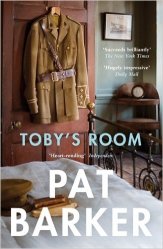 It generated an interesting discussion on a range of topics.
Toby’s Room
Toby was a papyrus twin. This means his twin died in the womb and as Toby continued to grow he compressed and flattened the dead foetus. So we talked about the effect on a surviving twin when his sibling dies at or before birth. One of our group surprised us by revealing that she was a twin and her sister was stillborn. Throughout her life she has always felt something was missing and she’s also felt guilty that she may have caused the death of her sister by ‘stealing all the goodness’ in the womb. She remembers in her childhood this being said aloud in her presence.
Many of the characters in Toby’s Room
We also talked about a scene in the book where Toby’s uniform is sent home in a parcel. When it is opened the smell of the battlefield fills the nostrils. It’s difficult to imagine the terrible emotions this would evoke in a family.
In our group the book got a mostly positive response. We thought the first half was particularly good and enthralling. The second half seemed to be dragged out a little and some thought the ending was too sudden. The reader does find out what happened to Toby – but I won’t spoil it by telling you!
We all agreed that we had learned something new about World War I from the book and that it had definitely been worth reading. If you’re in a book group, Toby’s Room
And if you’re thinking of writing rather than reading a novel, you might be interested in this Online Novel Writing Master Class with Bonus Manuscript Critique for £29 from Amazon Local.
Blurb Poll – The Results
Posted by Sally Jenkins in Books, Promotion, Self-publishing on July 16, 2015
Many thanks to all of you who took the time to vote and/or comment on the possible blurbs for my novel.
The poll winner, taking 50% of the votes, was the second blurb, ‘Single incidents shape our lives’. But Hilary Custance Green wisely pointed out that the shout-line was a little preachy. She suggested ‘The Butterfly Effect’ instead, which I think is much better too.
In second place was the final blurb, ‘Opposites attract’. This attracted 42% of the votes, including Anne Harvey who beta-read an early version of the manuscript – does that give her opinion more weight?
Last was, ‘Nature or nurture’ which gained only 8% of the vote. But one of supporters of this one was Julia Thorley, who used to write blurbs for non-fiction titles in her role as an editor – so perhaps it shouldn’t be ruled out completely?
Which blurb will I go with?
My personal favourite is the blurb that topped the poll, especially with its new ‘Butterfly Effect’ shout-line. I’m pleased it won. When I did this voting exercise with the three members of my immediate family, none of them chose it. That made me think I may be out of tune with what attracts readers, hence the reason I did the poll.
I have learnt that opinions on blurbs are very subjective. No blurb will attract every reader, so going with the poll majority may be the best thing to do.
Thanks again to everyone who voted and here’s the winner again:
The Butterfly Effect
A stupid mistake ended Ian’s marriage. Now he’s trying to put it right.
Sandra got pregnant as a teenager. Now she’s fighting to make a good life for her daughter.
Maxine made an important decision behind her boyfriend’s back. His reaction devastates all their lives…
Bedsit Three is a tale of mystery and romance. It won the inaugural Ian Govan Award and was shortlisted for both the Silverwood-Kobo-Berforts Open Day Competition and the Writing Magazine/McCrit Competition.
How to Write a Novel Blurb
Posted by Sally Jenkins in Books, Promotion, Self-publishing on July 9, 2015
I’ve been playing around trying to write a blurb for my novel. The blurb is that important paragraph or two which appears on the book’s back cover and may also form part of the Amazon product description. It has to hook, entice and leave readers with absolutely no option but to buy the book!
Searching the internet for help brings up lots of tips and information.
- The website Blurb concludes that it should introduce the main character, create intrigue and not give away the whole story.
- SilverWood Books adds some more pointers. Write in the present tense, use evocative, emotive words and have a ‘shout line’ that encapsulates the novel and could act as a subtitle for the blurb.
- Digital Book World says the blurb should be short and dramatic.
- Alison Baverstock on the Writers and Artists website says, “Stand back and hover above; try to create mood, feeling and value for what you have written, rather than describing it in endless detail.”
I’ve come up with three possible blurbs but I’m too close to the book to judge them objectively. So, I’d be most grateful for any comments and/or votes in the poll below.
Here are the blurbs, subtitled with their ‘shout line’:
Nature or nurture?
Ignatius is the product of a domineering mother. Ian hardly knew his father. Sandra is a single mum living on the poverty line. They all want a better life and someone to share it with.
But now one of them has done something very bad for the second time…
Bedsit Three is a tale of mystery and romance. It won the inaugural Ian Govan Award and was shortlisted for both the Silverwood-Kobo-Berforts Open Day Competition and the Writing Magazine/McCrit Competition.
Single incidents shape our lives.
A stupid mistake ended Ian’s marriage. Now he’s trying to put it right.
Sandra got pregnant as a teenager. Now she’s fighting to make a good life for her daughter.
Maxine made an important decision behind her boyfriend’s back. His reaction devastates all their lives…
Bedsit Three is a tale of mystery and romance. It won the inaugural Ian Govan Award and was shortlisted for both the Silverwood-Kobo-Berforts Open Day Competition and the Writing Magazine/McCrit Competition.
Opposites attract.
Divorced Ian is middleclass and educated. Single mum Sandra has no qualifications and lives on the breadline. Both will fight for the very best for their offspring. Both would like someone special back in their lives.
But the ex-tenant of bedsit three has a secret waiting to engulf all three of them…
Bedsit Three is a tale of mystery and romance. It won the inaugural Ian Govan Award and was shortlisted for both the Silverwood-Kobo-Berforts Open Day Competition and the Writing Magazine/McCrit Competition.
Midsummer Dreams
Posted by Sally Jenkins in Authors, Books, Lifestyle on June 12, 2015
Dreams are weird and wonderful things. They can disappear the moment we wake or linger in the mind for days. Sometimes we dream the same thing night after night. Other times we consciously try to re-dream something and it doesn’t happen. 
I’ve had one dream recur intermittently for many years. I dream that exam time is looming but I’ve done absolutely no revision. However hard I try to find time to revise, it doesn’t happen and I go into the exam totally unprepared. But I always wake up before I turn the exam paper over and read the questions.
This probably says something deep and meaningful about my waking life.
A bit of internet surfing, brought up a list of the Top 10 Common Dreams and Their Meanings. Number 6, ‘Failing a Test’, correlates most closely to my dream and the meaning given is, “…you are feeling tested in some way in your real life. You may feel that you are unprepared for something or playing the wrong part in life.”
That does tie in with my waking life, I like to be in control and ready for whatever life might throw at me.
Unsurprisingly, the most common dream listed is ‘Falling or Sinking’ and I’ve had that one too, where you always wake up before hitting the bottom. The explanation is, “… you are overwhelmed in life and feel ready to give up.” Maybe I need to get my life in order and then I can have some sweet dreams!
One person who’s put dreams to good use is romantic novelist, Alison May. Her latest novel, Midsummer Dreams, is published by Choc Lit today. Here’s the enticing blurb:
Four people. Four messy lives. One party that changes everything …
Emily is obsessed with ending her father’s new relationship – but is blind to the fact that her own is far from perfect.
Dominic has spent so long making other people happy that he’s hardly noticed he’s not happy himself.
Helen has loved the same man, unrequitedly, for ten years. Now she may have to face up to the fact that he will never be hers.
Alex has always played the field. But when he finally meets a girl he wants to commit to, she is just out of his reach.
At a midsummer wedding party, the bonds that tie the four friends together begin to unravel and show them that, sometimes, the sensible choice is not always the right one.
So Midsummer Dreams promises to be a sweet experience even if your own dream life (like mine) leaves something to be desired!
The Guernsey Literary and Potato Peel Pie Society
Posted by Sally Jenkins in Authors, Books on May 5, 2015
I’m currently reading The Guernsey Literary and Potato Peel Pie Society by Mary Ann Shaffer and Annie Barrows. 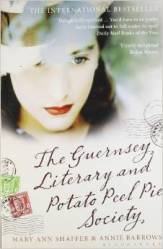
It’s set just after the end of WWII and the book comprises a series of letters to and from Juliet Ashton. She is an English writer looking for her next ‘big idea’. By chance she hears about the existence of The Guernsey Literary and Potato Peel Pie Society and decides to include it in an extended feature article for The Times. The various members of the society write to Juliet telling her how it was founded accidentally to escape the wrath of the Germans, they also write about the hardships of life under German occupation and about other things in their lives. Juliet also corresponds with her editor, her best friend and the rich Markham Reynolds, who appears to be trying to woo her. There may be more, but I’m only part way through the book so I’ll let you discover that for yourselves.
So far, I’ve found the book charming and easy to read – and it’s teaching me a lot about history.
But, as a writer, what interests me most is the story of its author, Mary Ann Shaffer. Mary Ann was an American born in 1934. In 1980 she visited Guernsey and left with a fascination with the history of Channel Isles during WWII. She was a ‘hobby’ writer, always working on something but never completing anything to her satisfaction, however around twenty years after her visit to Guernsey, and encouraged by her writing group, she started work on The Guernsey Literary and Potato Peel Pie Society. The completed book was snapped up by a publisher just before Mary Ann’s health began to fail. When the book’s editor requested some changes, Mary Ann wasn’t well enough to do them and so her niece, Annie Barrows (also a writer), stepped in to complete the book. Mary Ann died in early 2008, knowing that her only novel was to be published in thirteen countries but she was never able to enjoy its international success.
What’s the moral of this story? Get writing before it’s too late! Like all writers, I’m guilty of procrastination but the more birthdays I chalk up, the more aware I become of how little time we have. So I’m going to try to take Mary Ann’s story to heart – if I ever produce a best-seller (extremely faint chance, I know) then I want to be around and healthy enough to enjoy it!
And, if you need still more inspiration before facing that blank document, A Writer on Writing – Advice to Make You a Success, is only 99p until Monday 11th May 2015.

Police Procedure isn’t just for Crime Writers
Posted by Sally Jenkins in Authors, Books, Resources on April 14, 2015
Have you ever wanted to include the police in a novel or short story but got cold feet because you weren’t sure exactly what procedure they’d follow? Me too.
Today, I have the answer to our problems, in the form of retired police officer Kevin Robinson. So, it’s over to Kevin:
You only have to look at how many programmes there are on television featuring the police at work, both in reality and in drama to realise how much interest there is in the subject matter. Not all of it comes from writers or even readers of crime fiction. Throughout my 30-year police career and since retiring I have been approached by people from all walks of life wanting to know more about how the police do their job. 
During my career, I held many roles within the police service. I carried out uniformed foot and mobile patrol work with a small county and a large metropolitan police force. I conducted crime investigations ranging from the simple to the most complex. I have taught cops all over the world how to be better cops and investigators through law enforcement projects in the UK, US, Lithuania, Romania, Bulgaria, Croatia, Bosnia and Herzegovina, Serbia and South Africa. I rounded off my 30-years as Head of Initial Police and Custody Training for the fourth largest force in England and Wales. It was in my last two years that I met author Peter Robinson and provided him with some advice that helped him shape his 23rd DCI Banks novel, Bad Boy.
Following this I decided that once I retired, I wanted to help writers. Not just established writers but also those who as yet were unpublished. I knew that many people had questions about the police and how they worked but had no one they could ask and didn’t know where to look for the answers.
Not only did I know many of the answers but I also knew where I could find those that I didn’t readily know. None of my help is designed solely for writers of crime fiction. I have helped writers from genres such as historical fiction, romance, horror, fantasy, comedy and even science fiction. The one thing they all had in common was their desire to find answers to their questions about the police and crime.
To reach out to those seeking assistance with their stories I created a blog called Crime Writing Solutions, ran weekend workshops for writers wanting to make the policing element of their stories realistic and I have now just published a book called the British Police and Crime Directory for Writers and Researchers.
It is the only book of its kind, in that not only is it an E-directory of contacts within police forces and associated agencies and government departments in the UK: it provides links to over 200 free documents and manuals that describe in detail how the police are recruited, trained and should carry out their investigations and duties: there are links to 100 websites that every writer should know about: the reader will be able to find 37 authentic video clips describing ways in which the police really work, including following a murder investigation from start to finish and finally, which 58 books about the police, policing, crime and writing crime fiction, the writer and researcher may find most useful. 
The book lends itself perfectly to the electronic format because the reader can leap straight to the relevant place on the internet for research and then back to their book.
The British Police and Crime Directory for Writers and Researchers can be downloaded from http://www.amazon.co.uk/dp/B00TBAY150
Check out and subscribe to my blog at www.crimewritingsolutions.wordpress.com
Thank you, Kevin. I already follow your blog and the nuggets of ‘policey’ information that you generously post. And maybe now with this book, we writers won’t be so reticent about putting the odd policeman into our fiction!
Do Contemporary References ‘Date’ a Novel?
Posted by Sally Jenkins in Authors, Books on March 10, 2015
I recently read A Green and Pleasant Land by Judith Cutler. 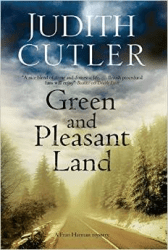 It’s a contemporary cold case crime novel and very engaging. Years ago an abandoned car was found containing a dead, disabled baby. The child’s mother and sibling were missing, feared dead and have never been found. What happened to them?
One of the things I particularly liked about the story was the many topical references to current events and today’s technology – these made the story much more immediate and real for me. One of Judith’s characters is a police and crime commissioner, there are references to the Huhne & Pryce speeding ticket fiasco, the sad case of Madeleine McCann and the terrible flooding that has hit areas of the country over the last few years. The two retired police officers investigating the cold case use iPads and have a coffee machine which uses pods.
Then I thought that anybody picking up this book in five or ten years time might find the technological references rather quaint and may not remember or have ever been aware of the current events mentioned. Would this spoil their enjoyment of the novel? Would they deem it old-fashioned? I asked Judith for her comments.
” I usually make my novels as topical as I can, because they tend to be library-only editions and therefore as evanescent as a may-fly.
Judith Cutler
So when rain and floods messed up my research, I decided to turn that to a strength, so it messed things up for my detectives too. A good police commissioner is as rare as a hen’s wisdom tooth, so it was obvious I could use one as a baddie. McCanns? Can you write about a missing child without mentioning them? So yes, a snapshot of 2014. Some might call this meticulous research, others opportunism.”
So the nature of the way Judith’s books are published means she doesn’t worry about how they may appear some years down the line. And probably most writers are more concerned about the immediate impact of a book on its publication day rather than in the future when sales have dwindled and readers attention has drifted elsewhere.
Judith’s going historical for her next book and finding it much more difficult to get the facts right.
” I’m currently setting a book in 1813 and some historical facts are proving a damned nuisance. How can my hero waltz in April 1813 when the waltz didn’t appear till about 5 months later? There’s no national police force to summon to his rescue and I’d give a lot for some penicillin too. I’m not a proper historian but I’m going to get 1813 right. If a novelist boobs over details, can you trust him or her with the big picture?”
In a few decades time people may read ‘A Green and Pleasant Land‘ as a historical novel and enjoy learning the small details of how we lived in 2014. So maybe it’s a good thing to stuff in all those contemporary references – what do you think?
CreateSpace Tips from Anne Harvey
Posted by Sally Jenkins in Authors, Books, Self-publishing on December 31, 2014
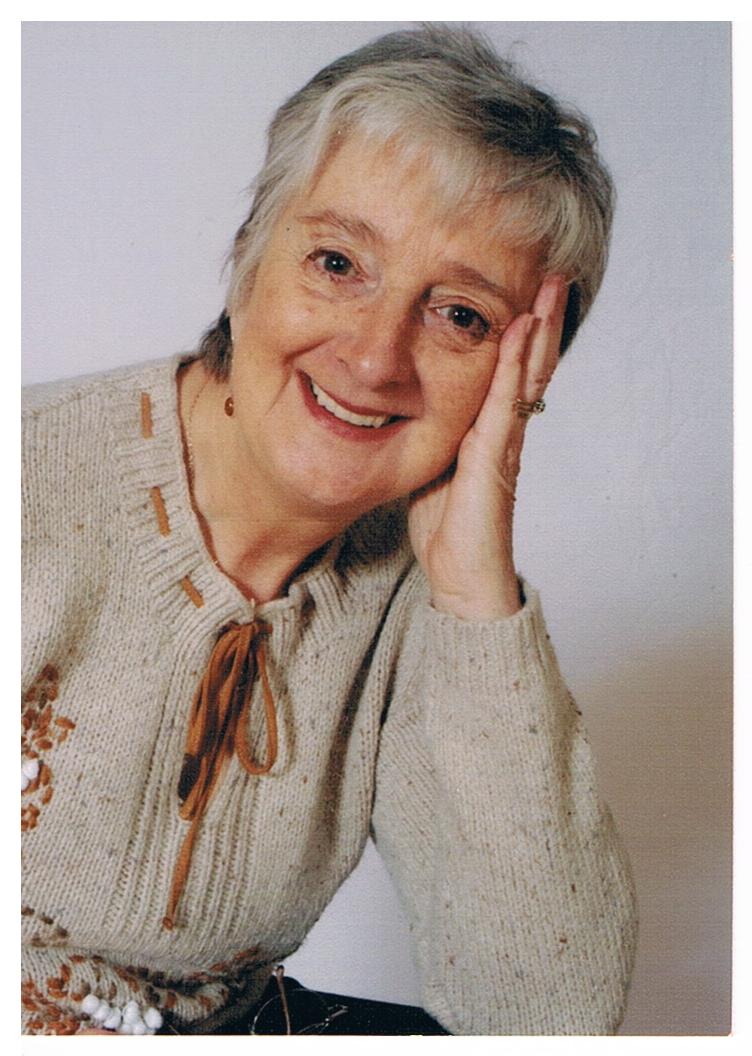 A couple of weeks ago Hilary Custance Green impressed us with her totally independent self-publishing journey. Today Anne Harvey has kindly agreed to share her CreateSpace experience with us.
Anne is the author of A Suitable Young Man.
It’s a nostalgic tale of friendship, family, love, loyalty and loss, set in a Lancashire mill town in the 1950s. One dark December night, Kathy Armstrong is rescued from two thugs by Nick Roberts, whom she’d known as a schoolgirl. But Nick is a Teddy boy, hell-bent on having a good time in the pubs and dance halls of the era. Shortly after, she meets accountant John Talbot at a party and is captivated by his middle-class charm. To the background of the new rock and roll, a mounting crisis over the Suez Canal, family and personal crises, Kathy struggles with a wayward attraction to Nick and her incubating love for John. But which one is ‘The Suitable Young Man?’
I read A Suitable Young Man during its beta phase and thoroughly enjoyed it.
Now, how did Anne get on with CreateSpace?
I published my debut novel ‘A Suitable Young Man’ on Amazon Kindle at the beginning of December but always knew that I wanted to bring it out as a paperback as well. Having only a limited budget, I chose to go with Amazon’s CreateSpace facility.
It looked a pretty scary project to undertake. Then, I learned of a book, ‘Format Your Print Book’ by Tim C Taylor, which promised to guide me through the process. I would recommend purchasing the paperback version for easy referral. The book proved invaluable but even though this was a second edition, certain things had changed which I needed to work my way through.
Although there is a Createspace template available, I didn’t like it because there seemed to be too many spaces between paragraphs which would have amounted to extra pages. Instead, I chose to format the book myself following Tim Taylor’s guidelines. It wasn’t easy but I took it a step at a time. The main thing to remember is to use section breaks instead of page breaks and first line indentation instead of tabs. Fortunately, there is a previewer so that you can check your work at all times. (Tip here: when formatting make use of the ‘print preview’ facility in Windows so that you can see how it’s going to look as a book.) Berni Stevens, who had designed my cover for the ebook, had had experience of formatting a full cover (including spine and back cover) and was a big help, eventually providing me with a print-ready pdf copy to upload.
Once everything is uploaded to your satisfaction, it has to be submitted for review (to ensure that it doesn’t contravene any of their regulations). This usually takes 24 hours after which you are emailed to say you can go ahead and order a proof copy. There’s a drawback here in that the proof copy has to come from the US. While waiting for that, I completed all the pricing and distribution details on my ‘dashboard.’ When working out a sale price, I took into consideration the cost price of author copies plus shipping from the States and added a profit margin onto that. Incidentally, cost of author copies and shipping costs are clearly given and simple to follow.
So, I’ve ordered my proof copy which should be with me some time in January. On receipt of that, I will need to check carefully through, make sure there are no typos or glaring formatting errors. Then, I will be ordering author copies which will take another few weeks to arrive. Because of this, it will be impossible to arrange a book launch in advance, which is a drawback. In the meantime, it will be available as POD for single copies for anyone who wants to purchase it through Amazon UK, no waiting time involved. I hope my experience helps anyone else thinking of trying Createspace.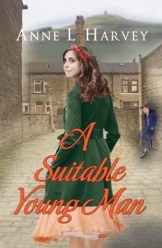
-
You are currently browsing the archives for the Books category.
 Sally Jenkins