Archive for category Resources
Coffee Break Fiction for Women’s Magazines
Posted by Sally Jenkins in Markets, Resources, Writing on June 13, 2011
Last week I was a guest blogger for the Writers’ Bureau. I chose to do my post about writing sub-1000 word stories for the womag market, in particular The Weekly News, My Weekly and Take a Break/Fiction Feast.
If you’re interested in writing for these magazines then read the full post by clicking here.
Anyone who is a student (or a temporarily lapsed student like me!) of the Writers’ Bureau is eligible to apply to be a guest blogger – just log in to the student community section of the Writers’ Bureau website for details. If chosen you will get a link back to your own blog – so if you’ve got something to say, it’s worth having a go.
Versatile Blogger Award (Part 2)
Posted by Sally Jenkins in Resources on May 9, 2011
Now it’s time to pass on the Versatile Blogger Award to some of my favourite blogs. Here they are:
- Patsy Collins’ blog is full of writing and reading related competitions. They range from prize draws to win a book through to more challenging writing projects. Patsy’s entry into the Readers’ Digest 100 word story competition was selected to appear on the Readers’ Digest website and can be found here (6 May 2011 story).
- Tracy Fells’ blog ‘The Literary Pig’ offers ‘a safe haven for all those afflicted with the unbearable urge to write’. Tracy has just completed the first draft of a children’s novel and has had various successes with short stories and flash fiction. In case you’re wondering, ‘The Literary Pig’ is a red cuddly toy with a starring role in Tracy’s blog.
- Julie Phillips’ blog Article Antics is devoted to those of us who write magazine articles. Julie is currently doing a Journalism course and her blog charts the ups and downs of her own writing career as well as giving useful advice and inspiration to anyone else interested in writing short non-fiction.
- Marilyn Rodwell’s blog God of the Cocoa is about her writing journey towards completing a trilogy of books. The books are set in Trinidad where Marilyn was born and brought up. Marilyn is also the organiser of the Romantic Novelists’ Association Birmingham Chapter – which is how I met her.
- Helen Yendall’s blog is full of information on market opportunities, writing events and other snippets. Helen was the Warwick Poet Laureate for 2006 – 2007 and she also writes fiction for women’s magazines and articles. Helen is a creative writing tutor and also my writing buddy.
I hope that, like me, you’ll find some interesting and useful things on the above blogs. Since I started this blog 6 months ago, I’ve discovered a whole new community of writers on the web. Most of us are unlikely to ever meet face to face but there is a supportive camaraderie amongst the writers I’ve come across which can be most comforting when things aren’t going well and the rejections are coming thick and fast!
I did promise you (under the terms of the Versatile Blogger Award) 7 favourite blogs and I’ve only listed 5. This is because 2 of my selected bloggers haven’t yet replied to my invite to accept the award. If they accept the award in the near future then I’ll give them a mention in a later post.
Don’t forget to sign up for free email updates to this blog (see the box on the right) if you would like the chance to be the next keeper of my World Book Night Books.
West Country Writers’ Association 60th Congress
Posted by Sally Jenkins in Events, Resources on April 25, 2011
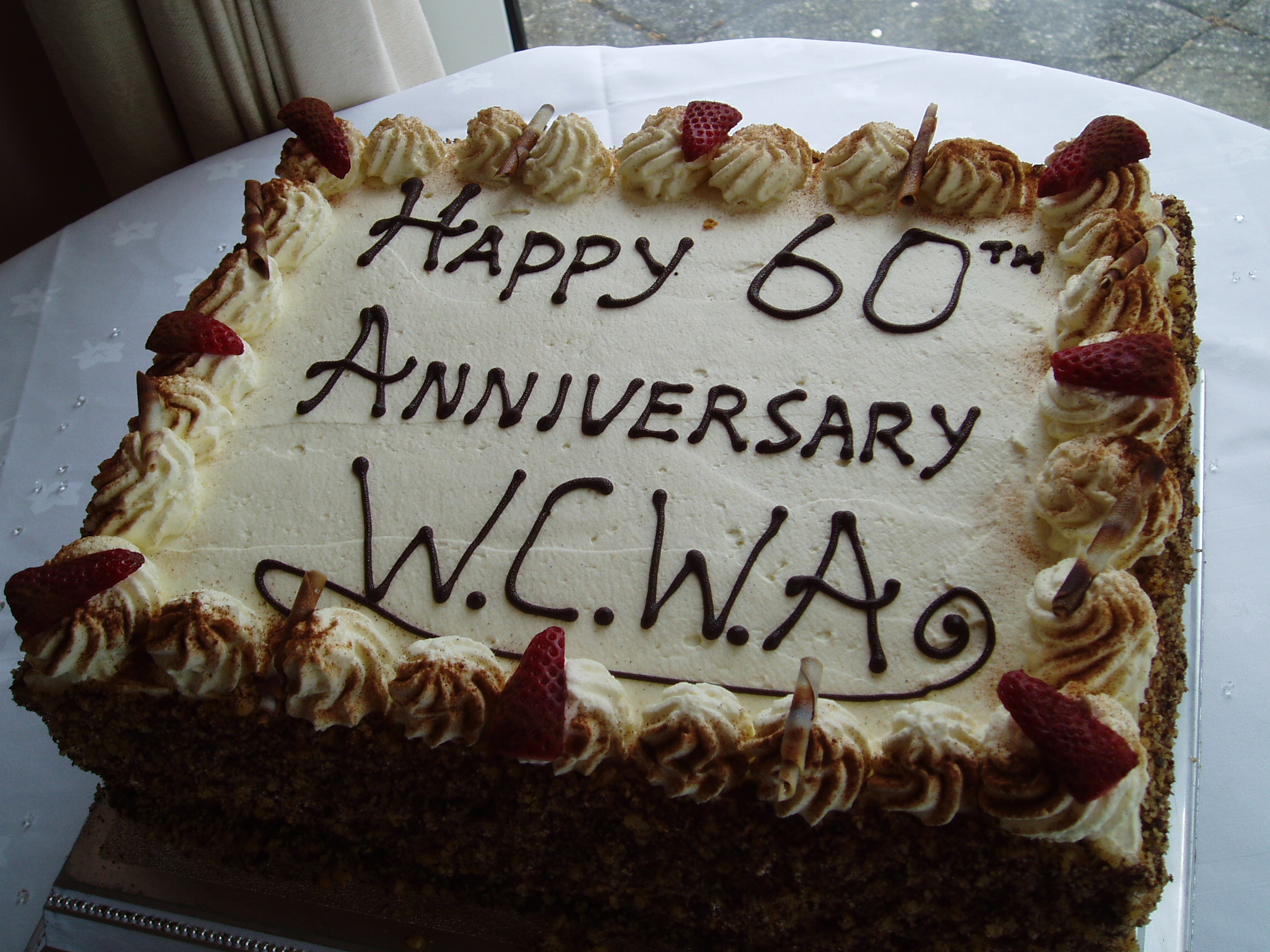 The weekend before last I attended the West Country Writers’ Association 60th Congress in Plymouth as the winner of their 2011 bursary.
It was a great luxury to be away from all the domestic disturbances for the weekend and to be able to completely immerse myself in chat about writing, publishing and related topics. It helped that the Congress was held at the lovely Elfordleigh Hotel which has a pool, sauna and steam room!
The weekend started on a high with the presentation of my certificate by Angela Rippon. She also gave an extremely interesting and enthusiastic talk about her career to date and revealed that, amongst other things, she is the author of a series of children’s books featuring the character Victoria Plum.
During the weekend I talked to writers of romantic fiction who were able to give me some advice about the world of My Weekly Pocket Novels:
- Include some adventure
- Try an exotic setting
- Have a foreign love interest
I was also told not to forget the possibilities of publication as a large print book too. The two main players are Chivers and Ulverscroft – the first of these pays royalties and the second pays a fee. And apparently there’s always the US market as well…
I also managed a few words with agent Dorothy Lumleyand asked her about writing the dreaded synopsis. She told me that writers always stress about this unnecessarily. She said that she always reads the first 3 chapters before the synopsis and it was imperative to grab the reader within the first page or two of these chapters. The best way of doing this is to open with a character that the reader immediately cares about. The reader must want to turn the page to find out what happens to this character. Dorothy added that the synopsis should always include the ending of the novel otherwise it is little more than an extended blurb – which will make you look unprofessional.
And one final titbit to put you off writing forever. I spoke to one novelist with a string of published titles to her name and she told me that she once calculated that she was writing for 40p an hour!
Writing Serials for Women’s Magazines (Episode 2)
Posted by Sally Jenkins in Events, Resources, Writing on April 18, 2011
More tips picked up at Joanna Barnden’s highly informative course on writing serials for women’s magazines:
Each episode of a serial needs a cliffhanger to make the reader buy the next edition of the magazine. The cliffhanger has to leave the reader wondering about what has just happened or desperate to find out what is going to happen next. It should open up the story for lots of possibilities in the next episode rather than answering any questions or tying up any loose ends.
Try to do this by revealing something that suddenly changes the reader’s assumptions about the story line, such as a dead body, a person who is not what he seemed or dropping in a face from the past. Alternatively leave your character in a perilous situation, for example in charge of a runaway horse or at the mercy of a gun man in a post office hold-up.
I mentioned in my previous post that it is the opening episode plus further episode by episode summaries that sell a serial to an editor. Joanna referred to this first episode as the ‘pilot’ that really has to ‘wow’ a very critical audience. This episode should try to include all your main characters. There are 2 obvious ways of doing this:
- Have everyone get together at a big important event such as a party, funeral or on a coach journey. Show how they react to each other and the event they are attending.
- Have a crisis (such as a road accident, outbreak of war) and show how the different characters react to it.
Following on from this, the episode summaries need to be concise and easy to read. Around 500 words per episode is sufficient. Also include a cast list with your submission listing a very brief sentence about each character. Finally, write a short summary of the whole story. This should be similar to the blurb found on a novel or DVD.
Three magazines currently use serials:
- People’s Friend – around 10 episodes with a total word count of 60,000
- Women’s Weekly – serials of either 3 or 4 parts of 3800 words each, they want ‘serials that reflect life but in a way that is utterly compelling’
- My Weekly – they don’t always run one but prefer 3 episodes of 2,500 words each
Once a magazine has accepted the first episode and summaries you will usually be asked to submit each episode in turn to the editor. She may request changes to get things just right before you move on to write the next episode. There is no need to write the whole serial ‘on spec’.
So there you have it – serial writing in a nutshell!
Writing Serials for Women’s Magazines (Episode 1)
Posted by Sally Jenkins in Events, Resources, Writing on April 14, 2011
Last week I enjoyed an immensely informative day in Derby taking part in Joanna Barnden’s course on writing serials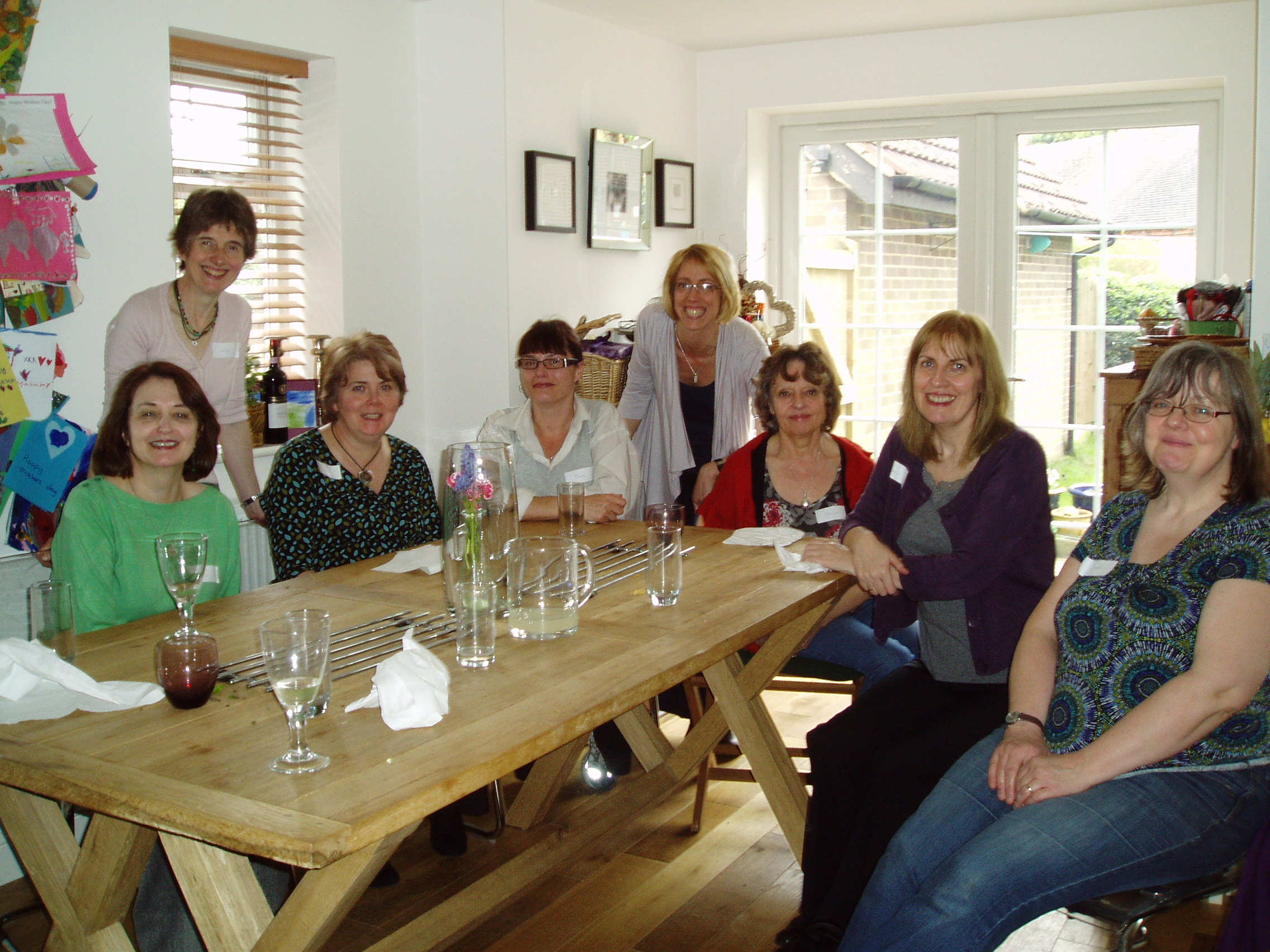 for women’s magazines. Joanna’s aim was for all of us to go home with a cast of characters and a basic outline for a serial that we could further develop ourselves. I thought it was a tall order but she succeeded!
There were 7 of us around the table (the picture shows us half way through a home-cooked lunch and waiting for pudding!) and as the day progressed so did our serials. From nowhere we produced story settings ranging from a Greek island, a solicitor’s office and a belfry. An equally disparate list of characters came to life and then we had to work on the bit I found really hard – a main plot plus a couple of sub plots…
Later it was down to planning that crucial first episode which has to grip the reader and make her buy the magazine again next week. But, most importantly, along with an episode by episode summary, it also has to sell the whole serial to the editor.
As we went through the day Joanna gave us a few rules to work with:
- Have lots of characters – all with their own problems. These people should be part of a linked group – perhaps they work together, belong to the same sports club or live around the same village green.
- The timeframe can be as long as you like
- Keep to a linear story
- Use several settings – think how often the camera moves to a different view in a TV drama
- Tease the reader by revealing things gradually
- Each episode needs to be satisfying read in itself – this is so that readers who have bought the magazine for the first time can still enjoy the story.
Most of these ‘rules’ are the exact opposite of short story writing where only a few characters play out the story in one setting within a tight time frame – so as someone who loves writing very short ‘coffee break’ fiction, this went totally against the grain for me.
One of the most important elements of a serial is the cliffhanger – and just to keep you on tenterhooks I’m going to save that plus how to submit your story to an editor for the next post !
In the meantime if you want to find out more about Joanna, her courses or her reasonably priced critiques – her website is here.
Short Story Critiques
Posted by Sally Jenkins in Competitions, Resources on April 4, 2011
A couple of weeks ago a follower of this blog contacted me for advice on obtaining a critique for a short story she was working on. Understandably, she didn’t want to pay a fortune and nor she did she want to risk the story being hijacked by someone else.
For a short piece of work like this the critiques offered by competitions are reasonably priced. These include:
- Writer’ Forum – a monthly competition with an open theme and maximum word length of 3,000. The critique is an extra £5 on top of the entry fee. I’ve used this service once and received a one page report covering: Presentation, Title, Opening, Dialogue, Characterisation, Overall. It pointed out my overuse of clichés, incorrect use of the word ‘indiscrete’, problems with characterisation and the fact that the ending was too ‘sudden’. So for £5 I had a lot to work on to improve the story before it went off to another competition.
- Meridian Writing run quarterly competitions and offer a basic critique for an extra £3. This is usually an A4 page in length. They are also offering critiques for noncompetition entries with the fee varying on whether a basic or detailed report is required and the length of the story.
- Flash 500 Competition is another quarterly open themed competition but the word limit is 500. The optional critique is £10. These competitions are run by Lorraine Mace and she also offers critiques on non-competition pieces (any length and including articles and non-fiction books), see here for more details.
A subscription to Freelance Market News includes a free critique on 3,000 words of prose or 120 lines of poetry. It costs £29 for 11 issues and includes free monthly writing competitions plus 20% off entry to The Writers’ Bureau Short Story and Poetry Competition.
Does anyone else know of a critiquing service that is good value?
Character Names
Posted by Sally Jenkins in Resources, Writing on March 31, 2011
Wouldn’t it be great to have an ‘age appropriate’ list of character names to choose from?
The pool of names at my disposal is quite limited. If the heroine is about my age then I run through the names of the girls that I was at school with – this means that you’ll often find a Karen, Alison (we had 4 of those) or Tracy starring in my tales about women in the prime of their life (!). When I am writing about a teenager then I pick the name of one of my daughters’ friends and Holly, Amy or Megan will take centre stage. My mum’s contemporaries come in useful when I’m writing about the older woman and the names that I’ve grown up with are Shirley, Audrey and Dorothy.
Anything in between these generations and I just have to guess or try to think of someone I know of the appropriate age.
Men’s names are much harder because I went to a girls’ school, had no brothers and I have no sons. I work mostly with men but their average age is just over 40 so choosing names for young men can cause me a problem.
If I were to set a story 100 years ago it would be much tougher still to work out an age appropriate name for my cast of characters.
However, Katey Nixon has solved this problem for me. She has produced a resource for writers comprising the most popular names for both sexes over the last 100 years. So whether you want to invent a cast of characters for a story set in war-torn London in the 1940s, or a tale of saucy goings on in the 1960s or even about a baby born as the world entered the new millennium, there should be something suitably inspiring to bring your story to life.
Specifically, Katey’s spreadsheet contains the top 100 girls and boys names for ten-year intervals from 1904 to 1994, and every year from 1994 to 2008. Plus there are Irish and Scottish names over the last century and this. The character’s age as of 2010 is preprogrammed into the spreadsheet. But it has a facility whereby you can enter the date your book or short story is set and it will recalculate.
But the best thing about this list of names is that it raises money for the charity Hamlin Fistula UK, which supports the Addis Ababa Fistula Hospital in Addis Ababa, Ethiopia – a hospital caring for women with horrendous injuries sustained in childbirth.
You can get hold of Katey’s fabulous resource by donating just £2 by clicking here. After you’ve donated you’ll receive a link enabling you to download the spreadsheet and get inspired by all those names just crying out to be brought to life!
Life Coaching for Writers
Posted by Sally Jenkins in Resources on March 28, 2011
Last week I had a telephone life coaching session. This was something completely new to me and I had no idea what to expect.
Suzanne, my coach, phoned at the appointed time and the first thing she advised was to go and fetch a glass of water – I would be doing a lot of talking over the next 50 minutes.
Life coaching is a way of asking questions to make the client see things from a different perspective and thus find solutions to the obstacles in their life. It is not some new pseudo-science that has been recently invented. Successful people have always had this ability to look at problems from a different angle and then set manageable goals to be achieved within a realistic timescale. Life coaches takes these skills and use them to help clients see a way forward towards what may have seemed an unachievable goal.
I told Suzanne that my goal was to finish my My Weekly Pocket Novel. At present I was only working on it once a week and therefore had lost momentum each time I came back to it. I am easily distracted into writing shorter stories for competitions and magazines – because I like the feeling of achievement that comes from having finished a piece of writing.
Suzanne asked me to imagine how I would feel when the Novel was finished (proud of my achievement plus an increase in confidence for future writing projects) and also how I would feel if I didn’t complete it (a failure plus a feeling that I could only manage shorter pieces).
She then got me to talk about the obstacles to completing the Novel and to think about ways in which they might be overcome. With Suzanne’s help, I created a plan for moving forward, with Easter as my first milestone:
- Print the Novel so far
- Read and make notes on each chapter (a sort of reverse planning)
- Plan out each as yet unwritten chapter (by Easter)
- Write the unwritten chapters according to the plan
This may not seem like rocket science but it is a step forward for someone like me who finds it hard to plan (because there’s no satisfaction of watching the word count increase and I find it difficult to see my characters until I actually write scenes with them in) and prefers writing in discrete chunks (hence my love of shorter pieces). Once the plan is in place I will be able to write my chapters in discrete chunks and will be less likely to ‘lose the thread’.
At the end of the session Suzanne pointed out that I had found the way round my own obstacles – she had merely asked questions to direct my thoughts. The advice about the water was good too – my mouth was getting dry towards the end of the session!
So now I’m feeling a little nervous but excited too about achieving the goals I’ve set myself.
Suzanne is a member of the Birmingham Chapter of the Romantic Novelists’ Association and has recently qualified as a life coach. She would like to specialise in coaching writers and other creative types and is currently offering free telephone coaching sessions in order to practise her skills and build up her experience. If you would like a coaching session with Suzanne please contact me via the form on my ‘About Sally Jenkins’ page (accessed via the tab on the top left of this page) and I will pass your details on to her.
Fiction Addiction – An Online Womag Writers’ Circle
Posted by Sally Jenkins in Resources, Writing on March 21, 2011
Fiction Addiction is an online writing circle for Womag (women’s magazine fiction) writers. It was founded in January 2011 by Sharon Boothroyd because she (like the rest of us!) was fed up of getting rejections but not knowing where she was going wrong.
Since Fiction Addiction was mentioned on womagwriter’s blog, Sharon has received loads of emails and the writing circle is growing.
The circle has no strict rules to follow. Members send their work out for feedback whenever they wish. All stories and feedback are sent on a ’round robin’ basis so that everyone can read everything and no-one is left out. However, if individual members want to then start corresponding separately then that is OK too. Most of the stories submitted so far have been under 2,000 words but Sharon thinks that 6,000 would be the absolute limit. Serials and My Weekly/People’s Friend pocket novels are also welcome and can be sent out for feedback chapter by chapter or part by part.
The members of Fiction Addiction are asked to abide by certain guidelines to ensure that criticism is given in a constructive away and that email addresses are kept confidential. There is no need to fear having a story ‘stolen’ by someone else in the group – the ’round robin’ method of communication means that everyone else will know where a particular story originated from.
Membership of the Fiction Addiction writers’ circle is free and Sharon runs it as a hobby not a money-making enterprise. Some members of the group have already been published professionally and others are just starting out but they are all feeling the benefit of being part of a group rather than floundering alone. Here are some of their comments:
“Thank you all for the warm welcomes I have received already! It really is an active group and I am so excited about being part of it.”
“I love sitting down with a coffee to read a good story and it’s also really interesting to read everyone’s comments.” “Congrats to you for setting this all up, I think its going to be a real bonus for everyone involved and it feels great to be a part of something.”
I write women’s magazine fiction and find the feedback that I get from Helen, my writing buddy, invaluable. So I would urge anyone who would like someone else to cast an eye over their work (and who is willing to do the same for other people) to have a look at the Fiction Addiction website for more details.
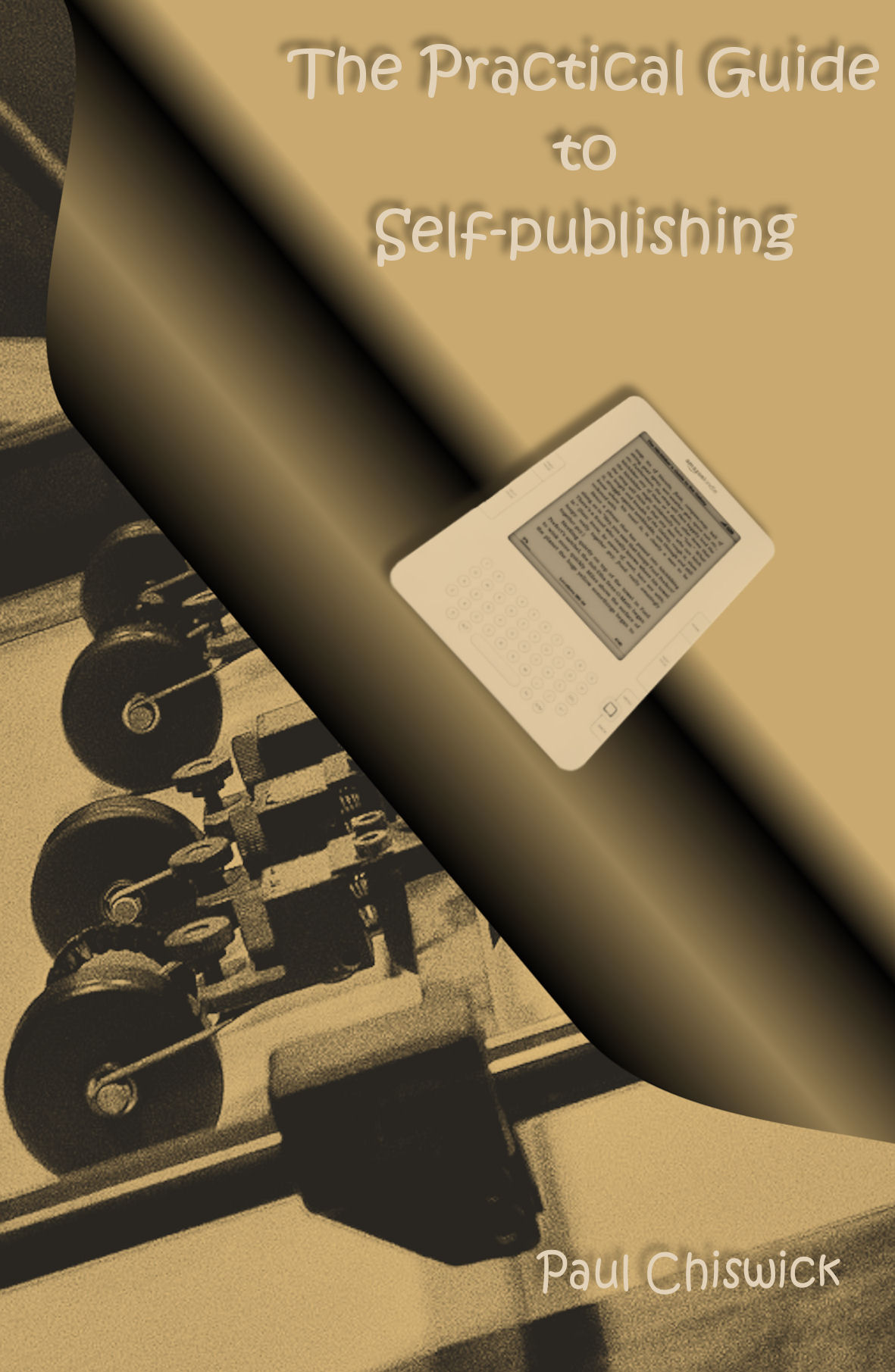
The Practical Guide to Self-Publishing by Paul Chiswick
Posted by Sally Jenkins in Resources, Self-publishing on March 3, 2011
I think all writers agree that getting published can be next to impossible for the novice writer (unless you’re a celebrity!). This means that more and more of us are turning to self-publishing as a way of getting our books out there. Paul Chiswick has experience of several self-published projects and has now written a book on the subject. Here he is with some advice for anyone thinking of going down the self-publishing route:
Everyone’s reason for producing his or her ‘book’ will be different. You may want it purely for posterity, a record of your own life. How many of us would love to know more about our grandparents and great-grandparents? Or you may be convinced you are the next JK Rowling, destined for fame and fortune. If only!
First things first: there’s a hurdle called publishing planted between you and your dream. Once upon a time, publishers were far more willing to publish an unknown author. They trusted their judgement, and knowledge of their readers. However, consolidation and an emphasis on profitability have changed the publishing world, perhaps forever. Look around you on the shelves of bookshops and supermarkets. Nowadays, a very large proportion of books published each year are by ‘celebrities’, who may or may not have written, or indeed have had much input into, the book that appears under their name. Either that or they are by well-established and successful authors. Naturally, these books are easier to sell. As a result, the highly competitive market for unknown authors has shrunk dramatically over the last few years.
Is there an alternative? You bet! Publish it yourself.
How do you do it? Here are four of the most common ways:
- The publisher takes your manuscript and carries out the complete publishing process. He charges you a fee, which covers the entire costs of production and distribution. This is exactly what a traditional publisher does, except in traditional publishing the publisher bears all the cost and assumes the risks. This is a growing area of self-publishing, and new entrants are coming into the market all the time. Expect pricing to become more aggressive and competitive.
- The services of the publisher are dispensed with altogether. You carry out all the stages of production and distribution. The only part of the physical process you won’t be able to undertake is the actual printing and binding of the books. A printer specializing in book production would undertake this for you. If this is an option that interests you, I suggest you acquire a copy of my eBook, The Practical Guide to Self-Publishing, a snip at only £3.99! Available from Barnes & Noble, Sony, Kobo, Amazon, Apple and Diesel.
- You produce everything in digital format on your PC and then employ Print On Demand technology. Print On Demand (sometimes termed Publish On Demand) arrived with the advent of digital printing when the printing of single copies of a document became economically viable. Using this technology, copies of the book are not printed until an order has been received.
- You produce everything in digital format on your PC, then produce, market and sell it as an eBook, often on your own website or through an online retailer such as Amazon.
What are you waiting for? Get publishing!
-
You are currently browsing the archives for the Resources category.
 Sally Jenkins