Archive for category Resources
To Blog or Not to Blog?
Posted by Sally Jenkins in Non-fiction, public speaking, Resources, Self-publishing on January 2, 2024
To blog or not to blog?
That is the question many are dwelling on at the moment. Some bloggers have given up, some have switched to Substack and some have decided to concentrate on newsletters.
I started this blog in the autumn of 2010 and love the fact that many subscribers have been with me since then (thank you! – and I hope we’ll continue to be virtual friends). I’ve gained a lot from blogging, including discipline (it’s not easy to dream up topics to blog about), contacts (it’s so lovely when people take the time to ‘like’ or comment, especially on a regular basis) and knowledge (from the lovely guest bloggers I’ve hosted and from research I’ve done for my own posts). I hope you’ve all gained something from it too!
For me, the answer to my initial question is: Continue to Blog.
I’ve thought about Substack but don’t know enough about it or how it beats a standard blog. If you’ve got experience – please enlighten me because I never seem to have the time to investigate it fully.
I have a newsletter but, so far, I’ve only used that for significant book or writing news rather than the general information and titbits I put on here. If you’re curious, signup here. Plus casual browsers stumble across this blog in a way that they wouldn’t find back issues of a newsletter.
I don’t want to abandon communicating with writers and readers because it’s taken a long time to capture you all (!) and I think an online presence is important.
So, you’ll find me here for a bit longer.
I’ve just looked back through my WordPress statistics to find out which have been my most popular pages over the last 13 years. Here are the top four:
Icebreakers for Creative Writing Adult Education Classes
The Seven Sisters Series by Lucinda Riley
The statistics for 2023 show that I wrote 31 blog posts and August 15th was the day this site got the most hits, which was also the day I published the post about My First RNA Conference and an Award.
Finally, given this is the start of a brand new year and many of us are setting goals and challenges, here are a few publications that might be useful:
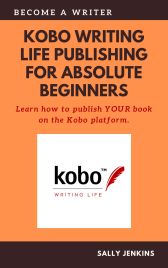
For those dipping a toe in the world of self-publishing – Kindle Direct Publishing for Absolute Beginners and Kobo Writing Life Publishing for Absolute Beginners.
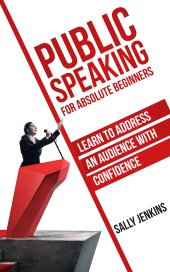
For those wanting to build self-confidence or to promote their books via author talks:
Public Speaking for Absolute Beginners.

A Competition, Kobo and NaNoWriMo
Posted by Sally Jenkins in Competitions, Computers & Technical, Resources, Self-publishing on November 9, 2023
I’m deeply down the NaNoWriMo rabbit hole this month, trying to churn out words that don’t resemble a plate of cold, congealed spaghetti. First drafts of a novel are never easy!
(For those of you outside the writing community, November is National Novel Writing Month when we attempt to write 50,000 words of a novel in the 30 days of November i.e. 1,700 every single day for 30 days.)
In other news, I was delighted to be invited by GeniusLink to contribute to their blog on the subject of Self-publishing on the Kobo Ebook Platform, based on my book Kobo Writing Life Publishing for Absolute Beginners. Kobo is big in the Canadian market and offers worthwhile opportunities to those authors who choose not to stay exclusive to Amazon.
This free-to-enter competition popped into my Inbox this week. I seem to remember something about it last year so it may be an annual thing. THE GLENCAIRN GLASS CRIME SHORT STORY COMPETITION is looking for crime stories of up to 2,000 words based on the theme ‘A Crime Story Set In Scotland’.
First prize is a lovely £1000 plus a couple of extras! Closing date is 31st December 2023.
Don’t forget to check all the details plus the terms and conditions before starting to create your story.
Finally, don’t forget the special preorder price of just 99p for my next novel, Waiting for a Bright New Future – to be published on December 5th by ChocLit (an imprint of Joffe Books). It’s a story about family, friends and facing your fears to find love after fifty.
Now I’m going back down that rabbit hole!

ALCS Focus Group & Networking
Posted by Sally Jenkins in Events, Resources, Writing on July 11, 2023
Last week I took part in the Authors’ Licensing and Collecting Society (ALCS) focus group in

ALCS = Free Money!
Birmingham and in the networking event that followed. It was the first time ALCS had ventured out of London since Covid and the first time I’d taken part in any sort of focus group.
For those of you who don’t know, ALCS makes sure that writers receive the money they are entitled to for secondary uses of their work, such as when someone photocopies a magazine article or a book extract. Understanding where ALCS get the money they pay to writers is complicated and I suggest reading what it says on their website.
There were ten of us ALCS members, ranging from academics to poets, novelists and indie authors, around the table in the focus group plus various ALCS staff members (as well as cookies, muffins and hot drinks to fuel us!) Various topics were thrown at us for discussion and the ensuing conversation was recorded. Points that came up:
- Initially some people had been reluctant to sign up to ALCS because ‘free money’ in exchange of bank details sounded like yet another internet scam.
- The fact that the membership fee is only taken from a writer’s ALCS earnings was a major selling point, because there is no risk of not receiving enough money to cover the joining fee.
- Very few of the writers present were aware of the ALCS podcast.
- Few of the writers present properly understood where ALCS source the money and how it is shared out – we were just happy to receive the payments!
- The big discussion point was Artificial Intelligence and how it might be used to plagiarise our work or to create new, ‘original’ pieces of writing. ALCS are currently lobbying MPs and the government to bring in laws that will protect writers from any negative effects of AI.
At the end of the discussion we were joined by other writers and offered prosecco, wine and lovely little canapes! It was interesting to discover all the different types of writing served by ALCS. I spoke to a script writer for the Horrible Histories children’s television series, a feature writer for Bauer magazines, an indie romantic novelist and an academic who got nothing on publication of a textbook but had received regular payments from ALCS because it was widely photocopied.
Conclusion: ALCS are definitely on a mission to protect and campaign for writers’ rights. If you have had anything published then you have nothing to lose by joining ALCS and you may well receive some free money!
(Members of the Society of Authors receive free ALCS membership)
Find Your Next Read with Shepherd
Posted by Sally Jenkins in Books, Promotion, Resources on June 27, 2023
Most of us are familiar with Goodreads as a source of inspiration for additions to our To Be Read pile but there is a new(ish) kid on the block: Shepherd.
Ben Fox is the founder and driving force behind Shepherd and he feels so strongly in the concept that he is using his savings to fund its development.
“I created Shepherd to add magic and serendipity to online book discovery,” he says.
Ben (rightly!) believes that books are one of the biggest net positives in the world and deserve something more than the often soulless experience of buying a book online. How does he wave a wand and create this wonderful, virtual cornucopia of books?
“I’ve asked 9,0000+ authors to share five of their favorite books around a topic, theme, or mood and why they love each book. This infuses each book with a bit of magic and meaning,” Ben explains.
I was approached by Ben early this year to contribute my five book choices. At the time I was busy editing to a tight publishing deadline and had to delay putting together my list and my reasoning behind each book. But Ben was happy to wait and my choices for The Best Life-Affirming Books are now live on the Shepherd website. What do you think of my selection?

Ben is very approachable and full of exciting ideas to make online book browsing an even more pleasurable experience (beware once you start exploring the Shepherd site, time will disappear in a flash!) – which is brilliant for readers and authors alike.
Have a search around and see what new treasures you discover!
#HaveFinishedEditing
Posted by Sally Jenkins in Lifestyle, Resources, Writing on March 28, 2023
The editing of Little Museum of Hope is now complete. It is winging its way off to be proof read. Hurrah!

Daffodils in Chester
Sarah, my Ruby Fiction editor, was full of wise advice and suggestions to improve the overall story arc and pace. She also has eagle eyes that spotted several inconsistencies in the manuscript, such as ages of characters which didn’t tie in with the music I’d mentioned, plus I had someone being 22 in 1981 and 50 in the present day. And I spotted an engagement ring change from sapphire to diamond half way through a chapter. This has taught me that going forward I need to be rigorous in keeping a detailed timeline and lots of notes for each protagonist. Every day is a school day, as they say!
I’ve also been learning about Instagram. You can now find me on there as @sallyjenkinsuk. I don’t have many posts to my name yet but will get more familiar with the platform eventually. If you’re an ‘Insta’ person please drop by and say ‘Hello’.
Since I last posted I’ve also had a big ‘0’ birthday which involved family, gin, a weekend away in Chester with two schoolfriends both hitting the same age (obviously) and prosecco. This leads me to: Never think you are too old to write a novel or to be published: through all the ups and downs of my writing career I’ve never specifically been asked my date of birth or how old I am. But, if you meet me in the flesh, my face might give the game away!
Finally, I spotted a great blog post from Kobo Writing Life on writing a fast first draft. I like to get the first draft completed as fast as possible so that I know the whole story and can then go back and flesh out/delete/change as required. But writing 60 – 90,000 words is never quick. One piece of advice in the blog is to write the whole novel in bullet points in order to get the complete structure down on paper while it’s in your head and without getting bogged down in description, dialogue and all the other minutiae. I am very tempted to try this next time I start a new project.
What do you think, will it work?

Researching the Past
Posted by Sally Jenkins in Authors, Books, Resources on February 9, 2023
I am delighted to have Choc Lit novelist, Victoria Cornwall, with me today, sharing research secrets from her new WWII novel, Waiting for Our Rainbow. Over to Victoria:
I have an interest in WW2, so researching for my latest release, Waiting For Our Rainbow, was particularly fascinating. From 1942, thousands of American soldiers began arriving in England, many of whom ended up in Cornwall. Who were these men? Where did they come from? What did they do while they were here?

Victoria Cornwall
My research began on the internet. I discovered it was the 29th Infantry Division who came to Cornwall, which gave me a starting point. Through Facebook and dedicated websites, I contacted several historians who were experts on the division and the training they undertook after their arrival in England. They answered many of my questions and provided me with lots of information. I also came across the US government’s advice booklet they issued to their soldiers to help them with the cultural differences they would face on their arrival to England.
I’d grown up knowing African American soldiers were also billeted to Cornwall. What role did they play? Why were their camps separate from the combat soldiers’ camps? I was concerned about writing this part of the novel because at the time racial tensions were particularly high. I could not ignore the important role they played, but I knew that if I wrote about it I wanted to remain true to the era and dialogue without contemporary attitudes and pressures making me water it down. Fortunately, I came across a collection of video interviews, where African American veterans recalled their experience of joining the army, the segregation they faced and their frustrations at not being given combat roles at the beginning. There is a pivotal scene in Waiting For Our Rainbow, where a small group of African American soldiers notice Joe, a white soldier, entering their encampment. The scene and dialogue that follows were inspired by those veterans’ memories and experiences.
Next was the local community… how did they feel about American soldiers invading their county? I was able to talk to some people who were there at the time, but I also read archived newspaper articles and a couple of childhood memoirs which were extremely helpful. I also read the BBC’s online memory collection, WW2 Peoples War, which is a brilliant resource.
My final research was to visit some of the places. Fortunately, I live in Cornwall so it was easy for me to do. It was a humbling experience to stand in the same places where American soldiers had once stood. They were young men, many with little to no experience of combat but, along with British and Canadian soldiers, they took part in the largest amphibious military assault in history – but they could not have done it without the help, knowledge and support of many others. Also taking part in the success of D Day were sailors, soldiers and airmen from Australia, Belgium, Czechoslovakia, France, Greece, the Netherlands, New Zealand, Norway, Poland and others. In addition, the skills of meteorologists, scientists, inventors and the French Resistance were used during its planning and implementation.
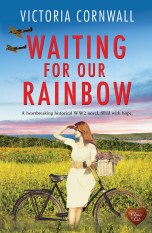 Waiting For Our Rainbow concentrates on Joe, an American soldier, and Anne, a young Cornish woman. Ultimately it is a normal romance between a man and a woman, yet it is set at a pivotal time in the history of the war that would affect their romance, the decisions they make and the course of their lives for decades to come.
Waiting For Our Rainbow was released as an Ebook on 31st January, 2023. A paperback and audio version will follow shortly afterwards.
About Victoria Cornwall
Victoria grew up on a farm in Cornwall and is married with two grown up children and three grandchildren. She likes to read and write historical romance with a strong background story, but at its heart is the unmistakable emotion, even pain, of loving someone.
Her books have reached the finals of the NEW TALENT AWARD at the Festival of Romantic Fiction, the RNA’s JOAN HESSAYON AWARD, the 2021 RNA’s Goldsboro Books HISTORICAL ROMANTIC NOVEL AWARD. Her books have also been twice nominated for the RONE Best Indie or Small Published Book Award by InD’tale magazine.
She is a member of the Romantic Novelists’ Association.
Find Victoria on her website, Twitter, Facebook, Instagram, YouTube and Pinterest.
About Waiting For Our Rainbow
Would you give your heart away if you knew it could only end in goodbye?
It should have been a time of romance and excitement for Anne – but it’s 1941 and the war is raging. So instead, she spends her days repairing spitfire wings and reminding herself that the real sacrifice is going on far away from her Cornish village.
When the news breaks that America has entered the war, it brings cautious hope to Anne and her family. And eventually, as the Jeeps filled with GIs roll in, it seems their little community is to play a pivotal role in the next stage of the fight.
But the Americans don’t just bring Hollywood glamour and optimism, they also bring something more tantalising – so when Anne meets handsome Joe Mallory, she has to remind herself of exactly why he’s there; that any relationship between them could only end in goodbye.
But is the inevitability of ‘goodbye’ powerful enough to stop what has already begun to blossom?
Buying Links:
Amazon UK
Amazon US
Kobo
Nook
iBook
Google Play
Short Story Ideas Generator
Posted by Sally Jenkins in Resources, Short Story on September 22, 2022
I’m on a mission to gather 30 short story ideas before the end of October. I will then write one 1700-word story per day through the 30 days of November, harnessing the global enthusiasm for NaNoWriMo (National Novel Writing Month) to keep me going. Purists may argue that writing short stories rather than novels for NaNoWriMo is cheating but for me, as long as I’m in the groove and aiming for 50,000 words, it doesn’t matter – it’s not a competition and no one is giving out prizes.
Image Courtesy of NaNoWriMo
How do I come up with 30 short story ideas?
So far, I’ve amassed 14 and used a variety of means. There were a few ideas floating in my head anyway, a friend sent me a page of prompts used by her poetry society, I took inspiration from all the recent royal coverage, and I discovered this online short story generator. Fill in the form to customise the story or take the option to fill the form with random things, then let the generator do its stuff.
Warning: the story will be nonsense. However, the first time I used it the opening sentence triggered an idea for me and the second time around it produced an intriguing title.
Might be worth a try if you’ve got a blank piece of paper and an empty mind?
For anybody not familiar with NaNoWriMo, the 30 stories I write will be very rough drafts, time doesn’t permit anything else. From December onwards they will need to be worked upon, crafted to the right length to suit the prospective market and then submitted gradually next year.
Whatever you choose to write in November, it only generates a starting point to be worked on over future months. It is never an endpoint in itself.
Indie Publishing: No Barriers, But Plenty of Responsibility
Posted by Sally Jenkins in Resources, Self-publishing on January 23, 2021
Today I have a thought provoking post from long-time indie author and publisher, Elizabeth Ducie plus a heads-up about her free and discounted books on the Business of Writing – essential reading for those serious about making an income from their writing.
Over to Elizabeth:
I’ve been an independent publisher for more than a decade now. And by that, I mean I am responsible for publishing my own books, in a variety of formats, using a variety of tools and platforms; and for the ongoing marketing and sales.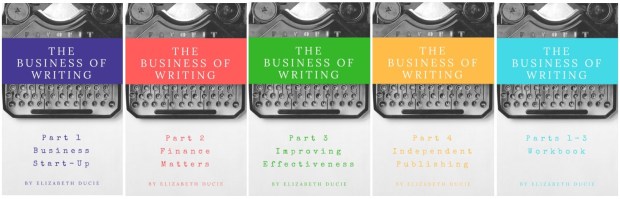
But do I do everything myself? Of course not. There are aspects I can’t do: cover design for one; proofreading for another; or production of physical copies. There are experts I contract in for that, and I pay for their services. But I take full responsibility for, and maintain full control over, the project.
One of the biggest benefits of indie publishing to me is the absence of barriers to entry; or gatekeepers. The technology is available for all, at a low cost, or even free in some cases. There are no agents to turn down that manuscript you’ve spent years getting right. There are no publishers to decide your book isn’t on trend. The decision to go ahead with the project rests solely with you, the author.
Conversely, one of the biggest disadvantages of indie publishing is also the absence of barriers to entry; or gatekeepers. Just because it’s possible, even easy, to get your book out there, doesn’t mean you necessarily should. Not until it’s ready.
That’s where the responsibility comes in. I once had a conversation with a member of staff for a well-known retailer. He picked up a copy of my debut novel, which had been runner-up in the previous year’s Self-published Book of the Year awards and said “wow, it looks like a proper book!” As you can imagine, I didn’t know whether to be proud or insulted!
There should be no difference for the reader between an independently published book and one that’s gone down the traditional route. The cover should be professionally designed; the content should be correctly formatted; the text should be free of typos and other errors. The quality requirements are the same however a book is published; the only difference is who takes ultimate responsibility. Actually, there’s no difference there, either. In both cases, it’s the publisher. The only difference is that as an indie, the author is also the publisher.
 Self-publishing, as being an indie is sometimes called, used to be a really dirty word in our industry. It’s less so these days, as more people realise it’s not the route of last resort, but a viable option. And frankly, I don’t believe most readers ever notice, or care, who’s published something. But there’s still a number of books out there that aren’t ready and shouldn’t have been published.
If you are considering going down the indie route, I wish you good luck; it’s a fun time to be an indie. But please, please, please take it seriously and take responsibility for the quality of the finished product. Your readers, and fellow indies, will thank you for it.
Elizabeth Ducie is the author of The Business of Writing, a series of books on business skills for authors. This week, her books are all on special offer:
Part 1 Business Start-Up is free until 27th January.
Part 2 Finance Matters; Part 3 Improving Effectiveness; and Part 4 Independent Publishing are all on Countdown deals and are available today at 99p / 99 cents each.
For members of Kindle Unlimited, the entire series is free to download at all times.
A Few Interesting Nuggets
Posted by Sally Jenkins in Events, Resources, Writing on October 17, 2020
I’ve had a day of writing events.
First up was a writers’ networking meeting organised by Writing West Midlands:
The chief executive, Jonathan Davidson, explained how the selection process for the writer development program Room 204 works – each year there are around 150 people for 15 places, but a worthwhile scheme for ’emerging writers’ if you can make the grade.
The Arts Council England is now open again for applications for Developing Your Creative Practice – grants from £2000 to £10000 are available, but be quick because they close on 5th November.
And a reminder about the free courses offered by Futurelearn and be edX.
Then it was off to Bristol Literature Festival and Build Your Social Media Presence with Tom Mason. He told us that social media posts that include images get 150% more engagement than those without. He recommended using Lumen5 to create mini promotional videos to use with social media and Canva for graphics.
Next up in Bristol was a panel discussion between Phoebe Morgan, editorial director at Harper Collins, literary agent Kate Hordern and book blogger, Anne Cater. Phoebe explained the importance of the hook – it is the selling point to an agent, on to a publisher and then on to supermarkets and book shops. It’s also essential that the book fits a recognised genre, otherwise even the best written book is likely to fall by the wayside. Kate Hodern echoed the importance of hook and genre and mentioned the usefulness of being able to draw comparisons between your book and others already out there. She added that younger agents are often more hungry to take on new writers than older, more established agents who already have a large stable of writers. Anne Cater gave an explanation about the blog tours that she runs for both mainstream publishers and indie authors. She and Phoebe both agreed that, hot on the heel’s of Richard Osman’s The Thursday Murder Club, cosy crime is likely to be the next big thing. There was a general consensus that psychological thrillers are still hugely popular but to be successful, they need to be better than the books being published five years ago and need to offer the reader something different to what has gone before.
Please take the above nuggets and use them as you see fit!
Finally, a couple of months ago I recommended Readly for accessing a multitude of magazines digitally. I now have a link offering you a two month trial subscription if you fancy trying it out: Readly 2 Month Trial. The link is valid until 31/10/2020.
#MarketYourMarketing Workshops
Posted by Sally Jenkins in Events, Promotion, Resources on September 10, 2020
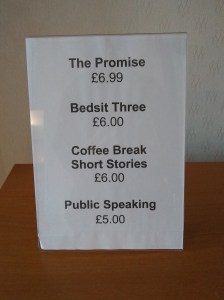
My Very Basic Marketing!
I want to give a shout out to the very generous Ellie Pilcher. She is running a series of free Zoom workshops entitled #MarketYourMarketing. The workshops are principally aimed at those taking their first steps in a career in book marketing. However, anyone can signup and it’s useful for an author to be aware of what goes on behind the scenes when a book is published or to apply some of Ellie’s advice to the marketing strategy for a self-published book.
So, in order to broaden my own horizons, I signed up to Ellie’s first two workshops: How to Write a Marketing Plan and How to Utilise Social Media to Promote a Book, the latter will also feature Claire Fenby from One More Chapter.
How to Write a Marketing Plan took place last week and is now available to watch on YouTube. There were over a hundred people in the meeting (all muted!) to watch Ellie’s presentation. The main purpose was to show how to create a book marketing plan during the interview process for a job in publishing. However, as an author, I found it interesting and picked up on the following points:
- The importance of pinpointing the audience for the book, for example: gender, age, beach read, Christmas gift etc. This enables the marketing to be correctly targeted.
- Publishers generally allocate large marketing budgets to writers who are already big names and often there is no budget at all for some books. No budget means creative thinking is needed plus more input from the author.
- It’s important to get a buzz going pre-publication around the cover reveal and the launch of pre-orders. At this point assets for social media are effective (gifs etc.) along with trying out different straplines for the book and using fun photos.
- Post-publication the emphasis shifts slightly to sharing reviews and a blog tour plus more social media.
- A person has to see a book mentioned three times before they might be tempted to buy. So it’s important to keep putting the cover image out there.
How to Utilise Social Media to Promote a Book takes place on Tuesday 15th September at 18:00. This is followed on Tuesday 29th September by How to Ace a Publishing Job Interview. Both of these are free and can be booked via Eventbrite.
-
You are currently browsing the archives for the Resources category.
 Sally Jenkins