Posts Tagged Crime fiction
5 Questions About Writing With . . . Claire Sheldon
Posted by Sally Jenkins in 5 Questions About Writing, Authors, Books, Writing Handicaps on October 24, 2024
Crime author, Claire Sheldon lives in Nottingham with her family, and a dog called Podrick. She suffers from Multiple Sclerosis but that doesn’t stop her writing. Perfect Lie was released in 2020 followed by A Silent Child and A Burning Lie. Her latest book A Dead Lie was published on October 24th 2024. Claire’s inspiration comes from hours spent watching The Bill with her grandparents and then later, Spooks.
How do you discipline/motivate yourself to write and do you set daily targets?
I use Scrivener so I input how many words I need to write and when I need to get them done by. Scrivener then tells me how many words I need to write each day. I try to stick to that and if I write more than that in a day, it just means I’ll get to the magic number quicker.
What are the most important qualities required by a writer? Do you have them?
If you’re writing for fun, then I don’t think there are any important qualities because you’re doing something you enjoy with no major goal in mind.
If you’re looking to get published then you’ll need patience (I have zero of that!) and perseverance, because it’s unlikely you’ll become the next best seller overnight. And even when you’ve written “The End”, there is still so much more work needed to get the book out there.
How do you market yourself and your books?
Social media is a great tool. I’ve joined several Facebook groups in my genre, such as UK Crime Book Club and Crime Fiction Addict. And also, a group called The Fiction Café Book Club, who are always happy to support authors.
In the real world, I’m part of a group that meets every month and we have different authors that come in and talk to us about their work. So, I occasionally run an event there.
It’s about getting your books out there and being “seen”. And, of course, supporting others, who will then go on to shout about your books in return.
Which writing resources have you found useful, e.g., books, courses, organisations, websites etc.?
I’ve got all of Stuart Gibbon’s “straightforward guides to” books, which have been really helpful for everything to do with police procedure. I also use Forensics for Dummies. And I’ve got The Emotion Thesaurus by Angela Ackerman and Becca Puglisi, which details character traits for each emotion – great for those show don’t tell moments.
A top tip for other writers?
Never give up! Keep chipping away because you will eventually get there. It might be hard work but it will be worth it 😊
About A Dead Lie – published 24th October 2024
 A DEVOTED WIFE. THE PERFECT MOTHER. A DARK PAST SHE’LL DO ANYTHING TO OUTRUN. MEET DETECTIVE JEN GARNER.
Jen’s life is a balancing act between her past as an undercover police officer and her present as a mother. Until a woman claiming to be her best friend, Chloe Seaward, shows up on her doorstep.
But Chloe died years ago during an undercover operation.
Caught in a deadly game of cat and mouse with no one she can trust, can Jen uncover the truth . . . and keep her family safe?
A Competition, Kobo and NaNoWriMo
Posted by Sally Jenkins in Competitions, Computers & Technical, Resources, Self-publishing on November 9, 2023
I’m deeply down the NaNoWriMo rabbit hole this month, trying to churn out words that don’t resemble a plate of cold, congealed spaghetti. First drafts of a novel are never easy!
(For those of you outside the writing community, November is National Novel Writing Month when we attempt to write 50,000 words of a novel in the 30 days of November i.e. 1,700 every single day for 30 days.)
In other news, I was delighted to be invited by GeniusLink to contribute to their blog on the subject of Self-publishing on the Kobo Ebook Platform, based on my book Kobo Writing Life Publishing for Absolute Beginners. Kobo is big in the Canadian market and offers worthwhile opportunities to those authors who choose not to stay exclusive to Amazon.
This free-to-enter competition popped into my Inbox this week. I seem to remember something about it last year so it may be an annual thing. THE GLENCAIRN GLASS CRIME SHORT STORY COMPETITION is looking for crime stories of up to 2,000 words based on the theme ‘A Crime Story Set In Scotland’.
First prize is a lovely £1000 plus a couple of extras! Closing date is 31st December 2023.
Don’t forget to check all the details plus the terms and conditions before starting to create your story.
Finally, don’t forget the special preorder price of just 99p for my next novel, Waiting for a Bright New Future – to be published on December 5th by ChocLit (an imprint of Joffe Books). It’s a story about family, friends and facing your fears to find love after fifty.
Now I’m going back down that rabbit hole!

SUNDAY TIMES CRIME CLUB / ELIZABETH GEORGE CRIME-WRITING COMPETITION
Posted by Sally Jenkins in Competitions on May 1, 2020
Here’s a fabulous competition for unpublished crime writers (self-published authors are eligible to enter).
It will be judged by Elizabeth George, creator of the Inspector Lynley series.
First prize is a personal masterclass with Elizabeth plus an editorial consultation with the commissioning editor for crime at Hodder & Stoughton, Elizabeth’s UK publisher. Runners up will also be offered the editorial consultation.
Entry is by an online submission form and it requires the first chapter (up to 2,500 words) of your crime novel plus a 200-word synopsis.
Closing date is 2nd June 2020 and don’t forget to read the full terms and conditions.
Good Luck!
Book Giveaway – Retriever of Souls by Lorraine Mace
Posted by Sally Jenkins in Authors, Books, Competitions on October 2, 2019
Today I have the fabulous Lorraine Mace in conversation and she is offering you the chance to win an audio or e-book version of Retriever of Souls, the first in her dark and gritty DI Sterling series. But first, let’s learn a bit more about Lorraine and her work.
Lorraine, you have many strings to your writer’s bow. Please can you tell us what they all are?
How much time do you have? It might take me a while to list them.
• I am the humour columnist for Writing Magazine, penning the Notes from the Margin page, a compilation of which has since been published as a book.
• I am the head judge for Writers’ Forum monthly fiction competitions and also write two columns for the magazine – the Competition Round-up and the Writers’ Workshop.
• I provide the critiques for entrants to the Writers’ Forum short story competition.
• I am a tutor for Writers Bureau – fiction, non-fiction and writing for children.
• I run my own private critique and author mentoring service with clients around the world.
• I run the Flash 500 website featuring competitions for flash fiction, short stories and novels.
• I am a children’s novelist and also write non-fiction books.
• Last, but by no means least, I am the author of the D.I. Sterling crime series: Retriever of Souls, Children in Chains and Injections of Insanity.
How do you fit all of this into your daily life?
With great difficulty! Serious answer is I have to be disciplined and organised. I schedule my time out into morning and afternoon slots at the beginning of each month to make sure I cover all the things I have to do. As with most authors, my novel writing has to fit in around my many day jobs.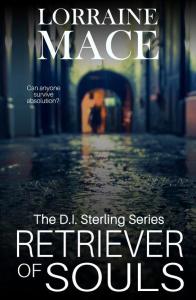
Which is your favourite out of all these writing activities?
Writing the crime series. I get to inhabit the heads of some really evil people and so work off all the frustrations life might throw at me. I think I’m probably only sane because my antagonists are psychopaths!
How did you earn a living before becoming a full-time writer? When did you become a full-time writer?
This is another of those how much time do you have questions. I have owned my own businesses, sold cosmetics, worked in the insurance industry, part owned a restaurant, part owned a corner shop, did the books for a stud farm, waitressed, worked as a telephonist, worked in a pharmacy, spent a year as a barmaid, was the sole sales force for a lock company, and, finally, became a writer. I started writing as a hobby and then discovered I had a knack for it. I’ve been writing as a professional since 2002.
Tell us a little about D.I. Paolo Sterling, the lead character in your detective series?
Paolo is a troubled man (aren’t they all?) in that he is dealing with some horrendous crimes by seriously disturbed people. He has an on again off again relationship with his ex-wife and a fabulous relationship with his daughter, Katy. His eldest daughter was killed in a hit and run that was meant for him and he is still living with the guilt of that. He has a good sense of humour, integrity, tenacity, and a burning sense of wanting to do what is right.
What are your writing plans for the future?
I am busy writing the sixth in my series. Book four, Rage and Retribution, will be out in February 2020 and number five, Petals of Pain, has been accepted for publication, so I need to get book six finished so that I can move on to the standalone psychological thriller that is playing on a constant loop demanding to be written.
Spare time must be rare. How do you fill it?
Sleeping! No, that’s not really true. I read as much as I can and run 5 km five times a week. Also, my partner and I try to spend a long weekend in one of Spain’s many gorgeous towns and villages as often as we can. I leave the laptop behind and try to ignore the guilty voice in my head telling me I should be working.
Do you have an all-time favourite book or author?
I have many, but Harlan Coben, Terry Pratchett and Georgette Heyer are three that I will read over and over for the sheer pleasure of entering the worlds they have created.
About Lorraine
Born and raised in South East London, Lorraine lived and worked in South Africa, on the Island of Gozo and in France before settling on the Costa del Sol in Spain. She lives with her partner in a traditional Spanish village inland from the coast and enjoys sampling the regional dishes and ever-changing tapas in the local bars. Her knowledge of Spanish is expanding. To stop her waistline from doing the same, she runs five times a week.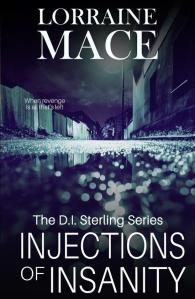
Find her at:
Website: www.lorrainemace.com
Blog: http://thewritersabcchecklist.blogspot.com
Twitter: https://twitter.com/lomace
Facebook: https://www.facebook.com/lorraine.mace.52
THE COMPETITION!
To be in with a chance of winning your choice of either an audio or e-book version of Retriever of Souls, simply send an email to lorraine@lorrainemace.com with the subject header: Retriever of Souls. The competition will close at midnight BST on Wednesday 9th October. Lorraine will pull a name out of the hat, contact the winner directly and also leave a comment on this post announcing the winner’s name.
Good Luck!
January is Hot Month for New Crime and Thriller Releases
Posted by Sally Jenkins in Books on January 7, 2018
If you’re a crime or thriller fan, January is your month. The first month of the year used to be the post-Christmas dead slot in the publishing world but not any more.
An article in today’s Sunday Times reports that January is the hot time to release new titles in these genres. The trend started with the January release of The Girl on the Train in 2015 and that book occupied the UK hardback number one spot for 20 weeks.
Nicholas Clee, joint editor of the book-trade newsletter, BookBrunch, says, “You’re making a statement putting your book out in January — you’re saying it could be the next Girl on the Train.” And there’s no sign of the popularity of this type of book diminishing. Alice O’Keeffe, books editor at the Bookseller magazine, puts it down to the “blurring of the psychological suspense thriller with the women’s fiction market. It pulls in two readerships.”
So what have fans got to look forward to in January?
Dark Pines by Will Dean is Nordic noir by a British author.
Need to Know by Karen Cleveland is about a CIA analyst who believes her husband could be a Russian sleeper agent.
Girl in Snow by Danya Kukafka investigates the death of a teenager in a small Colorado town.
It looks like The Promise by Sally Jenkins, about a vow made in prison 30 years ago, will be in good company when it’s released on January 28th!
Head Count by Judith Cutler
Posted by Sally Jenkins in Authors, Books on December 31, 2017
I’ve written before about Judith Cutler, known as Birmingham’s queen of cosy crime. She has a knack of creating feisty female lead characters and also a prolific output. Judith knows her fan base well and how to please them, which she does time and time again. Her books are very readable and so I was pleased to hear about her latest novel, Head Count. This is the second in a series of novels featuring Jane Cowan, a primary school head teacher. 
In Head Count, Jane Cowan gets mixed up in the horrors of people smuggling, in particular children arriving in the UK alone and having to fend for themselves. It is cosy crime with a realistic and very topical sharp edge. As a writer I found the structure of this book very interesting. Generally, crime fiction begins with a body on page one and then the hunt is on to find the killer. In Head Count, Judith Cutler takes a different tack. The story starts with Jane being knocked off her bike and into a hedge. She’s not badly hurt and an elderly couple help her back on her feet – but when Jane later goes to their house to thank them with flowers, the couple have disappeared into thin air. From that point on the mysterious happenings come thick and fast – no local builder will touch the renovations needed to Jane’s house, a village do-gooder constantly interferes with Jane’s school and two small boys with no English keep turning up at the school’s breakfast club.
If you want to find out how to create a layered mystery rather than a traditional whodunnit, Head Count is worth a read.
Head Count is authentic and well-researched. As well as being a head teacher, Jane Cowan is also a cricket umpire and match descriptions and after match socialising events in the novel feel real. Jane Cowan also has friends in the police and I’m guessing that Judith Cutler does as well – the police involvement in the book appears true to life, in particular there’s a clever piece of advice included in the narrative about how to make a 999 on a mobile phone when you are in the process of being kidnapped and can’t speak out loud to the operator. It’s worth reading the book just for this advice – it might save your life one day!
Judith Cutler is not afraid to tackle topical and controversial issues but she does so in an empathetic and accessible way. If you like your cosy crime to be relevant to today’s society, rather than 1930s golden age, Judith Cutler is an author to watch out for and Head Count is a good place to start.
Now I’m off to catch up with the first book in the Jane Cowan series, Head Start.
Police Procedure isn’t just for Crime Writers
Posted by Sally Jenkins in Authors, Books, Resources on April 14, 2015
Have you ever wanted to include the police in a novel or short story but got cold feet because you weren’t sure exactly what procedure they’d follow? Me too.
Today, I have the answer to our problems, in the form of retired police officer Kevin Robinson. So, it’s over to Kevin:
You only have to look at how many programmes there are on television featuring the police at work, both in reality and in drama to realise how much interest there is in the subject matter. Not all of it comes from writers or even readers of crime fiction. Throughout my 30-year police career and since retiring I have been approached by people from all walks of life wanting to know more about how the police do their job. 
During my career, I held many roles within the police service. I carried out uniformed foot and mobile patrol work with a small county and a large metropolitan police force. I conducted crime investigations ranging from the simple to the most complex. I have taught cops all over the world how to be better cops and investigators through law enforcement projects in the UK, US, Lithuania, Romania, Bulgaria, Croatia, Bosnia and Herzegovina, Serbia and South Africa. I rounded off my 30-years as Head of Initial Police and Custody Training for the fourth largest force in England and Wales. It was in my last two years that I met author Peter Robinson and provided him with some advice that helped him shape his 23rd DCI Banks novel, Bad Boy.
Following this I decided that once I retired, I wanted to help writers. Not just established writers but also those who as yet were unpublished. I knew that many people had questions about the police and how they worked but had no one they could ask and didn’t know where to look for the answers.
Not only did I know many of the answers but I also knew where I could find those that I didn’t readily know. None of my help is designed solely for writers of crime fiction. I have helped writers from genres such as historical fiction, romance, horror, fantasy, comedy and even science fiction. The one thing they all had in common was their desire to find answers to their questions about the police and crime.
To reach out to those seeking assistance with their stories I created a blog called Crime Writing Solutions, ran weekend workshops for writers wanting to make the policing element of their stories realistic and I have now just published a book called the British Police and Crime Directory for Writers and Researchers.
It is the only book of its kind, in that not only is it an E-directory of contacts within police forces and associated agencies and government departments in the UK: it provides links to over 200 free documents and manuals that describe in detail how the police are recruited, trained and should carry out their investigations and duties: there are links to 100 websites that every writer should know about: the reader will be able to find 37 authentic video clips describing ways in which the police really work, including following a murder investigation from start to finish and finally, which 58 books about the police, policing, crime and writing crime fiction, the writer and researcher may find most useful. 
The book lends itself perfectly to the electronic format because the reader can leap straight to the relevant place on the internet for research and then back to their book.
The British Police and Crime Directory for Writers and Researchers can be downloaded from http://www.amazon.co.uk/dp/B00TBAY150
Check out and subscribe to my blog at www.crimewritingsolutions.wordpress.com
Thank you, Kevin. I already follow your blog and the nuggets of ‘policey’ information that you generously post. And maybe now with this book, we writers won’t be so reticent about putting the odd policeman into our fiction!
Do Contemporary References ‘Date’ a Novel?
Posted by Sally Jenkins in Authors, Books on March 10, 2015
I recently read A Green and Pleasant Land by Judith Cutler.  It’s a contemporary cold case crime novel and very engaging. Years ago an abandoned car was found containing a dead, disabled baby. The child’s mother and sibling were missing, feared dead and have never been found. What happened to them?
One of the things I particularly liked about the story was the many topical references to current events and today’s technology – these made the story much more immediate and real for me. One of Judith’s characters is a police and crime commissioner, there are references to the Huhne & Pryce speeding ticket fiasco, the sad case of Madeleine McCann and the terrible flooding that has hit areas of the country over the last few years. The two retired police officers investigating the cold case use iPads and have a coffee machine which uses pods.
Then I thought that anybody picking up this book in five or ten years time might find the technological references rather quaint and may not remember or have ever been aware of the current events mentioned. Would this spoil their enjoyment of the novel? Would they deem it old-fashioned? I asked Judith for her comments.
” I usually make my novels as topical as I can, because they tend to be library-only editions and therefore as evanescent as a may-fly.

Judith Cutler
So when rain and floods messed up my research, I decided to turn that to a strength, so it messed things up for my detectives too. A good police commissioner is as rare as a hen’s wisdom tooth, so it was obvious I could use one as a baddie. McCanns? Can you write about a missing child without mentioning them? So yes, a snapshot of 2014. Some might call this meticulous research, others opportunism.”
So the nature of the way Judith’s books are published means she doesn’t worry about how they may appear some years down the line. And probably most writers are more concerned about the immediate impact of a book on its publication day rather than in the future when sales have dwindled and readers attention has drifted elsewhere.
Judith’s going historical for her next book and finding it much more difficult to get the facts right.
” I’m currently setting a book in 1813 and some historical facts are proving a damned nuisance. How can my hero waltz in April 1813 when the waltz didn’t appear till about 5 months later? There’s no national police force to summon to his rescue and I’d give a lot for some penicillin too. I’m not a proper historian but I’m going to get 1813 right. If a novelist boobs over details, can you trust him or her with the big picture?”
In a few decades time people may read ‘A Green and Pleasant Land‘ as a historical novel and enjoy learning the small details of how we lived in 2014. So maybe it’s a good thing to stuff in all those contemporary references – what do you think?
Death in Elysium by Judith Cutler
Posted by Sally Jenkins in Authors, Books on July 5, 2014
Have you ever fancied creating your own cosy crime ‘detective’ to star in a series of books? 
If so, take a look at Judith Cutler‘s latest novel, Death in Elysium, published by Severn House.
Judith is an old hand at creating strong female leads to solve a variety of crimes. She’s written series featuring lecturers, caterers, antique dealers and resting actresses. Death in Elysium is her first novel to feature vicar’s wife, Jodie Welsh.
But Jodie isn’t your typical vicar’s wife. She accumulated her fortune working in the City and has been made redundant. She falls in love and marries Theo, a widower and parish priest with a small town lifestyle completely different to the London life that Jodie is used to. Adjusting to the role of vicar’s wife is not easy and the parishioners give her a mixed reception.
Jodie employs a local teenage ne’er do well, Burble, as her gardener. But Burble goes missing and Jodie discovers strange building work going on in a nearby valley. The mystery deepens as someone tries to mow Jodie down with a car and a church warden is knocked unconscious.
Jodie needs all her contacts and skills from her past life to work out what is going on …
I asked Judith to explain how Jodie Welsh came into being.
“My experience as a village-dweller and as a practising member of the C of E came together in Jodie. Brash new-comers aren’t always the most welcome people in Kentish villages, and clergy wives are under particular scrutiny, since they’re often supposed to conform to an unwritten set of rules – rules poor Jodie never even knew existed since her relationship with her husband is so new.”
Judith planted a few characteristics within Jodie that will ensure she can stay the course for a series of books.
“Jodie needed a quirk, in this case her love of running, which has the advantage of her being able to spot things others wouldn’t and to take to her heels when necessary. Since clergy aren’t bound to stay in the same parish forever, Jodie and Theo can move to other parts of the country and her private wealth can free Theo to work in areas which will bring new challenges for them both.”
Another aspect of Jodie’s life which I found intriguing was her tendency to compare herself unfavourably to Theo’s deceased wife. I wonder if her insecurities in this area will subside or grow as the series continues.
So, if you fancy getting to know Jodie (and seeing how an experienced author handles the first book in a new series) take a look at Death in Elysium. It’s available now in hardback and will be out as an e-book in October – or why not ask your local library if they can get hold of it for you?
Turning to Crime
Posted by Sally Jenkins in Competitions, Short Story on April 23, 2013
Recently, I’ve been turning my hand to crime-writing – inspired by some of the competitions mentioned on Helen’s blog.
I’ve sent my entry into the M.R. Hall competition (by email after the on-line form kept insisting that my entry was longer than the required 2,000 characters, but I think that glitch is fixed now).
My entry for the Cremona Hotel competition has been drafted – but will no doubt need a generous dose of spit and polish before it’s ready to go on its way.
Now I’m turning my mind to brainstorming ideas for the GKBC competition (stands for Giving Kudos to Brilliant Content) and after that there’s the ‘Win a Book’ competition in the May issue of Writing Magazine (write 250 words in which someone pulls a gun on a bank cashier).
Alongside this, and to get me into the mind-set of a crime writer, I’ve been reading Crime in the City – the Official Crime Writers’ Association Anthology 2003. I’ve just looked on Amazon and only second-hand copies are available now – so maybe I’ve got a rarity here!
Like all good stories, these tales are character-led and usually contain no great detail about the mechanics of the crime involved or the police procedures used in solving it. The latter often puts people (including me) off penning crime fiction for fear of getting the investigative procedures wrong, so short stories could be a good starting point.
The best way of finding out about police procedure is to make friends with a policeman but failing that, there are resources available on the internet. After a quick trawl I’ve found:
- Crime and Clues – the Art and Science of Criminal Investigation
- Writers Write – this page lists several websites that might interest crime writers
- Writing.ie -Really Useful Links for Crime Writers
Or if you want some advice from the professionals (and have £99 to spare) why not book a place on Creative Thursday at the Theakstons Old Peculier Crime Festival.
Now, time to decide how my next victim’s going to die …
 Sally Jenkins