Free: Concrete Short Story Competition
Posted by Sally Jenkins in Competitions, Short Story on April 17, 2022
Outsideleft is running a free to enter short story competition in conjunction with The Bear Bookshop.
The theme is ‘concrete’. ‘Concrete’ might not immediately grab you but the story doesn’t have to be about physical concrete. It could be about solid ideas or anything unmovable and difficult to get around.
First prize is £100. Maximum of 1,000 words and the closing date is 31st May 2022.
Any genre is acceptable and entry is by email only. As always, make sure you read all the rules before submitting.
In Praise of the Electronic Calendar
Posted by Sally Jenkins in Computers & Technical, Lifestyle, Non-writing on April 1, 2022
Towards the end of 2021 I bought my usual paper calendar and started to jot down the skeleton of my commitments for 2022. In October 2021 I’d started a new part-time job as a library assistant which requires me to work alternate Saturdays. Also in 2021 I became a co-leader of a Shared Reading group – my turn comes around every other Thursday.
I couldn’t be bothered to go through the whole calendar and work out the dates of both of these two-weekly engagements. Then, my husband, who was working away during the week and didn’t have sight of the joint paper calendar, began putting dates into his phone so he had them to hand.
That was my light bulb moment! I stepped forth into the convenience of the electronic calendar and wondered why I’d been a dinosaur for so long.
It was easy to download the Calendar app and I discovered it was possible to set up single events for the library job and Shared Reading and then tell the calendar to schedule the events fortnightly going forward. What a time saver!
I discovered it was possible to make my calendar visible to my husband and vice versa – so we can see if there are any clashes with dates.
I discovered it was possible to set up an event and send an email invite to someone else.
If I’m out and someone suggests a date for our next meeting, it’s easy to check the calendar on my phone and see when I’m free – no more waiting until I’m home to look at the joint paper calendar hanging on the wall.
So far I’ve come across only two disadvantages to the electronic calendar. Firstly, I can’t simply glance at the wall as I walk past to see what’s happening over the next week – I have to remember to check my phone (but you can elect to get e-reminders of events in advance). Secondly, I have a vague fear of the servers belonging to the calendar provider crashing and burning – and taking the whole of my life with them. But the same could’ve happened to the paper calendar hanging in my hall.
Like everyone else, my work life has long been governed by an electronic calendar on the office laptop. It’s just taken me a very long time to make my personal life easier by embracing the calendar on my phone!
I’m using Google Calendar but other electronic calendars are available – as I’m sure you know because you’re probably light years ahead of me in your use of them. Please let me know that I’m not the only one who’s taken so long to embrace technology!
How to Organise Your Manuscript using Word
Posted by Sally Jenkins in Uncategorized on March 9, 2022
A useful post here for anyone trying to get a large, unwieldy manuscript under control!
Thanks, Claire.

Writing a novel can be a big unwieldy task. You’ve written 40,000 words or 90,000 words and you really need to know when you your protagonist sneezed for the first time, or when the octopus escaped, or when you last mentioned that minor character. It’s hard to keep track of it all, especially if you write in Microsoft Word as I do. It’s also hard to move quickly around a big document, as well as reordering chapters and scenes. But there is a part of the programme which should help: the Navigation Pane.
Yes, Scrivener – software designed for writers – will help with all this too, but I didn’t get on with it. If anything it was too complex and it too took long to get to know all its bells and whistles. I’ve written nearly all of my five novels (fifth finished recently) in Word. And I use…
View original post 712 more words
Still Waiting for News
Posted by Sally Jenkins in Events, Lifestyle, Writing on February 24, 2022

Last November I mentioned my novel was out on submission. It still is. Off it went to seven publishers and the responses have dribbled back. So far there have been four rejections and three publishers still to hear from. For many of us ‘getting an agent’ is the pinnacle for which we aim and we assume that after we’ve achieved that, everything will fall into place and we will become successful, traditionally published authors. Be warned: that is not always the case! However, hope springs eternal …
In the meantime I’m finding it hard to focus on a brand new novel and my ability to write short stories seems to have gone AWOL. So I’m keeping my writing brain in gear by producing short articles for The People’s Friend and the Mirthy website. Obviously this is not as glamorous as having a novel published but at least I’m no longer writing on spec and am getting paid for my words.
I am also considering doing Alison May’s ‘Re-ignite Your Creativity and Find Your Voice’ online course in order to kick the fiction part of my brain back into gear. But first I need to find some space between the day jobs and my other commitments …
In other news, we’ve been making marmalade in our house.
My husband and I do this every year and it takes hours of simmering the peel and filling the kitchen with steam. This year we used the slo-cooker to cook the peel overnight and it made things a lot easier, quicker and kept the windows free of condensation. The recipe is here – a bit late for this year’s Seville oranges but, if you’re a marmalade love, save it for next year.
The Magic Faraway Tree and Two Free Writing Opportunities
Posted by Sally Jenkins in Competitions, Writing on January 12, 2022
I heard on the news today that Jacqueline Wilson is to write new stories in The Magic Faraway Tree series, originally created by Enid Blyton. On the Today program she said, “I’m being very very faithful to the whole situation that Enid Blyton set up with this wonderfully original idea about a tree that reaches up to different lands. I have three modern children going into the Enchanted wood, up the tree, meeting Silky, Moon-Face etc. and then going up and finding the different lands. So the magic world stays the same and if anybody reads this new book when it comes out I very much hope that they will go back to the others.”
I’ve mentioned before that I loved The Magic Faraway Tree books as a child so I’m in two minds about the new, modern stories being written. I don’t see how they can contain the same magic if the children are eating pizza rather than pink blancmange. But if the new books are a hit with today’s youngsters and get them reading (as they did me, way back when) then they have to be a good thing.
What do you think?
If you’re scratching your head and wondering what writing project to tackle next, a couple of free competitions have come to my notice:
The Fusilli Writing Flash Fiction Competition is looking for  stories up to 200 words with a twist.
There is no closing date but the winner and short-listed entrants will be announced once 100 entries have been received (website shows details of how many entries have been received so far). No prize except publication on the Fusilli website and promotion on social media. Plus there is the opportunity to purchase feedback for £3.
The Kenneth Branagh Award for New Drama Writing 2022 is looking for one-act plays of 25 to 35 minutes from amateur playwrights. The plays should use a maximum of six actors and be suitable for a studio theatre. Three winning scripts will be performed during the Windsor Fringe Festival in October and the overall winner will receive a £500 prize. Entry is £10 BUT if “BBC Writers Room” is written on the top right hand corner of the contact sheet accompanying the play, no submission fee is required. More details about the waiving of the fee can be found on the BBC Writers Room website.
National Flash Fiction Competition 2022 from Nottingham Writers’ Club
Posted by Sally Jenkins in Competitions on December 9, 2021
I’ve had an email from Mars Hill about a new competition being run by Nottingham Writers’ Cub. To reflect the growing popularity of flash fiction, the Club are offering prizes of £100, £75 and £50 for the best 100-word stories on the theme ‘Wish You Were Here’.
The competition details suggest, ‘You could tell a story in the traditional form of a postcard from a beautiful place, or maybe you’d like someone special to be with you at a certain time. It can be happy, sad, dramatic, frightening, scary or horrifying, the choice of genre is yours, and please make it clear who you wish to be where.’
The entry fee for each story is £5 (free for Club members) and everyone gets a few lines of feedback. Entries will be accepted from 1st to 28th February 2022 either by post or via the Club website.
However, this is not a competition for ‘professional’ writers and those who have earned more than £150 from short stories during 2020/21 should not enter. And, as always, don’t forget to read all the terms and conditions.
Over the last couple of years we’ve had less opportunity to send postcards but increased reason to ‘wish you were here’. It’s a theme that will resonate with most of us – so why not make the most of it and get writing?
On Submission! (Again)
Posted by Sally Jenkins in Non-fiction, Self-publishing, Successes on November 23, 2021

463434 © Judwick | Dreamstime.com
For the greater part of this year I’ve been working with my wonderful agent, Juliet Mushens, to get my current manuscript into tip-top condition. She is now happy with it and last week it went out into the big wide world of publishers. My fingers are firmly crossed but, as I know from my experience two years ago, there is many slip between cup and lip. I’m not saying much about the actual story except there are no murders and it’s infinitely more cheerful than Bedsit Three or The Promise.
Juliet recently re-opened to submissions if you’re currently querying agents and think she might be a good fit for you.
I’ve also continued writing occasional articles for The People’s Friend and was asked to pitch ideas this week for Christmas 2022! As I’ve said before, finding the ideas is by far the hardest part of article writing. Correction: finding ideas that haven’t already been covered in some shape or form by a magazine with such a long history is the hardest part of article writing. The good part about writing for The People’s Friend is the quick response to most pitches – I usually get a ‘yes’ or ‘no’ within a week to ten days and the ‘pitch black hole’ of many publications is non-existent.
There are submission guidelines on The People’s Friend website if you fancy having a go at writing features for them.
Kindle Direct Publishing for Absolute Beginners was selected by Amazon as one of November’s Kindle Deals. Amazon have discounted the book to 99p and given it a little bit of a push. So far it has sold about three times more than in October which is good! And it’s currently got orange bestseller flags in both the Amazon Electronic Publishing and Digital Media categories. But at 99p my royalty rate drops to 30% so financially I won’t make any more money, however I’m hoping the boost the Deal has given me will generate a head start for December when the price returns to normal.
If you’d like to nominate any of your books for an Amazon Deal, go to your Amazon bookshelf and click the Marketing tab along the top of the page. Scroll down to see the option to nominate your e-books. It’s free of charge and so worth a try. There’s more information on the Amazon help pages.
Now I’ll stop typing so that I can cross my fingers again!
Writing as a Team (or The Importance of a Weapons Cabinet)
Posted by Sally Jenkins in Authors, Writing on September 7, 2021
Most of us write alone but occasionally successful writing partnerships come to the fore. James Patterson regularly co-authors novels and his latest partners have included Bill Clinton and Dolly Parton. C. L. Raven are identical twins who write horror stories together. Good Omens was written by Terry Pratchett and Neil Gaiman. Madeleine Purslow and her brother, Robin, recently published The Field of Reeds: In Shadows (Children of Bastet Book 1).
Today Madeleine and Robin have kindly agreed to spill the beans on the sometimes vicious experience of writing with a sibling.
So, co-authoring a novel. How does that work? Hmmm, let me introduce you to the weapons cabinet…
Picture, if you will, an antique cabinet in the corner of the room, ornate and a bit dusty. Now, open the doors. They protest a little, they groan, they could do with a spot of oil. Inside though… now, that’s unexpected, every kind of weapon you can think of, softly shining in the half-light. The weapons are all in perfect order and ready for use at a moment’s notice.
Got it? Great, hold that thought, we’ll come back to it in a minute. 
So, writing is a solitary thing, isn’t it? You take yourself away from other human beings for hours on end. Go deep inside your own head and stay there.
Stephen King said, writing is actually a form of telepathy. You take words, images, emotions and transfer them from one mind to another. Well, if that works between a writer and a reader, there is absolutely no reason why it shouldn’t work between two writers.
Well, perhaps not absolutely no reason…
Unless you really, get on well with your potential co-author, don’t even think about it. It has been said, that the best way to break up a friendship, is for two people to go on holiday together. I have a better one, try writing together.
If you are writing with someone else and you are both convinced that you have just come up with the best possible way to express what you are trying to say, who’s words do you use?
That’s where the weapons cabinet comes in…
You have to fight it out. Maybe with twin swords? Or, sneaky, ninja, throwing stars? Even a ball point pen can be lethal in the right hands…
Eventually, a compromise, the best of both worlds. Two brains really can be better than one. They had better be brains that genuinely like each other though. Whatever wounds you inflict in the heat of battle, you have to be able to live with afterwards.
So, what about the nuts and bolts? Well, it starts with huge brain storming sessions, lots of notes and a lot of laughing. You build the world, the shared playground and agree on a writing style.
Then, it may be that we take a chapter each, go away and write it. Or, if we are really unsure about how a chapter should go, then we both write the same chapter and ‘swap papers,’ like doing a test at school. Then we… Did you hear the creak, as the weapons cabinet doors opened?
Boundaries are also important, recognising who does what best. If you know your co-author is better at dialogue, or spooky atmospheres, or has a real feel for a particular character, then, you do what serves the story. After a trip to the weapons cabinet, obviously.
So, there you are. This blog has been brought to you after a short but vicious fight, by the gestalt brain that is Madrob, or possibly Robeleine. We have to decide which. Excuse us for a moment, we are just going to the weapons cabinet…
About The Field of Reeds: In Shadows (Children of Bastet Book 1):

When Priah, Captain of Cats, began her night patrol, everything was as it had always been. The sleeping streets of ancient Bubastis were quiet, dark and still.
Then it came… death came… sorcery came.
Before dawn, Priah’s life would be forever changed…
In Bubastis, the holy city of the cat Goddess Bastet, a secret enemy stalks the streets after dark, killing indiscriminately. As this seemingly unstoppable foe spreads terror, it falls to Captain of Cats, Priah to halt it in its tracks. She embarks on a quest to do just that, with the help of the newly arrived stranger cat, The Alexandrian. Together, their journey will lead them through magic and dangers and ultimately beyond life itself.
The Field of Reeds: In Shadows, is set in a fantastical world inspired by ancient Egypt, a stylized version of every cat’s original homeland. Here, cats have a hierarchy. They tell heroic tales of “the days of the beginning.” They communicate with and live alongside humans, in a secretive parallel existence, as advisers, spies and allies.
This is the first book in an epic fantasy series, that takes the ‘talking animal,’ genre to a very different place. A place full of heart and heroism, extraordinary things extraordinary deeds and extraordinary characters.
Death stalks the dark streets of Bubastis and they are the only hope of salvation…
An Update on Me
Posted by Sally Jenkins in Books, Lifestyle, Non-fiction, Self-publishing on August 9, 2021
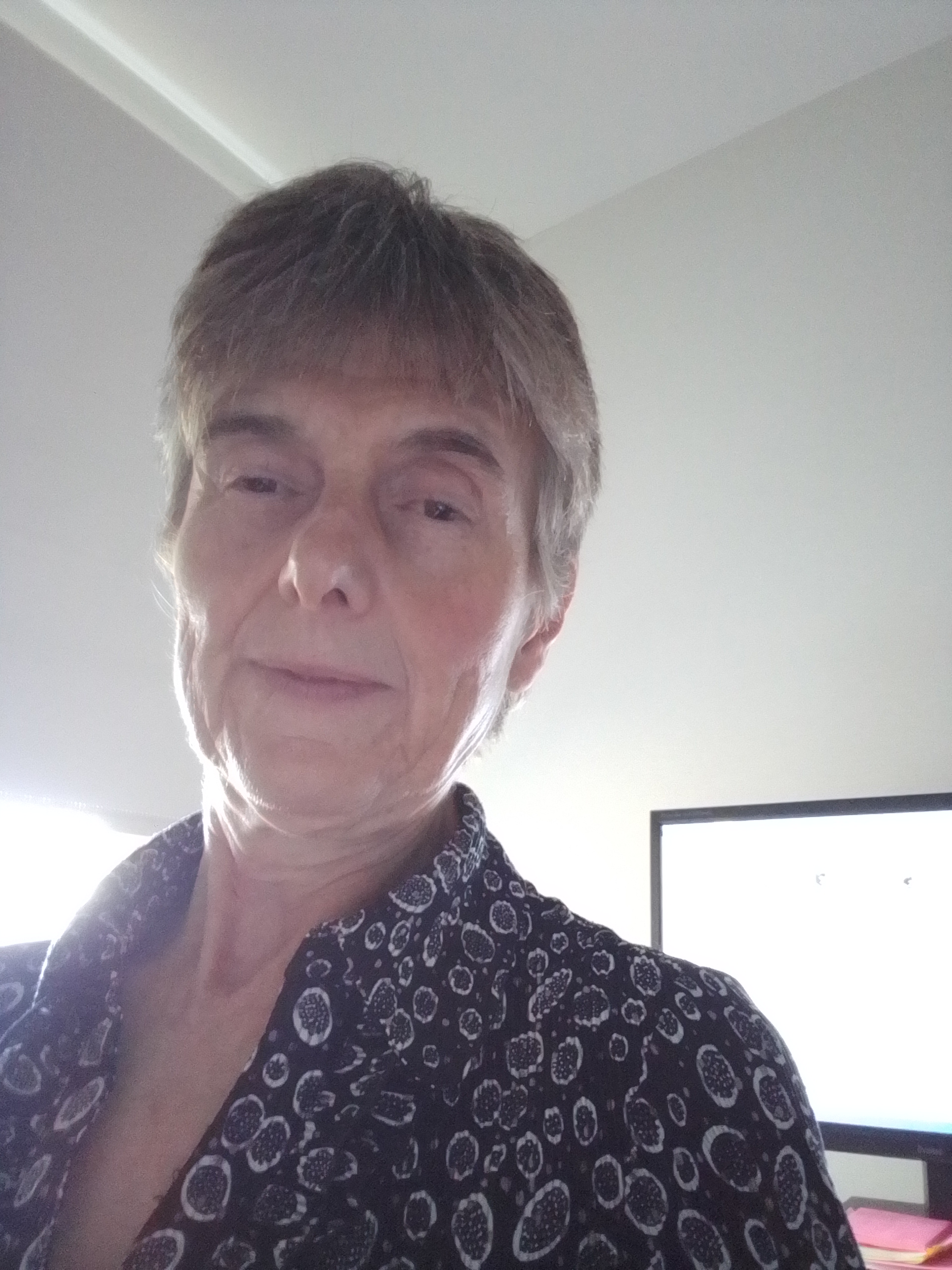
What’s been going on in my writing life recently?
At the end of June I completed the second round of agent edits on my current WIP and submitted the manuscript again. Over the last few weeks I’ve been biting my nails while I wait to hear if more work is needed or whether the novel has reached the standard for submission to publishers. You may remember that a previous manuscript went out to publishers a couple of years ago but failed to sell.
While I wait for the verdict I’ve found it difficult to get back into fiction (a new novel or short stories), so I’ve been doing bits and pieces of non-fiction writing.
I’ve taken the opportunity to update Kindle Direct Publishing for Absolute Beginners. The book was first published back in 2014 and has consistently been one of my best-sellers. Every year or so, I’ve re-read it and made changes/additions/deletions to reflect the ever changing landscape of self-publishing on Amazon in both Kindle and paperback format. It contains lots of useful information if you’re thinking of self-publishing for the first time.
I’ve also written a few articles for The People’s Friend. The hardest part of this (like any writing, I think) is generating ideas that are appropriate to the readership and haven’t already been covered in the magazine before. The magazine holds weekly editorial meetings and so I usually get a ‘yes’ or, more likely, a ‘no’ on ideas quickly. The downside is it’s no longer possible to earn any ALCS money on articles or short stories published in the magazine.
In June I had my first post-lockdown holiday. My husband and I walked the first five stages of the Cost to Coast. We started at St Bees and finished at Kirkby Stephen five days later. Physically it was much more difficult than we’d envisaged but great to finally get away. I took notes along the way and am currently turning those notes into a short e-book. It will be partly a personal experience narrative and partly resources for those planning to do the walk themselves. If you enjoy walking (or are just nosy about what other people get up to on their holidays) watch this space!
Finally I’ve recently got into the crime novels of Jane Harper. Jane was born in the UK but now lives in Australia. Her novels are set in the Australian outback which gives them quite a different feel to more urban murder stories. I started with The Lost Man and am now half-way through The Dry. In 2014 a short story submitted by Jane was included in the Big Issue’s annual Fiction Edition. This inspired her to pursue creative writing more seriously. Big things from little acorns grow!

Improve Amazon KDP Keywords
Posted by Sally Jenkins in Self-publishing on July 12, 2021
If you’ve published on Kindle or in paperback via Amazon KDP, you’ll be familiar with the concept of keywords. The purpose of these keywords is to make your book more discoverable in Amazon searches. But deciding which seven keywords or phrases (a keyword can be a short phrase rather than a single word) to use is difficult, especially for works of fiction.
A few days ago I watched an online presentation organised by the the Alliance of Independent Authors, featuring Darren Hardy who is the UK Author and Editorial Programmes Manager at Amazon KDP. He was talking about how to increase book sales via KDP and he gave some useful tips about keywords:
- Keep them generic but relevant
- Don’t use punctuation or ‘stop’ words. A ‘stop’ word is something like ‘also’, ‘and’ or ‘because’. These words are skipped over by the automated search logic.
- Don’t waste words by repeating words already in the book’s title or subtitle.
- Avoid using things like, ‘brand new’, ‘amazing’, ‘free’ etc.
- Do not use the names of other authors or the titles of other books.
- Include synonyms or alternative spellings of words. Readers may use these in their searches.
- Include the setting of your book.
- Include character types, e.g. ‘single dad’.
- Include character roles, e.g. ‘strong female’.
- Include plot themes, e.g. ‘coming of age’ or ‘forgiveness’.
- Include the story tone, e.g. ‘feel good’ or ‘dystopian’.
Darren also mentioned the importance of category selection in making a book more discoverable. I’ve previously written about Amazon categories in this post.
If you’d like to generate more sales for a book, it’s well worth reviewing your keywords and categories to see if they can be improved.
 Sally Jenkins