Archive for category Authors
Self-Publishing for Charity
Posted by Sally Jenkins in Authors, Books, Self-publishing on June 4, 2017
A client recently asked me to format an ebook that he intended to publish for charity. Then a writer friend of mine announced she’d published a short story anthology with the royalties going to a good cause. In turn, this reminded me of a book I’d bought in aid of charity at the beginning of last year. It seems that writers are a generous breed and so I had a word with each these three writers to see what they personally had got out of the project and how their chosen charities had helped publicise the book.
Speak the English the English Speak is Colin Grey’s first venture in self-publishing and I think he’ll be the first to admit that it was a steep learning curve!  The book contains the meaning and history behind 500 essential English idioms. The information will be useful for students and teachers of English as a foreign language as well as native English speakers who want to know more about phrases in everyday usage. For example, I didn’t know the origin of the expression, ‘Fill your boots‘, Colin’s book tells me that in the past, fighting forces’ alcohol was rationed and delivery was measured in long leather tubs that looked like riding boots.
Colin has chosen to give his royalties to the Maiastra charity, which helps young musicians. The charity has helped him publicise the book by mentioning it in their email newsletter which goes out to all supporters. I asked Colin what he, personally, got out of the project, “It’s fun! It gives me an interest and is a small achievement – something I never expected I would ever do.”

Sharon Boothroyd, of Ryecorn Digital Publishing, has produced a short story anthology, Paws for Thought, in aid of her local branch of the RSPCA. “Our project had to be passed by the RSPCA committee first, so it was an anxious wait for us, but they said yes and we were thrilled,” says Sharon. “Personal benefits to us are that it showcases our abilities and those of the terrific writers we’ve included in the ebook.”
The RSPCA gave the book a mention on their homepage and also allowed their logo to be used on the book cover. Sharon chose the RSPCA as their charity beneficiary because it was where her tabby cat, Buster, was adopted from. “The RSPCA are great to work with and if this book goes well, there might be a ‘Paws for Thought 2’ later.”
In 2016, proofreader Helen Baggott, wrote about her personal experience of breast cancer in Swimming With the Tide.  All royalties from the book go to the Macmillan charity.
Helen is the only one of our charity publishers to produce a paperback version of the book as well as an ebook.
“I did the paperback,” she said, “because there was no extra cost involved and I have friends who don’t use Kindles. I felt it was important that they could buy the book. Also, I wanted to give some people copies and paperbacks seemed a better way of doing that. Although Macmillan didn’t help with the promotion they did send some items that I could include inside the paperback copies that I sent out. These could be used as bookmarks.”
All the above writers should be applauded for using their talents for the good of others. Each one has also derived personal satisfaction from their project and probably learned something that will help them on their future publishing journey. I wish them well in their fundraising efforts.
If you’ve published something for charity, please give it a shout-out in the comments section below.
Benefits of Writing Competitions
Posted by Sally Jenkins in Authors, Books, Competitions on February 2, 2017
At the end of January Morton S. Gray celebrated the publication, by Choc Lit, of her first novel, The Girl on the Beach.  Morton’s success was the result of dogged perseverance and the culmination of a series of competition successes. Not surprisingly, she is now a great advocate of writing competitions and she’s here today to tell us how they helped her on the road to success:
Innocently entering a writing competition caused me to take my writing seriously! In 2006, a friend started a fledgling publishing business (sadly no longer trading) and she held a short story writing competition to raise the profile of the company. I entered, primarily to support her, and unbelievably won with my story “Human Nature versus the Spirit Guide”.
It was a wake-up call for me. I’d had a baby and not been well for a couple of years, so I was looking for a new direction. The competition win made me look at writing as a serious option for the future and it was relatively easy to combine with a small child still taking naps in the afternoon. I started to take courses to learn to polish my work. I entered several competitions and began to get shortlisted.
In 2008, I entered a Mills and Boon novel competition, the forerunner of their SYTYCW competitions. I quickly decided I wasn’t a Mills and Boon writer, as it is a particular way of writing and much harder than people might think to keep the focus on the main protagonists throughout a novel. However, the competition introduced me to several people with whom I’m still in contact.
Competitions give you a framework within which to work. They give you the discipline of a deadline and a word count. Not as many people enter these competitions as you may imagine, especially the smaller local ones. I’ve been involved in running a local competition and I was surprised not only by the relatively few number of entries, but by the fact that sixty percent of the entries were essentially the same story. Tip – think around the set theme for a while and don’t go for the obvious. Your entry will stand out if it is different.

Morton S. Gray
I continued to get shortlisted for flash fiction, poetry, short story and novel competitions. In 2013, I came second in the Romantic Novelists’ Association conference competition for the first chapter of a novel and that resulted in an appearance on the Tammy Gooding show at BBC Hereford and Worcester Radio. All good experience. Later that year, I shortlisted in the New Talent Award at the then Festival of Romance, with another first chapter. I met a different group of writers, many of whom I’m still in contact with in real life and online.
These encouraging signs for my writing kept me going. It is easy to get despondent when writing, as it can be a very solitary occupation. Don’t spend your life thinking no one will want to read your work, imagining that it’s rubbish, not up to scratch, not worthy of anything but the bin. Been there, done that! Keep going, keep writing and get your work out to competitions, send it to magazines, publishers, agents. Writing is a constant learning process and is generally about persistence. You need an imaginative spark, yes, but you also need to be willing to check your work over time and again to make it the best it can be. What is the point of a manuscript in a drawer?
I joined the Romantic Novelists’ Association New Writers Scheme and made sure I submitted a novel for critique every year. I also made a promise to myself to take part in the annual novel writing challenge NaNoWriMo and I’ve managed seven years running to write 50,000 words in November. One of these novels, when edited and passed through the RNA NWS critique service, I sent off to the Search for a Star competition run by a publisher I’d admired for many years, Choc Lit and I won! My debut novel, The Girl on the Beach was published on 24 January 2017.
I suppose the messages here are keep writing, learn your craft, polish your work and get it out into the world. My novel could so easily still be in that drawer under the bed. Competitions are a way of assessing how you are progressing, hopefully you’ll meet friends along the way and who knows, you might win a publishing contract like me.
I love Morton’s encouraging message and I love the blurb for The Girl on the Beach – the novel is now sitting on my Kindle hankering to be read. I think it might tempt some of you too:
When Ellie Golden meets Harry Dixon, she can’t help but feel she recognises him from somewhere. But when she finally realises who he is, she can’t believe it – because the man she met on the beach all those years before wasn’t called Harry Dixon. And, what’s more, that man is dead.
For a woman trying to outrun her troubled past and protect her son, Harry’s presence is deeply unsettling – and even more disconcerting than coming face to face with a dead man, is the fact that Harry seems to have no recollection of ever having met Ellie before. At least that’s what he says …
But perhaps Harry isn’t the person Ellie should be worried about. Because there’s a far more dangerous figure from the past lurking just outside of the new life she has built for herself, biding his time, just waiting to strike.
Two New Books for Writers
Posted by Sally Jenkins in Authors, Books, Resources, Writing on January 25, 2017
By now the initial excitement of New Year’s resolutions will have passed and keeping up that writing habit may have become a bit of a slog again. But do not despair – as always, your fellow writers are here to help and re-enthuse you.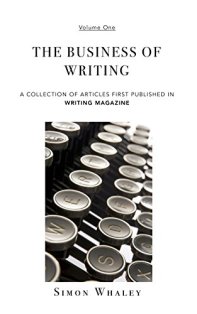
Simon Whaley is on a mission to make us all become more businesslike about our writing. If we treat our writing seriously and as a source of income, then our family and friends will adopt that attitude too – essential if you want to turn that ‘nice little hobby’ into a publishing empire! Simon’s blog about The Business of Writing is full of useful tips and many of you will recognise Simon’s name from his regular (and wise) column in Writing Magazine. He’s gathered together many of those articles into a handy e-book, also called The Business of Writing. It covers things like tax, record keeping, legalities, pseudonyms and much more, plus there are lots of tips and advice from writers across the genres.
 Teaching writing is one way that many authors top up their income but the thought of getting a class up and running can be daunting. Helen Yendall has years of experience as a writing tutor and she’s just published an e-book sharing the knowledge that she’s built up – Start a Creative Writing Class: How to set up, run and teach a successful class. The book focuses on the nuts and bolts of setting up a writing class for adults, covering everything from finding a venue and arranging insurance, to marketing the class and giving feedback. There’s also plenty of advice on dealing with students and ideas of what (and how) to teach. It contains 100 x 5 minute writing exercises plus icebreaker ideas to get the class warmed-up and ready to learn.
So let 2017 be the year you fulfill your ambitions and take your writing more seriously – with the help of Simon and Helen.
Branding a Book Series
Posted by Sally Jenkins in Authors, Books, Promotion, Self-publishing on October 27, 2016
I recently came across Anne Allen‘s wonderful Guernsey series of novels, in the form of the fifth book, Echoes of Time. It was a great read with alternating chapters set in WWII and 2010.
What particularly struck me about this series of books was the cohesive, professional branding across all the book covers.

I wondered whether Anne had started off with this brand in mind or whether it developed as she went along. This is what she told me:
Authors are often encouraged to create a ‘brand’. To be distinctive. To stand out in the crowd; never more important than now when thousands of books are added to Amazon on a daily basis. I knew nothing of this when I published my first book, ‘Dangerous Waters’, a romantic mystery/family drama set in Guernsey. Then came book two, ‘Finding Mother’, also set on the island, but there was little cohesion visually between them, although they shared characters and setting. By the time I wrote the third, ‘Guernsey Retreat’, I had realised (somewhat belatedly some might say!) that I was writing a series. The covers of the books bore little resemblance to each other, except for my name, although I had chosen a strong image of Guernsey as the background for book 3.
These are the original three covers:
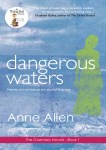
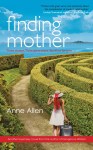

Then came the enlightenment, in the form of a successful American author I met at an Indie event as part of The London Book Fair. She told me I had no brand and the genre of the books wasn’t clear. But she did like the covers, particularly the third. Sooo, it was back to the drawing board.
I decided I needed a fresh approach and engaged a cover designer who came highly recommended, Jane Dixon-Smith, who also writes books. Together we worked on producing four covers, three replacing the old ones and one for my nearly finished fourth novel, ‘The Family Divided’. I knew the backgrounds had to be of Guernsey as I now had The Guernsey Novels series. The new branding was launched in 2015 to coincide with the latest book and, boy, were they well received! Even Amazon liked them, creating a little series motif on my books page, so anyone buying one of the books could see it was part of a series, even though each book is a standalone story.
If an author isn’t writing a true series, I think it’s still important to have a cohesive look for their books, unless they write in multi genres. I’ve often noticed how the books of top-selling authors frequently receive new covers to emphasise their ‘brand’ in line with current fashion. Speaking to insiders of the Big Five publishers, I learnt huge sums are spent on cover design and redesign to keep the brands fresh; something independent authors would be unable to afford.
To find out more about the Guernsey novels, visit Anne’s website. The first book in the series, Dangerous Waters, is currently only 99p on Kindle – why not give it a try?
A Hundred Hands by Dianne Noble
Posted by Sally Jenkins in Authors, Books on October 6, 2016
We’ve all heard the old adage ‘write what you know’. Dianne Noble has taken that to heart and her second book, A Hundred Hands, set in the slums of Kolkata, will be published by Tirgearr on 2nd November 2016. Remembering the details from a time past is often a problem when writing what you know. Dianne had no difficulty recalling the sights, sounds and experiences of her time in India because she made a determined, disciplined effort to keep a journal. In the passage below Dianne grabs the reader by the neck and dumps her in the midst of Kolkata. I challenge you to read it and not be gripped:
India is an assault on the senses.
My shirt sticks to my back as I edge round a goat, swatting at flies, coughing as the smoke from pavement cooking fires catches in my throat. After four hours of threadbare sleep I’m fighting my way round Kolkata, India, trying to find the group of street children I’m here to teach English to. 
The noise makes my ears hurt – shouting, blaring of horns, backfiring buses. A cow stands in the road, munching impassively on a discarded newspaper, and traffic edges round it. This creature is holy. If a driver were to run into it he would be dragged from his car by an angry crowd and beaten up.The heat beats on my head like a hammer as I search among blackened buildings whose stonework crumbles like stale cake. I smell spices and sewage and urine evaporating in hot sun.
That must be the place. It takes me an age to cross the road, weaving between rickshaws, yellow taxis, tuk tuks festooned with dusty tinsel. The children are so tiny – malnourished – with bare feet, cropped hair and laddered ribs, but they shriek with laughter when I try to speak to them in Hindi. They stroke the pale skin of my arms and clamber on to my knees as I sit, cross-legged and crampy, on the bare earth floor. They are a joy, desperate to learn English, desperate to improve their position at the bottom of the luck ladder.
When I get back to my small room that evening my feet are gritty and blistered, my chest is raw with exhaust fumes and I’m filthy. Sweat makes white rivulets down the dirt on my face and I feel, and doubtless smell, rank.
By the end of my first week I’m overwhelmed by the magnitude of the poverty, despairing at the smallness of my contribution. How can I possibly do this for three whole months? Whatever had I been thinking of?
I start a journal and at the end of every day, no matter how tired I am, I write down every detail of my day – how the children are progressing, who made me laugh, how much their poor chests rattle, who has the worst sores. It’s a sort of de-briefing and I find it cathartic as I realise that I’m surrounded every day by happy, smiling children. I hear laughter everywhere I go in this dreadful place and the Bengali men and women get used to seeing me, wave and call out ‘Hello, Aunty’ (a term of respect for women of a certain age!) At the wayside shrine even jolly, elephant-headed Ganesh wears a broad grin.

Dianne Noble
My diary covers three months and forms the basis for A Hundred Hands, which tells the story of Polly who saw the plight of the children living on the streets and stayed to help.
A Hundred Hands is currently on Amazon pre-order for only 99p – a bargain price for what promises to be a very atmospheric book!
Notes From A Big Country by Bill Bryson
Posted by Sally Jenkins in Authors, Books, Non-fiction, Travel on July 14, 2016
If you want to learn the art of writing humour based on everyday life, this is the book to read.
It’s also the first book by Bill Bryson that I’ve ever read. It came into my hands not through choice but because members of the library reading group that I coordinate requested something by Bill Bryson.
Notes from a Big Country is a collection of Bill’s columns about life in America that appeared in the Mail on Sunday‘s Night & Day Magazine in the late 90s. Despite being twenty years old the topics addressed are still interesting today, things such as the death penalty, Americans driving everywhere instead of walking, the devastating effect of a skunk spraying in your home, the history of diners (they came in prefabricated kits on the back of lorries) and how low key Christmas is in the US compared to here.
Bill Bryson has a wonderful turn of phrase and this quote made me smile in particular: My father, who like all dads sometimes seemed to be practising for a world’s most boring man competition.
I read the book straight through from start to finish because of our looming reading group meeting but I would advise others to dip in and out so that each column can be savoured like a favourite chocolate.
I had another American connection this week when I was congratulated on Twitter for my article in the Washington Post. Unfortunately I had to be honest and admit to never having written for the Washington Post and explain that the article was probably written by my doppelganger, the US sports writer Sally Jenkins. This is the second time I’ve been mistaken for my more famous counterpart. A couple of years ago I was contacted by someone who wanted help with their autobiography following ‘my’ success ghosting Lance Armstong’s It’s Not About the Bike. Perhaps one day the US Sally Jenkins will be mistaken for me!
Finding an Agent
Posted by Sally Jenkins in Authors, Events, Markets on June 9, 2016
Yesterday evening I braved the torrential rain that hit Birmingham and attended a Waterstones event on how to get a literary agent. The speakers were local authors Gemma Todd, Liz Tipping and Stephen Aryan.
Here are their stories (in brief):
Gemma Todd (writing as G.X. Todd)worked her way logically through the Writers’ and Artists’ Yearbook. She noted down all the agents working in her genre and then researched them further on the internet, looking specifically for anything that she could use to personalise each agent’s covering letter. Her first novel went out to 17 agents and received some positive comments but no offer of representation. So, she put that book aside and wrote another. She repeated her submission exercise with the second novel but also going back to the agents who’d made positive comments about the first book.
After six months of submissions with her second novel, Darley Anderson agreed to represent Gemma.
Liz Tipping found her agent, Juliet Mushens at United Talent Agency, accidentally via a Twitter appeal for ‘hilarious romantic comedies’. However, at that point Liz’s novel wasn’t finished. When it was complete, she went back to Juliet plus other agents she discovered via the internet. Liz said that she chose to submit to agents who looked ‘friendly and nice’ in their photos and, to make the experience less daunting, she turned it into a challenge to amass one hundred rejections rather than one acceptance. She also put her book on the now defunct site Authonomy and received interest from Harper Collins editors. Liz signed with Juliet Mushens and is now published by Harper Collins.
Stephen Aryan wrote eight books in several different genres over fifteen years before he was signed by an agent and published. When he started his first hunt for an agent at the turn of the century things were much more difficult because the internet was in its infancy and all submissions had to be posted rather than emailed. Now he advises using social media to follow agents that interest you and using #askagent to ask questions. Stephen was also signed by Juliet Mushens and spent a year working on the book with her and then another year working on the book with the publisher.
The overall message from the evening was positive with a theme of: ‘If at first you don’t succeed, try, try, try again’. And also a reminder that the wheels of the literary world turn very slowly.
Happy agent hunting!
Dianne Noble – From Rejection to Success
Posted by Sally Jenkins in Authors, Books, Events on March 21, 2016
Most writers get used to rejection early in their careers. The trick is to have a little cry, eat some chocolate, take on board any constructive criticism offered and then get back to the business of writing. And it always helps to know that you are not the only one being constantly kicked in the teeth.
I first met Dianne Noble on a weekend novel writing course in 2013 and then again at Swanwick a couple of years ago. Dianne’s first novel, Outcast,  was published last week by Tirgearr Publishing and she’s kindly agreed to share her rocky journey to publication:
It started with a journal.
I’d been doing voluntary work in India for several months, teaching English to street children in Kolkata and keeping a diary. My experiences seemed to be a good basis for a novel. Alas! Agents and publishing houses alike thought differently and 32 rejections later I stopped submitting, sat back and licked my wounds.
The painful truth was that my writing was just not good enough. After nursing my bruised ego for several months I started another book, based in India but with a different story. This time I took it in, chapter by chapter, to each of two writing groups I had joined. Their critique was merciless and I often felt like abandoning the whole idea. Why did I think I could write? What made me think I could be a published author? However, bit by painful bit, my work was pulled into shape and I felt ready to start the submission process again.
I trawled through the Writers’ and Artists’ Yearbook highlighting a) agents and b) publishing houses who not only handled contemporary women’s fiction but also accepted unsolicited manuscripts. I found them to be thin on the ground!
The plan was to have three submissions out at any one time and as each rejection was received, submit one more. This didn’t always prove to be viable as response times varied dramatically.
Conville & Walsh refused me in 17 days, Curtis Brown took 5 weeks, Aitken Alexander 8 weeks. Some were many months in responding, others didn’t reply at all.
It’s hard not to take rejections personally, to feel that you are deluding yourself that you can write, but all you can do is plough on and hope. One morning I opened an email from Tirgearr Publishing with the usual sinking heart, without noticing there was an attachment. A contract. How many times I read this before I could believe that someone liked my novel!
This small, independent publishing house requests the complete manuscript and guarantees an answer within 4 weeks and this is exactly what they delivered. Once I had signed the contract I was fully prepared for them demanding radical changes to my book but they accepted it as it was, other than a small amount of editing for grammar, punctuation and the occasional anomaly i.e. he had dark hair in Chapter 1 and by Chapter 12 he’s gone bald! Art work for the cover was organised in house, a website was set up linked to Tirgearr and the book was released on March 16th 2016.
The most important thing for any author, in my view, is to join a writing group. Not a cosy one where gossip is exchanged over coffee and cake but a tough one. A group who will critique, pull your writing to pieces, maybe reduce you to tears. Then, when your novel is as good as you can possibly make it, start submitting. Again and again and again. You’ll get there.
Good advice from Dianne. Her success has been hard won and well-deserved. Outcast is already sitting on my Kindle and I’m looking forward to reading it.
Find out more about Dianne and her itinerant life on her website and why not take a look inside Outcast?
One Writer’s Journey
Posted by Sally Jenkins in Authors, Books, Resources, Self-publishing on January 18, 2016
Every writer’s journey is different. Author Steve Wand is my guest today and he shares his path from adversity to publication, including resources he found useful. In the last paragraph he offers sensible and motivating advice – take it and you’ll immediately appear more professional.
Over to Steve:
Robert Schuller once said ‘good things are often birthed from adversity’. 
This was the case with me when recurrence of my old spectre epilepsy resulted in me losing my job and driving licence. The event placed me at one of life’s crossroads forcing me to re-evaluate my options. A love of writing led me to consider proofreading and, upon completion of nine-month’s professional training, I formed Steve Wand Editorial, allowing me to work from home, providing editorial services. I was also able to resurrect an unfinished fiction project and, in October last year, I set out to complete what I’d begun in 2004.
Along with self-doubt as a writer, one reason I’d consigned the completed first draft of my novel – a children’s fantasy adventure – to the drawer was my frustration with the story’s clumsy opening. I’d no idea how to remedy this and allowed myself to become disheartened. I now had opportunity to re-assess the work. My ‘eureka moment’ was when I chose to cull the first four chapters and start the tale at the point where things become interesting. But what of the missing backstory? How could I include this without relying on hefty paragraphs of narration? Using the ‘show rather than tell’ rule I selected elements crucial to the tale and worked them into dialogue. For example, two scrapped chapters illustrating the protagonist’s school bully problem were replaced by eight lines of verbal interaction.
Solving the tricky opening gave me confidence and motivated me to redraft The Door to Caellfyon with a view to self-publishing it on CreateSpace and Kindle. 
At this point my editorial training became invaluable, I knew the role outstanding book covers play in achieving sales so I elected to proofread the final copy myself and use my limited funds to buy professional artwork. For this I had just the chap in mind.
I emailed the remit to local graphic designer Stu Smith, along with sample text from scenes I considered would make for good cover art. Given the tight budget I think Stu did a terrific job. I received his completed artwork on Christmas day, at which point I was free to upload my novel. This proved to be a greater challenge than I anticipated. Sally helped here with her book Kindle Direct Publishing for Absolute Beginners. Rick Smith’s Createspace and Kindle Self-Publishing Masterclass was also helpful.
Having allowed self-doubt to deny me my ambition for so long I’d like to end here with a closing statement from my own recent blog-post Owning and Blowing Your Trumpet:
“ … as I begin 2016 with a sense of achievement and a feeling of excitement for the coming year I urge every aspiring writer who reads this to revisit your social media profiles and remove any trace of the word ‘wannabee’ or ‘aspiring’ and simply declare yourselves as writers. Make no mistake, this simple yet certain acknowledgement will serve as a powerful self-fulfilling prophecy and, in recognising yourselves as writers, writers you will be.”
Many thanks, Steve, for sharing your experience with us. It’s worth having a ‘look inside’ The Door to Caellfyon on Amazon and Steve’s website can be found at www.stevewandeditorial.co.uk
-
You are currently browsing the archives for the Authors category.
 Sally Jenkins