Archive for category Resources
3 Short Story Competitions plus the Society of Authors
Posted by Sally Jenkins in Competitions, Events, Promotion, Resources on February 13, 2026
It’s been a long time since I posted any competition opportunities – so here goes with three I’ve stumbled across recently.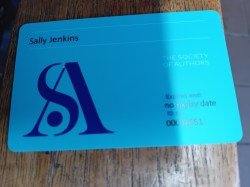
Cats Protection Short Story Competition
Cats must be central to the story’s plot and highlight the connection between cats and people. The story must be imaginative and creative as well portraying cats in an accurate and sensitive way.
The entry fee is £10 and will help the charity to continue its work in making a better life for cats.
The winning entry will be published in The Cat magazine and featured on the Cats Protection website. The winner will also receive an exclusive prize bundle from Cult Pens, worth up to £350.
Entries should be between 250 and 1,000 words.
Closing date is 31st March 2026.
For full details click here.
New2theScene Winter Short Story Competition
No theme and a maximum 4,000 words (so a bit more freedom with this one!)
The entry fee is £5 and the closing date is March 1st 2026 (so you might need to get your skates on!)
The winner receives lots of things: A podcast interview, their story published in an anthology & on the website, an ‘Origins’ blog to promote themselves, a free workshop place (worth £30), a relationship with New2theScene – potential offers for projects not advertised and £50 N2tS vouchers for their bookstore.
There are also prizes for ‘notable mentions’
For full details click here.
The Writing Clubroom Spring Competition
No required genre and a maximum 1,000 words.
FREE entry and the closing date is Easter Sunday 2026.
Total prize money is £150, split as follows: Prizes: £75, £35, £15 and £5 × 5
The judges are interested in work that feels honest, considered, and purposeful in its own terms.
For full details click here.
In other news, I’ve joined the Society of Authors. It describes itself as ‘the UK trade union for all types of writers, illustrators and literary translators’ and has 12,500 members. Amongst other things, it gives advice on contracts (these can be full of pitfalls and difficult for the layman to understand), tax and other writerly subjects. It also offers training and the opportunity to meet other writers. I’ve just been to a meet-up with the West Midlands group in Birmingham. There were about ten of us around a table in a cafe and the theme for meeting was ‘How We Promote Ourselves’. It was interesting to hear how authors handled book launches, ‘in person’ events, newsletters and other marketing opportunities. I was surprised (and relieved!) how little emphasis the group put on social media posts. The general consensus was that it was better to focus on a targeted group than shouting into the wind.
I’m looking forward to delving deeper into what the SoA has to offer as the year progresses!
All About . . .The Writing Clubroom
Posted by Sally Jenkins in All About . . ., Resources on February 3, 2026
I stumbled across The Writing Clubroom when Steve and Ash, who run the organisation, were promoting their Christmas short story competition at the end of last year. They were lovely to deal with and I was delighted when my story was placed third. I’ve invited them to answer five quick questions about their quiet ethos and what they offer.
What are you offering to writers?
We offer a calm, supportive place to write and think. The Writing Clubroom is designed for people who want to approach writing without pressure, comparison, or urgency. We provide gentle guidance, clear starting points, and thoughtful spaces where writers can explore ideas, practise craft, and grow in confidence at their own pace.
Who is your target audience in terms of experience level, genre, or motivation?
We mainly support beginners, returners, and quieter writers who may have drifted away from writing or never quite felt they belonged. Some are starting for the first time; others are coming back after years away. Genre matters less to us than mindset. Our members tend to value kindness, seriousness, and reflection over competition or speed.
What makes you different from similar organisations?
We focus on removing pressure before adding structure. Writing doesn’t begin with productivity; it begins with permission. We avoid noise, performative sharing, and the sense that writers must constantly prove themselves. People are free to work privately, alongside others, or to step gently into shared spaces if and when they wish. There is no expectation to impress or to progress at a fixed rate.
How are you qualified to offer this service, in terms of experience or anything else?
Our qualification lies in long experience of working with writers as people rather than as producers. We understand how hesitation, confidence, and self-judgement shape the writing process, and how easily good intentions can be blocked by pressure. The Clubroom has grown from careful listening, reflective practice, and a commitment to treating writing as a human activity rather than a competitive one.
What is the single most important thing a writer should have, and why?
 Permission. Before technique, before confidence, before ambition, a writer needs permission to begin imperfectly and to continue without judgement. Once that is in place, skills, habits, and confidence can grow naturally. Without it, even the best advice struggles to land.
Personally, I love The Writing Clubroom’s concept that writing should be enjoyed for its own sake without any of the outside pressure that we constantly feel in our everyday lives. Our writing can be our own personal retreat into calm, as illustrated by the two images Steve and Ash supplied to accompany this post.
If you would like to find out more, visit The Writing Clubroom’s website or their Facebook page.
Book Club Day UK 2025
Posted by Sally Jenkins in Books, Events, Lifestyle, Resources on September 11, 2025
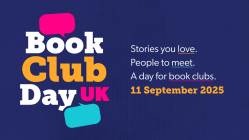 September 11th is Book Club Day in the UK.
It’s a time to share and highlight the joy of being part of a book club and to encourage new clubs to form, so that more people will discover the social connections that discussing a book can bring.
I led a library-based book club for eleven years, stepping down only recently due to time pressures. But I’m remaining a member of the group because I love hearing all the different opinions generated by just one book. Invariably, we have someone who loves it and someone who thought it was so bad that they couldn’t finish it, plus all shades in between. And as an author, the experience helps me to accept that, without a doubt, some readers will hate my books while others (fingers crossed!) will like them.
There are a multitude of different types of book club: some concentrate on a particular genre such as crime, in others members take it in turn to choose the books, in my group the leader chooses our monthly book from the book group stock held within the Birmingham library system, in some groups the wine is more important than the literature and others bring together neighbours in a particular street.
If you’re looking for recommendations for your group, here are a few that my group has read and discussed with gusto:
The Uncommon Reader by Alan Bennett – the late Queen visits a mobile library.
Mr. Two Bomb by William Cole – a man witnesses the atomic bombs in Hiroshima and Nagasaki.
Mrs. Palfrey at the Claremont by Elizabeth Taylor – an elderly lady in the late 1960s joins several other older people as a permanent resident in a hotel.
Daisy Jones and the Six by Taylor Jenkins Reid – a 1970s pop band and their lead singer.
Elevation by Stephen King – a man is mysteriously losing weight.
As a group leader, I always found it helpful when a book had a list of ‘Discussion Questions’ included at the end. We didn’t work prescriptively through the list but it was good to have a jumping off point to get the conversation buzzing. During the final edits for Out of Control I drew up a list of discussion questions and was delighted when my publisher, Choc Lit, agreed to include them at the back of the book. 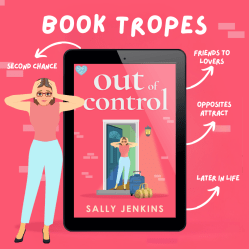
I’m too nervous to try out the book and the questions with my own group (and I think my presence would sugarcoat their comments!) but if anyone tries Out of Control with their group, I’d love to know how you get on, whether the questions help and whether there are any other topics that the book leads you on to?
Is this the End of NaNoWriMo?
Posted by Sally Jenkins in Resources, Writing on April 17, 2025
Most of you will be familiar with National Novel Writing Month or NaNoWriMo, as it’s commonly known.

Image Courtesy of NaNoWriMo
Like me, you may have used it as the discipline needed to get 50,000 words down on paper during the 30 days of November. Perhaps you logged your growing word count via the organisation’s website and participated in encouraging chats on its forums. I went to an in-person NaNoWriMo event in Birmingham one year, wrote an article about it for Writing Magazine and I’ve blogged about it several times.
But, according to this article in the Guardian, it seems that NaNoWriMo as an organisation has had to close due to financial problems compounded by reputational damage. The reputational damage relates to the behaviour of one of its forum moderators and to a statement made by the organisation about AI. More information can also be found on the Euronews website.
To me this is sad news because several of my novels started life as scrappy NaNoWriMo manuscripts and in the months after NaNo were honed to ‘perfection’.
So what happens next? Will you still use November to get those words written? Does it matter if there’s no formal organisation?
Island Song by Pepsi Demacque-Crockett
Posted by Sally Jenkins in Authors, Books, Resources on January 30, 2025
I’ve just finished reading Island Song, the debut novel by Pepsi Demacque-Crockett – published today, 30th January 2025 (No, I didn’t speed read 300+ pages! I received an advance review copy).  If the name of the author seems familiar to you, you are right. Pepsi enjoyed a career in the pop industry in the 1980s and 1990s as part of Wham! and later in the singing duo Pepsi & Shirlie. Pepsi’s parents came to the UK in the 1950s from Saint Lucia and Island Song is inspired by their experience. I enjoyed this book in two different ways, as a reader and as a writer:
The blurb: When their father dies, Agnes Deterville and her sister Ella must forge their own paths in life. Headstrong Agnes dreams of a new life far away. Cautious Ella fears the world beyond their small village in St Lucia. When Agnes departs for a new life in 1950s London, they are both confronted by heartbreak, loneliness, and tragedy. Separated by an ocean, but bound by love, can the sisters keep their island song singing in their hearts?
My reader review: Island Song is a book of contrasts. The reader travels from the bright and colourful island of St. Lucia to grey and dismal London. We experience the friendly, inclusive Caribbean culture and then witness the hostility and suspicion of people in 1950s UK. We get to know Agnes and her adventurous, determined spirit compared with her older, much more cautious sister, who is very much a home bird.
Pepsi Demacque-Crockett weaves all of these threads together to create an absorbing, timely, thought-provoking but easy-to-read novel. It is reminiscent of ‘A Small Island’ by Andrea Levy and would make a great book club read.
With thanks to HarperCollins and The Reading Agency for my Advance Review Copy.
My writer review: The word ‘contrast’ sums up what I learned as a writer from Island Song. We are always told the importance of differentiating our characters to avoid them homogenising into one voice. However, this can be difficult if our protagonists are similar ages, from similar backgrounds and have similar lifestyles. Pepsi got around this difficulty by giving the two sisters, Agnes and Ella, very different personalities: Agnes wants to conquer the world but Ella fears even leaving their village. But they still share the same basic philosophy that family is all important. For me, the lesson to take away is that I should concentrate on what makes my characters different to one another, especially when they are conversing or otherwise interacting with each other.
Author Newsletters?
Posted by Sally Jenkins in Computers & Technical, Promotion, Resources on December 28, 2024
It appears to be a truth universally acknowledged that an author should have an email list, to which they regularly send a newsletter detailing their writing exploits. There are, apparently, good reasons for this:
- Social media platforms bob in and out of popularity (X/Twitter is a good example). When a platform wanes or goes out of business, authors lose followers. However, a list of email addresses is yours to keep.
- Email is a more personal way to communicate with readers rather than ‘shouting’ to all and sundry via social media. Plus, the reader can hit ‘reply’ and open a genuine conversation with you.
- Keep readers engaged in between books coming out.
- Have a look at the Book Cave website for many more compelling reasons.
I have such an email list (you can signup here) but send out pitifully few newsletters and therefore I’m not properly connecting with all those wonderful people who have bought my books and been kind enough to trust me with their email address. (I use the Mailchimp platform to manage my newsletter and all the email addresses are securely held there and comply with GDPR rules). So, I was pleased to attend a Zoom seminar by Rebecca Fearnley about how she manages her author newsletter.
Rebecca uses the Mailerlite platform and regularly curates her subscribers in order to only keep those who are actually interested in her and her books. She offers a freebie to encourage signups but people who don’t open emails after they’ve received the free offer are eventually culled. This enable Rebecca to keep her subscribers below 1,000 and thus she can stick with the free version of Mailerlite. She uses BookFunnel to distribute her free e-book offer but this is a paid-for tool. Within Mailerlite, Rebecca has set up various email onboarding logic flows so that she can tell who has signed up from where and automatically send out different messages and measure their responses to gauge whether they are a worthwhile subscriber. At the end of each book she puts her newsletter signup link and the associated QR code. Rebecca sends out weekly newsletters – which really impressed me, it’s something I wouldn’t have the time, or the content, to do!
Going forward into 2025, I’m hoping to make more of my newsletter, possibly sending one every couple of months. It’s aimed at readers (this blog will continue because it’s aimed more at writers – but I hope you’re all readers as well!) and it usually contains information about books and TV programs I’ve enjoyed, how my my writing is going and a little bit about life in general. You’d be most welcome to find out how I get on.
In the meantime, I’d love to know your feelings on author newsletters:
Are you signed up to any? What keeps you opening and reading them? Do they encourage you to buy books? When/why do you unsubscribe?
Please let me know in the comments.
Kickstarter, Audiobooks and Limited Edition Print Runs
Posted by Sally Jenkins in Promotion, Resources, Self-publishing on November 29, 2024
New Street Authors is a collective of independent authors. We aim to support each other and increase our publishing knowledge. To this end we have a monthly guest speaker via Zoom. In November it was Oriana Leckert who is Head of Publishing at Kickstarter.
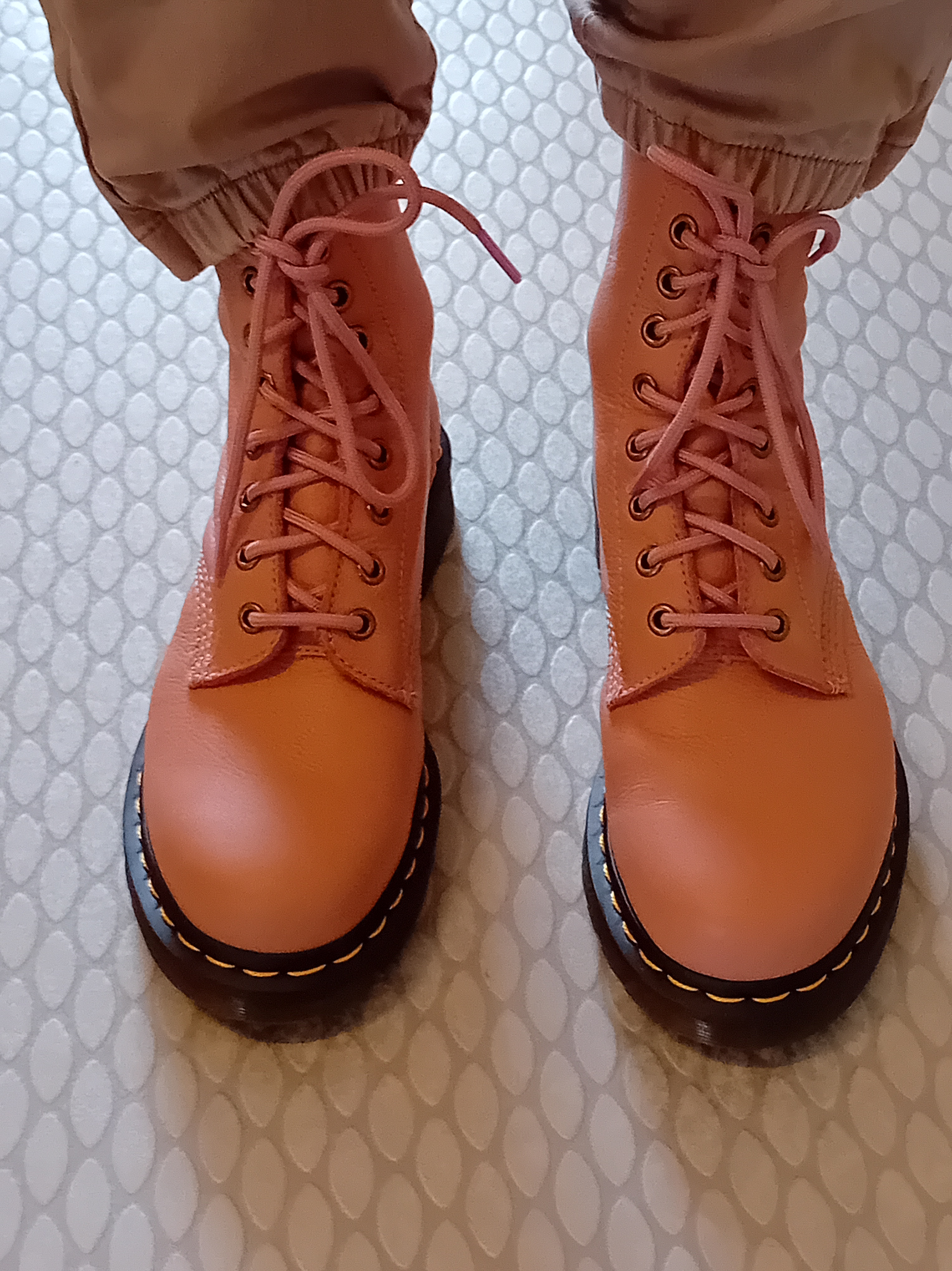
These Boots Were Made for Kicking!
Kickstarter is a crowd-funding platform aimed at creatives such as authors, artists, crafters, who need to raise money to fund projects such a hardback book print run, video game production, board game manufacture and so on.
Two particular uses of Kickstarter appealed to members of our group and I’m highlighting them here because there might be others who would like to fund their writing in this way.
Audiobooks. Audiobooks are growing massively in popularity. Possibly because, in our busy world, they allow multi-tasking, such as driving or doing chores at the same time as enjoying a book. Most traditional publishers now produce audio versions of their books alongside the paperback and e-book.
But the cost of producing a professional audiobook can be prohibitive for independent authors and/or risky. There is no guarantee of sufficient sales to recoup costs. This is where Kickstarter comes in. An author can ask for funding to produce an audiobook. If sufficient backers signup the project can go ahead at no financial risk to the author (assuming he/she has costed the project correctly). If there are not enough backers, the project doesn’t go ahead but the author has lost no money.
To attract backers, the author offers rewards for different levels of investment, as well as a copy of the audiobook. These rewards might be in the form of physical books, mentions on the acknowledgements page, artwork from the book and so on.
Limited Edition Print Runs. An author selling books at a genre-specific convention directly to readers who are hugely enthusiastic about their reading matter, might find that having a limited edition print run specifically for that event will attract large numbers of buyers. These buyers are getting an edition of the book which is not available elsewhere. But these are not books that can be cheaply produced via KDP. They may have gold sprayed page edges, a cover that is printed on the inside as well as the outside and various other expensive special effects. Upfront capital is needed to produce books like these. And Kickstarter can be a way of generating that capital in return for giving investors access to limited edition rewards.
Of course, the backing of investors has to be worked for. It’s not simply a case of putting your project on Kickstarter and waiting for the money to roll in. You will have to publicise and shout about the project in order to attract backers. But if you fancy creating something from your writing that requires capital, it might be worth a shot. The only thing you have to lose is your time.
Sorting Out the Admin
Posted by Sally Jenkins in Lifestyle, Non-writing, Resources on June 21, 2024
Being a writer isn’t just about the writing. Being a writer is like a running a small business, which is why all the big name authors employ assistants to help them. Those of us without the financial resources to do that, have to do it all ourselves! I’m currently taking a break from getting the words down while I wait for an editorial decision from my publisher and I’m using that time to get some of that admin done.
Firstly I’ve checked that all editions of my books are registered with the UK’s Public Lending Right. This is done via the British Library and ensures that authors receive a small amount of money every time their book is borrowed from a library. I’d like to say that this money is payable every time a book is borrowed from ANY UK library but the payments only apply if the books are borrowed from a sample of libraries across the UK. This sample changes from year to year and you can see which libraries are included this year and next on the website and scrolling down to the bottom of the page. Unfortunately for me, Birmingham Libraries (where I know there are several copies of my books and they do get borrowed!) is not in any of the recent samples. But maybe a library elsewhere has copies too!
I’ve also made sure that all editions of my paperback books are registered with ALCS. One of the reasons for doing this is to ensure I receive a small royalty if any of my books are sold secondhand via the World of Books website. More details about how this works can be found on the Society of Authors website. In the future it’s hoped that more secondhand booksellers will join the scheme. Fingers crossed!
I’m also going to be running a free prize draw in the next edition of my newsletter to win a signed (or unsigned if you prefer!) copy of The Promise. At the moment brand new paperback copies of The Promise are only available exclusively from me (there are a couple of secondhand copies on World of Books!) and it is also available on Kindle with an updated cover. If you’d like to be in with a chance, please sign up for my newsletter ASAP and before 26/6/2024. My newsletter is published less frequently than this blog and contains more general content for readers rather than specifically for writers. I’d love to have you on board!

Linktree, Amazon Book Recommendations and a Competition
Posted by Sally Jenkins in Competitions, Promotion, Resources, Short Story on March 26, 2024
Most writers have a presence on several social media sites as well as an Amazon page, a website and possibly other types of internet presence as well. We want to make ourselves easy to find and contact via whichever channel our readers prefer. However, listing all these links in a profile or biography looks messy, as well as using up valuable characters where there is a length limitation.  To solve this problem I’ve recently started using Linktree. Linktree provides one link to insert into your bio, profile or social media post. When clicked, the link will take users to a list of all the ways to connect or contact you. To see a working example, click through to my Linktree: https://linktr.ee/sallysjenkins7. There are various price points offered by Linktree but the basic version (which I’m using) is free. If you’re fed up of listing your different internet connection points, it might be worth a try? One piece of advice if you do set it up: I found that the second half of the link (sallysjenkins7 in my case) needs to be first part of your email address.
One of the things included in my Linktree is my Amazon Author Page. Amazon now encourage authors to add book recommendations to their page. These recommendations can include your own books and those of other authors. Amazon says, “If you submit at least three or more new book recommendations, we will consider sending your recommendations to your followers through email and/or push notifications.” For an example of what these recommendations look like, click through to my page and scroll down. It’s then possible to scroll across the page to see all my recommendations. I’ve done six, three of mine and three from other authors.
The New Writers 1000-Word Short Story Competition 2024 is open for entries until April 30th 2024. There is a top prize of £1,000, a second prize of £300 and a third prize of £200. The entry fee is £10.00 and £1.00 from each entry goes to First Story (England’s leading creative writing charity for young people). There is a 1,000 word limit and stories can be on any theme. Remember to check the full terms and conditions before entering. Subscribers to the NewWriters.org.uk monthly newsletter gain access to exclusive free-to-enter micro, flash and poetry competitions (with cash prizes), book giveaways and the latest writing competition listings.
Finally, the cat illustrating this post, was spotted on a holiday to Madeira earlier this month. My daughter thinks he looks evil. What do you think?
Three Free Opportunities for Writers
Posted by Sally Jenkins in Competitions, Events, Resources on January 16, 2024
Over the last couple of weeks I’ve come across a few free opportunities for writers.

119395801 © Pras Boonwong | Dreamstime.com
Firstly, Indie Novella is offering a nine week online writing course free to successful applicants. It starts on 30th January 2024 and the deadline for applications is 29th January 2024. It is a self-paced course with learning material and writing exercises posted each Tuesday. Participants will have until Sunday night to complete each short assignment and interact with other writers on each exercise. Participants will have access to the learning materials for the entire course and beyond. At the end of each week Indie Novella editors will provide their feedback on a handful of assignments. Applications can be made now via the Indie Novella website.
Secondly, author, Freya North, is running a series of Instagram Live chats with writers on a Wednesday at 1 pm. Seek Freya out on Instagram, where she is @freya_north_author and find out who she’s talking to next.
Thirdly, here is an opportunity for new writers that has been bouncing around social media for the last couple of weeks. The Peoples’ Friend magazine is offering one lucky writer a £10,000 writing bursary! Unfortunately for me, entrants must be amateur, unpublished writers.
To enter, submit a short story of up to 2,000 words in the genre of either romance, thriller or comedy. The closing date is Monday 5th February 2024.
As always, read all the terms and conditions before entering.
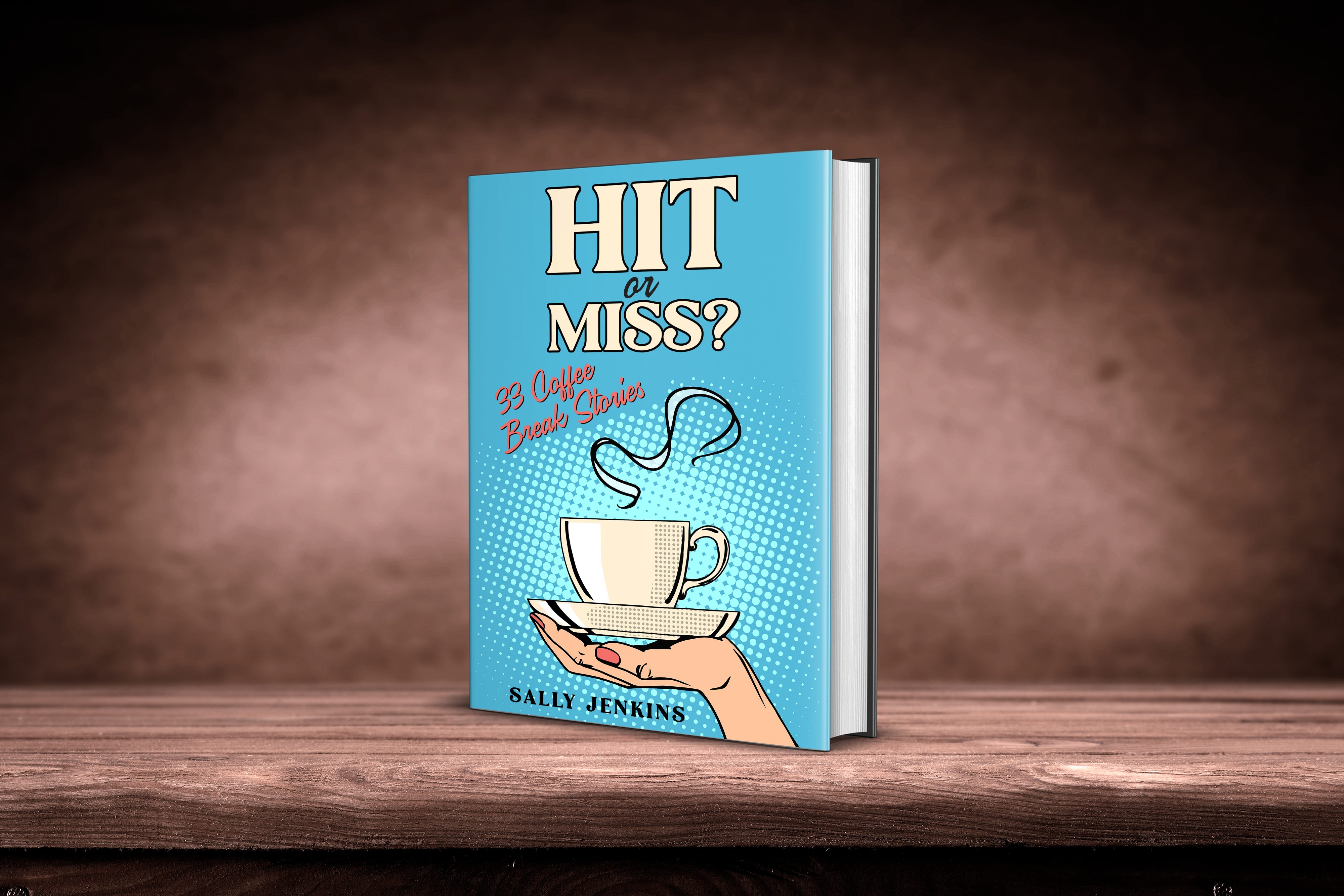
Finally (and unfortunately this is not free!), those interested in cracking the short story market might find the short story collection, Hit or Miss?, useful. It contains a range of short stories and invites the reader to play magazine editor and competition judge in order to work out which stories were successful in print or competition and which didn’t quite hit the mark.
-
You are currently browsing the archives for the Resources category.
 Sally Jenkins