Archive for category Self-publishing
E-book Erotica – the way forward?
Posted by Sally Jenkins in Events, Markets, Self-publishing on November 29, 2012
On Saturday we had a really interesting meeting of the Birmingham Chapter of the Romantic Novelists’ Association. There were 8 of us around the table in the Edwardian Tea Rooms of the Birmingham Museum and Art Gallery and one of our member’s exploits took up most our discussions.

Birmingham Museum & Art Gallery – Edwardian Tea Room (Photo credit: ell brown)
She shall remain nameless, since for obvious reasons she writes under a pseudonym, but she is making around £800 a month selling her erotic e-books, mostly to the US markets. Bear in mind that she fits this around a full-time day job and a family -it makes me wonder why I am slogging away trying to get the odd story accepted by a women’s magazine or shortlisted in a competition!
Our successful author currently has 67 stories for sale, ranging in length from 3,000 to 10,000 words. Apparently the secret of her success is to keep up with the latest trends in erotica – for example monsters are the ‘in thing’ at the moment (the mind boggles!).
She self-publishes the e-books, formatting them and designing the covers herself. As you can imagine, we were all agog to learn her secrets and she has promised us a workshop in January…
Talking about the mind boggling, I caught the tail end of a Radio 4 program – ‘When Harry Potter Met Frodo’ – about Fan Fiction this week. The presenter was talking about Slash Fiction. This is a sub-genre of Fan Fiction and involves choosing 2 of your favourite male characters from existing works of fiction, bringing them together and letting them have an affair (at least that’s my polite way of putting it!).
So, if you want to write what the market wants – now you know!
Sell Your Books! Part 2
Posted by Sally Jenkins in Books, Promotion, Resources, Self-publishing on October 24, 2012
In my last post I introduced you to Debbie Young – book promotion guru. And this post concludes her sage advice:
Many writers worry about the time-consuming nature of maintaining a presence on social media. What is the best platform (blog, Twitter, Facebook etc.) to concentrate on?
On Radio 4 alone there are plenty of magazine shows that need topical, expert material for their programmes – Woman’s Hour, Money Box, the Today Programme, PM. Your book and the knowledge or experience that enabled you to write it might give you viable ideas for an article, or an engaging comment to follow up a programme.
Approach your target programme’s production office with a well-thought out idea, backed up by your credentials as the author of a book on the subject, and you may get lucky. (Other national outlets can also be approached in this spirit – the nature of your book will dictate what should be your priority, e.g. a special interest national magazine in your field.)
Sell Your Books! Part 1
Posted by Sally Jenkins in Books, Promotion, Resources, Self-publishing on October 19, 2012
Here in the blogosphere you trip over lots of very knowledgable people and they’re all very generous with their support and  advice.
Debbie Young is one such person. Debbie is an absolute expert on book promotion and marketing. She has 30 years experience in the industry and runs Off The Shelf Book Promotions which offers a bespoke marketing and promotion service to self-published authors (she also maintains a very useful blog of book promotion tips here.)
Debbie’s book Sell Your Books! has just been published (I’ve read it and it’s excellent – well worth buying if you want to give your book the push it deserves). I asked her a few questions about selling books and her answers were so comprehensive that I’ve split them into two blog posts. Here we go with number 1:
It’s often said that a writer needs to build a potential readership before their book is published. Do you agree and if so, how would you recommend doing this?
Try to define your potential readership, so that you can bear them in mind whilst writing the book. But don’t let it distract or divert you from actually getting the writing done nor from writing the book you want to write. Be true to yourself.
Always be on the look out for practical ways of reaching your target audience. Keep a note of useful websites, interest groups etc that you can come back to when you are ready. Watch out for what others in your field are doing to promote their books.
By all means engage with your potential readership but don’t show them your hand before you are ready – your book may evolve into something quite different to what you expected!
Consider also: other influential writers who you might ask to review your book; book reviewers; book bloggers; local booksellers; interest groups for your genre or topic. Follow their blogs and comment on their blog posts. Follow them on Twitter, befriend them on Facebook and GoodReads. Write reviews of their books. Comment on their book reviews on Amazon and GoodReads. Post worthwhile comments on their websites. Go to their public events. When commenting online anywhere, include a link to all your contact details (website, Twitter, email etc) so they can track back to you and the relationship can be a two-way thing. Then, when your book is published, you will be a familiar (and hopefully respected!) name to them and they will be well-disposed towards your new book.
Secure your own website address (URL) in advance so that it can be printed on your book jacket. But don’t be tempted to promote the book before it exists. This can be counter-productive. You’ll have much more impact on a bookshop, for example, if you can go in with actual samples of your book, a fully functional website and a few reviews, than with nothing physical to show. These things give you much more credibility as an author whose books are going to make a profit for the store.
There’s a lull between finishing your manuscript, proofing it and it being on sale as a finished product – that’s a really good time to roll up your sleeves and get stuck in. But don’t rush things. In this digital age of e-books and on-demand printing, there’s no rush to start marketing your book, because it’s never actually too late. Your book doesn’t come with a sell-by date, and it won’t be remaindered or de-listed by your publisher (i.e. you!). There’s more about this on my blog here.
On the other hand, don’t err on the side of sloth! You do HAVE to put in the effort sooner or later if your book is going to be successful, because no matter how good it is, it won’t sell itself if you don’t promote it at some time.
Vivien Hampshire on e-publishing and Losing Lucy
Posted by Sally Jenkins in Authors, Books, Self-publishing on September 9, 2012
Like me, many of you may recognise Vivien Hampshire’s name from her monthly column, ‘Book Deal or Bust’, which appeared a few years back in Writers’ Forum magazine. As Vivien wrote and edited her novel, ‘Losing Lucy’, she shared her experiences with the magazine’s readers.
‘Losing Lucy’ is about the abduction of a baby and the impact this loss has on the adults in the baby’s life. Vivien tackles this difficult subject well and the story takes an unexpected turn towards the end (you’ll have to read it to find out what happens!).
The novel is now available on Kindle via Amazon.
I asked Vivien about the process of publishing her book in this way:
Without the backing of a traditional publisher and editor, how did you know when your work was good enough to be published?
The suggestions, advice and encouragement I received from the readers of Writers’ Forum (largely struggling authors themselves) were wonderfully helpful! The manuscript also received a full critique from the Hilary Johnson Authors Advisory Service, whose positive comments gave me added faith in my book and the confidence to carry on, even when traditional agents and publishers kept turning me down. As for self-editing, I have been writing magazine fiction, teaching creative writing, and producing a small magazine as part of my ‘day job’ for years, so I have a good feel for what looks and feels right. Having said that, I did re-read my manuscript many, many times to eliminate even the tiniest errors!
How did you decide between uploading the book onto Kindle yourself and using a paid for service?
I am not the most technical person, and felt that the e-book uploading process, although relatively straightforward, might just be beyond me! I paid a modest fee (less than £100) to a company called New Age Publishers who really held my hand throughout the whole process, reformatted my Word document so the layout of the book was right for Kindle, made sure my royalties went to the right place, and gave me the opportunity to check and make changes for up to three months after the book went ‘live’. They did a grand job, well worth the fee.
How important do you think the cover is for a digital book?
Ebooks without covers look very unappealing, and I certainly wouldn’t look twice at one, let alone buy one. As professional artists can be costly, I took my cover photo myself, and New Age tweaked the wording for me. The cover is not perfect but it serves its purpose. (See Vivien’s cover here).
What are the pricing considerations on Amazon?
Very fair to the author – but then, there are no paper or storage costs, so Amazon’s cut is actually quite easy money! By pricing at around the £2 mark, my readers can buy the novel much cheaper than the average paperback, and I get 70% of the sale price. Royalties drop to only 35% if the price is set at less than £1.49, so I may think about lowering the price some time later if sales start to flag.
How did you go about marketing ‘Losing Lucy’?
Marketing is by far the hardest part, and that’s where the absence of a big publisher’s budget really tells. I used my own blog, writers’ groups and Facebook to publicise the book. Talks and book signings are difficult, if not impossible, without a physical pile of books to sign. I recently took advantage of Kindle’s 5 day promotion offer, and more than 800 free copies were downloaded – no royalties for me, but at least the book is being read, talked about and reviewed, which should help future sales.
Many thanks to Vivien for sharing her experience. E-publishing has made it so much easier for writers to self-publish and there’s no reason why we shouldn’t all be doing it – as long as we are absolutely sure that what we are about to release on the world has been edited to within an inch of its life and is absolutely the best it can be!
And don’t forget the possibilities for non-fiction – Vivien has also written ‘How to Crack Cryptic Crosswords’ which has recently been published by How To Books Ltd.
From around the web…
Posted by Sally Jenkins in Competitions, Self-publishing on July 21, 2011
… a few interesting bits and pieces
- Waterstones are offering a Faber Academy Creative Writing Short Course (worth £450) in a prize draw, the only snag is you need a Waterstone’s loyalty card to enter – so if you haven’t got one, get one now! Then click here for full details and your chance to win. Closing date 1st September 2011.
- Ian Arkell used the contact form on my ‘About’ page to tell me about his novel, ‘Who Your Mates Are’, which is available for free on his blog. It is a crime novel set in Sydney and the south coast of New South Wales, Australia. Ian came across the usual brick wall when he tried to get it published in the traditional way and so decided to put it in blog form. He explains why here.
- If you enjoy blogging and have an interest in natural health then here is the competition for you. The Wise Woman is running a Natural Health Blog Competition. 500 words on any topic related to natural health could win you £100. Entry fee is £2 and the closing date 31st August 2011.
- As with any job, writing and publishing has its own ‘lingo’ that can seem amazingly complicated to the newcomer. Nicola Davies has been attempting to de-mystify some of the technical terms associated with magazine publishing on her blog. Have a look here if you want to be able to understand ‘editor speak’.
- And don’t forget there’s still time to enter the 100 word story competition on Helen Yendall’s blog – there are two fabulous writing books to be won. Closing date is 26th July and entry is via email.
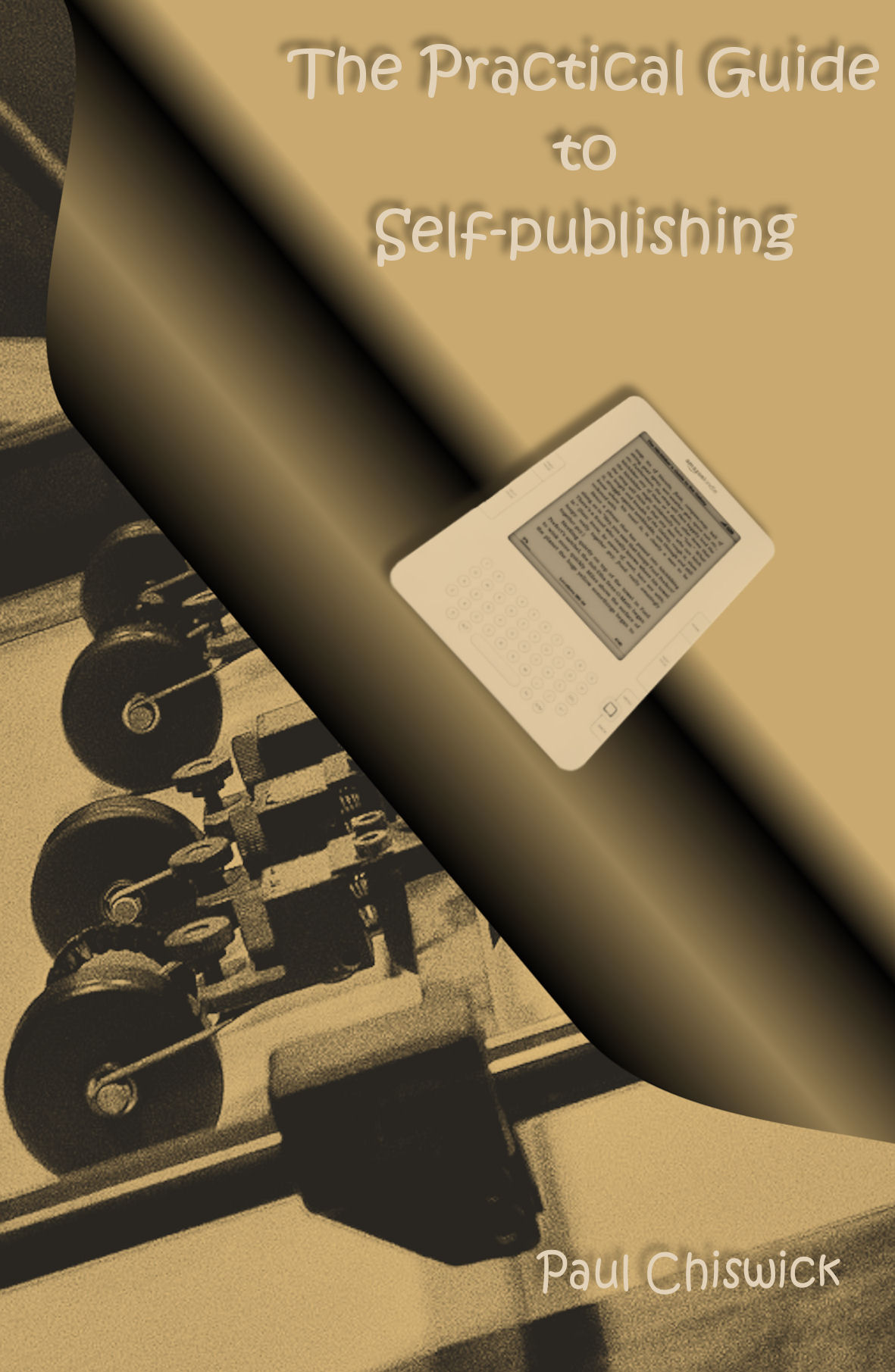
The Practical Guide to Self-Publishing by Paul Chiswick
Posted by Sally Jenkins in Resources, Self-publishing on March 3, 2011
I think all writers agree that getting published can be next to impossible for the novice writer (unless you’re a celebrity!). This means that more and more of us are turning to self-publishing as a way of getting our books out there. Paul Chiswick has experience of several self-published projects and has now written a book on the subject. Here he is with some advice for anyone thinking of going down the self-publishing route:
Everyone’s reason for producing his or her ‘book’ will be different. You may want it purely for posterity, a record of your own life. How many of us would love to know more about our grandparents and great-grandparents? Or you may be convinced you are the next JK Rowling, destined for fame and fortune. If only!
First things first: there’s a hurdle called publishing planted between you and your dream. Once upon a time, publishers were far more willing to publish an unknown author. They trusted their judgement, and knowledge of their readers. However, consolidation and an emphasis on profitability have changed the publishing world, perhaps forever. Look around you on the shelves of bookshops and supermarkets. Nowadays, a very large proportion of books published each year are by ‘celebrities’, who may or may not have written, or indeed have had much input into, the book that appears under their name. Either that or they are by well-established and successful authors. Naturally, these books are easier to sell. As a result, the highly competitive market for unknown authors has shrunk dramatically over the last few years.
Is there an alternative? You bet! Publish it yourself.
How do you do it? Here are four of the most common ways:
- The publisher takes your manuscript and carries out the complete publishing process. He charges you a fee, which covers the entire costs of production and distribution. This is exactly what a traditional publisher does, except in traditional publishing the publisher bears all the cost and assumes the risks. This is a growing area of self-publishing, and new entrants are coming into the market all the time. Expect pricing to become more aggressive and competitive.
- The services of the publisher are dispensed with altogether. You carry out all the stages of production and distribution. The only part of the physical process you won’t be able to undertake is the actual printing and binding of the books. A printer specializing in book production would undertake this for you. If this is an option that interests you, I suggest you acquire a copy of my eBook, The Practical Guide to Self-Publishing, a snip at only £3.99! Available from Barnes & Noble, Sony, Kobo, Amazon, Apple and Diesel.
- You produce everything in digital format on your PC and then employ Print On Demand technology. Print On Demand (sometimes termed Publish On Demand) arrived with the advent of digital printing when the printing of single copies of a document became economically viable. Using this technology, copies of the book are not printed until an order has been received.
- You produce everything in digital format on your PC, then produce, market and sell it as an eBook, often on your own website or through an online retailer such as Amazon.
What are you waiting for? Get publishing!
-
You are currently browsing the archives for the Self-publishing category.
 Sally Jenkins