Posts Tagged Society of Authors
3 Short Story Competitions plus the Society of Authors
Posted by Sally Jenkins in Competitions, Events, Promotion, Resources on February 13, 2026
It’s been a long time since I posted any competition opportunities – so here goes with three I’ve stumbled across recently.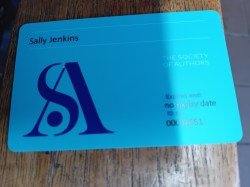
Cats Protection Short Story Competition
Cats must be central to the story’s plot and highlight the connection between cats and people. The story must be imaginative and creative as well portraying cats in an accurate and sensitive way.
The entry fee is £10 and will help the charity to continue its work in making a better life for cats.
The winning entry will be published in The Cat magazine and featured on the Cats Protection website. The winner will also receive an exclusive prize bundle from Cult Pens, worth up to £350.
Entries should be between 250 and 1,000 words.
Closing date is 31st March 2026.
For full details click here.
New2theScene Winter Short Story Competition
No theme and a maximum 4,000 words (so a bit more freedom with this one!)
The entry fee is £5 and the closing date is March 1st 2026 (so you might need to get your skates on!)
The winner receives lots of things: A podcast interview, their story published in an anthology & on the website, an ‘Origins’ blog to promote themselves, a free workshop place (worth £30), a relationship with New2theScene – potential offers for projects not advertised and £50 N2tS vouchers for their bookstore.
There are also prizes for ‘notable mentions’
For full details click here.
The Writing Clubroom Spring Competition
No required genre and a maximum 1,000 words.
FREE entry and the closing date is Easter Sunday 2026.
Total prize money is £150, split as follows: Prizes: £75, £35, £15 and £5 × 5
The judges are interested in work that feels honest, considered, and purposeful in its own terms.
For full details click here.
In other news, I’ve joined the Society of Authors. It describes itself as ‘the UK trade union for all types of writers, illustrators and literary translators’ and has 12,500 members. Amongst other things, it gives advice on contracts (these can be full of pitfalls and difficult for the layman to understand), tax and other writerly subjects. It also offers training and the opportunity to meet other writers. I’ve just been to a meet-up with the West Midlands group in Birmingham. There were about ten of us around a table in a cafe and the theme for meeting was ‘How We Promote Ourselves’. It was interesting to hear how authors handled book launches, ‘in person’ events, newsletters and other marketing opportunities. I was surprised (and relieved!) how little emphasis the group put on social media posts. The general consensus was that it was better to focus on a targeted group than shouting into the wind.
I’m looking forward to delving deeper into what the SoA has to offer as the year progresses!
5 Questions About Writing With . . . Gabrielle Mullarkey
Posted by Sally Jenkins in 5 Questions About Writing on November 11, 2025
Gabrielle Mullarkey has just released her fourth novel, The Ones Who Never Left, a gothic chiller to read with the lights on. She’s also written over 3,000 short stories and serials for women’s magazines.  As a journalist, she’s contributed features, travel writing and opinion pieces to a wide range of publications. Her writing has been broadcast on radio, adapted for audio download, and won or been shortlisted in writing competitions. She also teaches creative writing.
How do you discipline/motivate yourself to write and do you set daily targets?
I trained as a journalist and that discipline helps when it comes to developing ideas and meeting deadlines. Because I write short stories and serials alongside novels, my daily routine is determined by a story or serial I have to complete, or the next idea I have to pitch. I can be very tunnel-visioned unless distracted by the pressures of daily life. That’s handy because, as a champion worrier, I sometimes find it difficult to switch off from daily demands.
What are the most important qualities required by a writer? Do you have them?
When an idea takes root, you must let it germinate without becoming impatient. Stamina is key when actually writing, it’s the old adage of ten per cent inspiration and 90 per cent perspiration.
I teach creative writing for two local authorities, and meet talented writers who become disheartened by the need to make several revisions to a story. The act of creativity is such an initial joy, it often comes as a shock to discover how much hard work is involved in making a piece the best it can be.
You also have to tread a fine line between self-evaluation and self-belief so that you’re open to learning from others. I like to believe in the democracy of writers (the correct collective noun is a procrastination of writers!): There’s always something to learn from others if you pay attention.
How do you market yourself and your books?
All my novels have been different. I wrote two romances, then a historical crime novel featuring Jane Austen as an amateur detective, and my latest novel is a gothic chiller set in a haunted house. Writers are often told that we need a ‘brand’ and to stick to writing in the same genre. So, while I do love flexing my writing muscles in different genres, I feel I’ve ‘come home’ writing dark subject matter that’s full of psychological chills and jump scares.
While my four novels have been traditionally published, like all writers I do as much self-promotion as possible. On social media, you can find me on X.com, Bluesky and on Substack, where I talk about the inspiration behind my latest book.
I also reach people through the women’s magazines I write for, and through courses and workshops I teach. I don’t impose myself on anyone when teaching (I hope!), but writing course participants are always keen to know what the tutor is working on.
For the past few years, I’ve attended the South Warwickshire Literary Festival. I have an MSc is in Creative Writing for Therapeutic Purposes and, last year, I gave a talk on writing for wellbeing. This year, I judged the festival short story competition, gave a workshop at the event itself and joined the author Q&A panel. I’ve also given talks on gothic literature and teach an annual Christmas workshop on writing a ghost story.
Sometimes I’ve had to push myself out of my comfort zone, but it’s a case of ‘feel the fear and do it anyway!’ Now, if I could just master the diving board at my local swimming pool or driving on the motorway at night…
Which writing resources have you found useful, e.g., books, courses, organisations, websites etc?
I’m a member of the Society of Authors, which offers excellent one-off workshops to members, on everything from narrative structure to mental wellbeing.
My love of Jane Austen inspired my darkly comic detective novel and I’ve always adored ghost stories and gothic literature, from Mary Shelley’s Frankenstein to Shirley Hill’s The Haunting of Hill House. I don’t try to emulate or be like anyone else. It’s vital that you listen to your own voice.
From a wellbeing perspective, I love to revisit Natalie Goldberg’s book, Writing Down the Bones, which talks about writing as an act of discovery and is chockful of wisdom to help sustain self-belief.
A top tip for other writers?
Be attuned to the world around you. You might get the spark of an idea from reading about a seaweed farm in the Hebrides or overhearing a remark on the bus. I once got a short story out of a stranger exclaiming in public, ‘but we always have shepherd’s pie on a Tuesday!’ Writers are magpies.
Equally, read as a writer, noting how the writer uses imagery, structures the narrative and so on. It won’t spoil your enjoyment of a text, only enrich it.
About The Ones Who Never Left – published October 2025
 Disillusioned with London, newlyweds Lucy and Hugh move to rambling Rook House in Yorkshire, unfazed by local claims that the house is haunted. Hugh, as a writer of supernatural fiction, hopes that the house will ‘speak’ to him through its brooding history. Meanwhile, Lucy craves the solitude and scenery that will inspire her to pick up a paintbrush again. But it soon becomes clear that someone – or thing – in Rook House has been waiting for its latest occupants… waiting to unfold a story that’s been whispered down the years but gone unheard. They don’t yet know it, but Hugh and Lucy are the perfect audience. The former inhabitants of Rook House have a story to tell. And if you listen too closely, you end up joining the ones who never left.
The Ones Who Never Left is available in paperback from Spiral Books, Amazon and all good bookshops, including Waterstones.
5 Questions About Writing With . . . Chris Penhall
Posted by Sally Jenkins in 5 Questions About Writing, Authors on November 19, 2024
Chris Penhall writes uplifting stories set in gorgeous places.  A member of The Society of Authors and the Romantic Novelists Association, she won the 2019 Choc-Lit Search for a Star competition, sponsored by Your Cat Magazine, for her debut novel, The House That Alice Built, and has since written five more books. The House That Florence Left is the fourth in her Portuguese Paradise series.
How do you discipline/motivate yourself to write, and do you set daily targets?
I am disciplined and I am motivated, but I don’t really have a set time to write or daily targets, although I have tried to work like that. A lot of my work has been deadline driven, with many different projects on a given day, week, or even month, so I’m used to prioritising, adapting, dealing with other things urgently, then making sure I’ve done everything in time. So when I write a novel, which is a long-term project, I behave in the same way.
When I’m working on a book, I strive to write something every day. This doesn’t always work but after six books, I don’t beat myself up about that so much. As far as word counts are concerned, some writing sessions provide a couple of thousand, some provide a couple of hundred, and very occasionally a couple of sentences. But whichever it is, I’m staying connected to the book.
What are the most important qualities required by a writer? Do you have them?
Imagination – all writers have that. Tenacity – you have to really want to do this, in order to ride the waves of success, disappointment, success etc. etc! Also, you have to love writing for the sake of it. You are spending a lot of time in your own head, so you’ve got to enjoy being there…!
How do you market yourself and your books?
I’m still learning how to market myself and the books. My publisher does a lot of marketing, thankfully, which is great as I think it can be a bit overwhelming if you’re not used to it. I have always done things that are related to books and reading, so I’m continuing to do that, but now sometimes as an author, rather than a reader.
I have worked for BBC local radio for many years, and way back in the last century for Radios One and Four, so I lean into my audio experience and background as a way of marketing myself and therefore my books. For instance, I have a community radio programme called Books and Tunes in which I chat to other writers, and before that I made my own podcast called Talking to My Friends About Books – in which I did just that!
I have also hosted events and interviewed other authors at The Essex Book Festival and have been a judge for a short story competition the festival ran in conjunction with the Essex Gardens Trust. A few years prior to that I was a long-list judge for the BBC Essex radio play competition for two years.
And I have a blog on my website in which I feature interviews with authors.
Which writing resources have you found useful, e.g., books, courses, organisations, websites etc.?
I started writing my first novel many years ago and when I got stuck I enrolled on an online course, which helped me develop the characters, the plot and actually get to the end of the book. A few years after that I invested in a mentor with a literary consultancy, and that is what got the manuscript to the level that won the Choc-Lit Search for a Star Competition.
After that I did an online course with Future Learn – because basically I enjoy developing my skills, and I have done one or two writing workshops too. I’m doing one in a few weeks actually.
I find chatting to other writers really helpful, but I have only just joined The Society of Authors and the Romantic Novelists Association.
A top tip for other writers?
Write. Be tenacious. Pat yourself on the back whether you’ve written 5, 50, 500 or 5000 words today. Enjoy it. Remember why you’re doing it. And follow your dreams.
About The House that Florence Left – published October 2024
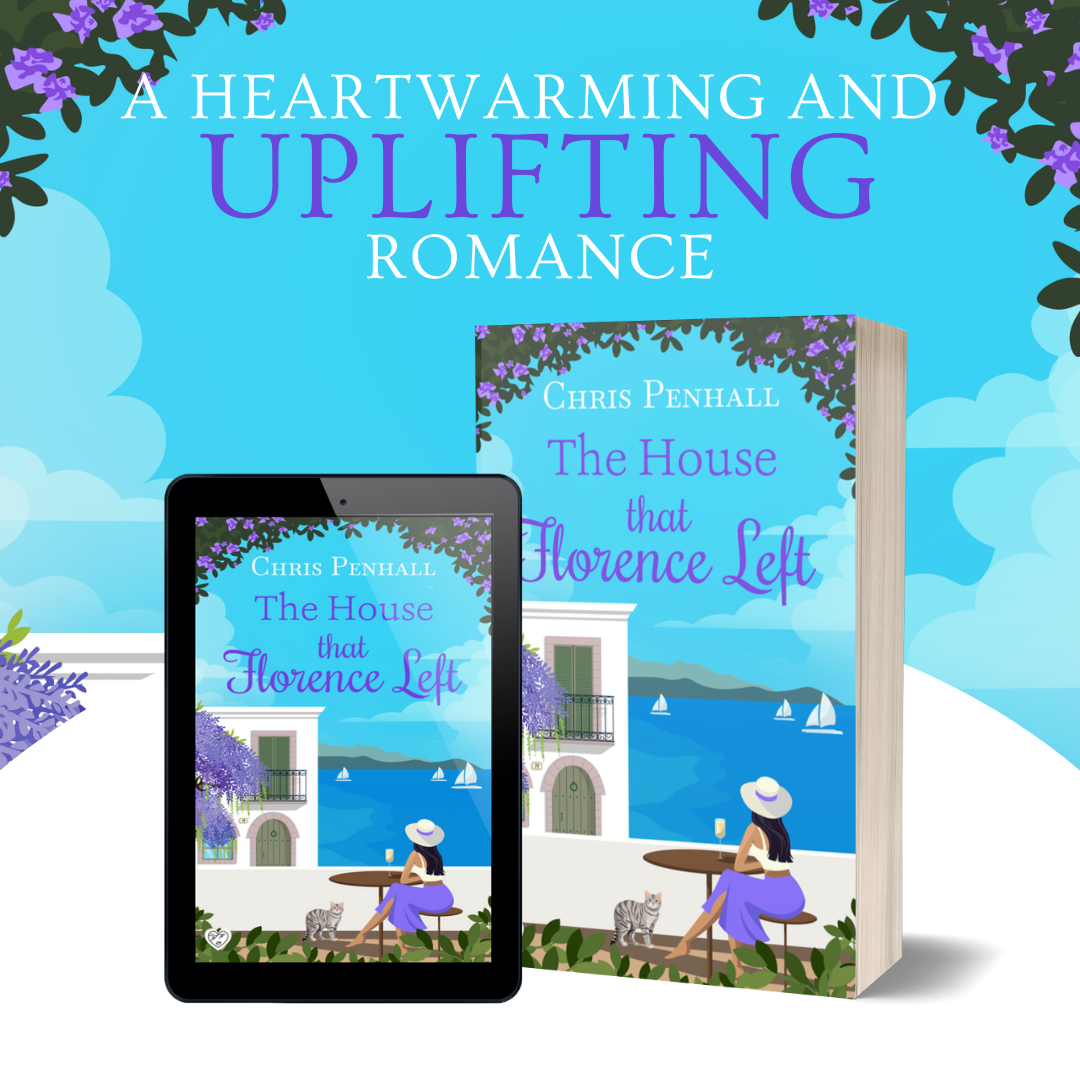 Bella Cresswell likes her life organized. But when she inherits her great-aunt Flo’s house in the Algarve, her life gets decidedly disorganized. She flies to Portugal hoping for a quick sale and to return home. Except there is a clause in the will stopping her. Before she can sell the house, Bella must ‘make it better’.
As she tries to fix up the dilapidated property, Bella discovers the faded walls are filled with the memories and secrets of Florence’s vibrant life. And, as she looks further into her great-aunt’s time in Portugal, she realises, there’s more to making it better than she first thought. Bella finds herself caught up in the charm of the lively Portuguese village, the eccentric and friendly locals and her handsome, yet mysterious, neighbour, Hugo.
But when it’s time to sell and say goodbye will Bella be able to return to her old life?
Or will she discover that some things are meant to be held onto forever?
Sorting Out the Admin
Posted by Sally Jenkins in Lifestyle, Non-writing, Resources on June 21, 2024
Being a writer isn’t just about the writing. Being a writer is like a running a small business, which is why all the big name authors employ assistants to help them. Those of us without the financial resources to do that, have to do it all ourselves! I’m currently taking a break from getting the words down while I wait for an editorial decision from my publisher and I’m using that time to get some of that admin done.
Firstly I’ve checked that all editions of my books are registered with the UK’s Public Lending Right. This is done via the British Library and ensures that authors receive a small amount of money every time their book is borrowed from a library. I’d like to say that this money is payable every time a book is borrowed from ANY UK library but the payments only apply if the books are borrowed from a sample of libraries across the UK. This sample changes from year to year and you can see which libraries are included this year and next on the website and scrolling down to the bottom of the page. Unfortunately for me, Birmingham Libraries (where I know there are several copies of my books and they do get borrowed!) is not in any of the recent samples. But maybe a library elsewhere has copies too!
I’ve also made sure that all editions of my paperback books are registered with ALCS. One of the reasons for doing this is to ensure I receive a small royalty if any of my books are sold secondhand via the World of Books website. More details about how this works can be found on the Society of Authors website. In the future it’s hoped that more secondhand booksellers will join the scheme. Fingers crossed!
I’m also going to be running a free prize draw in the next edition of my newsletter to win a signed (or unsigned if you prefer!) copy of The Promise. At the moment brand new paperback copies of The Promise are only available exclusively from me (there are a couple of secondhand copies on World of Books!) and it is also available on Kindle with an updated cover. If you’d like to be in with a chance, please sign up for my newsletter ASAP and before 26/6/2024. My newsletter is published less frequently than this blog and contains more general content for readers rather than specifically for writers. I’d love to have you on board!

Titles and Trademarks
Posted by Sally Jenkins in Books, Resources on June 25, 2018
There is no copyright in titles. A quick search on Amazon has shown me that there are at least ten novels with the same title as mine; The Promise.
However, difficulties can arise if the words in your title have been trademarked by someone else. I came across two incidents of this recently.
Firstly, I met someone to whom this had happened. The author’s publisher was contacted by the lawyer of a company who had trademarked a phrase very similar to, but not exactly the same as, the title of this writer’s book. The company used this trademark to identify a series of books rather than a single book. The company’s lawyer threatened legal action if the title of my acquaintance’s book wasn’t changed. This meant my author acquaintance and their publisher had to decide whether to get into a legal battle, which could be costly, or whether to change the title of the book, stand the cost of destroying the existing copies and reprinting.
Secondly, I came across an article about a romantic novelist who has trademarked the word ‘cocky’ for use in book titles. Faleena Hopkins has self-published a series of romance novels featuring the Cocker brothers and each has the word ‘cocky’ in the title. Following her trademarking, Faleena has asked several other romantic novelists to remove the word ‘cocky’ from their book titles. This hasn’t gone down well and a petition has been started to ask the US Patent and Trademark Office to cancel the ‘cocky’ trademark. See the full Guardian article for more details.
I am not a lawyer and if you have any specific questions or concerns in this area you should seek professional advice from a qualified person or a reputable organisation such as the Society of Authors. However, from some internet research, it seems to that:
- Individual book titles cannot be trademarked but the name relating to a whole series of books can e.g. Chicken Soup for the Soul
- Trademarks are generally registered at a national level but there are mechanisms to register them in multiple countries.
- Trademarks are generally registered to apply only to a certain range of products or services such as chemicals, vehicles, printed matter etc.
More information can be found at:
 Sally Jenkins