Archive for category Markets
Amazon Ratings
Posted by Sally Jenkins in Competitions, Markets, Successes on December 15, 2025
As we approach Christmas and the end of the year, I’d like to say a heartfelt thank you for your continued support. Most of the time, the writing life is a hard slog. Having people ‘on side’ makes a massive difference to the morale. Thank you!

The Interior of Waterstones in Bradford
At the beginning of December, Out of Control received its 1000th Amazon rating – which I think is cause for celebration. Little Museum of Hope has 1035 ratings and Waiting for A Bright New Future is creeping up behind them with 809 ratings. Thank you to anyone who has read and rated or reviewed any of my books – it makes a difference in several ways: a positive rating or review gives the author a boost and helps the book gain visibility on Amazon, which in turn may increase sales and sway a publisher into re-signing an author for further books.
The lovely people at Farnham Literary Festival have asked me to remind you that the closing date for their ‘First Five Pages’ competition is 31st December 2025 and it’s fast approaching. There is a first prize of £1000!
And here is a submissions opportunity for the New Year. Bending The Arc, a Thrutopia Magazine, will be open for submissions from Monday 12th January until Sunday 1st February. The magazine wants stories, poems, and essays which ‘bend the arc of the possible towards a thriving future on earth’. Their Substack account has more specific details.
I’ve mentioned the New Street Authors’ Collective before. They have produced a Collection of Beginnings. This allows readers to try a new author or genre without monetary risk and it’s available free of charge. The opening to my psychological thriller The Promise can be found by scrolling down to page 10, if you fancy giving it a try.
A couple of weeks ago I was in Bradford for the weekend and finally got to visit the town’s branch of Waterstones. I’d seen many pictures of the store’s interior on social media and it didn’t disappoint in real life. And it’s got a cafe where you can peruse your purchases! What more could a reader want?
Finally, I’d like to wish you a very happy Christmas and a healthy 2026. See you in the New Year!
Book Fairs
Posted by Sally Jenkins in Events, Markets, Promotion on February 15, 2025
Book Fairs appear to be growing in popularity. These are gatherings of large numbers of authors for the purpose of signing and selling books to the reading public. Authors pay for a table at these events. Sometimes readers have to pay an entrance fee and sometimes the events are free entry. 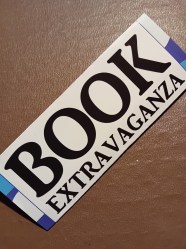 These are not the same as Literature/Book Festivals where there is a program based around authors speaking about their books. Nor are they the same as events like The London Book Fair which is principally for the publishing industry, not the reading community.
There has been some discussion amongst the members of the New Street Authors Collective about whether Book Fairs are financially worthwhile. Tables usually cost upwards of £25 with those located in prime spots, and thus receiving the most footfall, priced higher. Many events cost significantly more than that. Adding in the cost of travel, parking and food and drink increases the financial outlay even more. Depending on how much authors charge for their books, the profit per book over cost price may be around £3. The sheer number of authors at these events means that competition is fierce and therefore the number of books sold may well only be in single figures. This means that many authors won’t make money at these events.
I’ve never attended one of these book signings and so I asked my fellow writers what the attraction was, given that they were likely to end up out of pocket.
F. D. Lee – “You don’t get many sales but more often than not you do get fans and fans will be loyal to you whatever you do.”
Dawn Abigail – “For me it’s a question of having some ulterior motive, i.e., Do I want to go, irrespective of how much I sell? If so, then sales are just a bonus.”
Jill Griffin – “It’s a good way to meet other authors and share information.”
Lee Benson – “I enjoy meeting people in the flesh and, at the shows I’ve attended, I’ve always sold books as well as getting school performance bookings and meeting other authors who want to be interviewed for my radio show and vice versa.”
The attraction of Book Fairs for authors is not wealth and riches – we all know that the average writer earns a pittance from his work – but the social aspect of mixing with other bookish people and comparing notes.
If you’d like to dip your toe into this world, whether as an author or a reader, here are a few places to try:
Book Extravaganzas (Midlands) organised by Rosie’s Retro Bazaar and Fantom Publishing
Book Signing Events in the UK A range of genres and locations
UK Book Signing Events Private Facebook Group
Flash Fiction Opportunities
Posted by Sally Jenkins in Competitions, Markets, Short Story on September 10, 2024
Sometimes, in the midst of trying to churn out a novel, hook an agent or sell ourselves to a publisher, we forget about the fun side of writing. We overlook what drew us to pick up a pen in the first place.
Many years ago, short pieces of writing attracted me to this industry. I loved the satisfaction of sending a reader’s letter to a magazine, often swiftly followed by seeing it in print and receiving a small cheque in the post. Next came magazine articles and short stories. There were rejections aplenty but they helped build the thick skin and determination which are essential to all writers. And when the acceptances came, they were all the sweeter because of those previous failures.
Nowadays I rarely write short pieces and I miss the satisfaction of regularly finishing something, sending it out into the world and carrying within me the hope that it will find success. If a piece missed it’s target, I was disappointed but not distraught. The amount of time ‘wasted’ writing the story was not huge and by then I always had at least one other thing ‘out there’ and the hope that it would land on the right desk at the right time.
It’s different with novels. They take a LONG time to write, publishers and agents take a LONG time to respond and when the coveted acceptance finally arrives, it’s a LONG time before the book is actually published. I think that’s why flash and short fiction opportunities keep catching my eye. I’m tempted to take a break from the long game and have a bit of fun with something short!
Here’s a few of the things that have caught my eye:
Flash Frog
Flash Frog are looking for stories of up to 1,000 words. The website says: “We like our stories like we like our dart frogs: small, brightly colored, and deadly to the touch.” Flash Frog publishes a new story every week, accompanied by specially created artwork. Payment is $25 per story.
Seaside Gothic
Seaside Gothic is based in the UK and does what it says on the tin i.e. it publishes short pieces of seaside gothic literature. If, like me, you’ve never come across this genre, a full definition is on the Seaside Gothic website. The magazine’s next open reading period is 7th to 13th October 2024 and they pay £0.01/word. Full details are on their submission page.
New Writers Book Review Competition 2024
This one closes 30th September 2024 – so be quick! First prize is £50 and there is a limit of 1,000 words. Entry is free but you must subscribe to the New Writers e-newsletter. N.B. The novel or poetry collection you review must be published and available to purchase in the UK. And it must be the first novel or poetry collection published by that writer (but can have been published prior to 2024). See the competition website page for full details.
If you want to read some short fiction and play judge/editor by deciding whether or not that piece was successful in the big wide world, you might enjoy Hit or Miss? 33 Coffee Break Stories. 
Librarian Stories Wanted
Posted by Sally Jenkins in Competitions, Markets, Short Story on May 10, 2022
This is a bit of an unusual call for stories but it caught my eye because I’ve been working as a library assistant since last October.

16211412 © Grahamtaylor | Dreamstime.com
Air and Nothingness Press want short stories about a librarian for their upcoming anthology which will have the title ‘The Librarian’. However, the stories must be about a very specific librarian who, “… travels the multiverse (along the timeline – past through the future – and across planetary systems and universes) helping out people, societies, and those in need, with their questions, problems, and research (as librarians do).” The stories should be positive and hopeful and have narratives that celebrate librarians.
There’s lots more information about the requirements on the Air and Nothingness Press website.
The closing date for submissions is June 30 2022. Selected stories will be paid for at the rate of 8 cents per word and authors will also receive one print copy of the anthology.
The cookie picture was just to get your attention. Sorry.
The Short Story Synopsis – How to Get It Right
Posted by Sally Jenkins in Markets, Short Story, Writing on November 16, 2020
Much is written about crafting the novel synopsis and agent pitch but there’s far less on how to sell a short story to the women’s magazine market via a synopsis.
Writer, S. Bee has put together some good tips for those of us trying to make sales in this ever decreasing market. Here is her advice:
Six UK women’s magazines require a short synopsis – either with the story itself, or before the story is submitted.
- The regular, fortnightly Yours
- The Yours Fiction Special
- Take a Break’s Fiction Feast. (N.B. This has a closed writer’s list and takes all rights.)
- Spirit & Destiny. This magazine requires a story pitch upfront. If they like the sound of the story, they ask for it to be emailed for consideration. They also take all rights to accepted stories.
- My Weekly require a brief synopsis to head up the story. This magazine has a closed writer’s list.
- During the current lockdown, The People’s Friend is asking for writers who have previously been published by the magazine to email a synopsis. Writers new to the magazine should continue to submit by post.
Possible reasons editors ask for a short story synopsis:

S. Bee
- It allows the editor to quickly see what kind of story it is – sweet romance/comedy/crime/revenge, etc.
- It explains the plot, so the editor can decide whether or not the story will work for that magazine.
- It’s useful for the illustrator/picture editor – so consider including significant details about the age and appearance of characters or the location.
Below are six steps to getting the synopsis right:
- Keep to the word count. If the guidelines ask for 200 words, don’t ramble on. Don’t start with: ‘This is a story about…’ Provide a clear outline of the story from start, middle and end.
- Do I reveal the ending? There is some debate around this. Some writers do (I’m one of them) but some choose not to. It’s entirely up to you.
- Run it past a womag writer/ reader friend before submitting. Asking other womag writers to read your work before submitting is useful. I run a womag writers’ email critique group; we read each other’s work and give constructive feedback. Not only can others point out the flaws in the story, they might be able to spot the flaws in your synopsis too.
- Themes/ Genres There’s no need to include the theme or a genre in your synopsis. The word count matters, so don’t fill your lines with: ‘This is an empty nest/ moving on/ dealing with bereavement story.’
- Get to the point Imagine you are an aspiring scriptwriter who steps into a lift with a movie producer. You have an amazing opportunity to pitch your story – but only 30 seconds to do it. Cut the waffle and focus on the chain of events in your story: The main character has a problem/conflict. How do they overcome this problem? What complicates it? How is it solved?
- Get over the dread writing of them. It can seem like a synopsis cruelly chops our work down and removes the heart of the story. But without it, there’s no chance of a sale to the above magazines. The more synopses you write, the more confident you’ll become.
Women’s magazine writer, TW, has kindly provided me with an example synopsis:
Music manager Ross King is visited in his office by Beth and Sam, who are members of one of his most successful pop acts.
Beth and Sam are in their early twenties, slim, blonde and beautiful. They are very excited, as they have met a potential new member of the group, Penny. Ross has a shock when Penny enters the office, as although she is also slim, blonde and beautiful, she is over forty. Ross thinks the group’s young fans won’t accept an older woman as part of the group. He’s forced by politeness to watch Penny audition (sing and dance) and recognises that she is very talented. After some tough argument, Ross agrees that Penny can join the group.
The girls are so keen on her joining them that Ross suspects – rightly – that there is something they are not telling him about Penny, and at the end of the story the girls reveal what this is.
The above story was published in Take a Break’s Fiction Feast. Note that the twist ending wasn’t revealed in the synopsis.
Practice makes perfect. Writing a synopsis – whether it’s for a short story, a novel, article or a play – is a specific, highly valued skill. Give it a go and increase your chances of a story sale!
 S. Bee is the brains behind the lively short story anthology Paws for Thought. It is available on Kindle and raises money for the RSPCA.
To find out more about S. Bee and her critique group, Fiction Addition, please visit her website.
Don’t forget there’s lots more information about writing fiction for women’s magazines at https://womagwriter.blogspot.com/
Free Food in Lockdown
Posted by Sally Jenkins in Lifestyle, Markets, Non-fiction, Non-writing on August 27, 2020
During lockdown social media has been full of pictures of banana bread, sourdough starters (whatever they are!) and other delicious things produced by the nation’s bakers. In between the chocolate beetroot cake and lemonade scones, I’ve been trying some of the free food that nature has to offer:
Nuts from the Monkey Puzzle Tree.

Monkey Puzzle Tree Nuts
When we moved into our house 24 years ago there was a small monkey puzzle tree in the garden. Nearly a quarter of a century later, there is a HUGE monkey puzzle tree in the garden and, for the first time ever, it has produced nuts. A quick internet search confirmed that these nuts are edible if boiled for ten minutes. They taste a little like chestnuts and are very moreish …
Broccoli Stalks.
Like most people I used to cook the green bushy broccoli top and discard the stalks. However, if you slice the stalks very thinly, they can be successfully stir-fried or roasted in the oven and there are even recipes specifically for broccoli stalks.
Blackberries.
Obviously, blackberries aren’t a completely new food for me but I’ve never really taken advantage of the easily available abundance of this fruit until this year. Last week we picked A LOT of blackberries and now have stewed blackberries in the freezer and ten jars of blackberry jam in the cupboard. The pips are a disadvantage compared to strawberries and other jamming fruit but spread over toast they don’t cause too much of a problem.
What has all this got to do with writing?
Not a great deal, but it does nicely lead up to me telling you that the food and drink website pellicle.com is accepting paid pitches for its blog.
Tip: My wine-related pitch was turned down because they are stocked up on wine articles for the next six months – so you might want to peruse the website and come up with a different topic.
Bon Appetit!
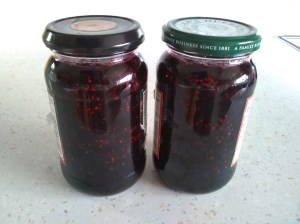
Blackberry Jam
Readly – Unlimited Magazines to Read
Posted by Sally Jenkins in Markets, Non-fiction, Resources, Short Story on August 18, 2020
Freelance writers must study their target publication before starting work on a short story or article.
It’s essential to find out the following as an absolute minimum:
- Are freelance contributions accepted? Look at the bylines, list of contributors etc.
- What’s the word count for the slot in the magazine you are aiming at?
- What’s the tone/style/age range of the publication?
- What topics have been covered recently? Potential writers will have to come up with something different.
- What’s the name and email address of the feature editor? This will allow an idea to be pitched in advance before writing up the whole article.
It’s difficult to discover the above without reading several copies of a magazine. If you’re aiming to write for several different publications, buying all the magazines can become very expensive.
I’ve just discovered the joy of Readly. For a monthly subscription of £7.99 Readly gives access to a wide range of magazines plus a couple of newspapers as well. You can read as many publications as you want across up to 5 devices including laptop, tablet and phone. Perfect for a writer to study the wide magazine market.
The Readly website currently offers a one month free trial but it’s sometimes possible to get a longer trial elsewhere. I found a two month trial via Money Saving Expert but unfortunately that’s finished.
However, electronic reading doesn’t beat curling up with a proper, paper copy of your favourite magazine. Use Readly for market research but please continue to buy your favourite magazines on the high street – otherwise there’ll be no markets left for us to write for!
Two Poetry Opportunities
Posted by Sally Jenkins in Markets, Poetry on May 12, 2017
A well-crafted poem is a beautiful thing. Unfortunately I’m not clever enough to create one but I know that several of you are capable of writing beautiful and clever poetry.
Here are two opportunities to get your skills noticed by a wider audience:
- Tony Williams, the poetry editor of English: The Journal of the English Association, invites you to send up to six, previously unpublished, poems plus a 30-word bio to tony.williams@northumbria.ac.uk. Selected poems will be published in the journal. There is no payment but the journal has a large global readership who will see your bio. Poems on teaching/classrooms are particularly wanted before 31st May 2017. There is no deadline for poems on other subjects.
- The Emma Press has a call out for submissions for poems about travel for an anthology titled In Transit: Poems about Travel. The anthology will be produced in collaboration with the Centre for Travel Writing Studies at Nottingham Trent University. ‘Poems may describe journeys undertaken on foot, by bicycle, motorcycle, wheelchair, ambulance, bus, train, plane, boat or other mode of transport.’ The deadline for submissions is 28th May 2017 and In Transit is scheduled for publication in April 2018. Full details can be found on the Emma Press website.
Happy poetry writing!
Call for Poems about Britain
Posted by Sally Jenkins in Markets, Poetry on February 28, 2017
The Emma Press is after your poems about life in Britain. They are looking for “poems about customs, rituals, festivals, holidays, celebrations and regular events that take place in the United Kingdom of Great Britain and Northern Ireland, on a micro level (what one person or one family might do) as well as on a larger scale.” Successful submissions will be included in an anthology about customs and rituals in Britain.
A maximum of three poems may be submitted and in order to submit you must be a member of the Emma Press Club. As far as I can see, this means that you have to have bought one Emma Press book in the calendar year you submit (& I think this can be an e-book costing £3.50) and this entitles you to enter submissions for the entire year. So it doesn’t appear to be any more expensive than paying a competition entry fee – and you get something back for that fee!
The closing date for submissions is 26th March 2017 and I suggest you read the full terms and conditions.
The customs, rituals and events of Britain is a very wide brief – why not grab a pad and pen and brainstorm some ideas?
Womag fiction is wanted by readers …
Posted by Sally Jenkins in Events, Markets, Short Story on September 27, 2016
Much is written in the blogosphere and on social media about the diminishing market for women’s magazine stories. I haven’t submitted any womag fiction for a while but am still interested in the area and mentioned it in a talk I gave a couple of weeks ago. 
The group I was speaking to consisted mainly of retired, but very active, women. I told them how my writing career had moved through articles, short stories for women’s magazines and on to longer fiction.
At the end, several of them told me how they’d stopped buying some of the magazines when the fiction was replaced by celebrity/real life stories. One lady said that she really enjoyed the Woman’s Weekly Fiction Specials because they were ‘proper stories with a beginning, a middle and an end’ and they gave her something nice to read before she went to sleep at night. Several mentioned that they liked the mix of things in My Weekly.
It makes me wonder whether the magazines that dropped fiction had a noticeable increase in sales afterwards or whether it brought them no obvious benefit. They certainly lost readers from the group I spoke to.
(By the way, if you’re wondering about the significance of the flower photo – this beautiful array of colour was a gift following my talk.)
-
You are currently browsing the archives for the Markets category.
 Sally Jenkins