Archive for category Resources
One Writer’s Journey
Posted by Sally Jenkins in Authors, Books, Resources, Self-publishing on January 18, 2016
Every writer’s journey is different. Author Steve Wand is my guest today and he shares his path from adversity to publication, including resources he found useful. In the last paragraph he offers sensible and motivating advice – take it and you’ll immediately appear more professional.
Over to Steve:
Robert Schuller once said ‘good things are often birthed from adversity’. 
This was the case with me when recurrence of my old spectre epilepsy resulted in me losing my job and driving licence. The event placed me at one of life’s crossroads forcing me to re-evaluate my options. A love of writing led me to consider proofreading and, upon completion of nine-month’s professional training, I formed Steve Wand Editorial, allowing me to work from home, providing editorial services. I was also able to resurrect an unfinished fiction project and, in October last year, I set out to complete what I’d begun in 2004.
Along with self-doubt as a writer, one reason I’d consigned the completed first draft of my novel – a children’s fantasy adventure – to the drawer was my frustration with the story’s clumsy opening. I’d no idea how to remedy this and allowed myself to become disheartened. I now had opportunity to re-assess the work. My ‘eureka moment’ was when I chose to cull the first four chapters and start the tale at the point where things become interesting. But what of the missing backstory? How could I include this without relying on hefty paragraphs of narration? Using the ‘show rather than tell’ rule I selected elements crucial to the tale and worked them into dialogue. For example, two scrapped chapters illustrating the protagonist’s school bully problem were replaced by eight lines of verbal interaction.
Solving the tricky opening gave me confidence and motivated me to redraft The Door to Caellfyon with a view to self-publishing it on CreateSpace and Kindle. 
At this point my editorial training became invaluable, I knew the role outstanding book covers play in achieving sales so I elected to proofread the final copy myself and use my limited funds to buy professional artwork. For this I had just the chap in mind.
I emailed the remit to local graphic designer Stu Smith, along with sample text from scenes I considered would make for good cover art. Given the tight budget I think Stu did a terrific job. I received his completed artwork on Christmas day, at which point I was free to upload my novel. This proved to be a greater challenge than I anticipated. Sally helped here with her book Kindle Direct Publishing for Absolute Beginners. Rick Smith’s Createspace and Kindle Self-Publishing Masterclass was also helpful.
Having allowed self-doubt to deny me my ambition for so long I’d like to end here with a closing statement from my own recent blog-post Owning and Blowing Your Trumpet:
“ … as I begin 2016 with a sense of achievement and a feeling of excitement for the coming year I urge every aspiring writer who reads this to revisit your social media profiles and remove any trace of the word ‘wannabee’ or ‘aspiring’ and simply declare yourselves as writers. Make no mistake, this simple yet certain acknowledgement will serve as a powerful self-fulfilling prophecy and, in recognising yourselves as writers, writers you will be.”
Many thanks, Steve, for sharing your experience with us. It’s worth having a ‘look inside’ The Door to Caellfyon on Amazon and Steve’s website can be found at www.stevewandeditorial.co.uk
Ordering CreateSpace Author Copies into the UK – Beware Incorrect VAT
Posted by Sally Jenkins in Resources, Self-publishing on January 4, 2016
One of the most exciting things about being an author is receiving a box full of brand new, pristine paperbacks.  This box of treasure represents the months or years of hard work needed to get from an ethereal idea to actual words down on paper in black and white.
Shortly after publishing the thriller Bedsit Three I ordered fifty author copies direct from CreateSpace in the US. They were delivered by UPS and left at a convenient local pick-up point because I was out at the time of delivery. The parcel arrived much quicker than I expected and I was impressed by the service.
Two months down the line I had sold over 2/3 of that original delivery and, with a book-signing event arranged with a local community group for the end of January, I decided to order more copies. This time things didn’t go so smoothly. Again I was out when UPS called but this time they left a note indicating that when they attempted a future second delivery I would have to pay £36.89 in taxes to the driver. Apparently this was the VAT charged on the parcel by HM Customs & Excise. I wasn’t expecting this and panicked, calculating it would mean increasing my prices by around 75p per book – thus making it harder to sell.
I phoned UPS and they said the charge couldn’t be avoided. I contacted CreateSpace and they said customs charges were up to each individual country. Then I searched the internet and found this useful and reassuring CreateSpace forum post. It says that import VAT should not be charged on books coming into the UK and advises phoning the UPS Brokerage team on 01332 815514. I did this and was given a reference number to give to the driver when he attempted to deliver the parcel a second time. This reference number tells him not to impose the charge.
If this charge had been imposed on my first consignment I may well have paid it out of ignorance. So beware when ordering/receiving CreateSpace author copies into the UK!
Bedsit Three is “a psychological why dunnit reminiscent of Barbara Vine/ Ruth Rendell” – Amazon reviewer.
Nottingham Writers’ Club National Short Story Competition 2016
Posted by Sally Jenkins in Competitions, Non-fiction, Resources, Short Story on December 3, 2015
Nottingham Writers’ Club have just launched their 2016 National Short Story Competition.
The theme is ‘Fire’ and to get you started the Club has brainstormed a few ideas. Do any of the following inspire you to get writing?
Bonfire, house fire, barbeque, candle flames, fireworks, firing a gun, canon fire, lightning, brush fire, wood burning stove, coal fire, garden fire, firing someone from work, rockets, St Elmo’s fire, execution by firing squad, burning crop fields, smoke signals, brazier, fire pit, roasting chestnuts on an open fire, volcanic eruption, gas explosion, dynamite, cowboy shoot out, food smoker, sauna, assassination …
I’m sure there’s loads more ‘Fire’ related things to be written about. Grab a pen and paper and have a think.
The important thing to remember about this competition is that its purpose is to encourage new and less experienced writers. So entrants must not have earned £300 or more from short story writing in 2015. If you fit that category then this is a competition worth entering because you won’t have to compete with the ‘professionals’.
There will be three main prizes – £200, £100 and £50 – plus five runners up prizes and all entrants will receive a few lines of feedback on their story. The entry fee is £5 and there is a limit of 2,000 words.
Novelist and short story writer, Patsy Collins will be judging the competition. Coincidentally, her latest book, Firestarter, involves a hunky fireman… 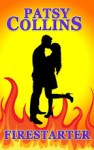
The competition opens for submissions of entries on 1st February 2016, with the last day for receipt being 29th February 2016. (But don’t wait until February to start thinking about your story!)
If writing non-fiction is more up your street, you may find Alex Gazzola’s new e-book, 50 Mistakes Beginner Writers Make, useful. Alex, a writing tutor and journalist, takes you through 50 of the key errors new and aspiring writers may be making – and guides you towards putting them right. Worth a read if you want to write and sell magazine or newspaper articles. 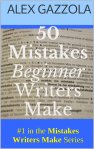
How to Write a Book Review
Posted by Sally Jenkins in Books, Promotion, Resources on October 15, 2015
I recently heard the book blogger Kim Nash speak in Leicester and she gave her personal rules for writing book reviews. This is what she said:
- Be kind.
- Indicate how the book made you feel.
- If reviewing on your own blog or website, always include links within the review to where the book can be bought.
- Don’t review a book that you don’t like.
- Share the review on social media.
Points 1 and 4 might cause some of you to raise an eyebrow. But I agree with Kim. If the book is a full-length novel, someone has sweated blood for months, maybe even years, to write it and the last thing they need is a kick in the teeth from a reviewer. So, if you can’t write something kind then don’t write anything at all. Similarly, don’t choose to review a book in a genre that you don’t like because you won’t give it a fair chance. With the Amazon ‘Look Inside’ feature it’s easy to get an idea of whether a book is going to be to your taste before you buy. If you notice formatting issues within a book, it’s kinder and more helpful to contact the writer direct so that the problems can be corrected, rather than point them out in an Amazon review that will remain on the site permanently, even after the errors have been corrected.
Remember – when you review a book, especially by a newish indie author, you are treading on someone’s dreams.
Kim also works for the publisher Bookouture and she gave a tip about doing a cover reveal. Apparently the best time for doing these on social media is 4:45 pm – this is when you’ll catch most people. Announce in advance that you’ll be doing the reveal at this time and make sure that the book’s Amazon page is open to accept pre-orders at this time too. If the cover provokes a reader’s interest, you want him to be able to order it immediately rather than have chance to forget about it.
Cover Reveal for ‘House Guests’
Posted by Sally Jenkins in Computers & Technical, Promotion, Resources, Self-publishing on September 5, 2015
Let’s have a drum roll … followed by a few oohs and aahs from the audience. Here it is, the moment you’ve all been waiting for, the cover reveal for my third e-collection of short stories!
Put your hands together for the cover of House Guests and Other Stories!

There are four different ways of obtaining an e-book cover:
- Design and create it yourself. Unless you’re a whizz at graphic design this can be very time-consuming. I give some advice on DIY (based on my own experience) in this guest post for the Writers’ Bureau.
- Use Amazon’s Kindle Cover Creator. This is very easy but the covers can’t be used on other e-book sales platforms and there’s a danger of them looking formulaic. I’ve written about this here.
- Use one of the cover designers on Fiverr.com. All services on Fiverr.com cost $5 plus a 50c processing fee (currently around £3.62). I’ve done this several times.
- Use a ‘proper’ bespoke cover designer. This will probably give you the best result but will also be significantly more expensive than the other options – meaning it will take longer to make a profit from e-books sales.
The cover for House Guests and Other Stories is from pro_ebookcovers, a designer on Fiverr.com. This designer worked differently to the others that I’ve used previously from the site. She asked for links to two e-books on Amazon with cover designs in a similar style to what I wanted (so I looked at short story collections that seemed to be selling well and had covers with a warm and friendly style). Then she asked me to choose a cover image from http://depositphotos.com (or I could’ve supplied my own). I chose something that I felt was vaguely applicable to the title story. The designer then downloaded the image and did the necessary fiddling to get it to the right dimensions and added the lettering.
I felt this way of working made things easier for both parties. I didn’t have to struggle to explain the type of image I wanted and the designer didn’t have to struggle to interpret my brief or spend time finding a suitable picture.
I recommend pro_ebookcovers and will use her again in the future.
So, back to House Guests and Other Stories. It’s a collection of fifteen short stories, many with a twist and most have appeared in either The Weekly News, My Weekly or People’s Friend. There’s also a couple of competition successes in there plus a special guest story by a prize-winning author!
I’ll reveal the guest author in a later post when I launch pre-orders for the book. I’ve never used pre-orders before and I’ve never had a guest author before so it’s exciting – watch this space!
A Simple Tip for Finding a Literary Agent
Posted by Sally Jenkins in Promotion, Resources on June 27, 2015
Are you trawling through the Writers’ and Artists’ Yearbook searching for suitable literary agents?
Here’s a simple tip that was given at a writers’ networking event I attended a few weeks ago:
Start at ‘Z’ and work backwards through the agents’ list in the Yearbook.
Apparently, agents at the end of the alphabet receive fewer submissions than those at the beginning, therefore you may have a better chance of being picked up by an agent with a name beginning with ‘X’, ‘Y’ or ‘Z’.
This is, of course, in addition to checking that the agent deals with your genre, is open to submissions etc. etc.
Maybe worth a try?
BookLinker
Posted by Sally Jenkins in Computers & Technical, Promotion, Resources, Self-publishing on May 12, 2015
A year ago I told you about GeoRiot, a service which creates universal Amazon and iTunes links. These universal links detect where visitors live and redirect them to their own national Amazon store. For example, a customer clicking on the link in the US will automatically get directed to Amazon.com and a customer in England will see the equivalent Amazon.co.uk page.
Using these universal links when promoting an e-book online gives both a professional image and a smoother customer journey in two ways:
- There is no need to list different Amazon links for different countries
- The customer always lands on the Amazon page where he or she can make an immediate purchase, without having to re-route themselves from Amazon.co.uk to Amazon.com or vice versa.
When GeoRiot first started it was essentially a free service, funded by taking a small percentage of Amazon affiliate earnings. However recently GeoRiot introduced a charge. The first 1,000 clicks per month are free and then the cost is $10 per 10,000 clicks. This charge doesn’t affect the very small user (I haven’t yet paid anything) but all users have to give their credit card details to GeoRiot.
But there is now an alternative which is always free and may suit indie authors better. BookLinker is also managed by GeoRiot but directed specifically at indie authors using Amazon (it will not convert iTunes links). Like GeoRiot, BookLinker provides statistics so that you can see how many clicks you are getting and from where in the world. BookLinker is more basic than GeoRiot but, for most writers, will do the job just as well. I intend to move over to it in the near future.
If you are an Amazon affiliate, both GeoRiot and BookLinker will allow you to include your affiliate code in the links.
There is more useful information about using BookLinker on Nick Daws’ blog, Entrepreneur Writer.
My original post, explaining how universal Amazon links work, is here.
Police Procedure isn’t just for Crime Writers
Posted by Sally Jenkins in Authors, Books, Resources on April 14, 2015
Have you ever wanted to include the police in a novel or short story but got cold feet because you weren’t sure exactly what procedure they’d follow? Me too.
Today, I have the answer to our problems, in the form of retired police officer Kevin Robinson. So, it’s over to Kevin:
You only have to look at how many programmes there are on television featuring the police at work, both in reality and in drama to realise how much interest there is in the subject matter. Not all of it comes from writers or even readers of crime fiction. Throughout my 30-year police career and since retiring I have been approached by people from all walks of life wanting to know more about how the police do their job. 
During my career, I held many roles within the police service. I carried out uniformed foot and mobile patrol work with a small county and a large metropolitan police force. I conducted crime investigations ranging from the simple to the most complex. I have taught cops all over the world how to be better cops and investigators through law enforcement projects in the UK, US, Lithuania, Romania, Bulgaria, Croatia, Bosnia and Herzegovina, Serbia and South Africa. I rounded off my 30-years as Head of Initial Police and Custody Training for the fourth largest force in England and Wales. It was in my last two years that I met author Peter Robinson and provided him with some advice that helped him shape his 23rd DCI Banks novel, Bad Boy.
Following this I decided that once I retired, I wanted to help writers. Not just established writers but also those who as yet were unpublished. I knew that many people had questions about the police and how they worked but had no one they could ask and didn’t know where to look for the answers.
Not only did I know many of the answers but I also knew where I could find those that I didn’t readily know. None of my help is designed solely for writers of crime fiction. I have helped writers from genres such as historical fiction, romance, horror, fantasy, comedy and even science fiction. The one thing they all had in common was their desire to find answers to their questions about the police and crime.
To reach out to those seeking assistance with their stories I created a blog called Crime Writing Solutions, ran weekend workshops for writers wanting to make the policing element of their stories realistic and I have now just published a book called the British Police and Crime Directory for Writers and Researchers.
It is the only book of its kind, in that not only is it an E-directory of contacts within police forces and associated agencies and government departments in the UK: it provides links to over 200 free documents and manuals that describe in detail how the police are recruited, trained and should carry out their investigations and duties: there are links to 100 websites that every writer should know about: the reader will be able to find 37 authentic video clips describing ways in which the police really work, including following a murder investigation from start to finish and finally, which 58 books about the police, policing, crime and writing crime fiction, the writer and researcher may find most useful. 
The book lends itself perfectly to the electronic format because the reader can leap straight to the relevant place on the internet for research and then back to their book.
The British Police and Crime Directory for Writers and Researchers can be downloaded from http://www.amazon.co.uk/dp/B00TBAY150
Check out and subscribe to my blog at www.crimewritingsolutions.wordpress.com
Thank you, Kevin. I already follow your blog and the nuggets of ‘policey’ information that you generously post. And maybe now with this book, we writers won’t be so reticent about putting the odd policeman into our fiction!
Updated for 2015 – Kindle Direct Publishing for Absolute Beginners
Posted by Sally Jenkins in Computers & Technical, Resources, Self-publishing on April 8, 2015
In February 2014 I pulled together everything I’d learnt about publishing a Kindle e-book and produced Kindle Direct Publishing for Absolute Beginners. This concise e-book covers everything a writer needs to know in order to publish their first Kindle e-book and it’s written in simple language. 
But nothing stays the same and over the last twelve months there have been some changes over at Amazon KDP. For example, UK writers who enter their National Insurance number in the Amazon on-line tax interview (not as scary as it sounds!) no longer have 30% tax withheld on their US royalties, pricing for EU Amazon sites is now inclusive of VAT (see my previous blog post for more information) and it’s now possible to allow pre-orders of a new e-book before it is published.
Therefore, I have updated Kindle Direct Publishing for Absolute Beginners to reflect these changes plus a few more bits and pieces, such as the advent of Kindle Unlimited allowing e-books enrolled in KDP Select to be borrowed and earn royalties and the ability for authors to run paid-for ad campaigns on Amazon.com.
So, if you’re thinking about e-publishing a collection of short stories, a ‘how-to’ book or a novel then Kindle Direct Publishing for Absolute Beginners will show you the way – and it currently costs less than a nice coffee (but I’m toying with the idea of putting it up slightly to reflect the extra work that’s gone into it).
And remember, the nice thing about e-publishing is that anything goes! There’s no rules about genres or word counts – as long as the product description and price reflect the content.
Extract from one of several 5* Amazon reviews:
“The field of e-publishing through Amazon’s Kindle Direct Publishing is full of tall grasses and hedges, but Sally’s straightforward advice offered a tidy path for my first foray into becoming an online author! Easy-to-read, this guide is clearly written by a writer who has experience with the format, and can either be read as a standalone account or dipped into as you’re on the Amazon website.”
Copyright for Writers
Posted by Sally Jenkins in Preparing to Teach in the Lifelong Learning Sector, Resources on January 29, 2015
More from the world of my PTLLS course …
My fellow learners and I each had to choose a piece of legislation affecting adult education tutors and give a short presentation to a small group. I decided to look at copyright law because of its direct impact on creative writing tutors, who may use extracts from other people’s work as examples in a class. This is a brief summary of what I came up with:
It is an infringement of copyright to do any of the following in relation to a substantial part of a work protected by copyright without the consent of the copyright owner:
- copy it
- issue copies of it to the public
- rent or lend it to the public
- perform or show it in public
- communicate it to the public
The important word here is substantial. It is subjective and the quality, importance or significance of the extract are as important as the quantity of words – using just four lines of a poem or even a four word extract have been found to be substantial.
Tutors working in colleges or similar places will probably be covered by the institution’s CLA (Copyright Licensing Agency) licence. In brief, this allows tutors to copy up to 5% of a published item e.g. one chapter of a book, a single article from a magazine, a ‘reasonable’ amount of text from a website. The source should always be cited on the copy and copies can only be given to students and members of staff.
The money collected from the sale of these licences is distributed back to writers via ALCS (Authors’ Licensing & Collecting Society), PLS (Publishers Licensing Society) and DACS (Design and Artists’ Copyright Society). If you’ve ever had an article or story published in a magazine make sure you register with ALCS to get your share of this money.
However, tutors who work independently in the private sector have to purchase their own CLA license or obtain the permission of the author or publisher each time they want to use an excerpt.
Alternatively it may be best to avoid using other people’s work and make up examples instead.
With all the cuts in local council spending, I guess more tutors may be forced to teach privately so the above is just something to be aware of.
-
You are currently browsing the archives for the Resources category.
 Sally Jenkins