A Simple Tip for Finding a Literary Agent
Posted by Sally Jenkins in Promotion, Resources on June 27, 2015
Are you trawling through the Writers’ and Artists’ Yearbook searching for suitable literary agents?
Here’s a simple tip that was given at a writers’ networking event I attended a few weeks ago:
Start at ‘Z’ and work backwards through the agents’ list in the Yearbook.
Apparently, agents at the end of the alphabet receive fewer submissions than those at the beginning, therefore you may have a better chance of being picked up by an agent with a name beginning with ‘X’, ‘Y’ or ‘Z’.
This is, of course, in addition to checking that the agent deals with your genre, is open to submissions etc. etc.
Maybe worth a try?
Midsummer Dreams
Posted by Sally Jenkins in Authors, Books, Lifestyle on June 12, 2015
Dreams are weird and wonderful things. They can disappear the moment we wake or linger in the mind for days. Sometimes we dream the same thing night after night. Other times we consciously try to re-dream something and it doesn’t happen. 
I’ve had one dream recur intermittently for many years. I dream that exam time is looming but I’ve done absolutely no revision. However hard I try to find time to revise, it doesn’t happen and I go into the exam totally unprepared. But I always wake up before I turn the exam paper over and read the questions.
This probably says something deep and meaningful about my waking life.
A bit of internet surfing, brought up a list of the Top 10 Common Dreams and Their Meanings. Number 6, ‘Failing a Test’, correlates most closely to my dream and the meaning given is, “…you are feeling tested in some way in your real life. You may feel that you are unprepared for something or playing the wrong part in life.”
That does tie in with my waking life, I like to be in control and ready for whatever life might throw at me.
Unsurprisingly, the most common dream listed is ‘Falling or Sinking’ and I’ve had that one too, where you always wake up before hitting the bottom. The explanation is, “… you are overwhelmed in life and feel ready to give up.” Maybe I need to get my life in order and then I can have some sweet dreams!
One person who’s put dreams to good use is romantic novelist, Alison May. Her latest novel, Midsummer Dreams, is published by Choc Lit today. Here’s the enticing blurb:
Four people. Four messy lives. One party that changes everything …
Emily is obsessed with ending her father’s new relationship – but is blind to the fact that her own is far from perfect.
Dominic has spent so long making other people happy that he’s hardly noticed he’s not happy himself.
Helen has loved the same man, unrequitedly, for ten years. Now she may have to face up to the fact that he will never be hers.
Alex has always played the field. But when he finally meets a girl he wants to commit to, she is just out of his reach.
At a midsummer wedding party, the bonds that tie the four friends together begin to unravel and show them that, sometimes, the sensible choice is not always the right one.
So Midsummer Dreams promises to be a sweet experience even if your own dream life (like mine) leaves something to be desired!
The Short Story Competition 2015
Posted by Sally Jenkins in Competitions, Short Story on June 7, 2015
The Short Story Competition 2015 is now open for entries. The competition has been running annually since 2011 and ‘… showcases the best short stories from around the world.’
First prize is £300, second prize is £150 and third prize is £50. The winners will be published on the website and may be included in a future anthology. The competition has an open theme and the word limit is 1,000 to 5,000.
Entry fee is £5 via PayPal and the closing date is 15th September 2015 – so it could be a nice project to work on over the summer.
Don’t forget to check the full submission guidelines.
Good Luck!
TV Presenter Training
Posted by Sally Jenkins in Events, Lifestyle, Non-writing, Promotion on May 26, 2015
Ever wondered what it’s like to read from an autocue or how to stand when you’re talking to a camera or what the difficulties might be in co-presenting a program?
I’ve just experienced all of these on a TV Presenter Taster Day with TV Training UK. Our tutor was Simon Davies who has a wealth of experience in children’s TV, shopping channel and acting. He was very informative and gave us the six rules of presenting:
- Anchor yourself to the spot so you don’t wander out of shot.
- Look directly into the lens of the camera.
- Be ready for the countdown. The director will cue you in by counting backwards from five but only actually saying, ‘5, 4’ out loud. The presenter counts ‘3, 2, 1’ silently and then begins.
- Arrange your thoughts in groups of three when preparing to speak – this stops you drying up.
- Be yourself but increase your energy/animation levels by 30% to avoid coming over as ‘flat’.
- Don’t gabble but also, don’t speak too slowly as this comes across as patronising.
The participants on the course were all ages from 17 to 60 and from varied backgrounds. Some wanted to make and present YouTube videos to promote their business, others were performers who wanted another string to their bow and some, like me, thought it would be an interesting experience. A handful of them had instant on-screen charisma and it was obvious they would make good presenters. Simon told me that I came across as ‘intelligent’, which I’m taking as a positive but I don’t expect to be hosting The One Show anytime soon!
My only criticism is that there wasn’t time for us to view our autocue or co-presenting footage during the course. But it was available to purchase as a ‘showreel’ (a showreel is an essential part of a presenter’s c.v.).
If you’re interested in having a go at being a TV presenter, the day cost me around £26 via Amazon Local.
Now, maybe I should go and make a video book trailer …
Book Reviews in Magazines
Posted by Sally Jenkins in Promotion, Self-publishing on May 19, 2015
There’s always something new to learn about the book promotion business.
Over the last bank holiday I went away for the weekend and picked up a lovely free glossy magazine in one of the cafes. It had lots of interesting pieces about the surrounding area, a page of readers’ poems and a book review page. On the review page was an interview with a local author who suggested that writers struggling to get traditionally published could, instead, make their work available on Kindle.
I saw this as an opportunity to contact the editor, agree with the local author’s advice, suggest that the aspiring writers in the magazine’s readership might be interested in Kindle Direct Publishing for Absolute Beginners and ask if it could be included on the magazine’s book review page.
The editor replied and agreed that my book would be of interest to the readers … and that the cost of inclusion on the review page would be £100.
I was quite taken aback, not having realised that there was a charge to appear on magazine book review pages. But on reflection, I suppose I shouldn’t have been surprised. A magazine book review is like an advert and we expect to pay for advertising. It’s common knowledge that publishers pay for display space in the major book shop chains – so they probably don’t mind paying for magazine review space.
I politely replied to the editor, confessed my ignorance and didn’t go ahead with the review because I wasn’t sure it would generate enough sales to pay for itself. The editor did explain that since it was a free publication they were reliant on generating income where they could – which I could understand.
Am I the only one that didn’t realise this was how things worked?
BookLinker
Posted by Sally Jenkins in Computers & Technical, Promotion, Resources, Self-publishing on May 12, 2015
A year ago I told you about GeoRiot, a service which creates universal Amazon and iTunes links. These universal links detect where visitors live and redirect them to their own national Amazon store. For example, a customer clicking on the link in the US will automatically get directed to Amazon.com and a customer in England will see the equivalent Amazon.co.uk page.
Using these universal links when promoting an e-book online gives both a professional image and a smoother customer journey in two ways:
- There is no need to list different Amazon links for different countries
- The customer always lands on the Amazon page where he or she can make an immediate purchase, without having to re-route themselves from Amazon.co.uk to Amazon.com or vice versa.
When GeoRiot first started it was essentially a free service, funded by taking a small percentage of Amazon affiliate earnings. However recently GeoRiot introduced a charge. The first 1,000 clicks per month are free and then the cost is $10 per 10,000 clicks. This charge doesn’t affect the very small user (I haven’t yet paid anything) but all users have to give their credit card details to GeoRiot.
But there is now an alternative which is always free and may suit indie authors better. BookLinker is also managed by GeoRiot but directed specifically at indie authors using Amazon (it will not convert iTunes links). Like GeoRiot, BookLinker provides statistics so that you can see how many clicks you are getting and from where in the world. BookLinker is more basic than GeoRiot but, for most writers, will do the job just as well. I intend to move over to it in the near future.
If you are an Amazon affiliate, both GeoRiot and BookLinker will allow you to include your affiliate code in the links.
There is more useful information about using BookLinker on Nick Daws’ blog, Entrepreneur Writer.
My original post, explaining how universal Amazon links work, is here.
The Guernsey Literary and Potato Peel Pie Society
Posted by Sally Jenkins in Authors, Books on May 5, 2015
I’m currently reading The Guernsey Literary and Potato Peel Pie Society by Mary Ann Shaffer and Annie Barrows. 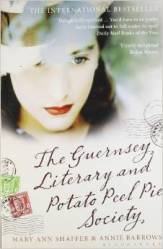
It’s set just after the end of WWII and the book comprises a series of letters to and from Juliet Ashton. She is an English writer looking for her next ‘big idea’. By chance she hears about the existence of The Guernsey Literary and Potato Peel Pie Society and decides to include it in an extended feature article for The Times. The various members of the society write to Juliet telling her how it was founded accidentally to escape the wrath of the Germans, they also write about the hardships of life under German occupation and about other things in their lives. Juliet also corresponds with her editor, her best friend and the rich Markham Reynolds, who appears to be trying to woo her. There may be more, but I’m only part way through the book so I’ll let you discover that for yourselves.
So far, I’ve found the book charming and easy to read – and it’s teaching me a lot about history.
But, as a writer, what interests me most is the story of its author, Mary Ann Shaffer. Mary Ann was an American born in 1934. In 1980 she visited Guernsey and left with a fascination with the history of Channel Isles during WWII. She was a ‘hobby’ writer, always working on something but never completing anything to her satisfaction, however around twenty years after her visit to Guernsey, and encouraged by her writing group, she started work on The Guernsey Literary and Potato Peel Pie Society. The completed book was snapped up by a publisher just before Mary Ann’s health began to fail. When the book’s editor requested some changes, Mary Ann wasn’t well enough to do them and so her niece, Annie Barrows (also a writer), stepped in to complete the book. Mary Ann died in early 2008, knowing that her only novel was to be published in thirteen countries but she was never able to enjoy its international success.
What’s the moral of this story? Get writing before it’s too late! Like all writers, I’m guilty of procrastination but the more birthdays I chalk up, the more aware I become of how little time we have. So I’m going to try to take Mary Ann’s story to heart – if I ever produce a best-seller (extremely faint chance, I know) then I want to be around and healthy enough to enjoy it!
And, if you need still more inspiration before facing that blank document, A Writer on Writing – Advice to Make You a Success, is only 99p until Monday 11th May 2015.

A Disappointment, An Award and Kobo Writing Life
Posted by Sally Jenkins in Competitions, Non-writing, Successes on April 23, 2015
A few weeks ago I told you I was on a shortlist of eight for the Kobo-Silverwood Books-Berfort Open Day Writing Competition. I heard this week that I didn’t reach the final three. Congratulations to those who did: Phoebe Powell-Moore, Edward James and Sarah Channing Wright. Curiosity will definitely make me buy the winning novel when it’s published later this year.
It’s not all bad news though. As some of you may have seen on Facebook, I was awarded the Hwyl Stone (pictured) for Most Improved Speaker by Sutton Coldfield Speakers’ Club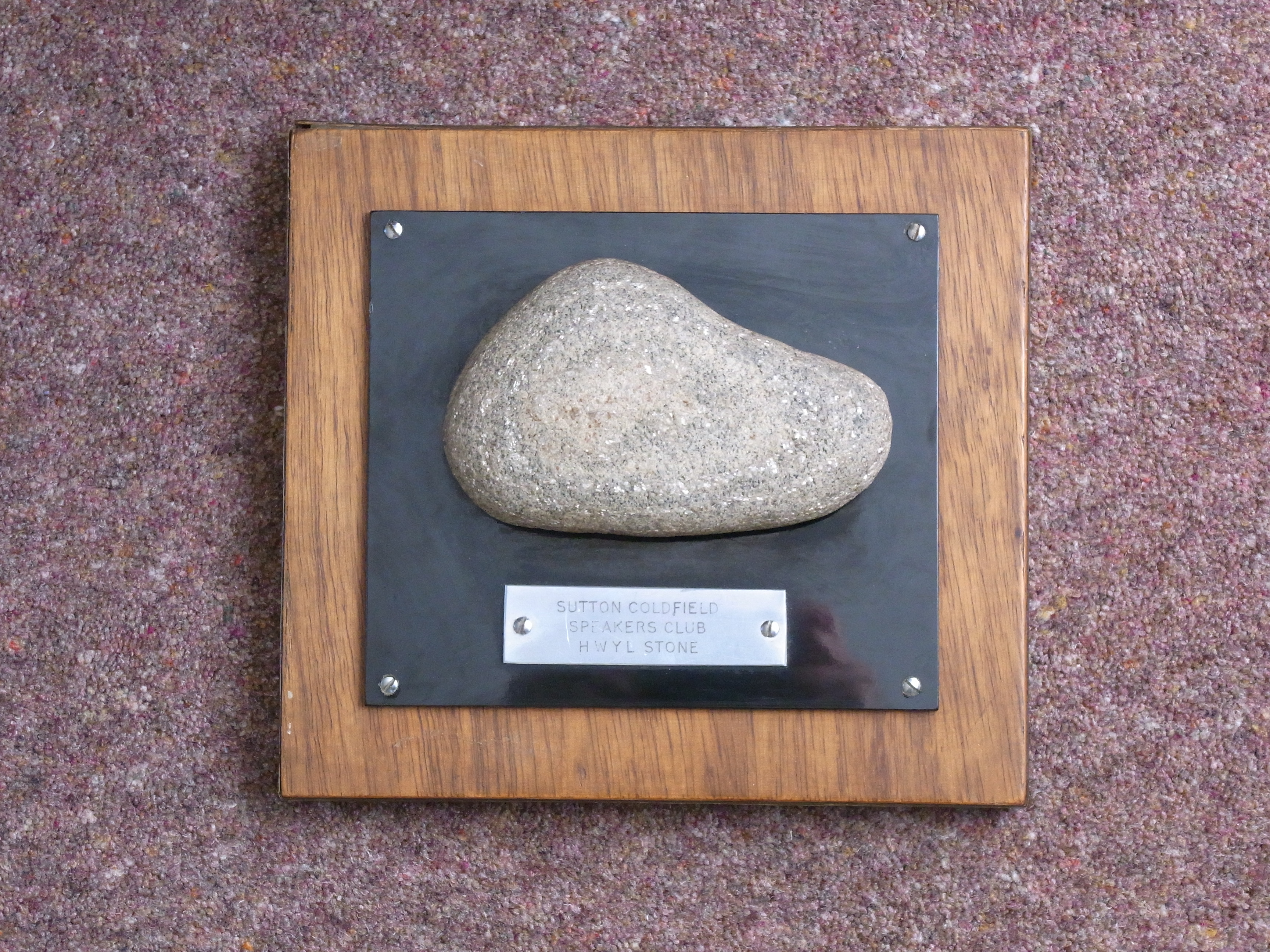 . This was a nice confidence boost. The stone is supposed to have similar properties to the Blarney stone and was collected in Wales and made into a trophy by a former member.
Finally, to show I’ve no hard feelings against Kobo, here’s some interesting stuff from Kobo Writing Life:
- A useful blog post looking at Goal, Motivation and Conflict – the three essential things for every character. Without these it’s difficult to move the story forward.
- There’s also a good post on why you should enter competitions. Take a look at it if you’ve been dragging your feet lately and not submitting anything.
- Kobo are now running a Romantic Novel competition. It’s free to enter and the winner gets a publishing contract with Mills and Boon. Closing date July 14th 2015.
Kobo do seem to do more to help and motivate writers than Amazon KDP. Or have I just missed the Amazon stuff?
Police Procedure isn’t just for Crime Writers
Posted by Sally Jenkins in Authors, Books, Resources on April 14, 2015
Have you ever wanted to include the police in a novel or short story but got cold feet because you weren’t sure exactly what procedure they’d follow? Me too.
Today, I have the answer to our problems, in the form of retired police officer Kevin Robinson. So, it’s over to Kevin:
You only have to look at how many programmes there are on television featuring the police at work, both in reality and in drama to realise how much interest there is in the subject matter. Not all of it comes from writers or even readers of crime fiction. Throughout my 30-year police career and since retiring I have been approached by people from all walks of life wanting to know more about how the police do their job. 
During my career, I held many roles within the police service. I carried out uniformed foot and mobile patrol work with a small county and a large metropolitan police force. I conducted crime investigations ranging from the simple to the most complex. I have taught cops all over the world how to be better cops and investigators through law enforcement projects in the UK, US, Lithuania, Romania, Bulgaria, Croatia, Bosnia and Herzegovina, Serbia and South Africa. I rounded off my 30-years as Head of Initial Police and Custody Training for the fourth largest force in England and Wales. It was in my last two years that I met author Peter Robinson and provided him with some advice that helped him shape his 23rd DCI Banks novel, Bad Boy.
Following this I decided that once I retired, I wanted to help writers. Not just established writers but also those who as yet were unpublished. I knew that many people had questions about the police and how they worked but had no one they could ask and didn’t know where to look for the answers.
Not only did I know many of the answers but I also knew where I could find those that I didn’t readily know. None of my help is designed solely for writers of crime fiction. I have helped writers from genres such as historical fiction, romance, horror, fantasy, comedy and even science fiction. The one thing they all had in common was their desire to find answers to their questions about the police and crime.
To reach out to those seeking assistance with their stories I created a blog called Crime Writing Solutions, ran weekend workshops for writers wanting to make the policing element of their stories realistic and I have now just published a book called the British Police and Crime Directory for Writers and Researchers.
It is the only book of its kind, in that not only is it an E-directory of contacts within police forces and associated agencies and government departments in the UK: it provides links to over 200 free documents and manuals that describe in detail how the police are recruited, trained and should carry out their investigations and duties: there are links to 100 websites that every writer should know about: the reader will be able to find 37 authentic video clips describing ways in which the police really work, including following a murder investigation from start to finish and finally, which 58 books about the police, policing, crime and writing crime fiction, the writer and researcher may find most useful. 
The book lends itself perfectly to the electronic format because the reader can leap straight to the relevant place on the internet for research and then back to their book.
The British Police and Crime Directory for Writers and Researchers can be downloaded from http://www.amazon.co.uk/dp/B00TBAY150
Check out and subscribe to my blog at www.crimewritingsolutions.wordpress.com
Thank you, Kevin. I already follow your blog and the nuggets of ‘policey’ information that you generously post. And maybe now with this book, we writers won’t be so reticent about putting the odd policeman into our fiction!
 Sally Jenkins